

Baddha konasana, or bound angle pose, is the seated posture most people know as butterfly pose: soles of the feet together, knees falling out to the sides, spine tall. It looks simple, and that is the trap. Many people tug the knees down and feel it in the knees instead of the inner thighs. This guide covers alignment cues, props under the knees, the reclined variation, safe hold times, common mistakes and who should modify the pose.
What is baddha konasana, and is it the same as butterfly pose?
Baddha konasana is the Sanskrit name for butterfly pose: “baddha” means bound, “kona” means angle and “asana” means pose. You sit with the soles of your feet touching and your knees open, which stretches the inner thighs, groin and hips. Titli asana, the Hindi name, usually means the same shape, sometimes with gentle knee flapping.
In practice the two terms overlap. A held, steady version is what teachers call baddha konasana. The flapping version is a warm-up drill; keep the movement small and easy. It is one of the first shapes taught in yoga poses for beginners because it needs no strength or balance, only patience in the hips.
How do you do baddha konasana step by step?
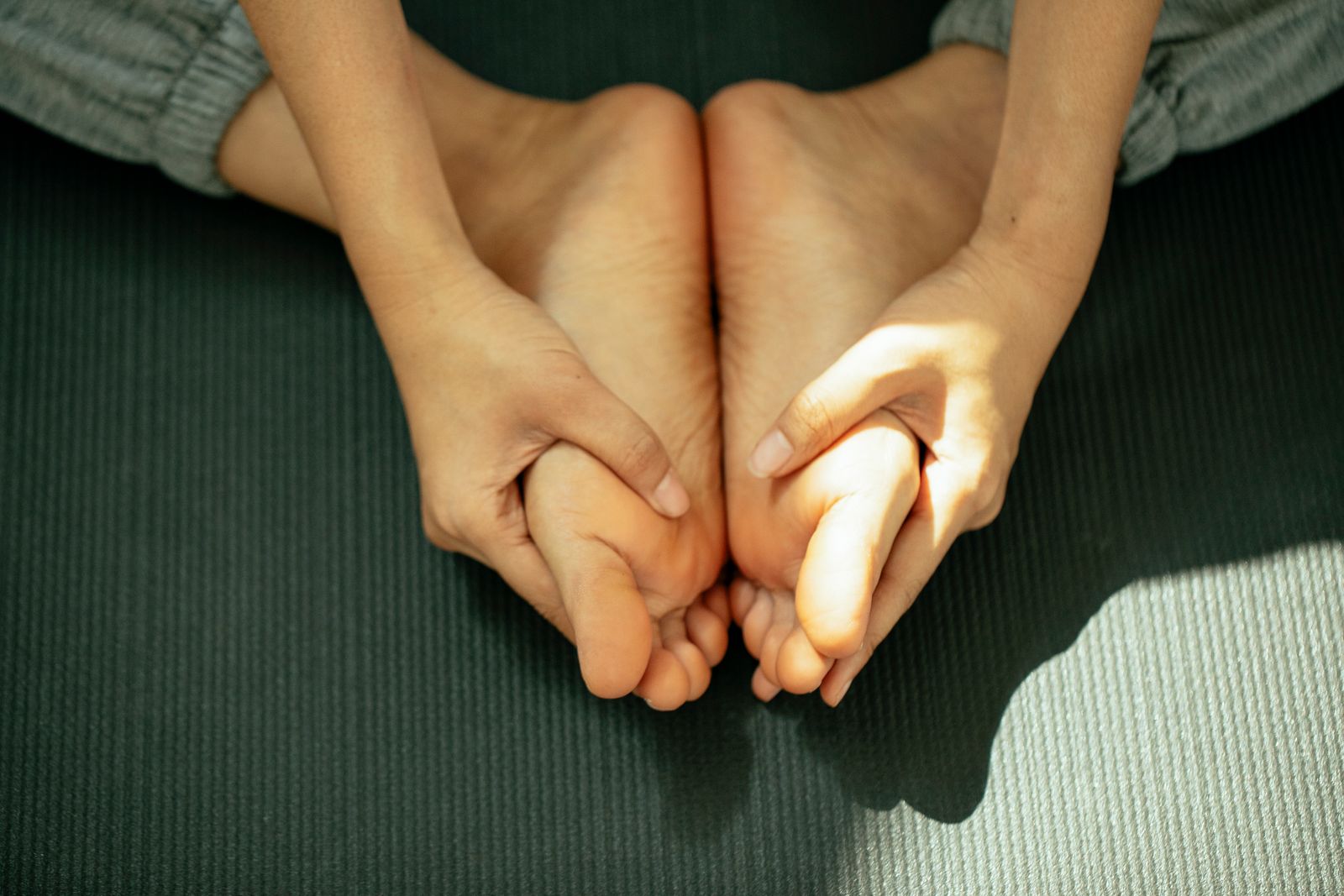
Sit on the front edge of a folded blanket, bend both knees, bring the soles of your feet together and hold your ankles or feet. Lengthen the spine, let the knees open under their own weight, and breathe for 30 to 60 seconds. Exit by lifting the knees and extending the legs forward.
- Sit on a folded blanket or firm cushion about 5 to 10 cm high, so the hips sit higher than the knees.
- Bend your knees and draw your heels toward you, as close as feels comfortable.
- Press the soles of the feet together and hold the ankles or toes. Keep the outer edges of the feet on the floor if you can.
- Lift the chest, lengthen the back of the neck and sit on the front of your sitting bones, not behind them.
- Let the knees open by gravity alone. Do not press, push or bounce them.
- Breathe slowly through the nose. Stay for 5 to 10 breaths, or 30 to 60 seconds, then release and shake the legs out.
A few minutes of tadasana first makes it easier to sit tall.
Alignment cues that matter more than knee height
Good alignment in baddha konasana means a tall spine, a pelvis that tips slightly forward, relaxed shoulders and knees that open without force. How low the knees go is the least important detail. Fix the pelvis first: sitting on a lift makes the rest easier.
- Pelvis: aim for a slight forward tilt, with your sitting bones pointing down and slightly back. If your lower back rounds and your tailbone tucks under, sit higher.
- Spine: grow tall from the crown of the head. Do not arch hard or collapse the chest.
- Knees: they move out because the hip joints rotate, not because you push them. Never press the knees down with your hands or elbows.
- Breath: if you cannot breathe smoothly, you are too deep. Back off until the breath evens out.
Props under the knees: what to use and when
Supporting the knees with props lets the inner thighs release without strain on the knee joints. Place a block, rolled blanket or cushion under each knee so the legs rest instead of hang. If you are still stretching hard, raise the prop.
| Prop | Where it goes | Best for | Cue |
|---|---|---|---|
| Folded blanket under the hips | Beneath the sitting bones, about 5 to 10 cm high | Tight hips, rounded lower back | Sit on the front edge so the pelvis tips forward |
| Yoga block under each knee | Flat under the outer thigh, near the knee | Knees that hover well above the floor | Choose the height where the thighs feel supported, not stretched |
| Rolled towel or blanket under each knee | Under the outer thigh or knee | Home practice with no blocks | Use a firm roll so it does not squash flat |
No props at home? A firm pillow or folded duvet works as well as a block. The same logic applies in a longer, quieter yin yoga practice, where props let you stay for several minutes without muscular effort.
Reclined baddha konasana (supta baddha konasana) as a restful variation
Reclined baddha konasana is the same leg shape performed lying on your back. A bolster or folded blankets along the spine support the torso, the knees rest on props, and the pose is held for 2 to 5 minutes. It asks for less effort than the seated version, so it suits tired hips and slow evening practice.
| Stage | Setup | Hold | Form cue |
|---|---|---|---|
| Gentle start | Flat on the floor, a folded blanket under the head, a prop under each knee | 1 to 2 minutes | Keep the lower back long and the ribs soft |
| Standard | A bolster or two rolled blankets lengthwise along the spine, props under both knees | 2 to 3 minutes | Let the arms rest out at your sides, palms up |
| Restorative | Bolster along the spine, a folded blanket under the head, blocks or cushions under both knees | 3 to 5 minutes | Breathe slowly and make the exhale longer than the inhale |
To come out, use your hands to bring the knees together, roll onto your side and rest for a few breaths before sitting up slowly. If you feel pinching in the groin or a pull on the inner knee, raise the props.
Myth: your knees must touch the floor
Your knees do not have to touch the floor in baddha konasana. How far they drop depends on the shape of your hip sockets, thigh bones and pelvis, as well as on muscle tension, so two people with perfect form can look completely different. Forcing the knees down loads the inner knee ligaments, not the hip.
The aim is a comfortable stretch you can breathe through, not a picture. Let gravity do the work, add props, and measure progress by how easily you can stay for a minute. Knees that sit high today may open a little over weeks of patient practice, but some people will always sit with them well above the floor, and that is normal.
Common mistakes in butterfly pose and how to fix them
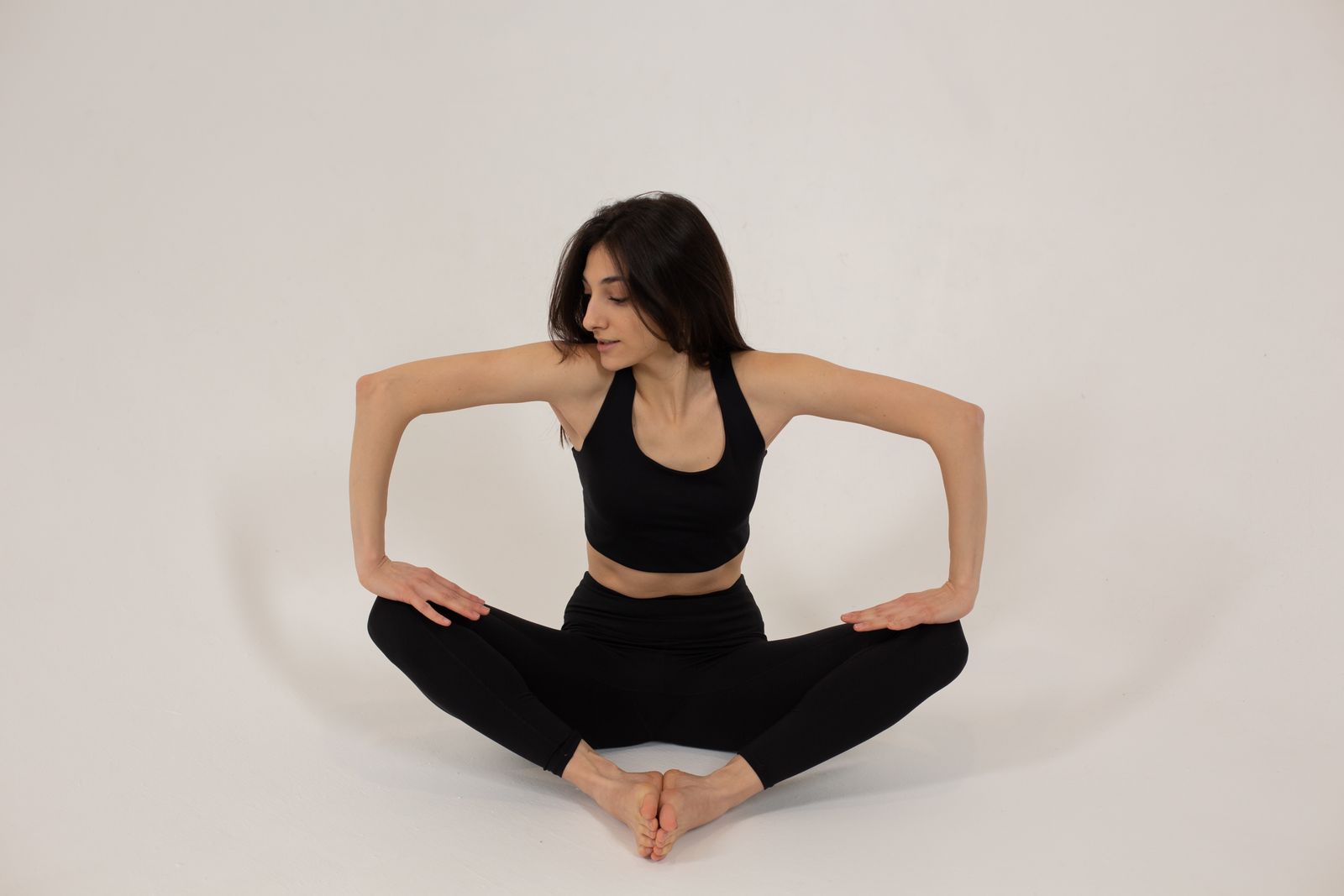
- Pushing the knees down. This strains the inner knee. Take your hands off the knees, hold the feet and let the knees fall by themselves, or slide a prop under them.
- Rounding the lower back. If the tailbone tucks under, you are sitting too low for your hips. Sit on a thicker folded blanket until the spine can lengthen.
- Holding your breath. A held breath tightens the pelvic floor and hips. Aim for a smooth, steady breath and ease off if it breaks.
- Folding forward too soon. Hinge from the hips with a long spine only after the upright pose feels easy. Rounding to reach the floor puts the stretch in the back.
Letting the breath lead is the same principle behind seated postures like padmasana.
How long should you hold baddha konasana?
Hold baddha konasana for about 30 to 60 seconds, repeated 2 or 3 times, for a general practice. Beginners can start with 20 to 30 seconds. Slow, supported or reclined versions can be held for 2 to 5 minutes. Stop sooner if you feel pinching or sharp pain.
| Level or goal | Version | Hold | Rounds |
|---|---|---|---|
| First week, complete beginner | Seated on a blanket, knees on props | 20 to 30 seconds | 2 |
| Regular practice, 2 to 4 weeks in | Seated on a blanket | 30 to 60 seconds | 2 to 3 |
| Cool-down after practice | Seated or forward fold, hands on the floor | 1 to 2 minutes | 1 |
| Evening wind-down | Reclined with props | 3 to 5 minutes | 1 |
A good rule of thumb: you should be able to breathe smoothly during the hold. If you cannot, ease off.
Which muscles does baddha konasana stretch, and what are the benefits?
Baddha konasana mainly stretches the adductors, the inner thigh muscles, along with the groin and hip external rotators. It also asks the back and core to hold the spine upright. Practised gently, it is a useful stretch for people who sit for long hours.
- Inner thigh flexibility. The adductors lengthen as the knees open. They are among the tightest muscles in people who sit all day.
- Hip mobility. The hips rotate outward, which can make squatting and cross-legged sitting more comfortable over time.
- A calmer breath. Slow breathing in a stable, seated shape is a good lead-in to meditation for beginners.
- A counter-stretch. It follows standing poses like vrksasana well, because tree pose asks the hips to rotate outward while standing.
It is a stretch, not a treatment for any medical condition. Treat it as one piece of a wider yoga for flexibility routine,.
Who should modify or avoid baddha konasana?
Skip or modify baddha konasana if you have a current knee, groin or hip injury, sciatica, or have had hip surgery. Use supports, a smaller range and shorter holds, or leave it out. If you are pregnant, take the pose upright with props and avoid long reclined holds late in pregnancy. Check with your doctor first.
- Knee injury or pain: support each knee with a block so the leg is never hanging. If you feel inner-knee pain, bring the heels further away or sit with legs extended instead.
- Groin or hip injury: avoid the pose during recovery, or use deep prop support and a small range. Return only once movement is pain-free.
- Sciatica: sit on a thick, firm lift so the pelvis is neutral, keep the knees well supported and stay out of any position that sends pain, numbness or tingling down the leg.
- Hip replacement or recent hip surgery: get explicit clearance from your surgeon or physiotherapist first.
- Pregnancy: sit upright on a lift, keep the knees supported and never push them down. Avoid lying flat on your back for long holds as pregnancy advances, and use a bolster to prop up the torso if you practise a reclined version. See our prenatal yoga guide for pregnancy-friendly sequences.
See your doctor or physiotherapist before practising if you have a diagnosed joint, spine or hip condition, if you are pregnant, or if the pose causes sharp pain, numbness or tingling.
Where baddha konasana fits in a practice
Baddha konasana works at the start, middle or end of a session. Early on, it loosens the hips for standing poses. After surya namaskar, it slows the breath and brings the body back to calm. It appears across most types of yoga.
If you are brand new to the mat, our guide to yoga for beginners shows how to build a short routine around it. Desk workers can try 1 minute seated on a folded blanket after lunch.
Frequently asked questions about baddha konasana
Is baddha konasana the same as butterfly pose?
Yes. Baddha konasana is the Sanskrit name and butterfly pose is the English name for the same seated posture, with the soles of the feet together and the knees open. Some teachers use titli asana for a more active version where the knees flap gently, but most classes treat the names as the same thing.
Why do my knees not touch the floor in baddha konasana?
Knees that stay above the floor are normal. The range depends on your hip structure, thigh bone shape and muscle tightness, not on how well you do the pose. Sit on a folded blanket, support each knee with a block or cushion and never push the knees down. Range may improve slowly with regular practice.
How long should I hold butterfly pose?
For most people, 30 to 60 seconds, repeated 2 or 3 times, is enough. Beginners can start with 20 to 30 seconds. In a supported or reclined version, you can stay 2 to 5 minutes. Come out slowly if you feel pinching, tingling or sharp pain.
Can I do baddha konasana during pregnancy?
Many people practise a gentle, upright version of baddha konasana during pregnancy, with the hips lifted on a blanket and the knees supported. Avoid pressing the knees down and skip long flat-on-the-back holds as pregnancy advances. Check with your doctor or a qualified prenatal teacher before adding any pose.
Is baddha konasana safe if I have knee pain?
It can be, with changes. Support each knee with a block or rolled blanket, bring the heels further from the body and keep the range small. Stop if you feel pain on the inner knee. If the pain continues, or follows an injury, see your doctor or physiotherapist before returning to the pose.
Want someone to check your alignment and suggest the right props? Join a live session in FitStrot’s online yoga classes and get hands-on feedback on your butterfly pose.


