

Most people cannot sit in full padmasana on day one, and some never will, because the pose depends on hip shape as much as on effort. Padmasana, the lotus pose, places each foot on the opposite thigh with the spine tall and the hands resting on the knees. This guide covers how to do padmasana step by step, a six-week progression, the real benefits, common mistakes and who should skip it.
What is padmasana, and why is it called the lotus pose?
Padmasana is a classical seated yoga pose in which each foot rests on the opposite thigh, soles facing up. The name joins the Sanskrit “padma” (lotus) and “asana” (seat). It is used mainly for meditation and breathwork because the crossed legs form a wide, symmetrical base that keeps the spine upright with little muscular effort.
The folded legs are said to resemble lotus petals, and the lotus, which rises clean from muddy water, stands for purity and awakening in yogic and Buddhist traditions. Classical hatha texts list it among the main meditation seats, with Vajrasana and Siddhasana.
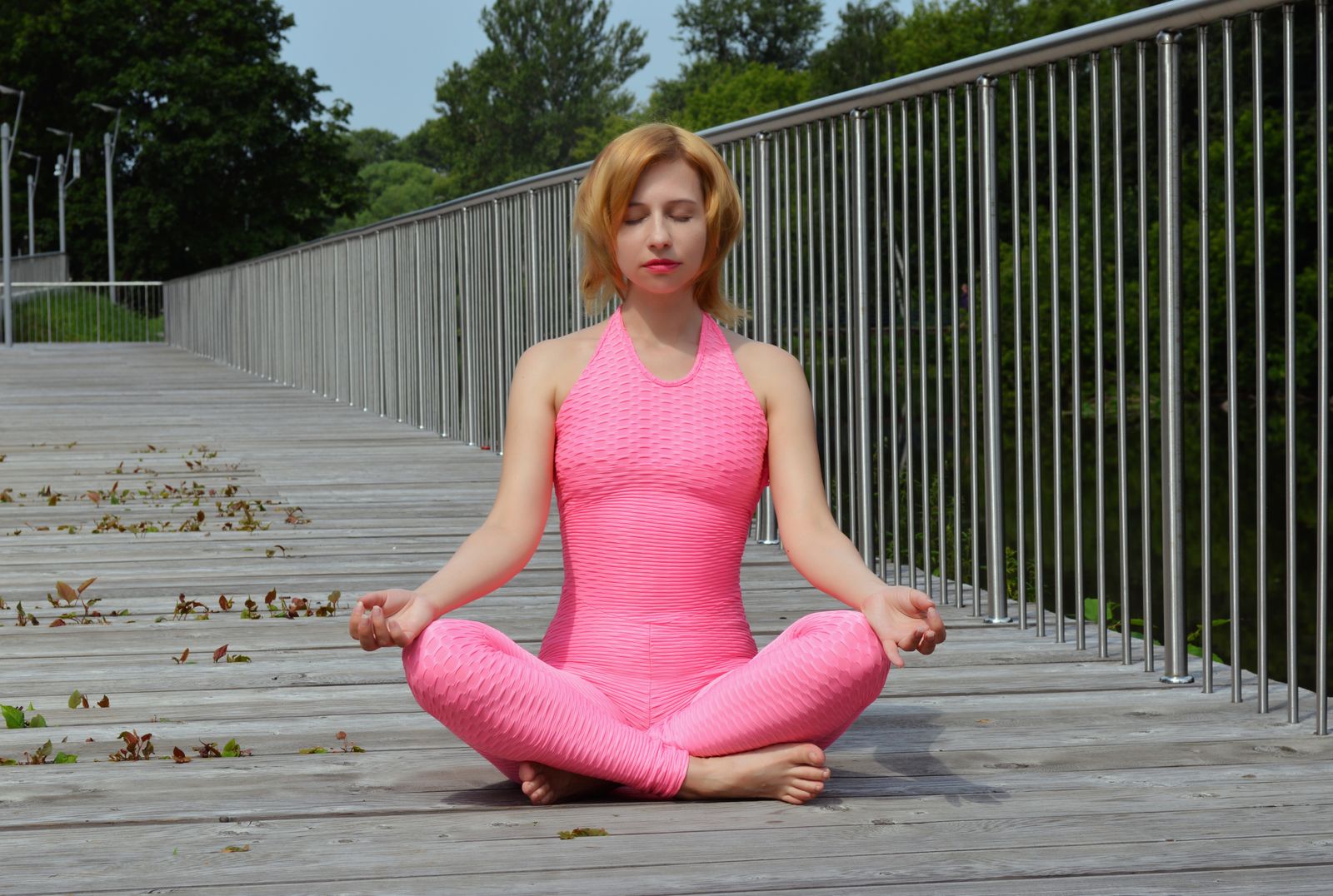
If you search for padmasana yoga images, you will see the same silhouette every time: both feet high on the thighs, knees low, back vertical, hands resting on the knees. The padmasana mudra is usually Jnana Mudra (index finger touching thumb, palms down) or Chin Mudra (palms up). Your knees do not need to touch the floor; that depth takes most bodies years.
How do you do padmasana step by step?
To do padmasana, sit with your legs straight, place the right foot high on the left thigh, then lift the left foot onto the right thigh, soles facing up. Lengthen the spine, rest your hands on your knees and breathe through the nose. Hold for 30 to 60 seconds, then repeat with the opposite leg on top.
- Sit tall with legs extended. Use a folded blanket or cushion under the hips if your lower back rounds when you sit flat.
- Place the first foot. Bend the right knee, rotate the hip outward and bring the right foot onto the top of the left thigh, sole up, heel close to the lower belly.
- Place the second foot. Bend the left knee and, using your hands rather than force, lift the left foot onto the right thigh the same way. Both soles face up.
- Lengthen the spine. Imagine a string pulling the crown of the head upward. Let the shoulders drop back and down.
- Set the hands. Rest them on the knees in Jnana or Chin Mudra.
- Soften and breathe. Relax the jaw and breathe slowly through the nose.
- Release and switch. Unfold slowly, shake out the legs, and cross the other leg on top next round.
If a foot will not reach the thigh without pain in the knee, stop at that point. That is your cue to practise Ardha Padmasana (half lotus pose), where one foot rests on the opposite thigh and the other stays tucked under the opposite shin. It is a completely valid pose in its own right.
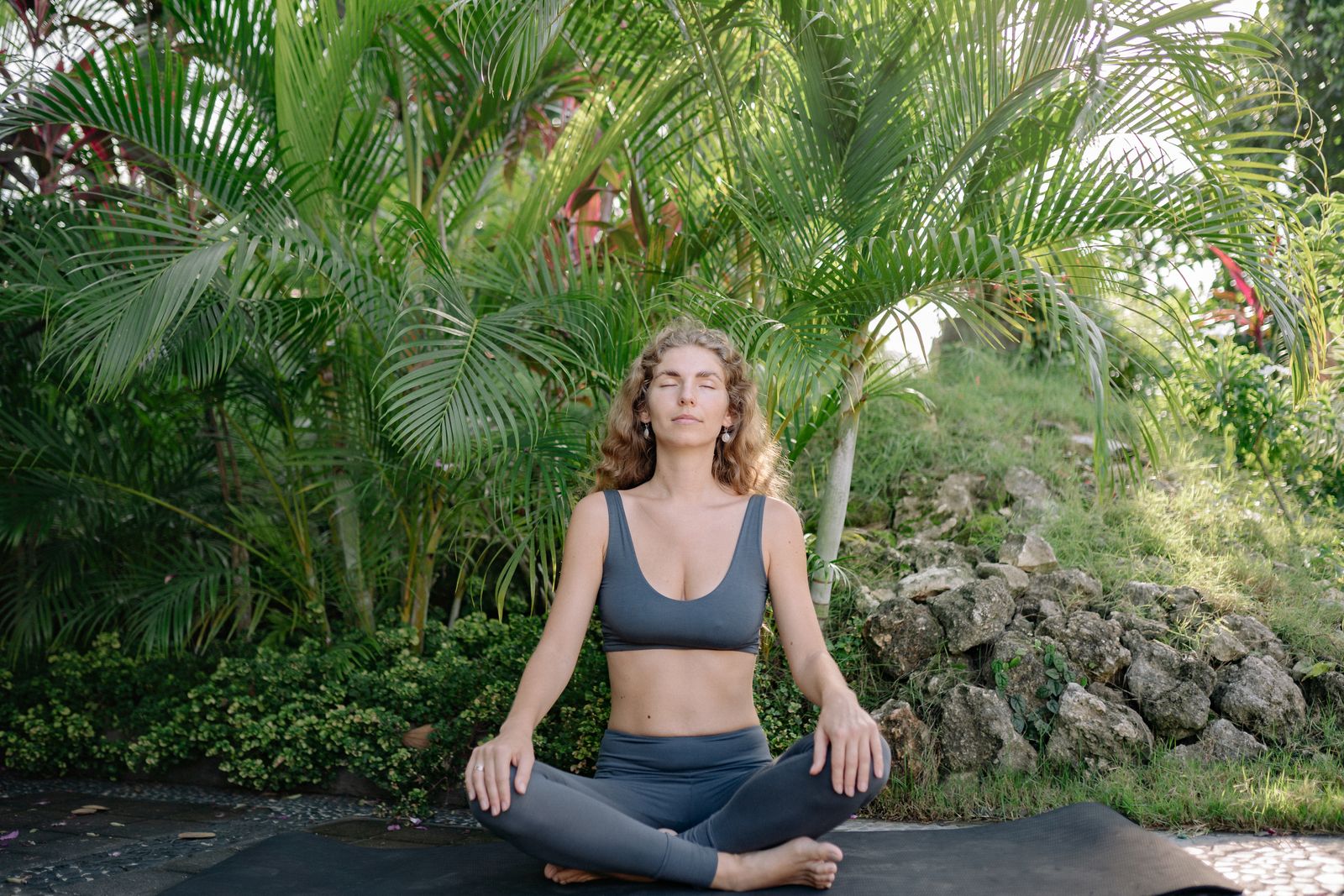
Can your hips, knees and ankles take it? A quick padmasana self-test
Your hips can usually handle padmasana if you can sit cross-legged for five minutes without knee discomfort, rest one ankle on the opposite knee with the shin roughly parallel to the floor, and settle into half lotus with no pinching at the knee. If any check fails, stay with an easier seat for now and keep building hip mobility.
| Check | How to test it | A pass feels like | If you fail |
|---|---|---|---|
| Easy seat | Sit cross-legged on a cushion for 5 minutes | Knees below hip level, no ache in the knees | Stay with Sukhasana on a higher cushion |
| Figure-four | Lie on your back, rest one ankle on the opposite knee | Shin roughly parallel to the floor, stretch in the outer hip only | Do hip openers for 2 to 4 weeks, then retest |
| Half lotus | Place one foot on the opposite thigh, other foot under the shin | No pinch or twist felt inside the knee | Stop; keep the foot on the shin instead |
| Ankle comfort | Rest the foot sole-up on the thigh | Ankle relaxed, no sharp pain on the outer edge | Roll the ankles gently before sitting, or skip the pose |
| Two-minute hold | Hold half lotus for 2 minutes per side | No numbness or tingling in the feet | Shorten the hold and use more height under the hips |
The rule behind every row: the stretch belongs in the outer hip. Anything sharp or twisting at the knee means the hip is not rotating enough.
Padmasana for beginners: a 6-week progression
Practise four to five days a week, with about 5 minutes of hip openers first. Timelines vary with bone structure, so treat the weeks as a guide, not a deadline. Staying at half lotus is a good outcome, not a failure.
| Week | Main seat | Hold per side | Hip prep (about 5 minutes) | Form cue |
|---|---|---|---|---|
| 1 | Sukhasana on a cushion | 2 to 3 minutes | Baddha Konasana, gentle | Hips higher than knees |
| 2 | Sukhasana, alternate shin on top | 3 to 5 minutes | Baddha Konasana, figure-four on back | Switch the crossing order each round |
| 3 | Ardha Padmasana, light version | 30 seconds | Figure-four, seated hip rotations | Foot on the thigh only as far as it goes freely |
| 4 | Ardha Padmasana | 45 to 60 seconds | Figure-four, low lunge | Tall spine, shoulders soft |
| 5 | Ardha Padmasana, cushion under hips | 1 to 2 minutes | Figure-four, Baddha Konasana | Knee should never pinch |
| 6 | Full Padmasana only if all checks passed | 15 to 30 seconds | Full hip sequence | Come out at the first sharp sensation |
If week 6 feels wrong, repeat weeks 4 and 5. For a wider hip routine, see yoga for flexibility.
What are the real benefits of padmasana?
The main benefits of padmasana come from sitting upright and still on a stable base: better hip and ankle mobility over weeks of practice, a taller seated posture, and an easier time staying put for breathing or meditation. It is a posture practice, not a cure for any condition.
- Hip mobility. Gradual practice builds outward rotation in the hips, and mobility in the knees and ankles follows when the pose is approached slowly.
- Upright posture. The pose cues a long spine, which can carry over to how you sit at a desk.
- A steady base for breathwork. Sitting without fidgeting makes it easier to follow slow breathing practices such as pranayama.
- A calmer feel. Slow breathing in a still seat tends to leave people feeling settled.
These effects build over weeks and months, much like balance gains from Vrksasana. One session will not change your hips.
Myth check: five things padmasana does not do
“You must sit in lotus to meditate.” You do not. Any seat that lets you sit tall and still without pain works, including a chair.
“Your knees must touch the floor.” They do not. Hovering knees are normal, and forcing them down is how injuries happen.
“It burns belly fat.” Not really. Holding a seated pose uses only slightly more energy than sitting quietly. Activity and food choices matter far more for fat loss.
“It cures diseases.” No pose does, and it does not replace medical care.
“Pain means progress.” A mild outer-hip stretch is expected. Sharp or pinching knee pain is a signal to stop.
Which muscles and joints does padmasana work?
Padmasana mainly stretches the deep hip rotators, including the piriformis, plus the hip flexors and adductors. The core and back extensors hold the spine tall without moving. The knee and ankle joints carry rotational load, which is why the pose needs gradual preparation and extra care with any knee history.
Padmasana variations and easier seats compared
Half lotus and simple cross-legged seats suit most people, while full padmasana and bound lotus suit only those with very open hips. The table below compares the common options so you can choose the seat your joints actually allow today.
| Seat | Hip demand | Knee demand | Ankle demand | Best for |
|---|---|---|---|---|
| Sukhasana (easy pose) | Low | Low | Low | First-time meditators, most beginners |
| Siddhasana | Moderate | Moderate | Moderate | A firmer seat without full lotus |
| Vajrasana (kneeling) | Low | High knee bend | High | Tight hips but comfortable knees |
| Ardha Padmasana (half lotus) | Moderate to high | Moderate | Moderate | Most people building towards lotus |
| Padmasana (full lotus) | High | High | High | Open hips and healthy knees only |
| Baddha Padmasana (bound lotus) | Very high | High | High | Advanced practitioners under guidance |
Height under the sitting bones tilts the pelvis forward and eases the knees in any of these seats. Supta Padmasana, the reclining version, is a hip stretch rather than a meditation seat.
Padmasana not working for you? Fixing the common problems
- Knee pinches or aches. The hip is not rotating enough. Come out, return to half lotus or Sukhasana, and add figure-four stretches for several weeks.
- Foot or leg goes numb. Pressure is cutting off circulation. Unfold slowly, shake the legs out, and shorten the hold or raise the hips.
- Back keeps slumping. Sit on a firm cushion about 10 to 15 cm high so the pelvis tips forward, and lift the chest before you settle.
- One side much tighter. This is common. Alternate which leg goes on top and stretch the tighter hip a little longer.
How long should you hold padmasana?
Beginners should hold padmasana for 30 to 60 seconds per side, then build slowly towards several minutes over weeks of comfortable practice. Experienced meditators sometimes sit 20 minutes or more, but that comes from years of gradual progress. Always come out at the first numbness, tingling or sharp pain.
Who should avoid padmasana, and what to do instead?
People with recent knee injuries, meniscus problems, hip replacements or marked ankle stiffness should skip full padmasana and use Sukhasana or a supported half lotus instead. Pregnant women are usually guided toward simple cross-legged seats with extra height. When in doubt, ask a doctor or physiotherapist first.
- Desk workers. Long hours of sitting leave the hips tight. Build up through the 6-week plan above and do not expect lotus quickly.
- During pregnancy. Deep hip rotation and pelvic pressure are best avoided. Check with your doctor and a qualified prenatal teacher before any seated hip opener.
- Anyone with knee, hip or ankle history. See your doctor or physiotherapist if you have ongoing joint pain, swelling, locking or numbness before attempting any cross-legged seat.
How does padmasana fit into a full yoga session?
Padmasana usually comes near the end of a session, after standing poses and hip openers have warmed the body. It is the seat you settle into for pranayama or meditation.
A sensible order is Surya Namaskar to build heat, Tadasana and other standing poses to set alignment, floor hip openers, and then padmasana or half lotus for breathing. You will see the same shape at the end of hatha yoga and yin yoga classes, where the goal shifts from movement to stillness. In flowing styles such as vinyasa yoga, it appears mostly at the very start or end of class.
For meditation, a stable seat frees attention for the breath, which is why meditation for beginners routines start with comfort. To see where padmasana sits among other postures, browse our list of yoga poses.
Padmasana FAQs
What does padmasana mean?
Padmasana means “lotus pose” in Sanskrit, from “padma” (lotus) and “asana” (seat or pose). The name comes from the shape of the crossed legs, which is said to resemble folded lotus petals.
Is padmasana good for the knees?
Padmasana can strain the knees if you attempt it before the hips rotate enough, because the twisting load shifts to the knee joint. With gradual hip-opening preparation, many people practise it comfortably. Anyone with existing knee problems should use half lotus or Sukhasana instead and check with a doctor or physiotherapist.
How long does it take to achieve full padmasana?
There is no fixed timeline. People with naturally open hips may manage it within a few weeks of steady practice, while others need many months, and some bodies are simply better suited to half lotus. Bone structure, not willpower, sets the limit.
Can pregnant women practise padmasana?
Deep lotus variations are generally not recommended in pregnancy because of the intense hip rotation and pelvic pressure. Simpler cross-legged seats with support under the hips are usually a safer choice. Check with your doctor and a prenatal yoga teacher first.
Why is the lotus position used for meditation?
The lotus position gives a wide, stable, symmetrical base and encourages an upright spine without ongoing muscular effort. That stability reduces physical distraction, so attention can settle on the breath or a meditation object rather than on balance or discomfort.
If you want someone to check your hip alignment and set your progression week by week, book an online yoga class with Fitstrot and start with a safe half lotus.


