
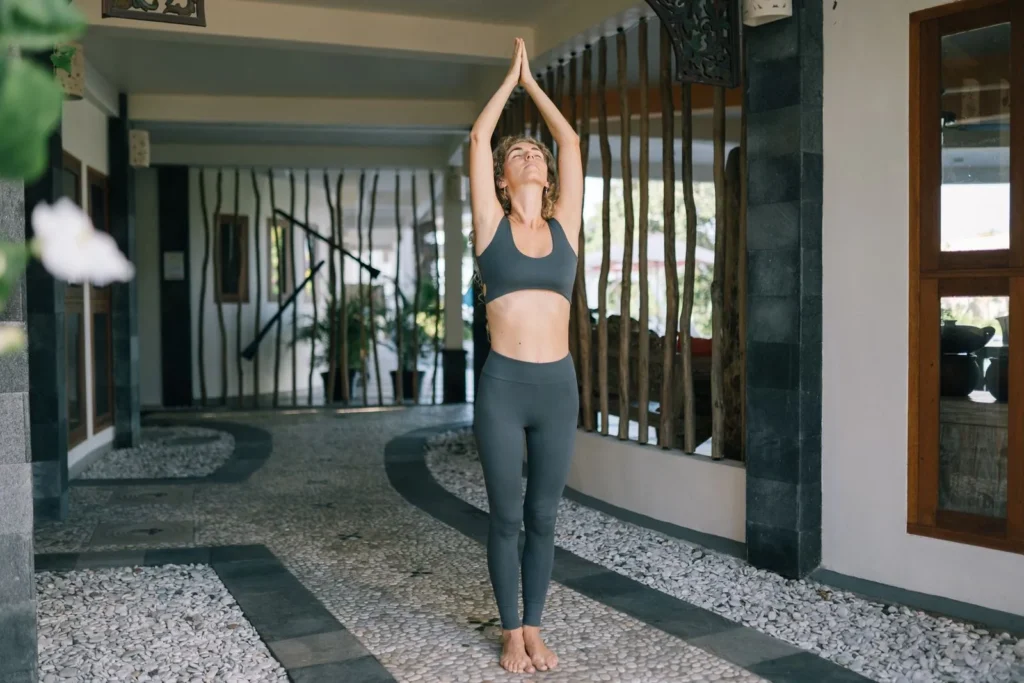
Tadasana, or Mountain Pose, looks like ordinary standing, yet most standing yoga postures borrow their alignment from it. This guide takes you through tadasana from the soles of your feet to the crown of your head, with cue tables, prop options, hold times, common mistakes and a plain note on who should take extra care. It is general practice information, not medical advice, and it makes no promises about height, posture or health outcomes.
What Is Tadasana and How Do You Align It From Feet to Crown?
Tadasana is a standing pose in which your feet are grounded, your legs are firm, your pelvis is neutral, your ribs are stacked over your hips and the crown of your head lifts. Hold it for about 30 to 60 seconds, or 5 to 10 slow breaths, breathing normally throughout.
The name is usually translated as Mountain Pose. Some teachers point out that “tada” can also mean palm tree, which fits the idea of standing tall and rooted. Either way, the aim is quiet, precise alignment rather than a dramatic shape. Use the table below as a checklist, working from the ground upwards.
| Body zone | Cue to use | Common slip | Quick fix |
|---|---|---|---|
| Feet | Spread the toes, press evenly through the big-toe mound, little-toe mound and heel | Weight sinks into the heels or outer edges | Rock gently forward and back, then settle in the middle |
| Ankles and shins | Stack the ankles under the hips; feet together or hip-width apart | Ankles roll inward | Lift the inner arches slightly without curling the toes |
| Knees and thighs | Firm the thighs and lift the kneecaps gently, knees soft | Knees snapped back (locked) | Bend the knees a little, then straighten to about 95 percent |
| Pelvis | Lengthen the tailbone toward the floor, hip bones level | Lower back over-arches, or the tailbone tucks hard | Find the midpoint between the two extremes |
| Ribs and belly | Draw the lower ribs softly in, gentle lift through the lower belly | Ribs flare forward | Exhale and let the front ribs soften toward the hips |
| Chest and shoulders | Broaden the collarbones; roll the shoulders back and down | Shoulders creep up to the ears | Lift them up as you inhale, drop them as you exhale |
| Neck and head | Chin level, back of the neck long, crown of the head lifting | Chin juts forward or tilts up | Lengthen the back of the neck, as if lifting the skull away from the shoulders |
Tadasana Steps: A 60-Second Walkthrough
These tadasana steps follow the same order as the table, so you can run through them in about a minute. Barefoot on a non-slip mat works best, and a mirror or side-on phone video helps you catch asymmetries.
- Arrive. Stand with your feet together or hip-width apart, whichever feels steadier. Spread your toes, then let them rest long on the floor.
- Ground. Feel the four corners of each foot, as in the table. Sway slightly until your weight feels centred.
- Wake the legs. Firm the thighs, lift the kneecaps a touch, keep the knees soft.
- Level the pelvis. Lengthen the tailbone down so the lower back is long, neither arched nor flattened.
- Stack the torso. Lift the breastbone gently, broaden the collarbones and let the shoulder blades slide down the back.
- Settle the arms and head. Arms hang by the sides, chin level, crown lifting.
- Breathe. Take 5 to 10 slow breaths. Each time you notice a slip, correct it by a few millimetres and carry on.
If you are new to the pose, start with three checkpoints only: even feet, a neutral pelvis and relaxed shoulders. Add the finer cues once those feel stable. A beginner-friendly overview of building a full routine is in our guide to yoga for beginners.
Tadasana Variations and Prop Modifications
You can change tadasana to make it easier, more challenging or simply different in purpose. A block, a wall, a belt or a chair each solves a specific problem. Choose one change at a time and keep the base alignment from the table above.
| Variation or prop | How to do it | Best for | Suggested hold |
|---|---|---|---|
| Wall at your back | Heels about a hand’s width from the wall; touch the back of the head, shoulder blades and hips to it | Learning what neutral alignment feels like | 5 to 8 breaths |
| Belt around the upper arms | Loop a belt just above the elbows, snug but not tight, and draw the shoulder blades toward each other | Rounded or forward-set shoulders | 5 to 8 breaths |
| Chair in front | Stand with fingertips resting on the back of a sturdy chair | Balance concerns, low confidence, tiredness | 30 to 60 seconds |
| Wider stance | Feet hip-width or slightly wider, toes forward | Pregnancy, stiff ankles, extra stability | 30 to 60 seconds |
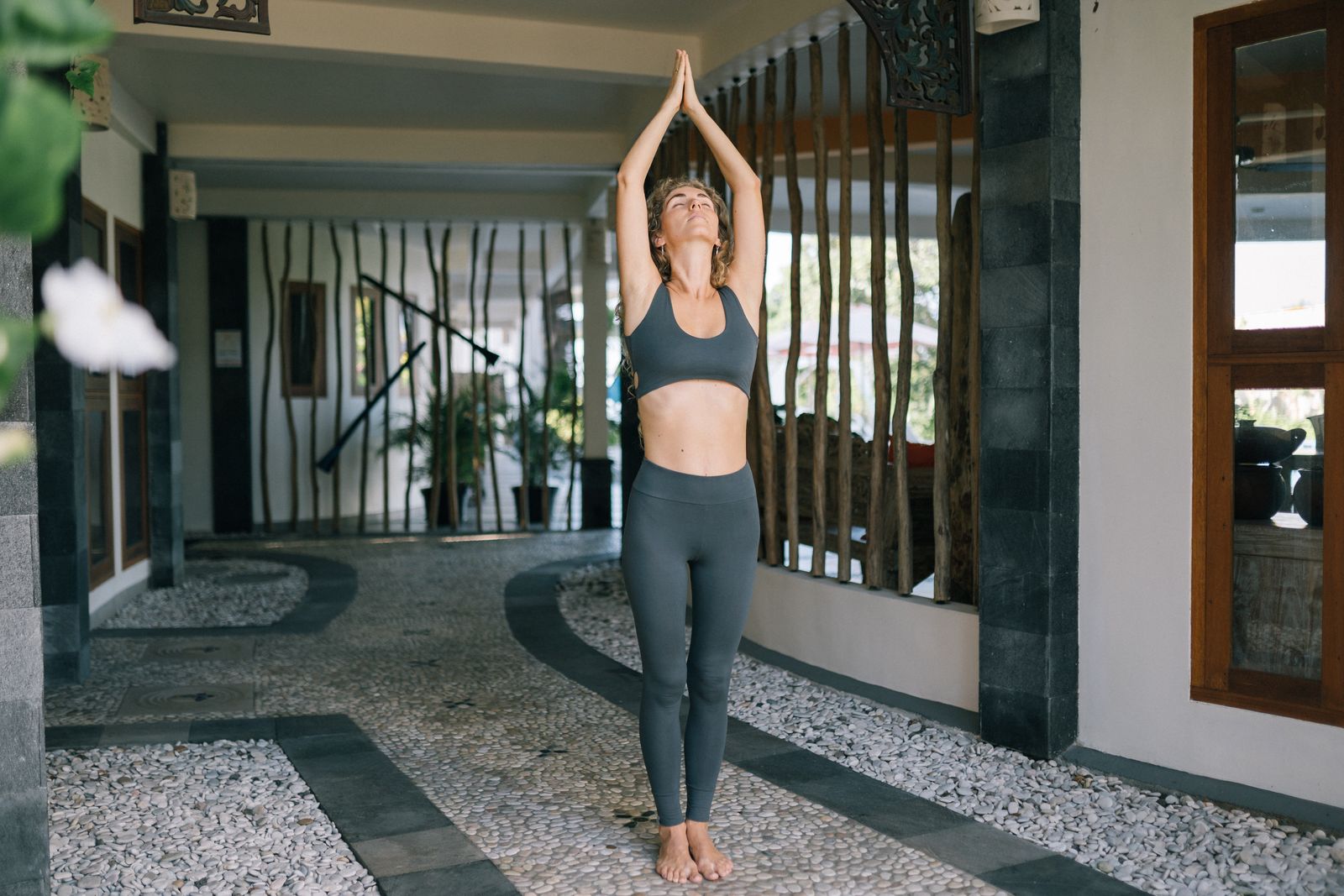
| Urdhva Hastasana (arms overhead) | Reach the arms up beside the ears, palms facing or touching, ribs still softly in | Side-body and shoulder stretch; Surya Namaskar practice | 3 to 5 breaths |
| Heels lifted | Rise slowly onto the balls of the feet and lower with control | Ankle and calf strength once the base pose is steady | 3 to 5 breaths |
The arms-overhead variation is the one you will meet most often in flowing practice, where you return to tadasana between folds and lunges. You can see how it fits into a full sequence in our guide to Surya Namaskar.
What Are the Benefits of Tadasana, Realistically?
Tadasana mainly builds awareness: how you distribute weight, where you hold tension and how you breathe while standing. It also asks the feet, legs, deep core and upper back to work gently and continuously. It is a skill-building posture, not a treatment, and results vary from person to person.
- Foot and leg engagement. Pressing evenly into the floor and lifting the kneecaps uses the muscles of the feet, ankles and thighs isometrically.
- Core and pelvic awareness. Keeping the pelvis neutral asks the deep abdominal muscles for a light, steady effort.
- Upper-back and shoulder habits. Drawing the shoulders back and down works the muscles between the shoulder blades and can reveal where you habitually round forward.
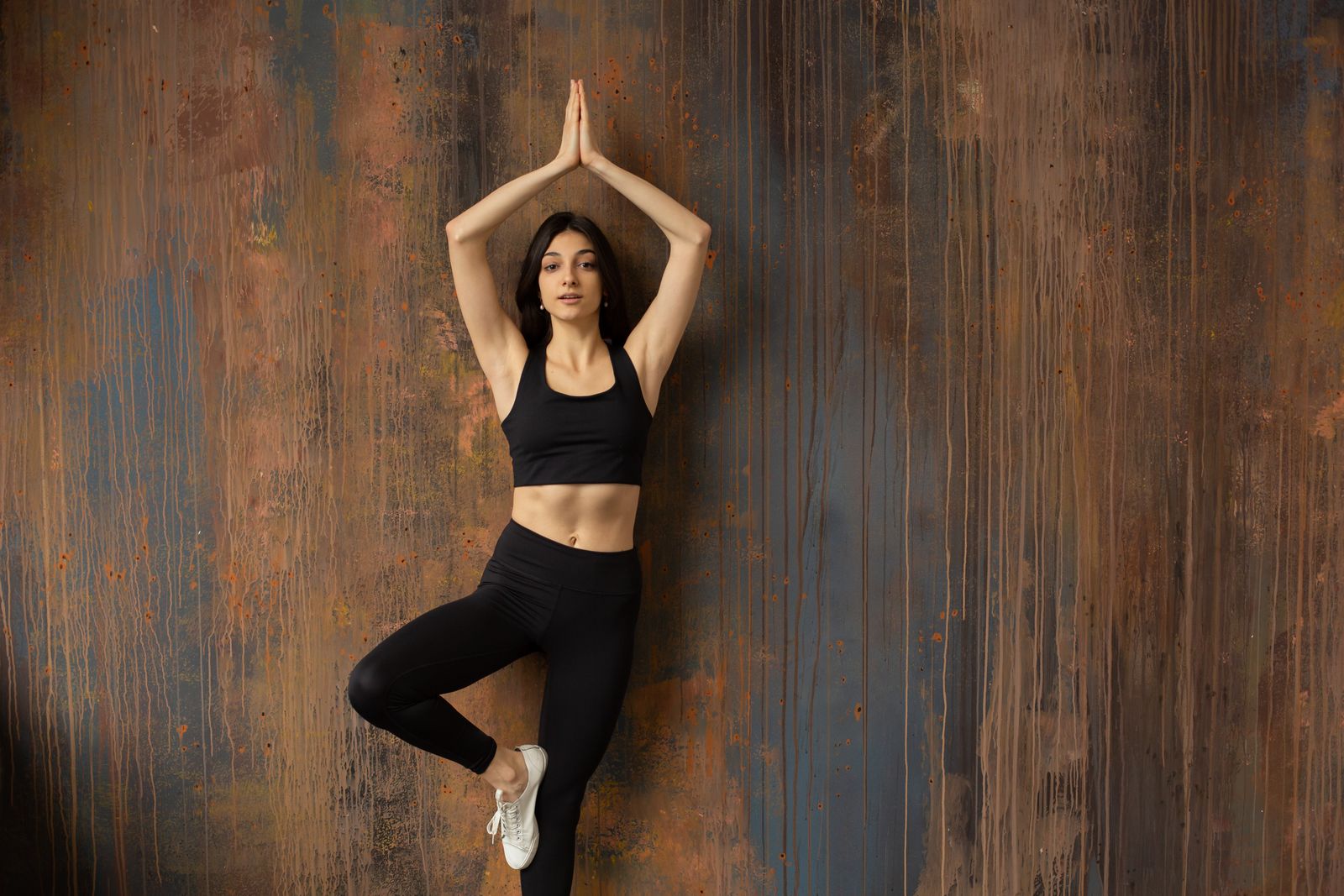
- A base for other poses. The same alignment shows up in Vrksasana, warrior poses and forward folds.
Does Tadasana Make You Taller or Fix Your Posture?
No. Tadasana cannot lengthen bones or add height once growth is complete, and it does not guarantee a permanent change in posture. What it can do is help you notice slouching and practise standing in a more upright, balanced way, so you may stand closer to your natural height on the day you practise.
That is a modest claim on purpose. Posture is shaped by daily habits, work set-up, strength and individual anatomy, so a one-minute pose cannot rewrite it alone. Carry the cues into how you sit and stand through the day. If you have persistent pain or a visible curve in the spine, speak to a doctor or physiotherapist rather than relying on yoga to correct it. For gentle sequences aimed at a stiff back, see yoga for back pain.
Common Tadasana Mistakes and How to Fix Them
Because tadasana looks effortless, it is easy to do carelessly. These are the errors teachers see most often, along with what to try instead.
- Locking the knees. This hands the work to the joints. Keep the knees soft and firm the thighs instead.
- Weight in the heels. Shift forward until you feel the big-toe and little-toe mounds press down as well.
- Over-arching the lower back. The belly pushes out and the ribs flare. Lengthen the tailbone down and soften the front ribs.
- Shoulders near the ears. Lift them on an inhale, then drop them on an exhale to find the lower position.
- Holding the breath. Concentrating on alignment often stops the breath. Keep the inhale and exhale smooth and unforced.
How Long Should You Hold Tadasana?
Most people hold tadasana for 30 to 60 seconds, or 5 to 10 slow breaths, when practising it on its own. In a flowing sequence you may stay for a single breath. For standing meditation, 2 to 3 minutes is common once you are comfortable.
| Situation | Hold time | Notes |
|---|---|---|
| Standalone practice | 30 to 60 seconds (5 to 10 breaths) | Run through the cue table once |
| Between flow poses | 1 to 3 breaths | Used as a reset, as in sun salutations |
| Arms-overhead variation | 3 to 5 breaths | Lower the arms if the shoulders tire |
| Standing meditation | 2 to 3 minutes | Only if you feel steady and comfortable |
Come out of the pose any time you feel lightheaded, numb, or pain in the joints. Shorter holds done regularly are better than a long hold that leaves you unsteady.
Who Should Be Careful With Tadasana? Safety, Pregnancy and When to See a Doctor
Tadasana is one of the gentlest poses, but standing still for a long time is not suitable for everyone. If you have low blood pressure, dizziness, vertigo, balance problems or a recent injury, shorten the hold, use a wall or chair, and check with your doctor first.
Here is how to adjust for specific situations.
- Low blood pressure. Standing for a long time can make blood pool in the legs and may leave you lightheaded. Keep holds short, avoid locking the knees, rise from the floor slowly and stay near a wall. If you feel faint, sit down at once.
- Dizziness or vertigo. Keep the eyes open with a soft, steady gaze on a fixed point, and skip eyes-closed and heels-lifted versions. Stay near a wall or chair, and stop if the room spins.
- Pregnancy. Many people find tadasana comfortable, but widen the stance for stability, keep the knees soft, avoid standing still for long stretches and keep a wall or chair within reach. Stop if you feel dizzy or breathless, and check with your doctor or midwife about what suits your stage of pregnancy.
- Knee, ankle, hip or back injuries. Use the chair or wall variation, keep the hold short and avoid anything that increases pain. Please see your doctor or a physiotherapist before holding standing poses if you are recovering from an injury or surgery.
See your doctor if you have fainting spells, ongoing dizziness, chest pain, unexplained numbness or an injury that is not settling. Yoga can sit alongside medical care, but it does not replace it, and you should not change any prescribed medication because of a yoga practice.
Where Tadasana Fits With Other Poses
Tadasana is the reference posture other poses grow from. Vrksasana (Tree Pose) lifts one foot to test the balance tadasana builds, and Vajrasana is a seated pose sharing the same tall, neutral spine. In hatha yoga it teaches alignment; in vinyasa it is the anchor between movements. See types of yoga to compare styles, and the yoga poses guide for the wider list.
Small errors in the feet or pelvis are hard to spot yourself. Our live online yoga classes include alignment feedback, and 1-on-1 personal training can build a plan around an injury or a specific goal. A wall near your mat also gives instant feedback at home.
Frequently Asked Questions About Tadasana
What does tadasana mean in English?
Tadasana is usually translated as Mountain Pose. “Asana” means pose or seat, and “tada” is commonly rendered as mountain, though some teachers note it can also mean palm tree. Both images describe the same quality: standing tall, steady and rooted while the crown of the head reaches upward.
Is tadasana the same as samasthiti?
Many teachers use the two names interchangeably. Where a distinction is made, samasthiti means “equal standing” and describes a calm, balanced stance with the arms at the sides, while tadasana emphasises the active lift through the legs, spine and crown. In practice the feet, pelvis and shoulders are set up in much the same way.
Can tadasana increase height?
No. Tadasana does not lengthen bones or promise extra height. It can help you notice slouching and stand more upright, which may make you look closer to your true height. For children and teenagers, steady movement habits matter, but growth is driven mainly by genetics, nutrition and sleep.
Is tadasana safe during pregnancy?
Many pregnant people find it comfortable, especially with a slightly wider stance, soft knees and a wall or chair nearby. Avoid standing still for long stretches, stop if you feel dizzy or breathless, and check with your doctor or midwife about what is right for your stage of pregnancy.
How many times a day can I practise tadasana?
There is no fixed rule. One to two minutes, two or three times a day, is a reasonable habit for most healthy adults, for example at the start and end of a yoga session and once during a work break. Shorten the holds if you have low blood pressure, dizziness or an injury.
Next step: book a live online yoga class with Fitstrot and have a teacher check your tadasana from feet to crown.


