

Yoga for beginners works best when it is small, slow and repeated: about 15 minutes, three or four days a week, using a handful of foundation poses and easy breathing. You do not need flexibility, special clothes or a studio. You need a mat, a quiet corner and a plan for the first month. This guide gives you that plan, plus the gear, style choice, mistakes to avoid and honest expectations.
How do you start yoga for beginners with no experience?
Start with 10 to 15 minutes, three to four days a week, in a gentle hatha-style sequence. Hold each pose for 3 to 5 slow breaths, breathe through the nose, and stop at mild stretch, never pain. Repeat the same short routine for two weeks so your body learns the transitions before you add anything new.
Most people quit because they begin with a 60-minute class, copy advanced poses from social media and wake up sore and discouraged. Think of the first month as learning a new language: a few words, repeated daily, beat a long lesson once a week. Three rules cover almost everything:
- Short and regular beats long and rare. Four 15-minute sessions teach your body more than one 60-minute session.
- Breath sets the pace. If you cannot breathe smoothly in a pose, you are going too deep or too fast.
- Same routine, small upgrades. Change only one thing per week, such as holding a pose two breaths longer.
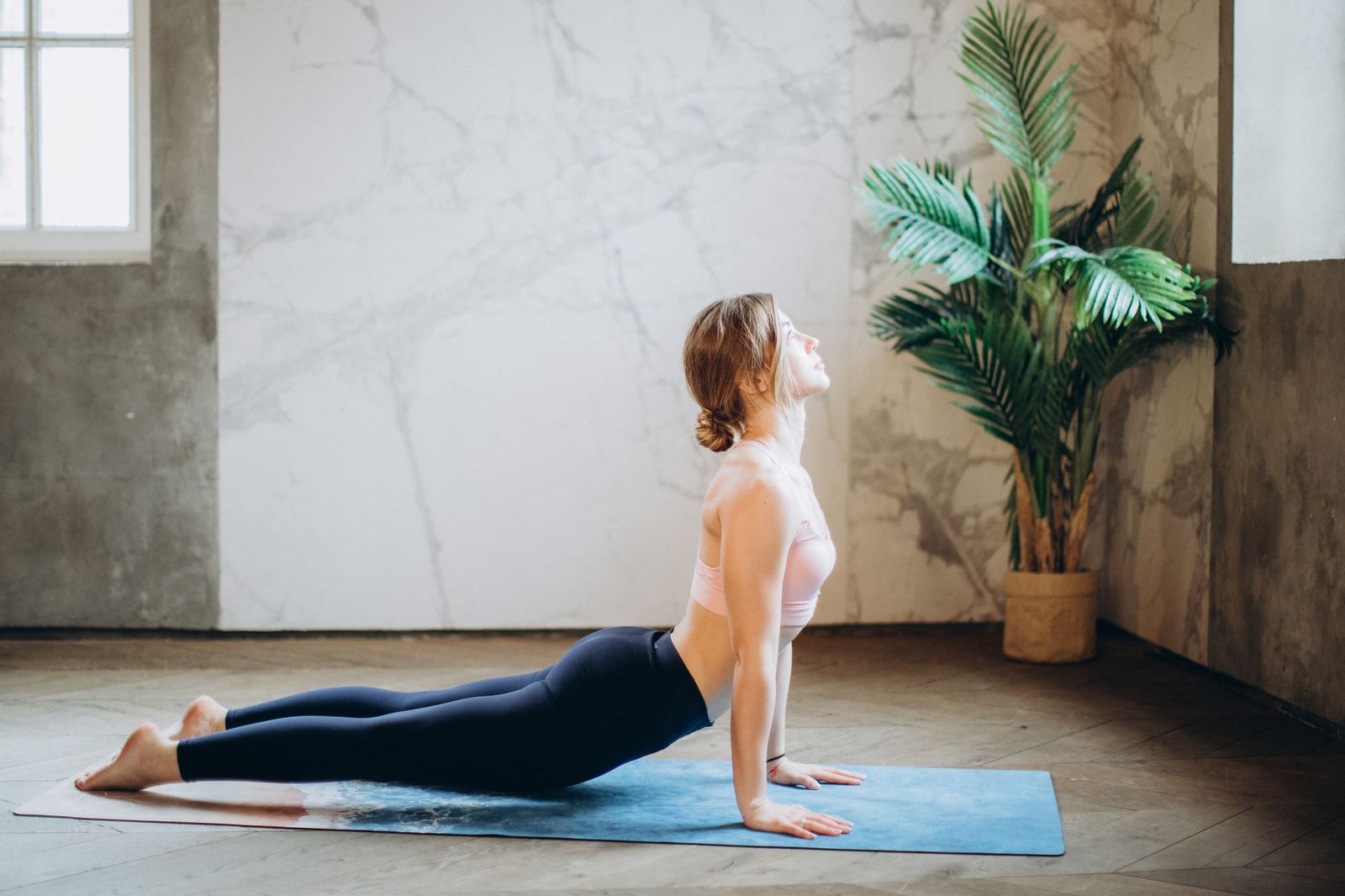
Which yoga style is best for a complete beginner?
Hatha yoga for beginners is the best starting style for most people. Classes move slowly, hold poses for several breaths and explain alignment, so you can feel each pose before moving on. Iyengar is also excellent if you want detailed alignment help. Faster styles such as vinyasa and power yoga are easier to enjoy once the basic poses feel familiar.
Names on class timetables can be confusing, so here is how the common styles compare for someone in week one.
| Style | Pace | What it feels like | Beginner verdict |
|---|---|---|---|
| Hatha | Slow | Poses held 3-8 breaths, plenty of instruction | Best first choice |
| Iyengar | Slow | Precise alignment, often uses blocks and straps | Very good, especially if you are stiff |
| Restorative | Very slow | Supported rest, holds of several minutes | Great once or twice a week |
| Yin | Very slow | Deep floor stretches held 2-5 minutes | Add after the first month |
| Vinyasa | Medium to fast | Poses linked by breath, flowing | Try after 4-6 weeks |
| Power yoga | Fast | Strength-heavy, sweaty, many chaturanga-style transitions | Wait until you have a base |
If you are unsure, pick hatha and judge it after three sessions. A good teacher lets you modify, tells you what to feel and never pushes you into pain.
What do you really need before your first session?
You need a non-slip mat about 4 to 6 mm thick, clothes you can stretch in and a clear floor space roughly 2 m by 1 m. Everything else is optional and can be improvised at home: a folded dupatta or cotton belt works as a strap, two thick books as blocks and a folded blanket under the knees.
Practise on an empty or light stomach. Leave about 2 to 3 hours after a full meal, or about an hour after a banana or a small handful of nuts. Keep water nearby, but sip rather than gulp between poses. Switch off notifications, because even 15 distracted minutes are less useful than 10 focused ones. If you prefer to practise at home with a guide, our post on yoga for beginners at home covers space and setup in more detail.
What should your first four weeks look like?
A sensible first month builds from 10-minute sessions three times a week to 20-minute sessions four times a week. Week one is about learning to breathe and position your body, not about stretching deeply. Add a few minutes and one or two new poses each week, and take at least two full rest days.
| Week | Sessions | Minutes each | Focus | Hold per pose |
|---|---|---|---|---|
| 1 | 3 | 10 | Breathing, Mountain, Cat-Cow, Child’s Pose | 3 breaths |
| 2 | 3 | 15 | Add Downward Dog and standing forward fold | 3-5 breaths |
| 3 | 4 | 15-20 | Add Warrior II, Bridge and a gentle seated twist | 5 breaths |
| 4 | 4 | 20 | Add Triangle, Tree and a longer final rest | 5-8 breaths |
Do not worry if a week does not go to plan. If you miss two days, restart where you left off. If a pose still feels unstable, stay with the earlier week. Nobody is grading you.
How do you do a 15 minute yoga for beginners routine step by step?
A 15 minute yoga for beginners routine moves from floor to standing and back to the floor: two minutes of breathing, warm-up on all fours, Downward Dog, a standing sequence, Bridge and a final rest of 2 to 3 minutes. For 10 minute yoga for beginners, skip the standing sequence and shorten each hold.
Follow this order the same way each time. The sequence is also an easy form of morning yoga for beginners, because it starts gently and wakes up the spine before asking your legs to work.
| Step | Pose | Time | Form cue |
|---|---|---|---|
| 1 | Easy seated breathing | 2 min | Sit tall, relax the shoulders, breathe in and out through the nose |
| 2 | Cat-Cow | 1 min | Move with the breath, arch on the inhale, round on the exhale |
| 3 | Child’s Pose | 1 min | Knees wide, hips toward heels, forehead down |
| 4 | Downward Dog | 1 min | Knees can stay bent, press the floor away, lengthen the spine |
| 5 | Standing forward fold | 1 min | Bend the knees, let the head hang, no bouncing |
| 6 | Mountain, then Warrior II (each side) | 3 min | Front knee over the ankle, shoulders stacked over the hips |
| 7 | Bridge | 1 min | Feet hip-width, press through the heels, keep the neck relaxed |
| 8 | Knees-to-chest, then Savasana | 3 min | Lie flat, relax the jaw, let the breath return to normal |
These are classic beginner yoga poses, and they are explained in more detail in our guide to basic yoga poses for beginners, which is a good companion if a cue above is unclear. Savasana is not optional; it is where the body absorbs the work, so do not skip it when time is short.
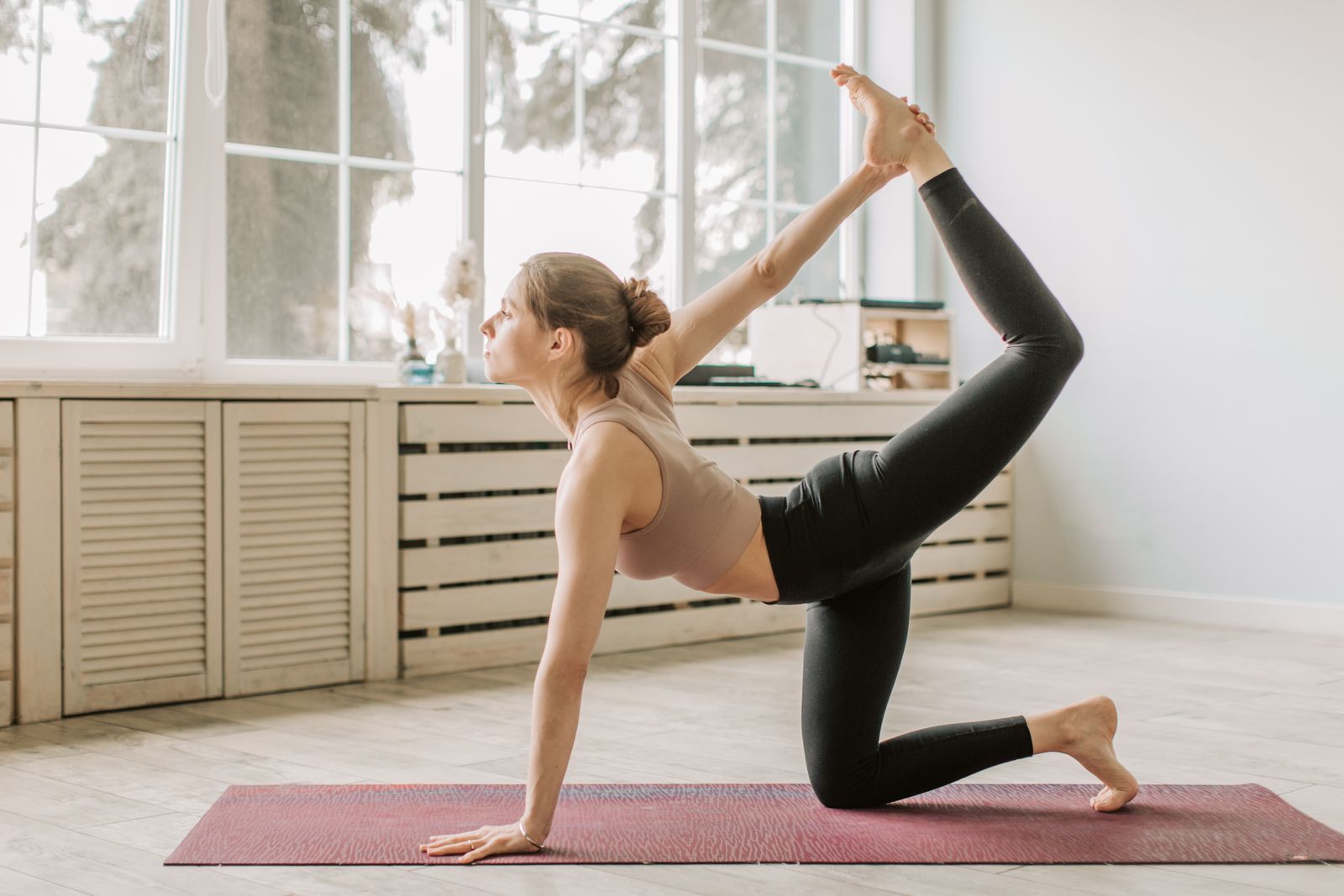
Myth check: do you have to be flexible to start yoga?
No. Flexibility is something yoga builds, not a requirement. If you cannot touch your toes, you can bend your knees in a forward fold, use blocks or a strap, and still get the full benefit. Most beginners are stiff in the hamstrings, hips and shoulders, and that is exactly who easy yoga for beginners is designed for.
A few related myths are worth clearing up:
- “Yoga is only stretching.” Holding Warrior II or Bridge works your legs, glutes and core, and balance poses train stability.
- “If it does not hurt, it is not working.” Sharp, pinching or joint pain means back off. Mild, even stretching is the target.
- “Yoga will melt fat quickly.” Gentle beginner yoga burns modest calories. It supports a healthy routine, but weight change depends mainly on food and overall activity.
- “You must master the full pose.” Props and modifications are standard practice, not cheating.
Why does it hurt, and how do you fix common beginner mistakes?
Most beginner discomfort comes from five fixable errors: locking joints, holding the breath, forcing depth, practising on a full stomach and skipping the warm-up. Slow down, bend your knees, shorten the hold and breathe steadily. Pain in a joint, or tingling and numbness, means exit the pose gently.
- Wrists ache in Downward Dog: usually weight dumped into the hands. Fix: spread the fingers, press through the knuckles, bend the knees and send hips back.
- Lower back rounds in forward folds: usually tight hamstrings. Fix: bend the knees generously, hinge from the hips, use a block or chair.
- Knee pain in seated poses: usually forcing the legs into a cross-legged shape. Fix: sit on a folded blanket, keep the ankles loose, skip any twisting at the knee.
- Dizziness on coming up: usually standing too fast, held breath. Fix: rise slowly, keep breathing, pause with hands on hips.
- Cramps in the feet or calves: usually unaccustomed stretch, low hydration. Fix: release the pose, flex and point the toes, sip water.
One more habit worth building: breathe in and out through the nose at a calm pace. Your breath is a built-in speedometer. If it becomes fast or ragged, the pose is too intense for today.
Who should adapt yoga or check with a doctor first?
Most healthy adults can begin beginner yoga safely, but some situations need medical advice and a qualified teacher first. This includes pregnancy, recent surgery, uncontrolled high blood pressure, glaucoma, a slipped disc or any condition that makes you dizzy. A doctor can tell you which poses to avoid, and a teacher can adapt the rest.
- Desk workers: focus on Cat-Cow, Child’s Pose and gentle shoulder opening, and avoid forcing deep hip stretches after long sitting.
- Adults over 50: use a chair or wall for balance, and favour slow, supported holds.
- Pregnancy: join a prenatal class and avoid deep twists, lying flat on the back for long periods and strong core work.
- Existing back, knee or neck issues: get clearance from a doctor or physiotherapist, then work with an instructor who can adapt each pose.
If you want a person to watch your form, a live class or a trainer is more useful than any article. Our online yoga classes let a teacher correct your alignment from the start, and 1-on-1 personal training suits you if you have injuries or specific goals.
How long until you notice a difference?
Expect to feel calmer and looser within one to two weeks of regular practice, and to see easier poses and better balance within 4 to 8 weeks. Strength and flexibility keep improving over months. Results vary by age, sleep, stress and consistency, so measure progress by how poses feel, not by photos or the scale.
Realistic early signs are falling asleep a little easier, a less stiff back in the morning and holding Downward Dog without shaking. If your main goal is fat loss, treat yoga as one helpful piece alongside food choices and walking, not a stand-alone fix.
Frequently asked questions
How many days a week should a beginner do yoga?
Three to four days a week is a good target. Start with three 10 to 15 minute sessions and add a fourth after two weeks. Keep at least two rest days, and use one of them for a walk or gentle stretching if you like.
Can I learn yoga for beginners at home without a teacher?
Yes, for simple poses. Use a structured routine, record yourself from the side to check alignment and keep to easy poses for the first month. If you have pain, an injury or a health condition, learn the basics with a qualified teacher first.
What is the best time of day to practise?
The best time is the one you will keep. Mornings suit gentle mobility, evenings suit unwinding. Wait 2 to 3 hours after a full meal. If mornings feel stiff, warm up with Cat-Cow before attempting forward folds or deep stretches.
Is 10 minutes of yoga a day enough for a beginner?
Yes. Ten minutes done five or six days a week builds the habit, breathing control and basic mobility, which is all a beginner needs. Increase to 15 or 20 minutes once the routine feels easy, rather than rushing to longer sessions.
Do I need to be able to touch my toes?
No. Almost nobody can at the start. Bend your knees, use a strap or block and aim for a mild stretch in the back of the legs. Flexibility is a result of regular practice, not a requirement for it.
Next step: pick one 15-minute routine from the table above, put it in your calendar for the next four days, and if you want a teacher to check your form, book a beginner session through Fitstrot online yoga classes.


