
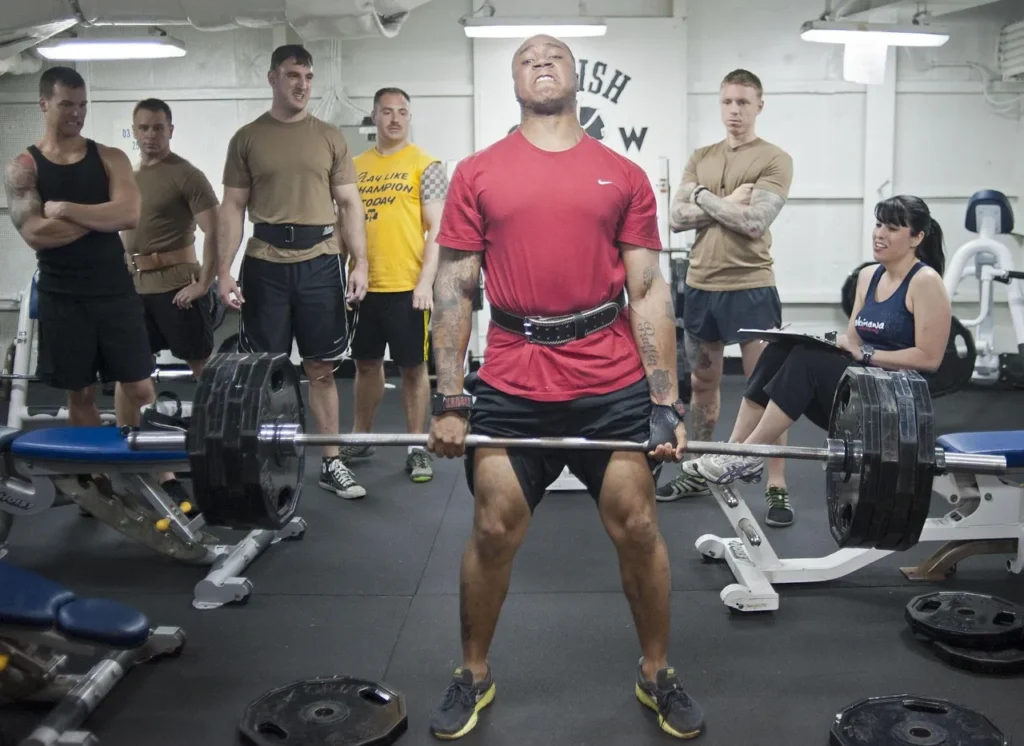
A deadlift workout is the simplest strength session in the gym: pick a loaded bar up off the floor, stand tall, put it down. It is also the lift people fear most, usually because of back pain stories. This guide compares five deadlift variations, walks through the setup step by step, gives an 8-week beginner progression with sets, reps, rest and form cues, and explains what the research says about deadlifts and your lower back.
What muscles does a deadlift workout actually train?
A deadlift workout trains the whole back of your body at once: the spinal erectors along your spine, the glutes, the hamstrings, the quadriceps at the start of the pull, plus your grip, upper back and trunk muscles that keep the bar close. A 2020 systematic review found the erector spinae and quadriceps showed the highest activation across deadlift variants.
That review, published in PLOS One in 2020 (Martín-Fuentes and colleagues), pooled surface-EMG studies on the deadlift and its variants. Two findings shape the plans below:
- Across deadlift exercises, the erector spinae and quadriceps were more active than the gluteus maximus and biceps femoris (a hamstring).
- The Romanian deadlift was the exception, with lower erector spinae activity than hamstring activity, so it shifts work towards the back of the thighs. Within the hamstrings, the inner semitendinosus was generally slightly more active than the biceps femoris.
Deadlift for back or for legs? Both, but not equally
Is the deadlift for back day or leg day? It is a hip hinge, so the hips and thighs do the lifting while the back muscles work isometrically, holding your spine in position rather than bending it. For hamstring and glute size, lean on the Romanian deadlift and add a dedicated hip thrust workout.
Deadlift variations compared: which one should you do?
There is no single “correct” deadlift. Each variation changes where the load sits and which muscles take the biggest share. Use the table as a quick reference; the sections below give the evidence.
| Variation | Start position | Main muscles | Lower-back demand | Best for | Key form cue |
|---|---|---|---|---|---|
| Conventional (barbell) | Feet hip-width, hands just outside legs, bar on floor | Glutes, hamstrings, spinal erectors, quads, upper back, grip | High | Overall strength, powerlifting | Push the floor away; bar drags up the shins |
| Sumo | Wide stance, toes out, hands inside knees | Quads, adductors, glutes; less spinal flexion moment | Moderate | Long torso, short arms, hip-mobile lifters | Knees track over toes; chest up before the pull |
| Romanian (RDL) | Start standing, bar lowered only to mid-shin | Hamstrings (esp. semitendinosus), glutes | Moderate | Hamstring size, sprinters, glute focus | Hips travel back; soft, fixed knee bend |
| Trap bar (hex bar) | Stand inside the bar, neutral grip at sides | Quads, glutes, hamstrings; more knee involvement | Lower than conventional | Beginners, athletes, anyone with a back history | Sit slightly deeper; drive straight up |
| Single-leg (dumbbell or kettlebell) | One foot planted, other leg swings back | Glute of the standing leg, hamstrings, hip stabilisers | Low (light loads) | Balance, runners, fixing left-right gaps | Hips stay square to the floor |
| Kettlebell / dumbbell | Weight between or beside feet | Glutes, hamstrings, quads | Low to moderate | Home training, learning the hinge | Hinge first, then bend the knees |
Romanian deadlift vs deadlift: what actually changes
The biggest difference in the Romanian deadlift vs deadlift comparison is where each rep starts. A conventional deadlift starts from a dead stop on the floor with the hips fairly low. An RDL starts standing, and you lower the bar only as far as your hamstrings allow, usually to mid-shin, with the knees softly bent. Because the hips move back rather than down, the hamstrings are stretched under load, which matches the higher hamstring activity the 2020 review found. Use the conventional lift for total pulling strength and the RDL as the accessory for hamstring and glute size.

Trap bar deadlift: the easiest version to learn
The trap bar deadlift (also called the hex bar deadlift) puts you inside the weight instead of behind it, so the load sits in line with your hips rather than in front of your shins. A 2011 study of 19 male powerlifters in the Journal of Strength and Conditioning Research (Swinton et al.) found the hex bar produced lower peak moments at the lumbar spine, hip and ankle, a higher moment at the knee, and significantly greater peak force, velocity and power at submaximal loads. The lifters’ one-rep max averaged 265 kg on the hex bar versus 245 kg on the straight bar.
That makes the trap bar the sensible first deadlift for most beginners and for anyone returning from back pain. The trade-off: more quad work, less lower-back work, so it is not a perfect substitute for powerlifters.

Conventional deadlift vs sumo: pick by body type, not by ego
The conventional deadlift vs sumo debate gets heated online, but the research is calm. A 2002 EMG study in Medicine & Science in Sports & Exercise (Escamilla et al.) had 13 collegiate football players lift at a 12-rep-max load in both styles. The sumo deadlift produced significantly greater activity in the vastus medialis, vastus lateralis (quadriceps) and tibialis anterior; the conventional style produced greater medial gastrocnemius (calf) activity. The authors’ conclusion: choose either style depending on which muscles matter most to you.
In practice, lifters with a long torso or mobile hips often prefer sumo. Try each style for two weeks at a moderate weight and keep the one where your back stays flatter at the start.
Single-leg deadlift: small weight, big balance demand
The single-leg deadlift uses a light dumbbell or kettlebell, so it is kind to the spine but hard on balance, and it exposes left-right gaps a barbell hides. Start with bodyweight, 3 sets of 8 per leg.
How to deadlift: a six-step walkthrough
These steps describe the conventional barbell deadlift; the hinge logic applies to every variation. Warm up first: our back workout warm-up covers the hip and spine mobility drills that make the setup easier.
- Bar over mid-foot. Feet hip-width apart, the bar over the middle of your foot (roughly over the laces).
- Grip without moving the bar. Hinge and bend your knees until your hands reach the bar just outside your legs. Use a double overhand grip until the weight slips, then mixed or hook grip.
- Shins to the bar. Bend the knees until your shins lightly touch the bar. Move yourself to the bar, not the bar to you.
- Set the back and brace. Pull your chest up, imagine squeezing oranges in your armpits (this engages the lats), take a big breath into your belly and tighten your trunk as if you are about to be poked in the stomach.
- Push the floor away. Drive through your whole foot so hips and shoulders rise together; if the hips shoot up first, the weight is too heavy. Keep the bar touching your legs.
- Stand tall, then reverse. Finish with glutes squeezed, without leaning back. Lower by pushing the hips back first, bending the knees once the bar passes them.
Do you need a belt? Not to learn. The Escamilla study found that wearing a lifting belt increased rectus abdominis activity and decreased external oblique activity, so it changes how you brace rather than doing the work for you. Learn to brace without one first.
Myth check: “Deadlifts are bad for your back”
Deadlifts are not inherently bad for your back. A 2017 systematic review in the British Journal of Sports Medicine found powerlifting, which includes maximal deadlifts, causes about 1.0 to 4.4 injuries per 1,000 training hours, similar to other non-contact strength sports and low compared with contact sports. Risk comes mostly from load jumps, fatigue and poor setup.
That review (Aasa et al., BJSM 2017) also found the spine, shoulder and knee were the most common injury sites, so the back is not immune. But a well-programmed deadlift is also one way people make it more resilient.
The rehabilitation evidence supports that second point, with a caveat. In a 2015 study in the Journal of Strength and Conditioning Research (Berglund et al.), 35 people with mechanical low back pain did 8 weeks of deadlift training supervised by a physiotherapist with powerlifting experience. The people who benefited most were those who started with less disability, lower pain intensity and better back-extensor endurance (measured by the Biering-Sørensen hold). Deadlifts can help some people with back pain, but only once pain is manageable, and ideally under supervision.
If you currently have back pain, see a doctor or physiotherapist before loading a barbell.
Beginner deadlift workout: an 8-week progression
This beginner deadlift workout plan follows the American College of Sports Medicine’s 2009 position stand on resistance training progression, which recommends that novices train 2 to 3 days a week with loads they can lift for 8 to 12 reps, and add 2 to 10 percent load once they can do one or two reps more than the target. For deadlifts, that usually means 2.5 to 5 kg a week.
| Week | Main lift | Sets x reps | Rest | Load guide | Form cue to practise |
|---|---|---|---|---|---|
| 1 | Kettlebell or dumbbell deadlift | 3 x 10 | 90 s | 12 to 16 kg (women), 16 to 24 kg (men); 3 reps in reserve | Hips back first, knees second |
| 2 | Kettlebell deadlift + bodyweight single-leg RDL | 3 x 10, then 2 x 8 per leg | 90 s | Add 4 kg if all reps felt easy | Neutral neck; eyes on the floor 2 m ahead |
| 3 | Trap bar deadlift | 3 x 8 | 2 min | Empty hex bar (often 20 to 25 kg) plus light plates | Shoulders over or slightly ahead of the handles |
| 4 | Trap bar deadlift | 4 x 8 | 2 min | +2.5 to 5 kg per session if form holds | Brace before every rep, exhale at the top |
| 5 | Conventional barbell deadlift (from floor) | 3 x 6 | 2 to 3 min | Start around 60 to 70% of your trap bar weight | Bar over mid-foot; shins touch bar |
| 6 | Conventional deadlift + Romanian deadlift | 3 x 6, then 2 x 10 RDL | 2 to 3 min / 90 s | +2.5 to 5 kg on the deadlift | Bar stays in contact with legs |
| 7 | Conventional deadlift + Romanian deadlift | 4 x 5, then 3 x 8 RDL | 3 min / 90 s | Heaviest set leaves 2 clean reps in reserve | Hips and shoulders rise together |
| 8 | Deload, then re-test | 2 x 5 at 80% of week 7 | 2 min | Film one set from the side | Check: flat back, no hip shoot, no lean-back |
Before working sets, ramp up: empty bar x 8, 50% x 5, 70% x 3.
Deadlift reps and sets by goal
For strength, most lifters do 3 to 5 sets of 1 to 6 reps with 3 to 5 minutes’ rest; for muscle size, 3 to 4 sets of 6 to 12 reps with 1 to 2 minutes’ rest. These ranges come from ACSM’s 2009 resistance-training position stand. Beginners should stay at 8 to 12 reps for the first two to three months.
| Goal | Sets | Reps | Load | Rest between sets | Deadlift days per week | Form cue at this load |
|---|---|---|---|---|---|---|
| Learning / novice | 2 to 3 | 8 to 12 | 8 to 12 rep max, stop 2 to 3 reps short | 90 s to 2 min | 2 | Same setup every single rep |
| Muscle size (hypertrophy) | 3 to 4 | 6 to 12 | 6 to 12 rep max | 1 to 2 min (longer for heavy pulls) | 1 to 2 (one conventional, one RDL) | Control the lowering for 2 to 3 seconds |
| Maximal strength | 3 to 5 | 1 to 6 | 1 to 6 rep max (about 80 to 95% of 1RM) | 3 to 5 min | 1 to 2 | Full reset and brace before each rep |
| Power (athletes) | 3 to 5 | 2 to 5 | Up to 60% of 1RM, moved fast | 3 to 5 min | 1 to 2 | Stand up explosively, lower under control |
| Muscular endurance | 2 to 3 | 15+ | 40 to 60% of 1RM | Under 90 s | 1 to 2 | Stop the set when your back position changes |
Where you place the deadlift in your week matters as much as the numbers. Put it first in the session; ACSM recommends multi-joint lifts before single-joint ones. In a push pull legs workout, it opens pull day or leg day, not both. Our guide on how many sets per workout explains how to budget weekly volume around it.
Dumbbell deadlift workout for home
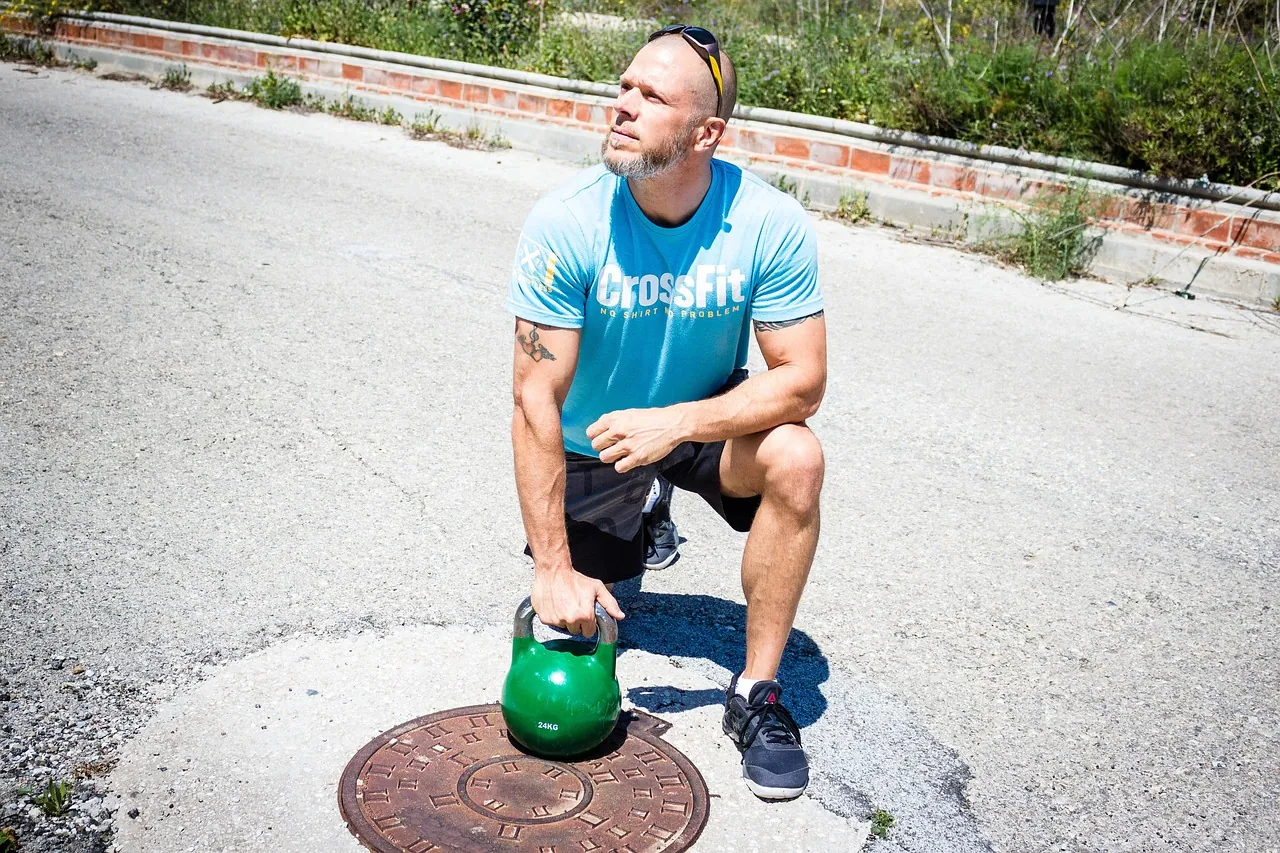
At home, a dumbbell deadlift workout covers most of what a barbell does at lighter loads. With adjustable dumbbells or one kettlebell, rotate these four moves:
- Dumbbell deadlift: 3 x 10 to 12, lowering to mid-shin.
- Dumbbell Romanian deadlift: 3 x 10, knees soft, down to a strong hamstring stretch.
- Dumbbell sumo deadlift: 3 x 12 with one heavy dumbbell between the feet.
- Single-leg RDL: 3 x 8 per leg with one dumbbell in the opposite hand to the standing leg.
When 12 reps with your heaviest dumbbells feels easy, slow the lowering to 4 seconds or add a 2-second pause at mid-shin before buying more weight.
Lower back ache after deadlift: troubleshooting
Mild, symmetrical tightness in the lower back muscles for 24 to 72 hours after a deadlift workout is usually normal muscle soreness. Sharp pain, pain that shoots down a leg, numbness, or pain that is not improving after a few weeks is not normal and should be checked by a doctor or physiotherapist.
The NHS back pain guidance notes that most back pain improves within a few weeks and advises staying active rather than resting in bed. It lists red flags that need urgent help: numbness or tingling in both legs, loss of sensation around the genitals or bottom, and changes in bladder or bowel control. Do not train through any of these.
| What you feel | Likely cause | Fix for next session |
|---|---|---|
| Dull ache in both sides of the lower back next day | Normal soreness from new volume | Keep sets the same for a week; walk and move normally |
| Lower back works harder than glutes and hamstrings | Hips too high at the start; bar drifting forward | Lower weight, bring bar back over mid-foot, keep shins against the bar |
| Back rounds on the last reps of a set | Load or reps too high; bracing fades with fatigue | Cut 2 reps per set, rest longer, reset the brace each rep |
| Pinch at the top of the lift | Leaning back and over-arching at lockout | Finish by squeezing glutes; ribs stay down |
| Pain on one side only, or it gets worse each session | Possible strain or asymmetry | Stop deadlifting; get it assessed before loading again |
| Pain spreading into the buttock or leg, tingling or numbness | Possible nerve irritation | See a doctor; do not self-treat with more lifting |
Deadlift benefits: what the evidence supports
The most defensible deadlift benefits are practical. It is one of the few single exercises that loads the legs, hips, back and grip together, which helps you meet the CDC adult guideline of muscle-strengthening activity on 2 or more days a week that works all major muscle groups. That matters because the WHO estimates that 31% of adults worldwide did not meet recommended physical-activity levels in 2022, and desk workers in Indian cities are hardly the exception.
The deadlift trains the hinge you use to lift a bucket of water or a gas cylinder, and builds hamstrings, glutes and back muscle with enough weekly volume. It does not “burn belly fat” on its own; treat it as a strength builder, not a shortcut.
Who should adjust the deadlift, and how
Women
The deadlift works the same way for women as for men, and the plan above applies unchanged. During pregnancy, check with your obstetrician before continuing, and avoid heavy breath-holding.
People over 40 or returning after a long break
Start with the trap bar or kettlebell for at least four weeks, use the ACSM novice range of 8 to 12 reps, and add weight in 2.5 kg steps.
Anyone with a history of back pain
Get clearance first. Build back-extensor endurance with back extensions and bird-dogs, then introduce the trap bar deadlift under supervision.
Deadlift workout FAQs
How many times a week should I do a deadlift workout?
Once or twice a week is enough for most people. Beginners can do two short sessions; intermediate lifters usually do one heavy conventional session and one lighter Romanian deadlift session. Deadlifting heavy three or more times a week makes recovery difficult for the lower back.
What is a good starting deadlift weight for a beginner?
Start with a weight you can lift for 10 clean reps with 2 to 3 reps left in reserve. For many beginners that is a 12 to 24 kg kettlebell or an empty 20 kg barbell with light plates. Add 2.5 to 5 kg per week only while your form stays the same.
Is the Romanian deadlift better than the regular deadlift?
Neither is better; they do different jobs. The regular deadlift builds overall pulling strength from the floor, while the Romanian deadlift puts more work on the hamstrings relative to the lower back. Most programmes use both.
Is the trap bar deadlift safer for the lower back?
It places less load on the lower back. A 2011 study of 19 powerlifters found the hex bar produced lower peak moments at the lumbar spine and hip than a straight bar, with more work at the knee. That makes it a good first variation, although no lift is risk-free.
Is it normal to feel lower back ache after a deadlift?
Mild soreness on both sides of the lower back for a day or two is common after new training. Sharp pain, one-sided pain that worsens, pain spreading down a leg, or numbness is not normal; stop deadlifting and get assessed.
Can I do a deadlift workout at home without a barbell?
Yes. Dumbbell deadlifts, dumbbell Romanian deadlifts, sumo deadlifts with one dumbbell and single-leg RDLs cover the same hinge pattern. Slow the lowering to keep light weights challenging.
Want someone to check your setup? A Fitstrot coach can watch your deadlift live on video, fix your hip position and build your 8-week progression around your equipment in 1-on-1 personal training. Book a session and film your first working set together.


