
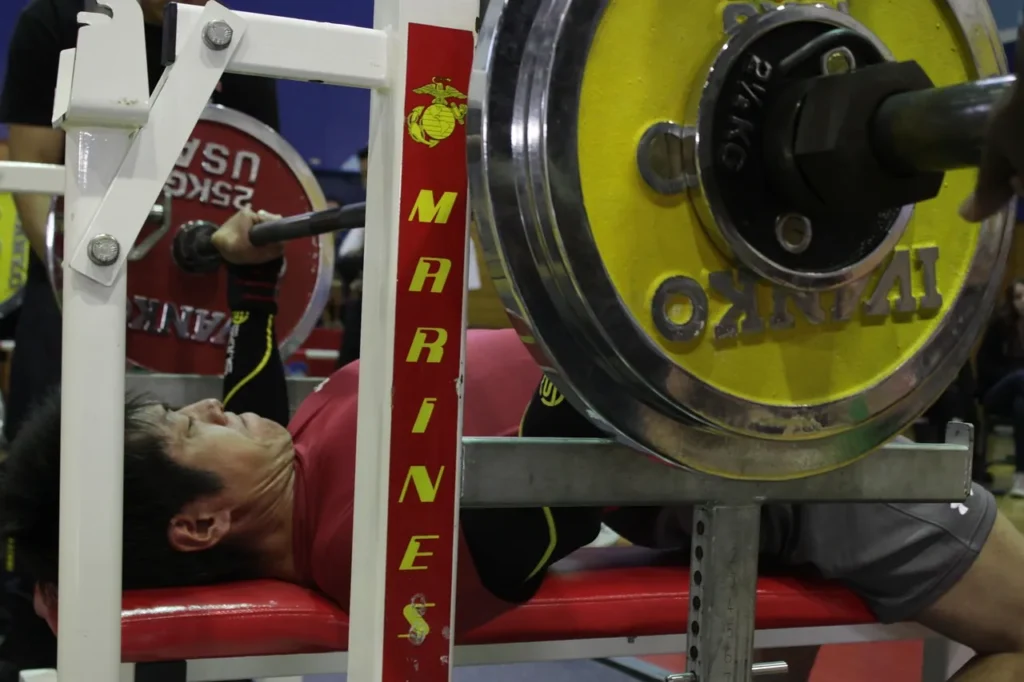
Push pull legs (PPL) is a way of splitting gym training by movement pattern instead of by body part. One day you do every pressing movement, the next day every pulling movement, and the third day you train your lower body. That’s all there is to the push pull legs idea. What matters is how often you repeat it, how many hard sets you do, and how you add weight over time. This guide covers all three, with a 3-day and a 6-day plan (sets, reps, rest and a form cue for every exercise), a split comparison and an 8-week progression, based on published resistance-training research.
What is a push pull legs workout?
A push pull legs workout splits training into three sessions. Push covers chest, shoulders and triceps. Pull covers back, rear shoulders and biceps. Legs covers quads, hamstrings, glutes and calves. Run it 3 days a week and each muscle is trained once; run it 6 days and each is trained twice.
The logic is overlap. Bench pressing already works your front shoulders and triceps, and rows already work your biceps and rear delts, so each group is finished the same day and then rests 48–72 hours before it’s trained hard again.
Push pull legs split: which muscles go where
- Push: pectorals, anterior and lateral deltoids, triceps.
- Pull: latissimus dorsi, upper back (rhomboids, mid and lower traps), rear deltoids, biceps, forearms.
- Legs: quadriceps, hamstrings, glutes, adductors, calves. Core work fits here or at the end of any session.
Lateral raises technically “push” away from the body, and most PPL programs put them on push day. If side delts are a weak point for you, our sibling guide on deltoid workouts explains how to split front, side and rear delt work across the week.
Push pull legs exercises, sorted by day
You don’t need 30 exercises. For each day, pick one or two heavy compound lifts and add two or three isolation movements. The ACSM position stand on resistance-training progression recommends putting large-muscle, multi-joint lifts before small-muscle, single-joint ones. That keeps intensity high where it counts (ACSM, Med Sci Sports Exerc, 2009). Here’s the menu, from compound to isolation:
- Push: flat barbell or dumbbell bench press, incline dumbbell press, standing or seated overhead press, machine chest press, dips, cable fly, dumbbell lateral raise, triceps rope pushdown, overhead triceps extension.
- Pull: pull-up or lat pulldown, barbell row, chest-supported dumbbell row, seated cable row, face pull, reverse pec-deck, barbell or dumbbell curl, hammer curl.
- Legs: back squat, leg press, Romanian deadlift, Bulgarian split squat, walking lunge, leg curl, leg extension, hip thrust, standing calf raise.
Even a ₹1,000–₹2,000-a-month neighbourhood gym in India usually has a bench, dumbbells, a cable station and a leg press. No squat rack? A goblet squat plus leg press covers the pattern.
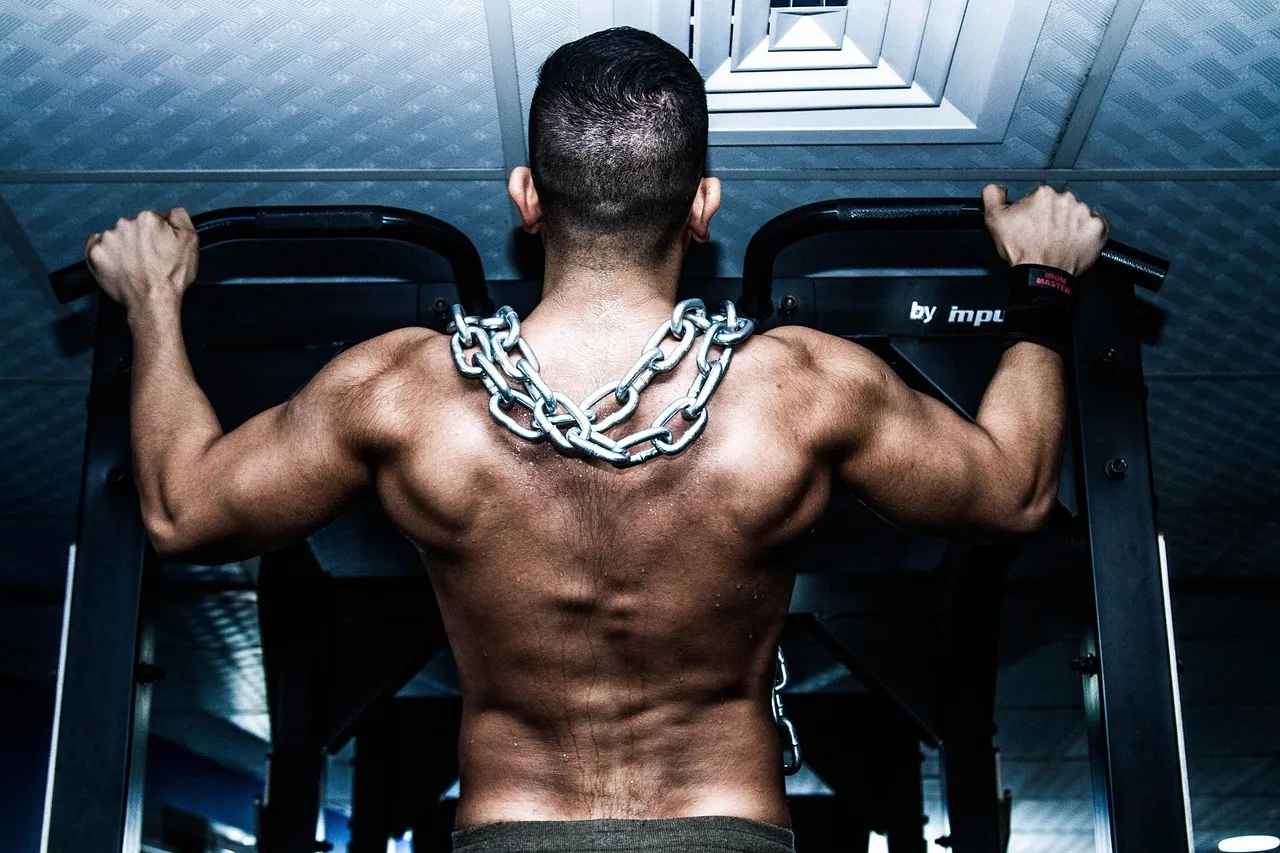
The 3-day push pull legs workout plan for beginners
If you’re new to lifting or can only reach the gym three times a week (Monday–Wednesday–Friday suits most office schedules), run each session once a week. For novices, the ACSM recommends 2–3 training days a week and loads you can lift for 8–12 reps (ACSM, 2009). A 3-day PPL fits that exactly. It also clears the CDC’s minimum of at least 2 days a week of muscle-strengthening work covering all major muscle groups.
| Day | Exercise | Sets × reps | Rest | Form cue |
|---|---|---|---|---|
| Push (Mon) | Dumbbell bench press | 3 × 8–10 | 2–3 min | Shoulder blades pinched back and down; lower to mid-chest |
| Seated dumbbell shoulder press | 3 × 8–10 | 2 min | Ribs down, don’t arch the lower back to finish the rep | |
| Machine chest press or push-up | 2 × 10–12 | 90 s | Full range: hands to chest line | |
| Dumbbell lateral raise | 3 × 12–15 | 60 s | Lead with elbows, stop at shoulder height | |
| Triceps rope pushdown | 2 × 12–15 | 60 s | Elbows pinned to your sides, split the rope at the bottom | |
| Pull (Wed) | Lat pulldown | 3 × 8–10 | 2 min | Pull elbows to back pockets; no swinging |
| Chest-supported dumbbell row | 3 × 8–10 | 2 min | Chest stays on the pad; pause 1 s at the top | |
| Seated cable row | 2 × 10–12 | 90 s | Tall torso, squeeze shoulder blades together | |
| Face pull | 2 × 12–15 | 60 s | Rope to forehead, thumbs point behind you | |
| Dumbbell curl | 3 × 10–12 | 60 s | Elbows still; lower in 2–3 s | |
| Legs (Fri) | Goblet squat or back squat | 3 × 8–10 | 2–3 min | Knees track over toes; depth you can control |
| Romanian deadlift (dumbbell) | 3 × 8–10 | 2 min | Push hips back, flat back, feel the hamstring stretch | |
| Leg press | 2 × 10–12 | 2 min | Lower back stays on the pad; don’t lock knees hard | |
| Lying or seated leg curl | 2 × 10–12 | 90 s | Control the lowering phase | |
| Standing calf raise | 3 × 12–15 | 60 s | 2-second pause in the stretched position |
That’s about 13 hard sets, roughly 50–60 minutes with warm-ups. Start with weights you could lift for 2–3 more reps than the target; it should feel easy for two weeks. Adding extra exercises too early is a classic error, covered in beginner mistakes in personalised workout plans.

The push pull legs 6 day split for intermediate lifters
After 6–12 months, once the beginner plan stops bringing weekly strength gains, run the cycle twice: Push–Pull–Legs–Push–Pull–Legs–Rest. The ACSM gives 4–5 days a week as the typical range for advanced trainees and 3–4 for intermediates (ACSM, 2009). Six days is a lot, so pair a heavier “A” day with a lighter, higher-rep “B” day to manage fatigue.
| Day | Main lift | Accessories (sets × reps) | Rest | Form cue |
|---|---|---|---|---|
| Mon – Push A | Barbell bench press 4 × 5–7 | Standing overhead press 3 × 6–8; weighted dips 3 × 8–10; lateral raise 3 × 12–15; overhead triceps extension 3 × 10–12 | 3 min main / 90 s accessories | Leg drive on the bench; bar path slightly diagonal toward the face |
| Tue – Pull A | Weighted pull-up or heavy pulldown 4 × 5–7 | Barbell row 3 × 6–8; face pull 3 × 12–15; barbell curl 3 × 8–10 | 3 min / 90 s | Dead-hang start, chest to bar, no kipping |
| Wed – Legs A | Back squat 4 × 5–7 | Romanian deadlift 3 × 6–8; leg curl 3 × 10–12; standing calf raise 4 × 8–10 | 3 min / 2 min | Brace before you descend; hit the same depth every rep |
| Thu – Push B | Incline dumbbell press 4 × 8–12 | Seated dumbbell shoulder press 3 × 10–12; cable fly 3 × 12–15; lateral raise 4 × 15–20; rope pushdown 3 × 12–15 | 2 min / 60–90 s | 30° incline; stretch deeply at the bottom |
| Fri – Pull B | Lat pulldown 4 × 10–12 | Seated cable row 3 × 10–12; reverse pec-deck 3 × 15–20; hammer curl 3 × 10–12; incline curl 2 × 12–15 | 2 min / 60–90 s | Full stretch overhead, then drive elbows down |
| Sat – Legs B | Leg press 4 × 10–15 | Bulgarian split squat 3 × 8–10 each leg; leg extension 3 × 12–15; seated leg curl 3 × 12–15; seated calf raise 4 × 12–15 | 2 min / 60–90 s | Front shin near vertical in the split squat for quad focus |
| Sun | Rest. Take an easy walk, or do mobility work or a gentle yoga session | |||
This gives each major muscle roughly 12–20 hard sets a week in 60–75-minute sessions. Short on time? A rolling 5-day version (Push–Pull–Legs–Rest, repeat) works too. For core work, add two or three ab exercises after each leg day; our legs and abs workout has a ready-made set.

Does training each muscle twice a week build more muscle?
Only when the extra session adds extra sets. A 2016 meta-analysis of 10 studies found training a muscle twice a week beat once a week. A 2019 follow-up of 25 studies found no meaningful difference when total weekly sets were equal. Frequency mostly helps you fit in more quality volume.
In the 2016 analysis, higher frequency gave an effect size of 0.49 compared with 0.30 for lower frequency, and the authors concluded major muscles “should be trained at least twice a week” (Schoenfeld et al., Sports Med, 2016). The larger 2019 review then showed that when volume was equated, frequency did not “significantly or meaningfully” affect growth. It said lifters can choose frequency “based on personal preference” (Schoenfeld, Grgic & Krieger, J Sports Sci, 2019).
How many sets per muscle per week?
A dose-response meta-analysis of 15 studies found that each extra weekly set was linked to about 0.37% more muscle growth. Groups doing 10 or more sets per muscle a week tended to do best (Schoenfeld, Ogborn & Krieger, J Sports Sci, 2017). A good target is about 10 hard sets per muscle per week for beginners and 12–20 for intermediates. Go beyond that only if you’re recovering well.
How hard, and how much rest?
You don’t need to hit failure on every set. A 2023 meta-analysis of 15 studies found no hypertrophy advantage for training to momentary muscular failure versus stopping short of it (Refalo et al., Sports Med, 2023). Stopping 1–3 reps short on compound lifts is safer and still effective. Save true failure for the last set of machine or isolation work. Rest also matters. In an 8-week trial with trained men, 3-minute rests produced more strength and more thigh muscle than 1-minute rests (Schoenfeld et al., J Strength Cond Res, 2016). That’s why the tables above give 2–3 minutes for big lifts.
Push pull legs vs upper lower split, full body and bro split
The right split depends on how many days you can realistically train, not on what a fitness influencer runs.
| Split | Days/week | Times each muscle is trained | Session length | Best for | Main drawback |
|---|---|---|---|---|---|
| Full body | 2–3 | 2–3× | 60–75 min | Beginners, busy schedules, anyone returning after a break | Legs and upper body compete for energy in one session |
| Upper / lower | 4 | 2× | 50–70 min | Intermediates with 4 fixed days | Upper days get long if arms and shoulders need extra work |
| Push pull legs (3-day) | 3 | 1× | 50–60 min | Beginners who like focused sessions | Only one exposure per muscle a week |
| Push pull legs (6-day) | 6 | 2× | 60–75 min | Intermediates who can train almost daily and recover well | Miss one day and the week falls apart; high time demand |
| Bro split (chest/back/shoulders/arms/legs) | 5 | 1× (arms indirectly more) | 45–60 min | Lifters who enjoy one-muscle “pump” sessions | Low frequency per muscle; lots of junk volume in one sitting |
Push pull legs vs bro split
A bro split hits each muscle once a week with very high volume; a 6-day PPL hits it twice. The 2016 data favours PPL, the 2019 data says the gap closes at equal sets, but in practice the twelfth set on “chest day” is rarely as productive as a fresh set on a second push day.
Push pull legs upper lower split (the 5-day hybrid)
Upper–Lower–Rest–Push–Pull–Legs–Rest trains every muscle twice in 5 days with two rest days: a good middle ground if 6 days is too much and 4 too little.
Myth-check: what people get wrong about PPL
- “PPL is only for advanced lifters.” The 3-day version suits beginners; the split is just scheduling.
- “You must train six days to see results.” Equal-volume programs produce similar growth at different frequencies. Three good sessions beat six rushed ones.
- “Every set has to go to failure.” No extra growth, and failure on a heavy squat or bench without a spotter is a real injury risk.
- “PPL is a fat-loss program.” It’s a strength and muscle program. Fat loss depends mostly on diet; no split burns fat on its own.
How to progress your push pull legs workout plan over 8 weeks
Muscle growth needs progressive overload: gradually doing more over time. The ACSM rule is simple. When you can do one or two reps more than the top of your target range for two sessions in a row, add 2–10% to the load (ACSM, 2009). For upper-body dumbbells, that usually means going up one dumbbell size (1–2.5 kg). For squats and leg press, it means 2.5–5 kg. Here’s an 8-week block for the 3-day plan. The same sequence works for the 6-day plan.
| Week | Sets per exercise | Effort (reps left in the tank) | What to change | Checkpoint |
|---|---|---|---|---|
| 1–2 | As in the plan (2–3) | 3 RIR | Learn technique, find starting weights, log everything | All reps look the same, first to last |
| 3–4 | Add 1 set to main lifts | 2 RIR | Add reps within the range each session | Hitting the top of the range on 2+ lifts |
| 5–6 | Same as week 4 | 1–2 RIR | Increase load 2–10% on any lift that hit the top of its range twice | Log shows higher load or reps than week 2 |
| 7 | Same | 0–1 RIR on the final isolation set only | Push for rep PRs on accessories | Note sleep, joint aches, motivation |
| 8 | Cut sets by ~40% | 3 RIR | Deload: same weights, fewer sets | Feel fresh? Start a new block with slightly higher starting weights |
RIR means “reps in reserve”: how many more clean reps you could have done. Beginners misjudge it, so film a set now and then.
Troubleshooting a push pull legs routine that has stalled
Work through these five causes before switching programs.
- The same weight for 3+ weeks on a lift. Drop the load about 10% and build back up, or swap to a close variation for one block.
- Everything feels heavy and joints ache. Usually too much volume or too little sleep. Take the week-8 deload early and cut one accessory per session.
- Legs growing, upper body not (or the reverse). Count weekly hard sets per muscle. Lagging muscles often get fewer than 10. Add 2–4 sets for them and take the same number away from a muscle that’s doing fine.
- Missing gym days. Don’t cram two sessions into one; continue the rotation where you stopped.
- Only home dumbbells available. Push: floor or bench press, push-ups with a pause, pike push-ups. Pull: one-arm row, band pull-apart, doorframe-safe pull-up bar. Legs: goblet squat, Bulgarian split squat, dumbbell RDL. Use higher reps (12–20), slower lowering and pauses when the dumbbells get too light.
Who PPL suits, and who should pick something else
Push pull legs workout for Indian office workers
With a Bengaluru or Mumbai commute, a 6-day plan often collapses by Thursday. The 3-day plan or the 5-day hybrid survives a real work week, and six consistent months beat three “perfect” weeks.
Women
The plans don’t change for women; many add hip thrusts and extra RDL sets on leg days. Lifting heavy won’t make you “bulky” by accident.
Lifters over 40, or anyone with joint or heart concerns
Start with the 3-day plan and the upper end of each rep range (10–15). If you have high blood pressure, heart disease, a recent injury or you’re pregnant, see your doctor before starting a heavy lifting program.
Eating enough protein on an Indian diet
A meta-analysis of 49 trials with 1,863 participants found protein intake helped lifting gains up to about 1.6 g per kg of body weight per day, with no added muscle gain above that (Morton et al., Br J Sports Med, 2018). For a 70 kg lifter, that’s about 110 g a day. For reference, 100 g paneer has about 18 g protein, a katori of cooked dal about 7–9 g, two eggs about 12 g, 100 g cooked chicken breast about 30 g, and 50 g dry soya chunks about 25 g. If you’re vegetarian and struggle to reach the target, a Fitstrot online nutritionist consultation can build a plan around your usual meals.
WHO estimates 31% of adults worldwide did not meet recommended activity levels in 2022 (WHO fact sheet), so three sessions a week already puts you ahead.
Push pull legs FAQs
Is push pull legs good for beginners?
Yes, in its 3-day form. Train each session once a week, stick to 13–15 hard sets per session, stop 2–3 reps short of failure and add weight as the ACSM progression rule allows. A full-body plan is equally good. Choose the one you’ll actually stick with.
How many days a week should I do push pull legs?
Three days if you’re a beginner or short on time, and five or six if you’re an intermediate lifter who recovers well. Research shows weekly sets matter more than frequency, so pick the schedule you can keep for months.
Can I do push pull legs 3 days a week and still build muscle?
Yes. A 2019 meta-analysis of 25 studies found no meaningful difference in muscle growth between training frequencies when weekly volume was equal. Aim for about 10 hard sets per muscle per week and keep adding load or reps.
Where do abs go in a push pull legs split?
Anywhere. Most people add 2–3 core exercises (planks, hanging knee raises, cable crunches) at the end of leg day or at the end of any two sessions each week.
Should I do cardio on a push pull legs routine?
Yes, for heart health. The CDC recommends 150 minutes of moderate aerobic activity a week alongside strength training. Put brisk walking, cycling or a dance class on rest days or after upper-body sessions, not right before leg day.
How long should each push pull legs session take?
About 50–75 minutes including warm-up. If you regularly go past 90 minutes, you’re either resting far longer than 3 minutes or doing more sets than you can recover from.
Is push pull legs better than upper lower?
Neither is better in itself. Upper/lower trains each muscle twice in 4 days, while PPL needs 6 days to do the same. Choose PPL if you can train almost daily, and upper/lower if you have 4 fixed days.
Your next step: copy the 3-day chart into your notebook and log week 1 on Monday. If you’d like a certified coach to check your form over video and write your next 8-week block for you, book a 1-on-1 personal training trial with Fitstrot.


