
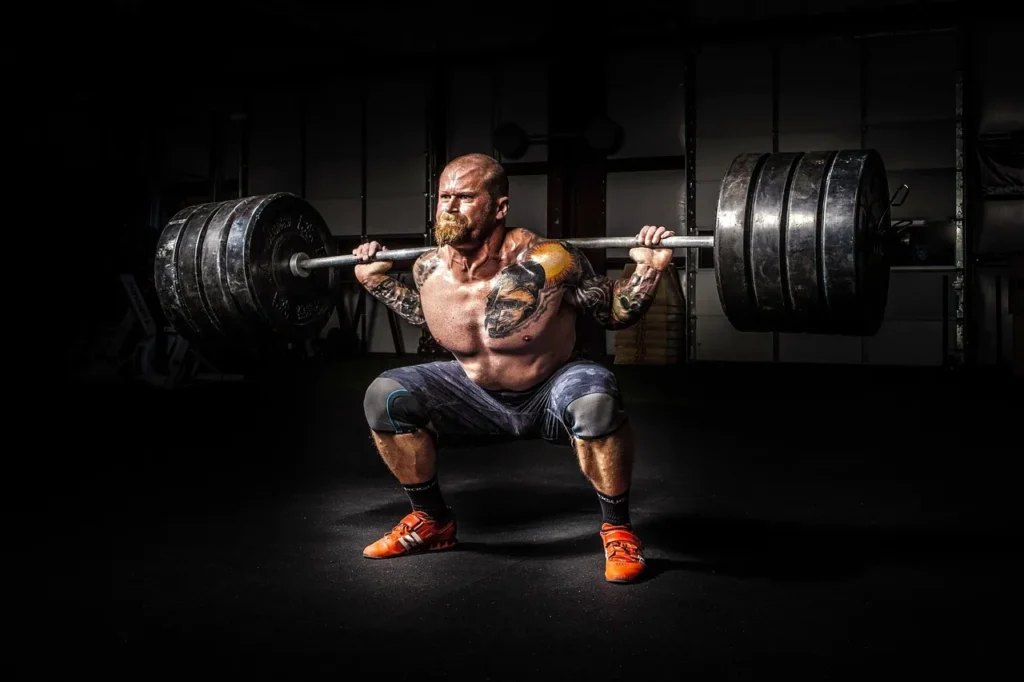
A legs and abs workout is one of the most time-efficient sessions you can put in your week: your lower body does the heavy lifting, and your core, which already works hard to brace every squat and lunge, gets finished off with direct work at the end. The catch is order. Train your abs first and your squat suffers; train them last and both get stronger. Below: the sequencing rule, home and gym versions with sets, reps, rest and form cues, time-saving supersets, a 4-week progression and weekly placement.
It’s built for how most people in India train: 45–60 minutes around work, in a crowded 7 pm gym or a small bedroom with a mat.
Can you train legs and abs on the same day?
Yes. Training legs and abs together is safe and efficient as long as you do heavy compound leg lifts first and direct core work last. The American College of Sports Medicine’s 2009 resistance-training position stand recommends ordering large-muscle, multi-joint exercises before smaller, single-joint ones so intensity is preserved where it matters most.
That recommendation comes from the ACSM position stand on progression models in resistance training (2009), which advises “multiple-joint exercises before single-joint exercises”. Squats, lunges and Romanian deadlifts come first; planks, leg raises and woodchops come last. In that order, a legs abs workout stops being a compromise.
The NHS physical activity guidelines for adults aged 19 to 64 ask for strengthening of all major muscle groups, including legs, hips and abdomen, on at least 2 days a week. One session covers three of them.
Legs first, abs last: the sequencing rule most people get backwards
Your trunk muscles stabilise every loaded leg exercise, stopping your spine folding under a barbell. Fatigue them first with 10 minutes of crunches and that support is weakest exactly when the load is highest: depth gets shaky and the lower back rounds.
The fix is a four-block structure:
- Warm-up (5–8 minutes): easy cardio, bodyweight squats, hip circles, glute bridges and one or two light sets of your first lift.
- Heavy compound leg work (20–25 minutes): squat variation, then a hinge such as the Romanian deadlift. This is where you need maximal bracing.
- Accessory legs paired with core (15–20 minutes): lunges, leg curls and calf raises, each paired with a core move that doesn’t compete for the same muscles.
- Direct core finisher (5–10 minutes): the exercises that need a fresh trunk but not fresh legs: leg raises, rollouts, side planks.
Bracing: the skill that links your legs and your abs
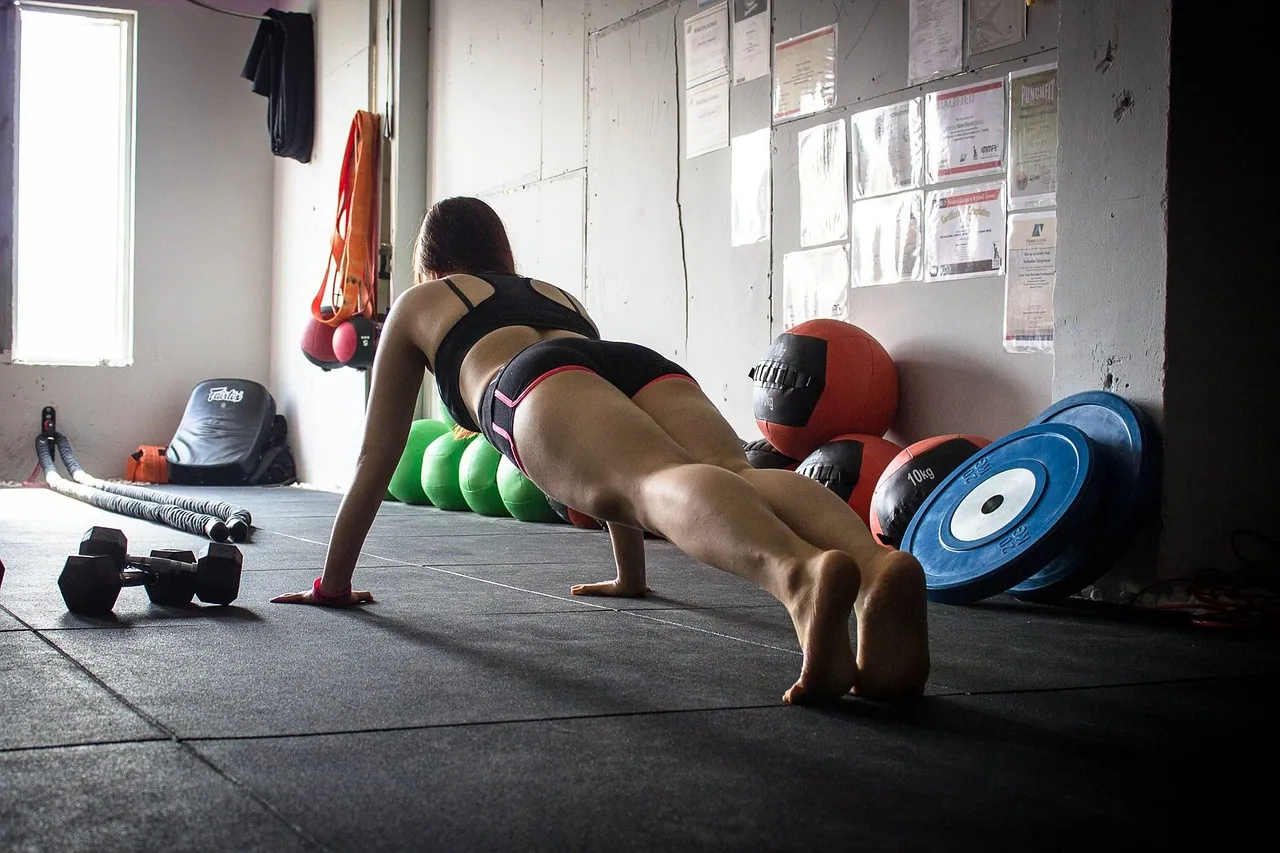
Bracing means tightening your whole midsection, front, sides and back, as if about to be poked in the stomach. It’s why leg day trains your abs indirectly.
Brace, don’t suck in
For heavy lifting, “pull the belly button to the spine” is the wrong cue. In a spine-biomechanics study, Grenier and McGill (2007) compared abdominal hollowing with a full abdominal co-contraction (bracing) and concluded that “bracing creates patterns that better enhance stability” of the lumbar spine. Hollowing narrows your waist; bracing stiffens it.
How to practise it before your first set:
- Hands on your belly and side; breathe in through the nose so both expand, shoulders still.
- Tighten everything under your hands to about 30–40% effort for light sets and harder for heavy sets, without letting the air out.
- Hold that tension through the lowering and the first half of the lift, then breathe out at the top.
Which ab exercises belong after leg day?
The best ab exercises after legs are ones that train the core directly without relying on leg power: reverse crunches, dead bugs, hanging leg raises, side planks, Pallof presses and cable woodchops. Skip ab moves that combine a squat or jump pattern, such as weighted step-up crunches, because tired legs turn them into sloppy, injury-prone reps.
Pick at least one exercise for each core job: anti-extension, anti-rotation or lateral stability, and controlled flexion or rotation.
Lower abs workout picks
The rectus abdominis is one long muscle, but moves that curl the pelvis toward the ribs (reverse crunches, knee and leg raises) emphasise its lower portion. Roll the tailbone up; swinging the legs just works the hip flexors.
Oblique abs workout picks
The obliques resist twisting as much as they create it. For an oblique abs workout on leg day, side planks and Pallof presses are safest; the cable woodchop is the best loaded option.
| Exercise | Core job | OK after heavy legs? | Sets × reps | Rest | Form cue |
|---|---|---|---|---|---|
| Dead bug | Anti-extension | Yes, ideal | 3 × 6–8 per side | 45 sec | Press the lower back into the floor the whole time |
| Forearm plank | Anti-extension | Yes | 3 × 20–45 sec | 45 sec | Squeeze glutes; ribs down, no sagging hips |
| Reverse crunch | Flexion (lower abs) | Yes | 3 × 10–15 | 45 sec | Curl the tailbone up; lower in 3 seconds |
| Hanging knee/leg raise | Flexion (lower abs) | Yes, if grip holds | 3 × 8–12 | 60 sec | No swinging; tilt pelvis up at the top |
| Side plank | Lateral stability (obliques) | Yes | 3 × 20–30 sec per side | 30 sec | Straight line from ear to ankle; hips high |
| Pallof press | Anti-rotation (obliques) | Yes, ideal | 3 × 10 per side | 45 sec | Press straight out; don’t let the cable twist you |
| Cable woodchop | Rotation (obliques) | Yes | 3 × 10–12 per side | 45 sec | Rotate through the upper back, hips stay quiet |
| Ab-wheel rollout | Anti-extension (advanced) | Only if back feels fresh | 3 × 6–10 | 60 sec | Stop before the lower back arches |
| Weighted Russian twist | Rotation | Not recommended | Swap for Pallof press | n/a | Loads a fatigued lower back in flexion + twist |
Legs and abs workout at home (35–40 minutes, minimal kit)

At home the challenge is load, so this version uses single-leg exercises, slower tempos and a backpack of books or a 5-litre water can as your “dumbbell”. A mat, a sturdy sofa and 2 m × 2 m of floor are enough.
Warm up for 5 minutes, then alternate A1 and A2 for all sets before moving to B.
| Order | Exercise | Sets × reps | Rest | Form cue |
|---|---|---|---|---|
| A1 | Backpack goblet squat | 3 × 12–15 | None, go to A2 | Hug the bag to your chest; knees track over toes |
| A2 | Dead bug | 3 × 6–8 per side | 60 sec after the pair | Exhale fully as the arm and leg lower |
| B1 | Reverse lunge | 3 × 10–12 per leg | None, go to B2 | Step back, drop the back knee straight down |
| B2 | Side plank | 3 × 20–30 sec per side | 60 sec after the pair | Push the floor away with your forearm |
| C1 | Single-leg glute bridge | 3 × 10–12 per leg | None, go to C2 | Pause 1 sec at the top; don’t arch the back |
| C2 | Reverse crunch | 3 × 10–15 | 60 sec after the pair | Lift the hips, not just the knees |
| D | Bulgarian split squat (rear foot on sofa) | 2 × 8–10 per leg | 60–90 sec | Torso slightly forward; front heel stays down |
| E | Mountain climber finisher | 3 × 30 sec | 30 sec | Hips level with shoulders; drive knees, don’t bounce |
When every set hits the top of its range, progress: 3-second lowering, then a 2-second bottom pause, then more books, then an extra set.
Supersets: pairing leg and core moves without wrecking form

A superset is two exercises done back to back with little rest. Pairing an accessory leg move with a core move is the best way to fit this session into 45–55 minutes.
A 2025 systematic review and meta-analysis in Sports Medicine by Zhang, Weakley and colleagues pooled 19 studies with 313 participants and found supersets matched traditional sets for total reps, volume load and long-term strength and muscle gains in a shorter session, though they felt harder and caused more muscle damage. An earlier review on time-efficient training by Iversen and colleagues (2021) estimated that supersets, drop sets and rest-pause training roughly halve training time while maintaining volume.
Pairs that work
- Walking lunge + Pallof press, leg curl + hanging knee raise, calf raise + woodchop: neither move in each pair tires the other.
Pairs to avoid
- Heavy squat + any ab exercise: fatigued bracing costs you most here.
- Romanian deadlift + ab-wheel rollout: both load the lower back.
- Bulgarian split squat + mountain climbers: both hammer hip flexors and quads.
Legs and abs workout gym session (about 55 minutes)
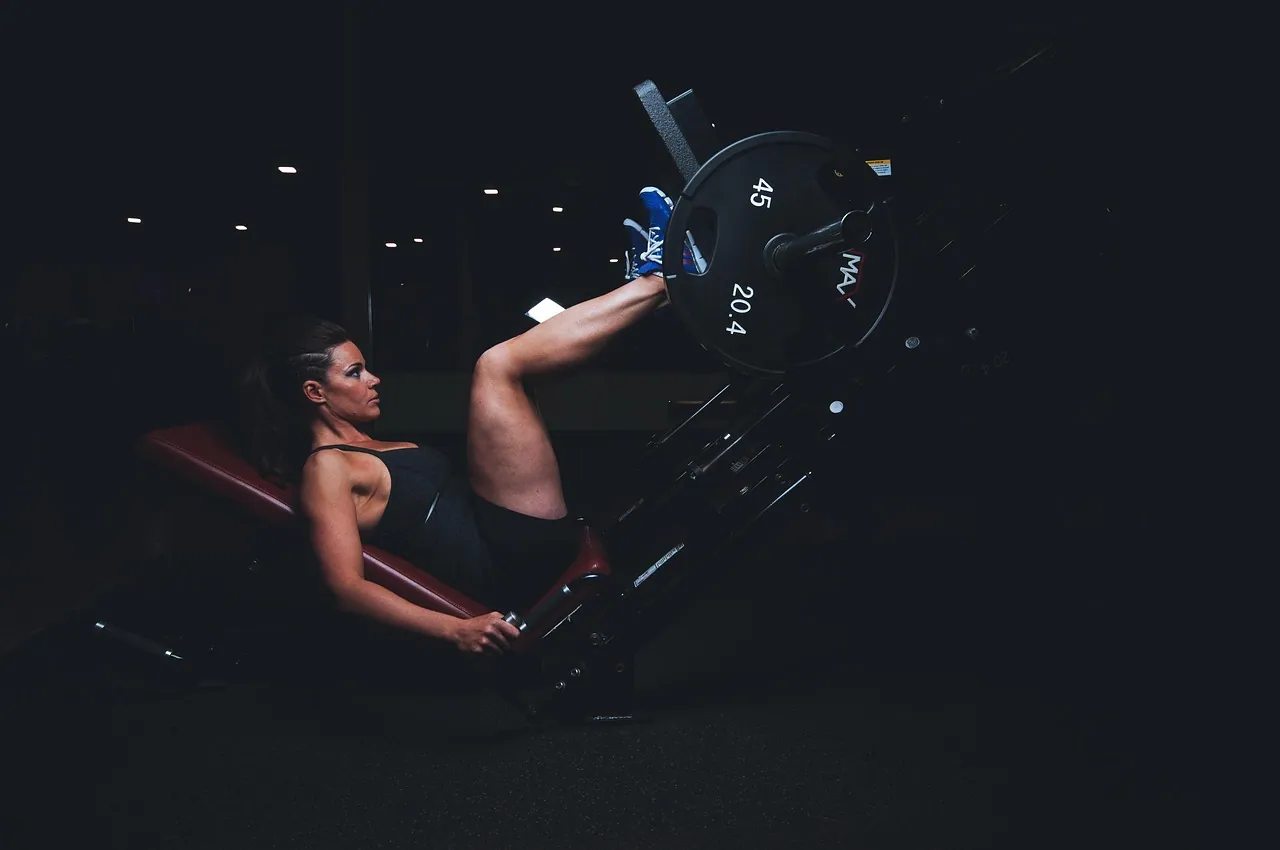
You need a squat rack, a cable station and a leg-curl machine. The first two lifts use straight sets with long rest because in an 8-week trial of 21 trained men, Schoenfeld and colleagues (2016) found that 3-minute rest periods produced significantly greater gains in squat strength and front-thigh muscle thickness than 1-minute rests.
Leg day workout exercises that matter most
Short on time? Keep three leg day workout exercises: a squat pattern, a hinge (Romanian deadlift) and a single-leg move (lunge or split squat). Together they cover quads, glutes, hamstrings and adductors.
| Order | Exercise | Sets × reps | Rest | Form cue |
|---|---|---|---|---|
| 1 | Barbell back squat (or leg press) | 4 × 5–8 | 2–3 min | Brace before you unrack; sit between your heels |
| 2 | Romanian deadlift | 3 × 8–10 | 2 min | Push hips back, bar close to thighs, soft knees |
| 3A | Walking lunge (dumbbells) | 3 × 10 per leg | None, go to 3B | Short, controlled steps; torso upright |
| 3B | Pallof press | 3 × 10 per side | 90 sec after the pair | Stand side-on to the cable; arms straight out |
| 4A | Seated or lying leg curl | 3 × 10–12 | None, go to 4B | Lower in 3 seconds; hips stay on the pad |
| 4B | Hanging knee or leg raise | 3 × 8–12 | 60–90 sec after the pair | Posterior pelvic tilt at the top; no swing |
| 5A | Standing calf raise | 3 × 12–15 | None, go to 5B | Full stretch at the bottom, 1-sec pause at top |
| 5B | Cable woodchop (high to low) | 3 × 10–12 per side | 60 sec after the pair | Rotate from the upper back; feet planted |
| 6 | Ab-wheel rollout or plank | 3 × 6–10 or 30–45 sec | 60 sec | Ribs down; stop before the back arches |
Leave about 2 reps in the tank early on. The ACSM position stand suggests increasing load by 2–10% once you can perform one to two reps more than your target.
Leg day workout beginner plan: your first 4 weeks
New or returning after a break? Don’t start with the full gym table. The ACSM recommends novices use an 8–12 rep range on 2–3 days a week; month one is about learning patterns.
| Week | Leg work | Core work | Rest | Progress to next week when… |
|---|---|---|---|---|
| 1 | Goblet squat, glute bridge, reverse lunge: 2 × 10–12 each | Dead bug 2 × 6 per side; plank 2 × 20 sec | 60–90 sec | Every rep looks the same as the first; no knee or back pain |
| 2 | Same exercises: 3 × 10–12 | Add side plank 2 × 20 sec per side | 60–90 sec | You finish all 3 sets with 2 reps to spare |
| 3 | Add Romanian deadlift (light): 3 × 10; add load to squat | Add reverse crunch 3 × 10; plank 3 × 30 sec | 90 sec for squat/RDL | RDL keeps a flat back all the way down |
| 4 | Squat and RDL 3 × 8–10; lunges 3 × 10 per leg | Pair lunges with Pallof press or dead bug (first superset) | 90 sec after each pair | You can run the full home or gym table at lighter loads |
Doing too much too soon is the classic error; see our guide to beginner mistakes in personalised workout plans.
Myth check: can abs workout reduce belly fat?
No, not on its own. Ab exercises strengthen the muscles under belly fat but don’t selectively burn the fat on top. In a 6-week trial, 24 adults who did 7 abdominal exercises, 2 sets of 10 reps, 5 days a week lost no more abdominal fat or waist circumference than a control group, though their ab endurance improved.
That study, by Vispute and colleagues (2011) in the Journal of Strength and Conditioning Research, is why “spot reduction” is considered a myth. The trained group could do 47 curl-ups on the post-test versus 32 in the control group: stronger abs, same belly. Mayo Clinic’s guide to core exercises says the same thing plainly: core work tones the abdominal muscles, but you need aerobic activity to burn belly fat.
Visible abs come from lower overall body fat, built by diet and activity over months. If fat loss is your main goal, our leg workout for weight loss guide is built for that purpose instead.
Where does a legs and abs day fit in your week?
Most people should train legs and abs together twice a week, at least 48 hours apart. A 2016 meta-analysis in Sports Medicine found that training each muscle group twice weekly produced greater muscle growth than once weekly, and the NHS asks adults to strength-train all major muscle groups on at least 2 days a week.
That meta-analysis, by Schoenfeld, Ogborn and Krieger (2016), reviewed 10 studies (effect size 0.49 for higher frequency vs 0.30 for lower). Whether three times beats twice is unclear, so twice is the sensible target:
- 3 days a week: Monday upper, Wednesday legs and abs, Friday full body with a lighter squat and plank.
- 4 days a week (upper/lower): Monday and Thursday upper, Tuesday and Friday legs and abs. Make Friday lighter and lunge-focused.
- 5–6 days (push/pull/legs): add your core finisher to each legs day. Our push pull legs workout guide shows the full split.
Avoid a hard legs and abs day right before a long run or match.
Troubleshooting: what to do when something feels wrong
- Lower back aches after the session: shorten the RDL to just below the knees and swap rollouts for dead bugs for two weeks.
- You feel leg raises in your hip flexors, not your abs: you’re swinging the legs without curling the pelvis. Switch to bent-knee reverse crunches and think “tailbone up”.
- You’re out of breath on planks within 15 seconds: you’re over-bracing. Plank at moderate tension and keep breathing through the nose.
- Squat stalls for 3+ weeks: check sleep (7+ hours), and make sure squat rest is really 2–3 minutes with no core superset.
Who should modify this plan?
- Complete beginners: start with the 4-week table above, home version, and don’t add supersets until week 4.
- Desk workers with tight hips: add 3–4 minutes of hip-flexor stretches to the warm-up. Gentle mobility work from online yoga classes on your off days helps the squat pattern too.
- People with existing back pain or a disc injury: get clearance from a doctor or physiotherapist first. Favour dead bugs, bird dogs and side planks, and avoid loaded spinal flexion (sit-ups, weighted crunches).
- Women after pregnancy: wait for your doctor’s go-ahead at your postnatal check. If you have abdominal separation (diastasis recti), leave out crunches, leg raises and planks until a women’s health physiotherapist clears them.
- Adults over 50: swap the barbell squat for a leg press or box squat.
Frequently asked questions
Is it good to train legs and abs on the same day?
Yes. Leg exercises already demand heavy core bracing, so your abs are warmed up by the end of the session. Do compound leg lifts first and direct ab work last, and the pairing saves time without hurting your squat or deadlift.
Should you do abs before or after legs?
After. Fatiguing your core first weakens the brace that protects your spine during squats and deadlifts. The ACSM recommends large, multi-joint exercises before smaller, isolated ones, so leg compounds go first and ab work goes at the end.
Can we do abs workout daily?
You can do light core work such as a 2–3 minute plank and dead bug routine most days, but hard ab training (loaded crunches, hanging leg raises, rollouts) needs recovery like any other muscle. Two or three focused sessions a week is plenty for most people.
How long should a legs and abs workout take?
About 35–40 minutes at home and 50–60 minutes in the gym, including a 5–8 minute warm-up. Using supersets for the accessory leg and core moves is what keeps it under an hour.
Can I do a legs and abs workout at home without equipment?
Yes. Single-leg moves such as reverse lunges, Bulgarian split squats and single-leg glute bridges make bodyweight challenging, and a backpack filled with books works as extra load. Dead bugs, side planks and reverse crunches cover the core.
Will a legs and abs workout give me visible abs?
It will make your abs stronger, but visible abs depend on overall body-fat level. A 2011 study found 6 weeks of ab training, 5 days a week, improved endurance without reducing belly fat, so your diet and total activity matter more.
What should I eat before a legs and abs workout?
Eat a light, carb-and-protein meal 60–90 minutes before: two rotis with dal, a bowl of poha with peanuts, or curd with a banana. Avoid a heavy, oily meal right before training, because bracing on a full stomach is uncomfortable.
Want someone to check your squat depth and plank position? Fitstrot’s online 1-on-1 personal training pairs you with a coach who adapts this legs and abs plan to your equipment, schedule and any niggles, live over video.


