

A leg workout for weight loss works, but not for the reason most people think. Squats won’t melt fat off your legs, and the famous “afterburn” is smaller than Instagram suggests. What leg training does do is work your biggest muscles, so every session costs more energy than an arm day. It also protects your muscle while you eat less, and it keeps your metabolism from sliding as the kilos come off. Paired with a modest calorie deficit and daily walking, it’s one of the most efficient uses of your training time. This guide covers the numbers first, then complete home and gym workouts from beginner to advanced, a 4-week plan and fixes for the problems that usually derail people.
Most Indian adults need this more than they realise. The World Health Organization estimates that 31% of adults worldwide, about 1.8 billion people, were physically inactive in 2022, and long hours at a desk hit the hips, glutes and thighs hardest.
Do leg workouts burn more calories than other workouts?
Yes, somewhat. Leg exercises move your glutes, quadriceps and hamstrings, the largest muscles you have, so they use more energy than upper-body moves. Harvard Health data shows a 70 kg person burns about 108 kcal in 30 minutes of general weight training and 216 kcal when it’s vigorous. Leg-dominant circuits sit at the top of that range.
Cleveland Clinic describes the gluteus maximus as the biggest and strongest muscle in your body. A squat, lunge or step-up also brings in your quads, hamstrings, calves and core, and it lifts your whole bodyweight each rep. A bicep curl moves a dumbbell. A squat moves you. That’s why your heart rate climbs faster on leg day.
The table below uses the Harvard Health Publishing calorie chart (updated 2021), converted from pounds to kilograms. These are averages. Your own numbers will vary with effort, rest periods and fitness.
| Activity (30 min) | 57 kg | 70 kg | 84 kg |
|---|---|---|---|
| Weight training, general (long rests) | 90 kcal | 108 kcal | 126 kcal |
| Weight training, vigorous (short rests, big lifts) | 180 kcal | 216 kcal | 252 kcal |
| Stair-step machine | 180 kcal | 216 kcal | 252 kcal |
| Stationary cycling, moderate | 210 kcal | 252 kcal | 294 kcal |
| Rope jumping, slow | 226 kcal | 281 kcal | 335 kcal |
| Calisthenics, vigorous (jump squats, lunges, burpees) | 240 kcal | 306 kcal | 336 kcal |
| Running, 8 km/h | 240 kcal | 288 kcal | 336 kcal |
| Brisk walking, 6.4 km/h | 135 kcal | 175 kcal | 189 kcal |
| Hatha yoga / stretching | 120 kcal | 144 kcal | 168 kcal |
Two things stand out. First, how you train matters as much as what you train. The same squats burn about twice as many calories when you keep rests short and loads challenging. Second, even a hard leg session burns 200–300 kcal. One extra snack can undo that. Exercise helps, but the calorie deficit still comes mostly from your plate.
Leg workout benefits that matter more than the calorie count
- You keep muscle while dieting. A 2017 review in Advances in Nutrition found that diet-only weight loss removes muscle along with fat, and resistance exercise helps preserve that muscle and also improves strength. Your legs hold a large share of your muscle, so they’re the main place to protect.
- Your resting metabolism stays higher. A 2012 review in Current Sports Medicine Reports found 10 weeks of resistance training may add 1.4 kg of lean weight, raise resting metabolic rate by 7% and cut 1.8 kg of fat. It also noted that inactive adults lose 3–8% of their muscle per decade.
- Daily life gets easier. Stairs, squatting at the chulha or on an Indian-style toilet, getting up off the floor after puja, carrying a child or a gas cylinder. All of it gets easier, so you move more through the day without planning to.
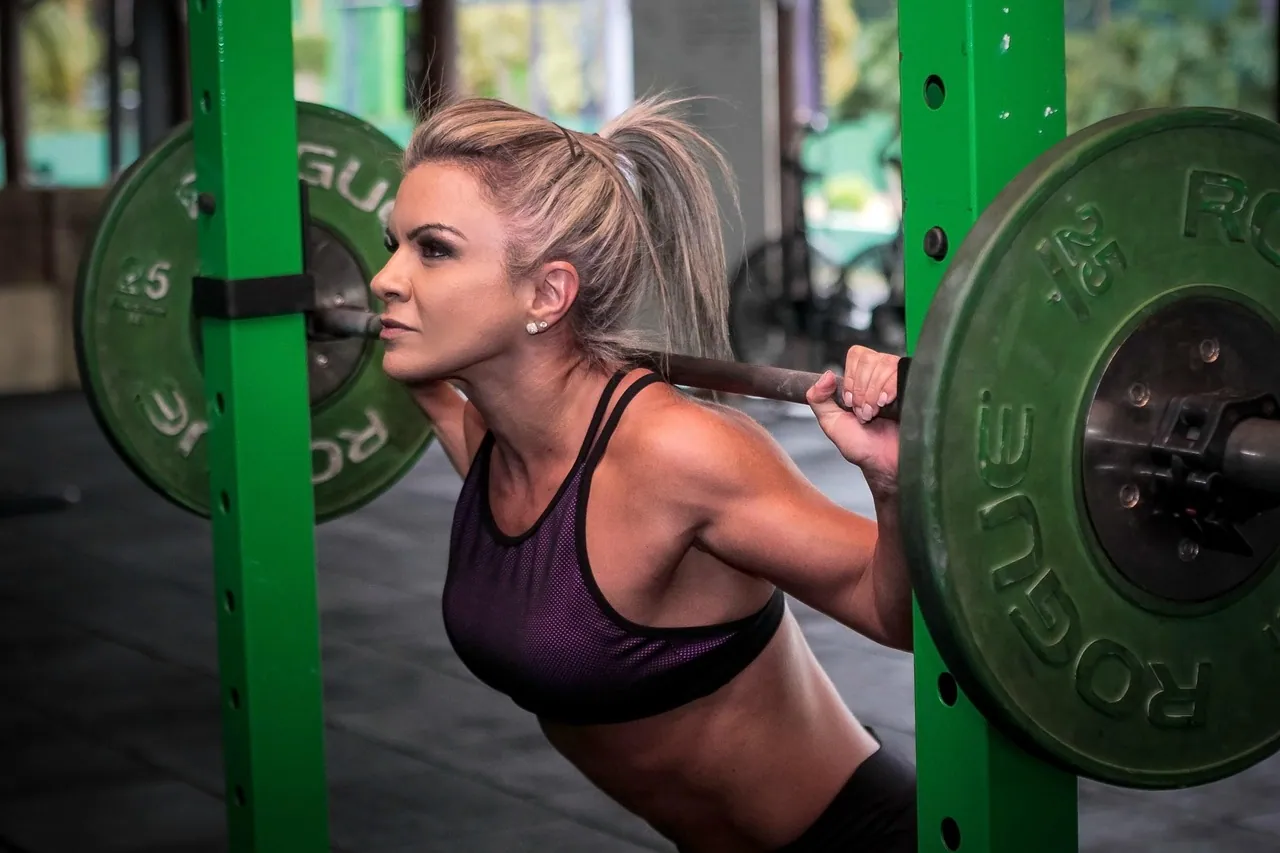
Myth check: the “afterburn” won’t do the work for you
You’ll often hear that a hard leg day keeps you burning fat for 24–48 hours. There’s a real effect behind this, called excess post-exercise oxygen consumption (EPOC), but its size gets exaggerated.
A widely cited review in Sports Medicine (Børsheim and Bahr, 2003) found that EPOC stays small and short after low-intensity or short workouts. It gets bigger and lasts longer only after hard sessions. The review also found a more prolonged EPOC after hard resistance exercise than moderate, so intensity matters. Treat the afterburn as a small bonus on top of the session. It isn’t a reason to eat more.
The bigger question is whether lifting beats cardio for fat loss. Two meta-analyses give an honest answer:
- A 2022 review of 54 trials in healthy adults found that resistance training alone, with no diet change, reduced body fat by 1.46 percentage points and fat mass by 0.55 kg on average, and reduced visceral fat (Wewege et al., Sports Medicine).
- A 2025 review of 36 trials with 1,564 people found that in programmes of 10 weeks or more, aerobic training cut 1.06 kg more fat mass than resistance training, while combined training cut 1.09 kg more than resistance alone. Resistance training kept more lean mass (Lafontant et al., Journal of the International Society of Sports Nutrition).
The practical takeaway: leg training protects your muscle and shape, cardio and diet drive the scale, and the best results come from doing both. That’s why every plan below pairs leg sessions with walking.
Compound leg exercises that give you the most for your effort
When fat loss is the goal, choose moves that train several joints and big muscle groups at once. Leg extensions and calf raises have their uses, but they burn little and take up time. These six moves are enough for most people:
- Squat (bodyweight, goblet or barbell). Quads, glutes, adductors, core. Sit between your heels, chest up, knees tracking over your toes.
- Lunge (reverse, walking or split squat). Trains one leg at a time, so it challenges balance and evens out left–right differences. Reverse lunges are easiest on the knees.
- Hip hinge (Romanian deadlift, conventional deadlift or single-leg RDL). Hamstrings, glutes and lower back. It balances the quad-heavy squat.
- Step-up. Uses a sturdy stair or bench. It’s very knee-friendly and easy to make harder by raising the step or holding weights.
- Glute bridge / hip thrust. Glute work with almost no knee stress. It’s a good starting point if squats hurt.
- Jump squat or skater hop (advanced). Raises your heart rate fast. Add these only once your regular squats are solid and your knees feel fine.

At home leg exercises: a no-equipment workout you can start today
You don’t need a gym. A floor, a stair and a filled water bottle or backpack are enough for months of progress. Warm up for 5 minutes first: march on the spot, do 10 bodyweight good-mornings, 10 slow half-squats and 10 leg swings each side.
Pick the column that matches your level. Do the exercises as a circuit, one after another, resting 60–90 seconds at the end of each round.
| Exercise | Beginner (rounds: 2) | Intermediate (rounds: 3) | Advanced (rounds: 4) |
|---|---|---|---|
| Squat | 10 chair squats (sit and stand) | 15 bodyweight squats, 3-sec lowering | 12 backpack squats (5–10 kg) + 10 jump squats |
| Lunge | 8 per leg, static split squat holding a wall | 10 per leg, reverse lunge | 12 per leg, walking lunge with backpack |
| Hip hinge | 10 glute bridges | 12 single-leg bridges per side | 10 single-leg RDLs per side with water bottles |
| Step-up | 8 per leg on the lowest stair | 12 per leg on a knee-height step | 12 per leg holding 5–10 kg, drive up fast |
| Wall sit | 20 seconds | 40 seconds | 60 seconds |
| Finisher | 2 min brisk marching | 3 × 30 sec fast skaters | 5 × 20 sec jump squats / 40 sec rest |
| Approx. time | 15–20 min | 25–30 min | 35–40 min |
Beginner leg exercises: how to know you’re ready to move up
Stay at your level until you can finish every round with good form and feel like you had 2–3 reps left. Then change one thing: add a round, add reps, slow the lowering to 3 seconds, or add load. If you’re very heavy, have knee arthritis or haven’t exercised in years, chair squats and bridges are enough to start. Walk every day as well. This isn’t a softer version of the plan. It’s the right one for you.
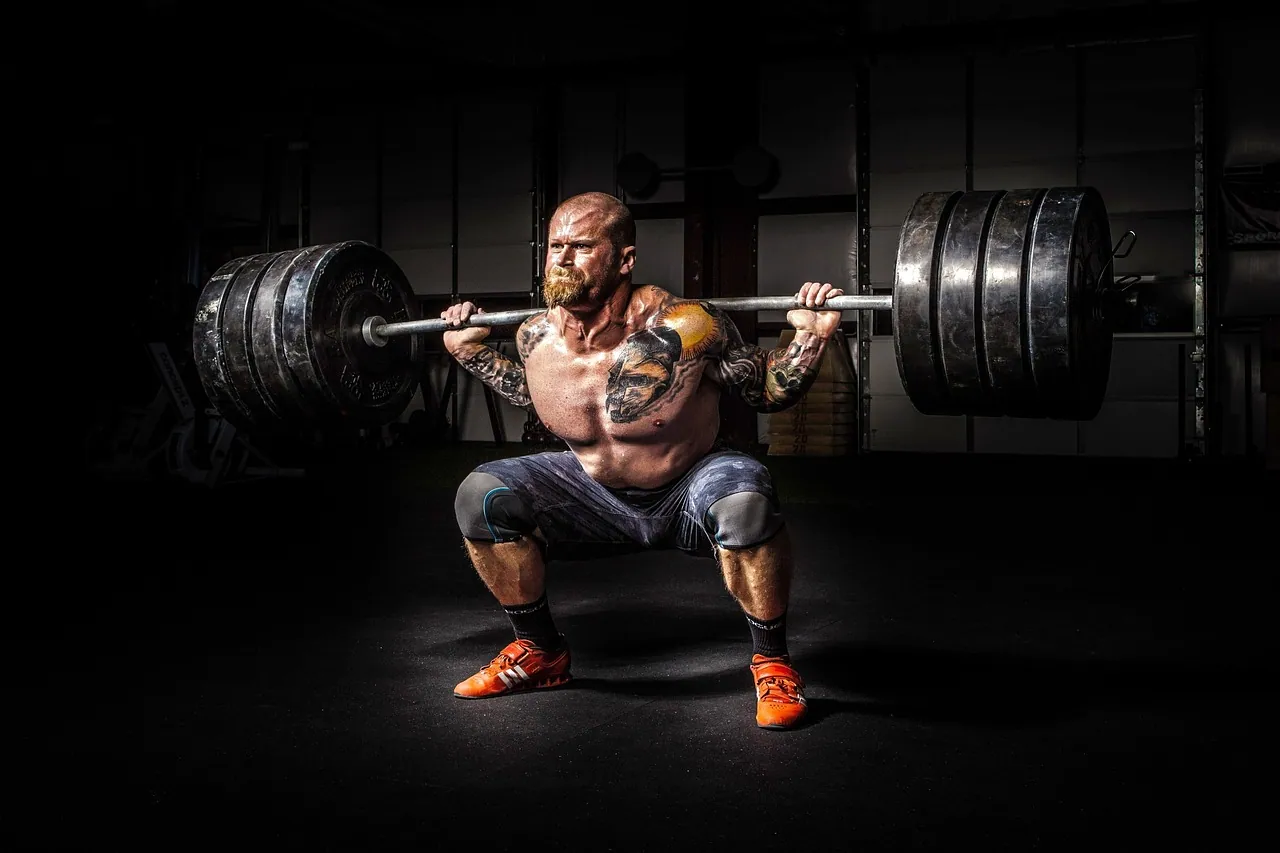
Full leg workout at gym: the session to follow
A gym lets you load big lifts safely and track your progress. The session below pairs exercises into supersets, so one muscle group rests while the other works. That keeps your heart rate up and the workout under 50 minutes. Choose weights that leave 2–3 reps in reserve on every set. Grinding to failure on heavy squats while dieting only raises your injury risk.
| Order | Exercise | Beginner | Intermediate / advanced | Rest |
|---|---|---|---|---|
| A1 | Goblet squat → barbell back squat | 3 × 10 (goblet) | 4 × 6–8 (barbell) | 60 sec after A2 |
| A2 | Plank | 3 × 20 sec | 4 × 40 sec | — |
| B1 | Romanian deadlift (dumbbell or barbell) | 3 × 10 | 4 × 8 | 60 sec after B2 |
| B2 | Leg press or step-up | 3 × 12 | 3 × 12–15 | — |
| C1 | Walking lunge (dumbbells) | 2 × 8 per leg | 3 × 10 per leg | 45 sec after C2 |
| C2 | Hip thrust or glute bridge | 2 × 12 | 3 × 10–12 | — |
| D | Finisher: bike or stair machine | 5 min steady | 8 × 20 sec hard / 40 sec easy | — |
Add weight once you hit the top of the rep range on every set: 2.5 kg on lower-body barbell lifts, or one dumbbell size up. If you’ve never squatted or deadlifted with a barbell, spend two or three sessions learning the pattern with a coach before loading it. A few form cues now will save you weeks of back or knee trouble. Fitstrot’s 1-on-1 personal training covers exactly this over video, with a trainer checking your angles in real time.

A 4-week leg workout plan for weight loss
Muscles adapt to the same stimulus, so build a little each week. NHS guidelines recommend 150 minutes of moderate activity a week plus strength work for all major muscle groups, legs and hips included, on at least 2 days. The ICMR-NIN Dietary Guidelines for Indians (2024) suggest 30–60 minutes of moderate aerobic activity on at least 5 days, with muscle-strengthening on at least 2. This plan fits both.
| Week | Leg sessions | Volume per session | Other days | Daily steps target |
|---|---|---|---|---|
| 1 | 2 (Mon, Thu) | Your level from the tables, 1 round fewer | 1 upper-body or yoga session; 2 × 30-min brisk walks | 6,000–7,000 |
| 2 | 2 (Mon, Thu) | Full rounds at your level | 1 upper-body session; 3 × 30-min walks | 7,000–8,000 |
| 3 | 3 (Mon, Wed, Fri) | Full rounds; add reps or 2.5 kg | 1 upper-body session; 2 walks or 1 Zumba class | 8,000–9,000 |
| 4 | 3 (Mon, Wed, Fri) | Add 1 round or 1 set to the first two moves | 1 upper-body session; 2 walks; 1 full rest day | 9,000–10,000 |
Keep at least one day between leg sessions. In week 5, drop volume by about a third for a lighter week, then start a new block at a slightly harder level. If you’re pairing this with dance cardio, schedule it on non-leg days. Online Zumba classes work well there.
Lower body workout for women: what changes and what doesn’t
The training principles are the same for women and men. Women usually start with less upper-body strength but relatively strong legs, so lower-body lifts often progress quickly. A few points come up again and again:
- “Will squats make my legs bulky?” Very unlikely during a calorie deficit. Building noticeable size takes years of surplus eating and hard training. Most women find their legs look smaller and firmer as fat drops and muscle holds.
- You can’t choose where the fat comes off. Leg training won’t target thigh fat. That depends on your overall fat loss, and hips and thighs are often the last areas to change. Our guide to thigh weight loss explains why, with a timeline.
- Your cycle may affect training. Some women feel stronger in the first half of the cycle and more tired in the days before a period. Cut a round rather than skipping the week.
- After pregnancy or with pelvic floor symptoms (leaking, heaviness), get clearance from your doctor or a women’s health physiotherapist first. Start with bridges and step-ups, and add jumps last.

Troubleshooting: when the plan isn’t working
“My knees hurt when I squat”
Squat only as deep as you can without pain, often to a chair or box at first. Let your knees travel forward over your toes, which is normal, but keep them in line with your feet rather than caving in. Swap lunges for reverse lunges and add more bridges and step-ups. Sharp pain, swelling, locking or pain that lasts past the next day needs a doctor or physiotherapist, not more reps.
“I’m training hard but the scale hasn’t moved”
Give it 3–4 weeks before you judge, and track your waist measurement, not just your weight. New lifters often retain water in sore muscles for the first 1–2 weeks. If nothing has changed after a month, the problem is almost always food intake, not the workout. The ICMR-NIN guidelines call 0.5 kg a week a safe rate of loss and say a reducing diet should not drop below 1,000 kcal a day. That’s roughly a 500–550 kcal daily deficit. For what’s realistic over 30 days, see how much weight you can lose in a month.
“I’m so sore I can’t walk properly”
That’s classic delayed-onset muscle soreness (DOMS). It peaks 24–72 hours after a new or harder workout. Next time, do one fewer round. Easy walking the day after helps more than resting on the sofa. Soreness fades within 2–3 sessions as your body adapts, and being sore isn’t proof that the workout worked.
Stretches after leg workout: 5 minutes that help
Stretching won’t burn fat, but it makes the next session more comfortable. After training, hold each for 30 seconds per side: standing quad stretch, seated hamstring stretch, figure-4 glute stretch, low-lunge hip-flexor stretch and a wall calf stretch. Slow nasal breathing helps you calm down after the session. If you’d rather have it guided, a gentle online yoga class makes a good recovery day.
Eating for leg day on an Indian plate
You don’t need supplements, but you do need enough protein and not too big a deficit. The ICMR-NIN guidelines note that during a typical 500–750 kcal/day deficit, getting about 15% of energy from protein helps preserve muscle. They add that protein above about 1.6 g/kg/day gives no further muscle gain. They also advise against a deficit larger than 40% of your daily needs. In practice, that means a protein source at every main meal: dal or rajma with rice, paneer or tofu bhurji, eggs, curd, chana, soya chunks, chicken or fish. Add a vegetable portion as well. A small pre-workout snack such as a banana, a roasted chana handful or a bowl of curd helps if you train early in the day.
For portion sizes and full-day menus, read our high-protein diet for weight loss guide. If you’d like targets based on your weight, routine and food preferences, book an online nutritionist consultation.
FAQ
Can leg workouts alone help me lose weight?
Only slowly. On its own, resistance training lowered body fat by about 1.46 percentage points on average in a 2022 meta-analysis. Real weight loss needs a calorie deficit. Use leg workouts to keep muscle, and walking plus diet to move the scale.
How many times a week should I train legs for weight loss?
Two to three sessions a week, with at least one rest day between them. Beginners get good results from 2; intermediates can use 3. Walk on the other days.
Which is better for weight loss, squats or walking?
Do both. Walking burns more fat per week because you can do it daily without soreness. Squats and other leg exercises protect muscle and keep your metabolism higher. Combined training beat either alone in a 2025 meta-analysis.
Will leg workouts make my legs bigger?
Not during a calorie deficit. Most people’s legs get smaller and firmer as fat drops. Visible muscle growth needs years of heavy training and extra calories.
Is it okay to do leg exercises every day?
Not hard ones. Muscles need 48 hours to recover from challenging sets. Light activity such as walking, cycling or gentle yoga is fine daily. Keep the squats, lunges and deadlifts to 2–3 days a week.
How long before I see results from a leg workout for weight loss?
Strength improves within 2–3 weeks. Visible changes in your waist and how clothes fit usually take 6–8 weeks, if you keep a steady deficit of about 0.5 kg a week.
Should I do cardio before or after a leg workout?
After, or on a different day. Heavy squats and deadlifts need fresh legs for safe form. A 5-minute warm-up before is enough. Save the longer cardio for after lifting or for non-leg days.
Not sure how much load your knees can handle, or whether your form is right? Book a video session with a Fitstrot weight loss trainer. They’ll build this plan around your level and check every rep live.


