
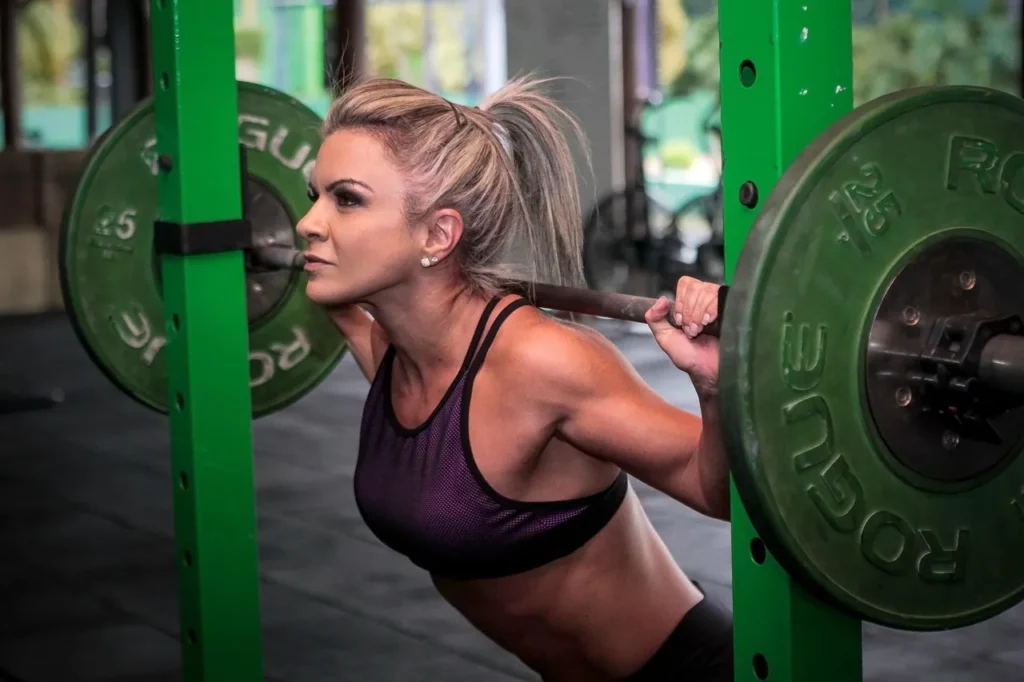
If you want to know how to lose thigh fat, start with the honest answer. You can’t choose where your body burns fat. Squats and leg lifts won’t burn the fat sitting on top of the muscles you’re working. Your thighs get slimmer when your overall body fat goes down, which takes a steady calorie deficit, 2–3 lower-body strength sessions a week and enough daily movement. For many women the thighs are the last place to change. This guide explains why, then gives you a 4-week plan, a separate section on inner thighs and a realistic timeline.
Can you spot-reduce thigh fat with leg exercises?
No. Exercising your legs does not burn the fat on your legs. In a 2013 trial, adults trained one leg with 960–1,200 leg-press reps, 3 times a week for 12 weeks. Total body fat fell by 5.1%, but the trained leg lost no significant fat. Leg exercises build the muscle underneath. Fat loss comes from an overall calorie deficit.
That trial (Ramírez-Campillo et al., Journal of Strength and Conditioning Research, 2013) is a direct test of “thigh toning”. Fat came off the arms and trunk (10.2% and 6.9%), not the trained leg.
Other studies agree. In a 12-week trial of 104 adults who trained one arm, MRI scans showed fat loss spread across the body (Kostek et al., 2007). In a 2011 trial, 6 weeks of ab exercises done 5 days a week didn’t reduce belly fat or waist size (Vispute et al., 2011).
Thigh exercises are still worth doing, just for a different reason. They build the quadriceps, hamstrings, adductors and glutes underneath the fat. As your body fat drops, that muscle is what makes your legs look firm rather than just smaller.
Why thighs are often the last place to slim down
“My face and waist have slimmed down, but my thighs look the same.” That usually doesn’t mean the plan has failed. There’s a biological reason for it.
How to lose thigh fat for women: understanding the “pear” pattern
Women’s bodies store fat on the hips and thighs and release it slowly. A 2012 review found women store about 38% of the fat from a meal in fat under the skin, compared with 24% in men, and oestrogen encourages new fat cells to form. So women usually lose thigh fat after face, arm and waist fat.
The same review (Karastergiou et al., 2012) found another difference. When stimulated, belly fat under the skin in women releases fat readily, but hip and thigh fat does not release it any faster in women than in men. That’s why the order most women notice is: face and waist first, then arms and back, and hips and thighs last.
There is also some reassuring news. Researchers at Oxford reviewed the evidence and found that more fat on the hips and thighs is independently linked to better cholesterol and blood sugar and lower heart and metabolic risk than the same amount of fat on the belly (Manolopoulos, Karpe & Frayn, International Journal of Obesity, 2010). Thigh fat is a cosmetic concern far more often than a health one. Belly fat is the reverse.
Genes matter too. Two people on the same plan can see very different changes in their thighs, so compare your progress with your own measurements, not someone else’s.
When it may not be ordinary fat: lipoedema
Some women have large thighs and lower legs that barely change even after real weight loss. If the fat is on both legs equally, the skin bruises easily, and the legs feel painful, tender or heavy, it may be lipoedema. The NHS describes lipoedema as an abnormal build-up of fat in the legs, and sometimes the arms, that mainly affects women and leaves the feet unaffected. People with a healthy weight can have it too. If this sounds like you, see a doctor before blaming yourself or cutting calories harder.
How to reduce thigh fat: what works and what doesn’t
Three things change how your thighs look: overall fat loss, muscle under the fat and time. Here’s how common methods compare.
| Method | Reduces thigh fat? | Builds thigh muscle/shape? | Verdict |
|---|---|---|---|
| Calorie deficit of 500–750 kcal/day | Yes, as part of overall fat loss | No (can lose muscle if protein is low) | Essential. Nothing else works without it |
| Squats, lunges, hinges done heavier over time | Only by burning calories | Yes, strongly | Essential. This is what shapes the leg |
| Brisk walking, cycling, stairs, Zumba | Yes, by adding to the deficit | A little | Very useful and easy to keep up |
| 100 light leg lifts every day | Negligible | Minimal once the move feels easy | Low value. Heavier and fewer reps work better |
| “Fat-burning” thigh creams, wraps, belts | No | No | Skip. Any change is water that comes back |
| Crash diets under 1,000 kcal/day | Short-term, often muscle and water | Loses muscle | Avoid. ICMR advises against this |
| 7–8 hours of sleep, protein at every meal | Indirectly (appetite, recovery) | Supports muscle growth | Underrated. Keep it |
These deficit numbers come from India’s own dietary guidelines. The ICMR-NIN Dietary Guidelines for Indians (2024) say losing about 0.5 kg per week is safe and that weight-loss diets should not go below 1,000 kcal/day. They describe a typical deficit as 500–750 kcal/day and advise against cutting more than 40% of your daily energy needs, because beyond that your body starts breaking down muscle protein for fuel. For a full plan to bring your body fat percentage down, see our guide on how to reduce body fat percentage. This page covers what’s specific to the thighs.
Thigh fat exercises worth your time, by muscle group
“Toning the thighs” really means training four muscle groups, and most home routines skip at least one.
- Quadriceps (front of thigh). Large muscles that respond quickly to squats, split squats and step-ups.
- Hamstrings (back of thigh). Often undertrained, because squats mostly work the quads. Romanian deadlifts, glute bridges and hamstring walkouts fill that gap. Weak hamstrings also put extra strain on the knees.
- Adductors (inner thigh). Worked by sumo squats, side lunges and Copenhagen planks. This group is smaller, so how the inner thigh looks depends more on overall fat loss.
- Abductors and glutes (outer thigh, “saddlebags”). Worked by lateral band walks, hip thrusts and side-lying leg raises. For many women this area changes last.
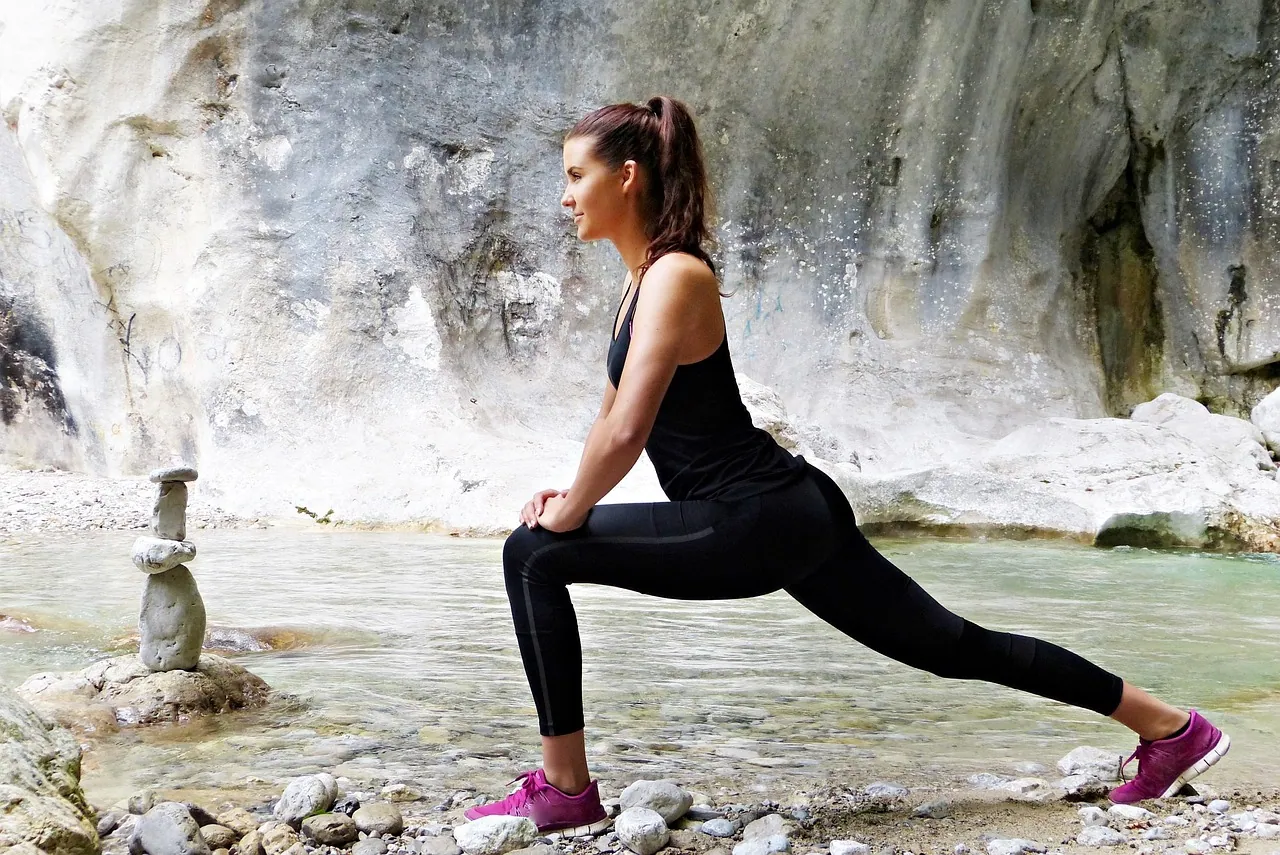
| Exercise | Main thigh area | Beginner version | How to progress |
|---|---|---|---|
| Goblet squat | Quads, glutes | Sit to a chair and stand up, 3×10 | Hold a 5–10 kg dumbbell or a filled water can |
| Reverse lunge | Quads, glutes | Hold a wall for balance, 3×8 per leg | Add weight, then move to Bulgarian split squats |
| Romanian deadlift | Hamstrings, glutes | Hinge at the hips with a broomstick, 3×10 | Dumbbells, then one leg at a time |
| Glute bridge / hip thrust | Glutes, hamstrings | Floor bridge, 3×12 | Back on a sofa, with a band or weight on the hips |
| Sumo squat | Adductors (inner), quads | Bodyweight, 3×12 | Hold a heavy weight between your legs, pause 2 seconds at the bottom |
| Side (Cossack) lunge | Adductors, glutes | Shallow range of motion, 3×6 per side | Go deeper, then add weight |
| Lateral band walk | Abductors (outer) | Light band above the knees, 3×10 steps each way | Heavier band, or move it down to the ankles |
| Step-up | Quads, glutes | A 20–30 cm stair step, 3×8 per leg | Higher step, then add weight |
One mistake matters more than which exercises you choose. Many people stick to light, high-rep sets for months because they believe heavy weights “bulk” and light weights “tone”. Muscle definition comes from progressive overload, which means gradually lifting more weight, doing more reps or using a harder version of the exercise. If you’re still doing side lunges with the same 2 kg dumbbells after three months, your legs stopped adapting long ago.
A 4-week lower-body strength and conditioning plan
This plan follows the WHO recommendation for adults: at least 150 minutes of moderate activity a week (300 minutes gives more benefit) plus muscle-strengthening for all major muscle groups on 2 or more days a week. It has two lower-body strength days, one full-body day, and cardio designed to add to your calorie deficit without wrecking your legs for the next strength session.
How to lose thigh fat at home: the weekly template
You only need a resistance band, a sturdy step and something heavy to hold, like a dumbbell, a backpack with books or a 5-litre water can. Each strength session takes about 35–45 minutes.
| Day | Weeks 1–2 | Weeks 3–4 |
|---|---|---|
| Mon: Lower A (quads + inner thigh) | Goblet squat 3×10, reverse lunge 3×8/leg, sumo squat 3×12, step-up 2×8/leg | Same exercises, 4 sets; add 2–5 kg or slow the lowering phase to 3 seconds |
| Tue: Cardio | 30–35 min brisk walk (you can talk but not sing) | 40 min brisk walk, or 25 min cycling with 6×1-min hard efforts |
| Wed: Upper body + core | Push-ups, rows, plank, 3 sets each | Same, harder versions |
| Thu: Lower B (hamstrings + outer thigh) | Romanian deadlift 3×10, glute bridge 3×12, Cossack lunge 3×6/side, band walk 3×10 | Single-leg RDL, hip thrust with weight, 4 sets |
| Fri: Cardio | 30 min Zumba, dance or cycling | 40 min, or 10 flights of stairs at a steady pace plus a 20-min walk |
| Sat: Full body + conditioning | Circuit: squat, push-up, glute bridge, mountain climber, 3 rounds | 4 rounds, less rest |
| Sun: Rest | Easy walk, 7,000+ steps | Easy walk, 8,000+ steps |

If you’re new to training or carrying a lot of weight, start with brisk walking rather than running. It’s much easier on the knees. Stop any exercise that causes sharp knee or hip pain, as opposed to the normal burn of hard work. If you’re not sure about your form, a few sessions with a 1-on-1 personal trainer can fix your squat and hip hinge before bad habits set in.
Inner thigh fat: what you can and can’t change
How to lose inner thigh fat
Inner thigh fat comes off through overall fat loss, like fat anywhere else. No exercise burns it faster. Adductor training builds the muscle underneath, so the area looks firmer as your body fat falls. Combine a 500–750 kcal/day deficit with sumo squats, side lunges and Copenhagen planks twice a week, and give it 12 weeks or more.
The inner thigh sits in the hip and thigh region, where women’s bodies release fat most slowly, so it usually changes last. In the meantime:
- Train the adductors with real resistance. Side-lying leg lifts become too easy within a couple of weeks. Once they do, move to weighted sumo squats, Cossack lunges and Copenhagen planks (start with your knee on the bench).
- Deal with chafing now. Cycling shorts under kurtas or dresses, and anti-chafe balm, work immediately. Fat loss takes months.
- Set a different goal than the thigh gap. Whether you can have a thigh gap depends mostly on how wide your pelvis is and the angle of your hip sockets. Plenty of lean, strong women don’t have one and never will. Aim for strength and a lower waist measurement instead.
How to lose thigh fat in a week or 2 weeks: the honest timeline
You can’t lose noticeable thigh fat in one or two weeks. At the safe rate of about 0.5 kg a week (ICMR-NIN, 2024), you’d lose roughly 1 kg in two weeks, spread across your whole body. Quick first-week drops are mostly water. Visible thigh change usually takes 8–12 weeks, and often longer for women.
How to lose thigh fat in 2 weeks: what’s actually achievable
Two weeks is enough time to build habits: 8 strength sessions, a daily step target, protein at every meal, and a consistent 500 kcal deficit. Your legs will feel stronger, but your jeans won’t fit differently yet. Our guide on how much weight you can lose in a month works through the same maths for the whole body.
| Timeframe | Expected total weight change* | What you’ll likely notice |
|---|---|---|
| Week 1 | 0.5–1.5 kg (mostly water) | Less bloating. Legs sore at first, then easing |
| Weeks 2–4 | 1–2 kg | Squats and stairs feel easier. Face and waist may start to slim |
| Weeks 5–8 | 2–4 kg | Clothes looser at the waist. Thighs firmer to the touch |
| Weeks 8–12 | 4–6 kg | First measurable drop in thigh circumference for many people |
| Weeks 12–20 | 6–10 kg | Clear change in the thighs, including the inner thigh for many women |
*Based on the ICMR-NIN safe rate of about 0.5 kg/week. Individual results vary with starting weight, sex, age, sleep and how consistent you are. These are ranges, not promises.

How to lose thigh fat without exercise: is it possible?
Yes. A calorie deficit alone reduces thigh fat, but you’ll also lose some muscle and end up with softer legs. ICMR-NIN (2024) recommends getting about 15% of your energy from protein while cutting 500–750 kcal/day to protect muscle. Adding just 2 strength sessions a week makes a visible difference to how your thighs look at the end.
If you can’t train right now, here’s what matters most in an Indian diet:
- Measure the cooking oil. ICMR-NIN recommends limiting cooking oil to 25–30 g a day for adults. A tadka, a paratha and some pakoras can easily add up to three times that.
- Add protein to every meal. Dal, paneer, curd, eggs, chicken, fish, chana or soya chunks. The same guidelines note that eating more than about 1.6 g of protein per kg of body weight doesn’t build more muscle, so there’s no need for supplement powders.
- Change your plate before cutting portions. Fill half the plate with vegetables, a quarter with dal or protein and a quarter with rice or roti. This cuts calories while you still eat a full plate.
- Count your steps. Going from 4,000 to 8,000 steps a day adds up over weeks.
If you’d like help turning this into a plan that works around your family’s meals, a Fitstrot online nutritionist can build it around the dal, sabzi and roti you already eat.
Stuck? Troubleshooting when your thighs won’t budge
Followed the plan for 8+ weeks with no change in your thighs? Check this list first.
- Your weight isn’t moving at all. You’re probably not in a deficit. Weigh your oil, count what you drink (chai with sugar, juice, lassi) and track honestly for 7 days.
- Your weight is falling but your thighs look the same. That’s the gluteofemoral pattern described above, and it’s normal. Measure your mid-thigh with a tape every 2 weeks, at the same point and the same time of day.
- Your thighs look bigger in the first month. New training causes muscle swelling and water retention for the first 2–3 weeks. Don’t stop because of it.
- You’re training legs 5–6 days a week. That’s too often. Two or three focused sessions with 48–72 hours of recovery between them do more.
- You never make the exercises harder. The same weights, reps and exercises for 3 months means you stopped progressing a long time ago. Add weight, reps or a harder version every 1–2 weeks.
- You have pain, heaviness or easy bruising in both legs. Ask your doctor about lipoedema (see above) instead of cutting calories further.
- You’re sleeping 5 hours a night. Short sleep makes you hungrier and slows recovery. Aim for 7–8 hours before you cut food any further.
Frequently asked questions
Can thigh exercises burn fat specifically from the thighs?
No. In a 12-week trial where people trained only one leg, total fat mass fell by 5.1%, but the fat came off the arms and trunk rather than the trained leg (Ramírez-Campillo et al., 2013). Thigh exercises build the muscle underneath, and overall fat loss reveals it.
How long does it take to lose thigh fat?
Most people see a measurable change in thigh size after 8–12 weeks of a steady calorie deficit plus 2–3 leg sessions a week. Women often need 12–20 weeks, because fat on the hips and thighs is released more slowly than fat on the belly.
Why do women store more fat on their thighs?
Oestrogen encourages fat to be stored on the hips and thighs, and women keep a larger share of the fat from meals in fat under the skin (about 38% vs 24% in men, according to a 2012 review). This lower-body fat is also linked to better metabolic health than belly fat.
Can I lose thigh fat in a week?
Not in a way you’d notice. The safe rate is about 0.5 kg of total body weight per week (ICMR-NIN, 2024), and it comes off your whole body. Any quick change in the first week is mostly water.
What is the best exercise to lose thigh fat?
No single exercise will do it. The best approach combines squats, lunges and Romanian deadlifts that get harder over time, 2–3 times a week, with brisk walking, cycling or stairs to add to your calorie deficit.
Is it possible to lose thigh fat without exercise?
Yes. A calorie deficit of 500–750 kcal/day through diet alone will reduce thigh fat along with fat elsewhere. Without strength training, though, you’ll also lose muscle, so your legs will look softer rather than firmer.
Is inner thigh fat harder to lose?
For many women, yes. It’s part of the hip and thigh fat store that tends to be lost last. Adductor exercises make the area firmer, but the fat itself only goes down as your overall body fat does.
Want someone to set your plan for you? A Fitstrot online weight loss trainer can set your calorie target, program your leg days and check your progress every week. Book a first session and get a plan built around your body, your schedule and your kitchen.


