
If you have ever stood between two machines wondering whether to do a fourth set or go home, this guide is for you. The honest answer to how many sets per workout is roughly 10–20 hard working sets in total, spread across two to four muscle groups, but the number that actually drives results is the weekly total per muscle. Below you will find what the research says, tables you can copy into your training log, and a clear plan for beginners, busy professionals and experienced lifters alike.
How many sets per workout should you actually do?
Most healthy adults make good progress with 10–20 hard working sets per session, which usually means 2–4 sets on each of 4–6 exercises. Warm-up sets don’t count. Beginners can start at 8–12 sets and still grow; lifters with 2+ years of training often need 15–20, as long as they recover between sessions.
That range is a starting point, not a rule. A 2017 meta-analysis in the Journal of Sports Sciences found that each additional weekly set per muscle was associated with a 0.37% increase in muscle growth, and that higher-volume groups gained about 3.9% more than lower-volume groups (Schoenfeld et al., 2017, PubMed). In other words, more sets help, up to a point. The trick is working out where your point is.
A “set” in this article means a working set: a set taken close to failure, typically stopping with 0–3 reps still in the tank. A light set of 15 lat pulldowns you could have done 30 of does not count. That single definition clears up most of the confusion you see in gym arguments and online forums.
The number that matters more: how many sets per muscle group per week
For muscle growth, aim for about 10–20 working sets per muscle group per week, split over two or more sessions. Research shows a graded dose-response: gains keep rising with volume, but each extra set adds less than the one before, and strength gains flatten out sooner than size gains.
Thinking per session is convenient, but your muscles only “see” the total stress they recover from over the week. That is why a chest workout of 20 sets done once a week often underperforms the same 20 sets split into two sessions of 10: the second half of a marathon session is done with tired muscles and sloppy form.
The strongest evidence we have is a 2026 meta-regression in Sports Medicine that pooled 67 studies and 2,058 participants. It found that both muscle size and strength rise with weekly set volume, but with diminishing returns, and that the returns diminish much faster for strength (Pelland et al., 2026, PubMed). The same paper made a useful point about counting: sets that only indirectly train a muscle (for example, triceps during a bench press) are best counted as half a set.
An earlier 2017 meta-analysis focused on strength reached a similar conclusion: medium and high weekly set volumes produced greater strength gains than low volumes, with a graded dose-response (Ralston et al., 2017, PMC).
| Training age | Weekly sets per muscle | Sessions hitting each muscle | Typical sets per session | Signal to add volume |
|---|---|---|---|---|
| Beginner (0–6 months) | 6–10 | 2–3 (full body) | 8–12 | Weights stop rising for 3+ weeks |
| Intermediate (6 months–2 years) | 10–16 | 2 (upper/lower or PPL) | 12–18 | Recovering fully and progress has stalled |
| Advanced (2+ years) | 14–20+ | 2–3 | 15–20 | Specialising in a lagging muscle for a 6–8 week block |
| Returning after a 3+ month break | 6–8 | 2 | 8–10 | Soreness settles within 48 hours |
| Age 60+ or health-focused | 4–8 (2 days/week minimum) | 2 | 6–10 | Daily tasks feel easier; no joint pain |
Sets and reps by goal: strength, size and endurance
Set count, rep range and rest time are a package deal. The American College of Sports Medicine’s position stand on resistance training progression recommends 8–12 repetition maximum (RM) loads for novices; heavy 1–6 RM loads with 3–5 minutes of rest for strength; a 6–12 RM emphasis with 1–2 minutes of rest for hypertrophy; and 40–60% of 1RM for more than 15 reps with under 90 seconds of rest for muscular endurance (ACSM position stand, 2009, PubMed). The table below turns that into numbers you can use.
| Goal | Sets per exercise | Reps per set | Load / effort | Rest between sets | Form cue |
|---|---|---|---|---|---|
| Maximal strength | 3–5 | 1–6 | 80–90%+ of 1RM, 1–3 reps in reserve | 3–5 min | Brace your core before every rep, not just the first |
| Muscle size (hypertrophy) | 2–4 | 6–12 (up to 30 works if close to failure) | 0–3 reps in reserve | 1.5–3 min on compounds, 1–2 min on isolation | Control a 2-second lowering phase |
| Muscular endurance | 2–3 | 15–25 | 40–60% of 1RM | Under 90 s | Stop the set when your form breaks, not when you hit a number |
| Power (sport) | 3–5 | 2–5 | 30–60% of 1RM, moved fast | 3–5 min | Every rep should be explosive; end the set if speed drops |
| General health | 1–2 | 8–15 | Challenging final 2–3 reps | 1–2 min | Full range of motion you can own without pain |
Hypertrophy sets and reps: the flexible middle
For size, the rep range is surprisingly forgiving. What matters most is that the set ends close to failure. Loads that allow 6–12 reps are the most time-efficient choice: heavy enough to be productive without the 25-rep sets that burn your lungs before your muscles. Use lower reps (6–8) on squats, deadlifts and presses, and higher reps (10–15) on curls, lateral raises and cable work where heavy loading stresses joints more than muscle.
How many sets and reps to build muscle if you are short on time
A 2019 randomised trial in trained men compared 1, 3 and 5 sets per exercise, three times a week for 8 weeks. Strength and endurance improved similarly in all groups, and the one-set group trained for just 13 minutes per session. Muscle growth, however, increased with volume: mid-thigh thickness rose 3.4% with 1 set versus 12.5% with 5 sets (Schoenfeld et al., 2019, PMC). The takeaway: if you only have 30 minutes, 2–3 hard sets per exercise keeps you strong and still builds muscle; add sets later when life allows.
How many sets per exercise?
Most people should do 2–4 working sets per exercise. Big compound lifts such as squats, deadlifts, rows and bench press sit at 3–4 sets; isolation moves like curls, raises and extensions work well at 2–3. Beyond 4–5 sets on a single exercise, fatigue usually lowers the quality of each extra set.
The reason to cap sets per exercise is simple: by set five of the same movement, the same muscle fibres are exhausted, joints take repetitive stress, and your reps drop sharply. If you want more volume for a muscle, it is usually smarter to add a second exercise at a different angle than to grind out a sixth set of the first. Eight sets of chest work, for example, might look like 4 sets of barbell bench press plus 4 sets of incline dumbbell press, not 8 sets of bench.
How many exercises per workout?
Most productive sessions use 4–6 exercises. Divide your target session volume by your sets per exercise: 12 sets at 3 sets each is 4 exercises; 18 sets is 6. Beginners do well with 4–5 full-body exercises, while split routines usually use 5–7 exercises for two or three muscle groups.
Eight or nine exercises usually means too many total sets or too few sets on each to improve at any of them. Pick fewer movements and get stronger on them.
Your weekly structure decides how these numbers land. If you train each muscle twice a week, you only need half your weekly target per session. Our guide to choosing the best workout split walks through full-body, upper/lower and bro splits in detail, and if you already follow a three-way split, the push pull legs workout guide shows how to spread sets across six days.

Training volume myths that waste your gym time
Training volume, meaning the total number of hard sets you do for a muscle, is the most useful lever you have. It is also the most misunderstood. Here are the myths we hear most often, and what the evidence actually says.
Myth 1: “More sets always means more muscle”
Volume helps, but not in a straight line. The 2026 Sports Medicine meta-regression found clear diminishing returns, especially for strength. And the high-volume trials that grab headlines (30–45 sets per muscle per week) used small groups of young, well-rested trained men over 8 weeks. That is not a template for someone commuting 90 minutes a day in Bengaluru traffic. Treat anything above 20 weekly sets per muscle as a short, planned phase, not your default.
Myth 2: “One set is a waste of time”
For health and basic strength, one hard set is far better than nothing. Mayo Clinic notes that a single set of 12 to 15 repetitions with the proper weight can build muscle efficiently in most people, and that two sessions a week of 20 to 30 minutes is enough to see results (Mayo Clinic, strength training). If you are starting from zero, one set of 8 exercises is an excellent first month.
How much rest between sets?
Rest 2–3 minutes between sets of heavy compound lifts and 1–2 minutes on isolation exercises. In a 2016 trial, trained men resting 3 minutes gained more strength and more quadriceps size than those resting 1 minute on an identical 8-week programme. For pure endurance work, keep rest under 90 seconds.
In that study, 21 resistance-trained men did three full-body workouts a week, each with 3 sets of 8–12 RM on 7 exercises. The only difference between groups was rest. The 3-minute group improved squat and bench press 1RM significantly more, and gained significantly more anterior thigh muscle thickness (Schoenfeld et al., 2016, PubMed).
How much rest between sets for muscle growth
For hypertrophy, rest long enough that you can repeat roughly the same reps on the next set: usually 2–3 minutes for squats, rows and presses and about 90 seconds for curls, raises and cable work. Cutting rest to 45–60 seconds does not “burn more fat” in any meaningful way; it mostly lowers the weight you can lift, which lowers the quality of every set.
Rest time also answers a practical question: how long will my session take? At 3 minutes rest plus about 45 seconds of lifting, each set takes roughly 3.5–4 minutes. Sixteen sets therefore needs 55–65 minutes, plus a 10-minute warm-up. If you only have 45 minutes, cut sets, not rest.

How many sets per workout for beginners
Beginners should start with 8–12 working sets per workout, doing 1–3 sets on each of 4–6 full-body exercises, two or three times a week. That gives each major muscle about 6–10 weekly sets, which is enough to build strength and muscle for the first 6–12 months without excessive soreness.
This matches public health advice too: the NHS recommends strengthening activities that work all the major muscle groups (legs, hips, back, abdomen, chest, shoulders and arms) on at least 2 days a week, done to the point where you need a short rest before repeating (NHS physical activity guidelines).
For the first two weeks, do 1–2 sets per exercise and stop each set with 3 reps still possible. From week three, move to 2–3 sets and get closer to failure. Add weight when you hit the top of the rep range on every set with good form. It sounds slow, but it prevents the classic week-one mistake of doing 25 sets, being unable to walk down stairs for four days, and quitting. We list more of these traps in our post on beginner mistakes in personalised workout plans.
| Exercise | Sets | Reps | Rest | Form cue | Home alternative |
|---|---|---|---|---|---|
| Goblet squat | 3 | 8–12 | 2 min | Knees track over toes; chest tall | Dumbbell or backpack squat |
| Dumbbell bench press | 2 | 8–12 | 2 min | Shoulder blades pinched, elbows ~45° | Push-ups (feet elevated when easy) |
| One-arm dumbbell row | 2 | 10–12 each side | 90 s | Pull elbow to hip, not to ear | Resistance-band row |
| Romanian deadlift | 2 | 8–10 | 2 min | Hinge at hips, soft knees, bar close to legs | Single-leg RDL with dumbbell |
| Seated dumbbell shoulder press | 2 | 10–12 | 90 s | Ribs down, don’t arch the lower back | Pike push-ups |
| Plank | 1 | 30–45 s hold | 60 s | Squeeze glutes; straight line head to heel | Same |
Day B swaps in a split squat, lat pulldown, incline push-up and hip thrust at the same set counts. Alternating A and B three times a week gives each muscle roughly 7–9 weekly sets.

Build your session in five steps
Here is the exact process our coaches use to set volume for a new client. You can do it with a notebook in 10 minutes.
- Pick your weekly target per muscle. Use the first table: 6–10 sets if you are new, 10–16 if you have trained consistently for 6+ months.
- Choose how often you will train each muscle. Twice a week is the sweet spot for most people. Divide the weekly target by two to get sets per muscle per session.
- Add up the session. An upper-body day training chest, back and shoulders at 5–6 sets each lands at 15–18 sets. If that’s over 20, move a muscle to another day.
- Assign 2–4 sets per exercise. Put compound lifts first with 3–4 sets, isolation moves later with 2–3.
- Run it for 4–6 weeks, then review. If weights are climbing and you recover well, keep going. If progress stalls and recovery is good, add 2 weekly sets to the lagging muscle. If you feel beaten up, remove 2–4 sets.
If you are running a surplus to gain size, our bulking workout plan shows how these volumes look across a full training week.
Troubleshooting: is your volume too high or too low?
Numbers on paper are a guess. Your body’s response over 3–4 weeks is the real test. Use these signals to adjust.
Signs you’re doing too many sets
- Your main lifts go backwards for two or more consecutive weeks.
- Soreness from Monday’s session still lingers on Thursday.
- Sleep quality drops, resting heart rate rises, or you dread every session.
- Joints (elbows, knees, shoulders) ache rather than muscles.
- Sessions regularly run past 75–90 minutes and your last exercises feel like filler.
Fix: cut 20–30% of sets for one week (a deload), then restart at the lower end of your range.
Signs you’re doing too few sets
- You finish every session feeling like you could do it all again.
- Weights and reps have not moved in 4+ weeks despite good sleep and enough protein.
- You have no muscle fatigue the next day, ever.
Fix: first check effort. Most people who think they need more sets actually need to take their existing sets closer to failure. If effort is already high, add 1 set per exercise to the lagging muscle for the next block.

For busy professionals and home trainees in India
Most of the people we coach are not full-time athletes. They are software engineers, doctors, teachers and new parents fitting training around long commutes, late calls and family commitments. For this group, a few adjustments make volume far more sustainable:
- Go full-body, three times a week. Three 45-minute sessions of 10–12 sets each gives every muscle 8–12 weekly sets, enough for steady progress, and missing one session still leaves you with two.
- Use supersets on non-competing muscles. Pairing a row with a push-up, or a curl with a triceps extension, cuts session time by about a third without hurting either set.
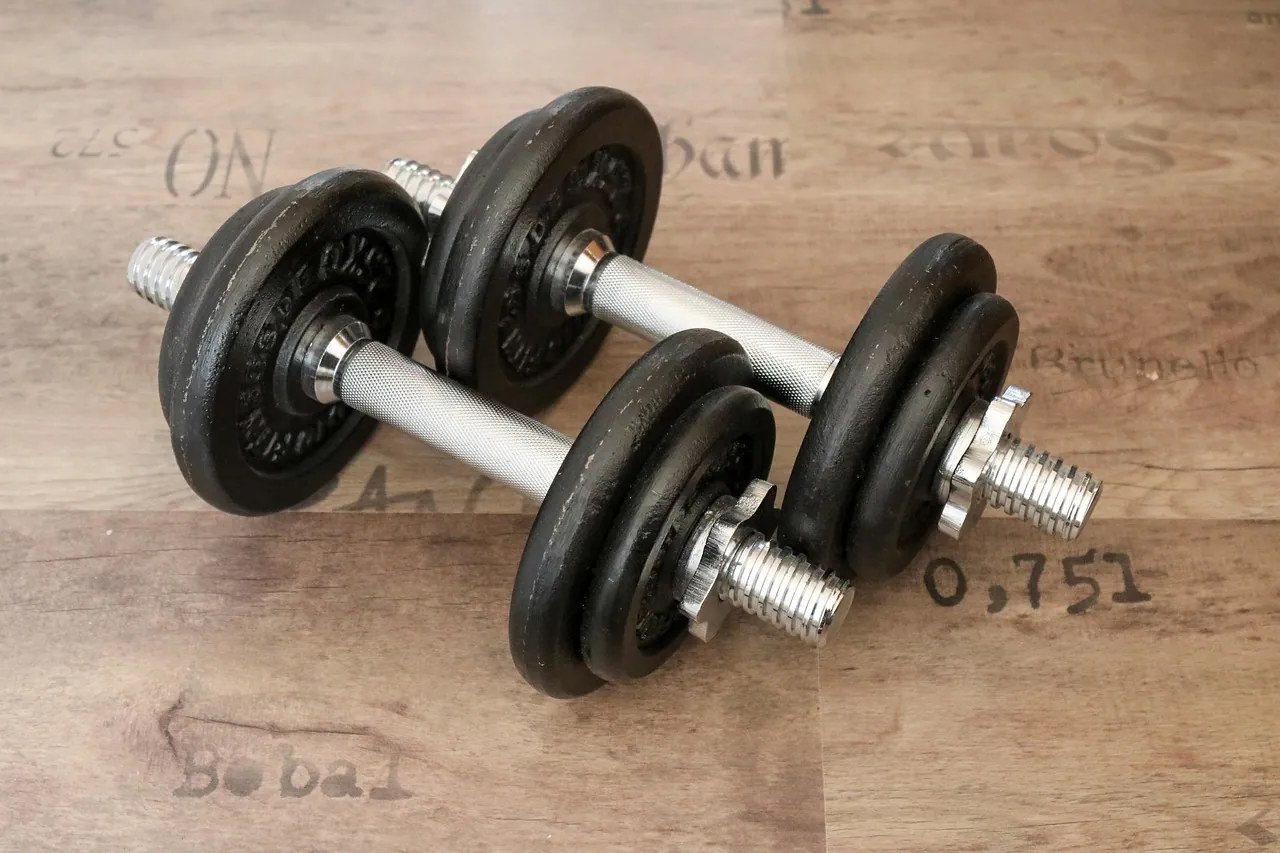
- Home equipment is enough. A pair of adjustable dumbbells (roughly ₹3,000–₹6,000 for a basic set) plus a resistance band covers every movement in the beginner table above. Increase reps to 15–20 when the weight gets light, and still take sets close to failure.
If you would like a coach to set your volume, check your form on video and adjust sets week by week, Fitstrot’s 1-on-1 online personal training is built around exactly this kind of individual programming.
Frequently asked questions
Is 3 sets per exercise enough?
Yes, for most people. Three working sets per exercise, taken close to failure, is enough to build strength and muscle, especially if you train each muscle twice a week. With 2 exercises per muscle, that gives 12 weekly sets, right in the middle of the evidence-based 10–20 range.
Is 20 sets per workout too much?
Not necessarily, but it is near the upper limit for most people. Twenty hard sets with proper rest takes about 75–90 minutes. If your performance drops sharply in the last third of the session, split those sets across two days instead.
How many sets per muscle group per week do I need to build muscle?
About 10–20 working sets per muscle group per week works for most intermediate lifters. Beginners grow on 6–10 weekly sets. Gains continue to rise with more volume, but with clear diminishing returns, according to a 2026 meta-regression of 67 studies.
Do warm-up sets count towards total sets?
No. Only count working sets that end within about 0–3 reps of failure. Warm-up sets prepare your joints and nervous system but do not provide enough stimulus to drive muscle growth.
How long should I rest between sets to build muscle?
Rest about 2–3 minutes on heavy compound lifts and 1–2 minutes on isolation exercises. A 2016 trial found that 3-minute rest periods produced more strength and more thigh muscle growth than 1-minute rests over 8 weeks.
How many exercises should a beginner do per workout?
Four to six full-body exercises, with 1–3 sets each, for a total of 8–12 working sets. Cover a squat, a push, a pull, a hinge and a core exercise, and repeat the session two or three times a week.
Can I build muscle with one set per exercise?
Yes, especially as a beginner or when short on time. One hard set per exercise improves strength and builds some muscle, but research shows that more sets produce more growth, so add sets as your schedule and recovery allow.
Start this week by counting your working sets per muscle for seven days. Most people find one muscle they are overtraining and another they barely touch. Fix that imbalance first, before you add a single extra set.


