
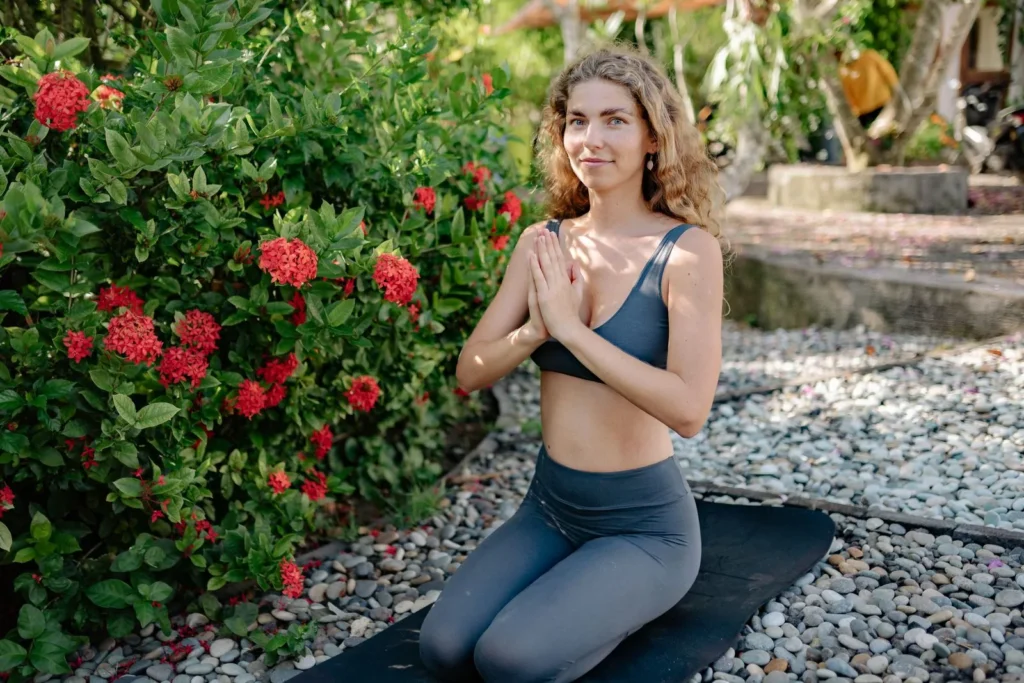
Vajrasana, the thunderbolt pose or diamond pose, is a kneeling posture where you sit back on your heels with a tall spine and hands on your thighs. It needs no hip flexibility, no equipment and about a mat’s worth of space. Below you get exact alignment cues, props for tight knees and ankles, safe hold times, an honest take on sitting in it after meals, and who should skip it.
What Is Vajrasana and Why Is It Called the Thunderbolt Pose?
Vajrasana (Sanskrit: vajra, thunderbolt or diamond, plus asana, seat) is a kneeling seat in which the buttocks rest on the heels, the spine stays upright and the knees stay together. In Hindi it is written वज्रासन. It is taught early because the pose asks for ankle and knee flexibility instead of open hips.
The name points to stability: a firm, grounded base with an alert, upright spine. Many traditional texts also treat it as a steady seat for pranayama and meditation. Compared with cross-legged seats such as padmasana or sukhasana, it suits people whose hips are tight but whose knees and ankles are comfortable.
How to Do Vajrasana: Step-by-Step Alignment Cues
To do vajrasana, kneel with knees together and big toes touching, lower your hips onto your heels, lengthen your spine, rest your palms on your thighs and breathe through your nose. Hold 30 to 60 seconds on day one, then build up gradually. Stop if you feel sharp pain in the knee joint.
| Step | What to do | Alignment cue |
|---|---|---|
| 1. Kneel | Come onto a mat with knees together or a fist-width apart, shins on the floor | Pad under the knees if the mat is thin |
| 2. Feet | Point the toes straight back, big toes touching or slightly overlapping | Heels fall slightly outward, like a bowl for your hips |
| 3. Sit back | Lower slowly until the buttocks rest on top of the heels | Use your hands on the floor to control the descent |
| 4. Spine | Stack ribs over pelvis and lift the crown of the head | Imagine a string lifting the top of your head |
| 5. Shoulders | Roll the shoulders back and let them drop away from the ears | Chin level, back of neck long |
| 6. Hands | Palms down on the thighs, just above the knees | Elbows soft, not locked |
| 7. Breathe | Inhale and exhale through the nose, eyes closed or soft | Let the exhale be slightly longer than the inhale |
| 8. Exit | Lean forward onto your hands, lift the hips, stretch the legs out | Shake out the feet for 20 to 30 seconds |
Vajrasana for beginners is mostly about patience: many feel tightness across the tops of the feet and ankles for the first few sessions. That is normal and eases with short, regular sits rather than one long forced hold. A minute of standing practice such as tadasana beforehand wakes up the legs and helps you find a tall spine before you kneel.
Variations and Props: Making Vajrasana Comfortable
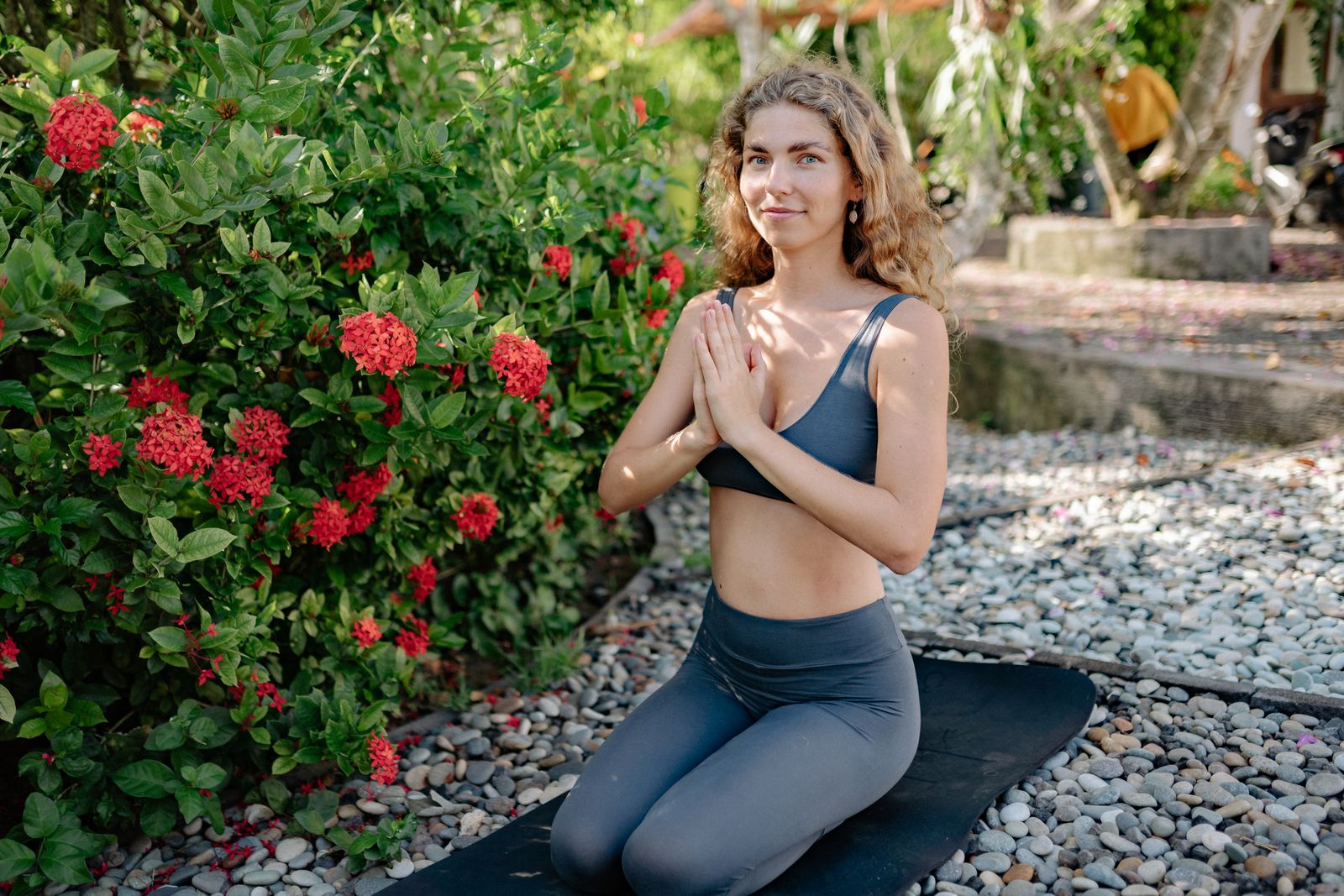
You do not need to force the full pose. Most discomfort comes from limited ankle flexion or a deep knee bend, and both respond to props. A folded blanket, a rolled towel or a yoga block changes the angle at the joints without changing the purpose of the pose, which is a steady, upright seat.
| Problem | Prop or variation | How to set it up |
|---|---|---|
| Knees feel compressed | Folded towel behind the knees | Tuck a small, tightly folded towel into the crease behind each knee before sitting |
| Tight ankles or sore foot tops | Rolled towel or thin blanket under the ankles | Place it across the mat so the shins rest slightly raised |
| Hips will not reach the heels | Yoga block or cushion between the heels | Use the block flat or on its medium height and sit on it |
| Toes cramp | Toes tucked under (the “toes-curled” option) | Tuck the toes, sit back, then untuck after 20 to 30 seconds |
| Cannot kneel at all | Chair version | Sit on the front half of a chair, feet flat, spine tall, hands on thighs |
How Long Should You Hold Vajrasana?
Beginners should hold vajrasana for about 30 seconds to 2 minutes, once or twice a day. With regular practice most people work up to 5 to 10 minutes. Longer sits of 15 to 20 minutes are mostly for people who already sit comfortably for meditation. Come out earlier if you feel numbness or sharp pain.
- Week 1: 30 to 60 seconds, two or three rounds with leg-stretch breaks in between.
- Weeks 2 to 3: 2 to 3 minutes in one sit, once or twice a day.
- Week 4 onward: 5 minutes is a comfortable target for most people; add time only if your ankles and knees feel fine afterwards.
- After meals: a relaxed 5 to 10 minutes is what is commonly taught (see the next section for what that does and does not do).
- Numb or tingling feet: a signal to exit, shake the legs out and shorten the next hold.
Can You Sit in Vajrasana After Eating?
Yes, vajrasana is the one asana traditionally taught for sitting after a meal. Most people sit for about 5 to 10 minutes, starting 5 to 10 minutes after finishing, with a straight back. It is a gentle, upright habit that many find comfortable. It is not a treatment for any digestive condition.
Here is the honest version of the story. Indian households often tell children to sit in vajrasana after lunch or dinner, and many adults say it feels better than lying down or slumping on a sofa. The traditional explanation is that the folded legs change blood flow toward the abdomen. That is a teaching from yoga practice, not a proven medical mechanism, so treat it as a comfortable posture habit, not a guarantee.
What is reasonable to say: staying upright for a few minutes after eating, rather than reclining at once, tends to feel lighter for many people. A short walk after a meal does a similar job, and you can do both. If you rely on vajrasana because meals leave you bloated or uncomfortable every time, speak to a doctor or a registered dietitian about the cause. Our online nutritionist consultation is one place to start sorting out what and how you eat.
Practical tips for after-meal sitting:
- Keep the back tall, but do not press the belly against the thighs.
- Stop if you feel nausea, reflux or knee discomfort, and just sit on a chair instead.
Myth Check: What Vajrasana Does and Does Not Do
Vajrasana has a long list of claims attached to it online. Some are inflated.
- Myth: it cures gas, acidity or constipation. It does not. It is a calm, upright posture that some people find comfortable after eating. Persistent digestive symptoms need a medical opinion.
- Myth: it burns belly fat. A static kneeling hold uses barely more energy than ordinary sitting. Fat loss comes from your overall food intake and activity, not from this pose.
- Myth: you can hold it as long as you like. Long holds without preparation can irritate the knees and ankles. Build up slowly.
- What it does offer (the realistic vajrasana benefits): a stable seat for breathing and meditation, a stretch through the ankles, the tops of the feet and the front of the thighs, practice at keeping the spine tall, and a quiet few minutes in your day.
Who Should Avoid Vajrasana or Modify It?
Skip or modify vajrasana if you have a knee injury, ankle problems, recent surgery or are pregnant. In these cases the deep knee bend and ankle flexion can aggravate pain or slow healing. Use a chair seat, check with your doctor or physiotherapist first, and never push through sharp pain.
| Situation | Why caution matters | What to do instead |
|---|---|---|
| Knee injury, ligament or meniscus issues, or arthritis | The pose holds the knee in deep flexion, which can aggravate pain | Get medical clearance first; use a chair seat and skip the kneeling hold |
| Ankle problems or sprain | The ankle is held in strong plantar flexion under body weight | Use a rolled towel under the ankles or sit on a chair |
| Recent surgery (knee, hip, ankle, abdomen) | Healing tissues should not be loaded or folded before clearance | Wait for your surgeon or physiotherapist to approve; chair sitting in the meantime |
| Pregnancy | Comfort, balance and joint laxity change across trimesters | Ask your doctor and a prenatal yoga teacher; use a bolster or chair and avoid pressure on the belly |
| Numb or tingling feet in the pose | Circulation or nerves may be compressed | Exit, shake out the legs, shorten holds; seek advice if it keeps happening |
See your doctor if… you have knee pain that is sharp, swelling, a joint that clicks painfully or locks, pain that lingers after you come out of the pose, or numbness that does not settle. Do not treat knee pain with more yoga, and do not use vajrasana in place of medical care.
Troubleshooting: Common Mistakes and Quick Fixes
- Sitting between the heels: that is virasana, a different pose with much more knee load. Keep the hips on top of the heels in vajrasana.
- Rounding the lower back: lift the chest, draw the lower ribs in slightly and imagine the crown of your head floating up.
- Ignoring knee pain: a stretch in the thighs is fine, sharp joint pain is not. Exit slowly.
- Cold start: do a few ankle circles and a minute of standing poses first. A balance such as vrksasana works well because it warms the ankles.
How Does Vajrasana Fit Into a Daily Practice?
Vajrasana works well as a closing or transition pose. After a warm-up and a few rounds of surya namaskar, a few minutes of stillness in vajrasana lets the breath settle.
A simple sequence: begin with tadasana, move through a few sun salutations, add vrksasana for balance and focus, then close with 2 to 5 minutes of vajrasana. This mirrors how hatha yoga classes often pair movement with stillness. If you are building a broader set of postures, our guide to yoga poses shows where it sits among the basics, and a short online yoga session for stress relief is an easy way to practise it at home.
When you are comfortable with the basic pose for several weeks, you can explore supta vajrasana, the reclined version. It stretches the thighs and hip flexors much more intensely and is not for beginners or anyone with knee or ankle concerns. Stay with the seated form until it feels easy.
How Does Vajrasana Compare With Other Seated Poses?
This vajrasana yoga pose asks for ankle and knee flexibility, while padmasana and sukhasana ask for hip rotation. If cross-legged sitting hurts your hips or lower back, vajrasana is often easier for meditation. If kneeling hurts your knees or ankles, sukhasana on a cushion or a chair is the better seat.
Questions People Ask About Vajrasana
Is vajrasana good for weight loss?
Not by itself. Holding vajrasana burns barely more energy than normal sitting, so it will not drive fat loss. It can support a routine by getting you upright and calm after meals. For weight loss, pair it with calorie-aware eating and active sessions such as Zumba, or work with an online weight loss trainer.
Can I do vajrasana every day?
Yes, for most healthy people a few minutes daily is fine, including a short sit after meals. Increase the time gradually and use a folded towel behind the knees or under the ankles if you feel pressure. If your knees or ankles feel sore the next day, shorten the hold or skip a day.
Why does vajrasana hurt my knees or ankles?
Usually because the ankles are tight, the thigh muscles are tense, or too much weight sits on the knee joint. Try a towel behind the knees, a rolled towel under the ankles or a block under the hips. Sharp or lingering knee pain is a reason to stop and see a doctor or physiotherapist.
What is the difference between vajrasana and supta vajrasana?
Vajrasana is the seated kneeling pose with an upright spine. Supta vajrasana starts there and then leans back until the back rests on the floor, giving a far deeper stretch through thighs and hip flexors. It is an intermediate pose and unsuitable if kneeling already bothers your knees or ankles.
Can I do vajrasana during pregnancy?
Many pregnant women find a modified seat comfortable, but it depends on your trimester, comfort and any medical advice you have. Ask your doctor first and practise under a prenatal yoga teacher. Use a bolster or a chair, avoid pressing on the belly, and stop if you feel dizzy, pain or pressure.
Learn Vajrasana With Live Feedback
Alignment is easier to fix when someone is watching your ankles and spine in real time. Join a live online yoga class with Fitstrot, tell the teacher about any knee or ankle history, and practise vajrasana with props that suit your body.


