
Surya namaskar, or sun salutation, is a flowing sequence of 12 yoga postures linked by breath, done as one continuous round. Each posture is paired with an inhale or an exhale, so you warm up the spine, shoulders, hips and legs while the breath slows the mind. It needs no equipment, only a mat-sized patch of floor and roughly 10 to 15 minutes.
This guide gives you the 12 steps of surya namaskar with breath cues, a four-week plan for building up rounds, the mistakes that cause most wrist and back complaints, and honest numbers on what it does and does not do for your fitness.
What is surya namaskar, and why are there 12 steps?
Surya namaskar means “salutation to the sun” in Sanskrit. It is a set of 12 linked postures, repeated on both sides of the body. One full round has two halves, right leg back first and then left leg back, so one round is 24 movements and usually takes 2 to 4 minutes at a calm pace.
The number 12 matches the 12 names of the sun in the traditional mantras, and also gives the sequence a natural shape: stand, reach up, fold, lunge, plank, lower, lift the chest, press back, then retrace the path to standing. Schools differ slightly (some use downward dog where others use plank), but the logic is the same.
The 12 steps of surya namaskar, pose by pose
Use this table as a reference while you learn. The breath column is the part beginners skip, and it is what turns a series of stretches into a flow. Where schools differ, the version below is the most widely taught one.
| Step | Pose (Sanskrit / English) | Breath | Key cue |
|---|---|---|---|
| 1 | Pranamasana / Prayer pose | Exhale | Feet together, weight even, palms joined at the chest |
| 2 | Hasta Uttanasana / Raised arms | Inhale | Arms up beside the ears, lift the ribs, soft backbend |
| 3 | Padahastasana / Standing forward fold | Exhale | Hinge at the hips, bend the knees if hamstrings are tight |
| 4 | Ashwa Sanchalanasana / Low lunge (right leg back) | Inhale | Front knee over the ankle, chest lifted, back knee may rest down |
| 5 | Dandasana / Plank | Hold, or breathe out slowly | Straight line from head to heels, belly gently drawn in |
| 6 | Ashtanga Namaskara / Eight-limb pose | Exhale | Knees, chest and chin down, hips stay slightly raised |
| 7 | Bhujangasana / Cobra | Inhale | Elbows slightly bent, shoulders away from the ears |
| 8 | Adho Mukha Svanasana / Downward dog | Exhale | Hips up and back, heels reaching toward the floor |
| 9 | Ashwa Sanchalanasana / Low lunge (right foot forward) | Inhale | Step the right foot between the hands, lift the chest |
| 10 | Padahastasana / Standing forward fold | Exhale | Bring the left foot in, fold, let the head hang |
| 11 | Hasta Uttanasana / Raised arms | Inhale | Roll up slowly, arms sweep overhead |
| 12 | Tadasana / Mountain pose | Exhale | Palms to the chest, stand still for one breath |
Steps 1 to 12 make the first half. For the second half, repeat everything but step the left leg back in step 4 and bring the left foot forward in step 9. Skipping the second half leaves one side stretched and the other not, which is the most common structural error in home practice.
How do you breathe during surya namaskar?
Inhale when the chest opens or the body rises (arms up, lunge, cobra, rolling up). Exhale when the body folds or compresses (forward fold, eight-limb pose, downward dog, returning to prayer). Breathe through the nose, aim for roughly 3 to 4 seconds per breath, and slow the movement if you start gasping.
Think of the breath as the metronome. If you run out of air before the pose ends, you are moving too fast. In plank, the usual instruction is to hold the breath briefly or let it out slowly, but if holding makes you tense, just breathe normally. Comfortable breathing matters more than matching a script.
Myth check: more rounds is not always better
You may have heard that real surya namaskar means 108 rounds, or that it replaces a gym or a diet. Neither is a safe starting point. The 108-round practice exists as a ritual or endurance challenge, usually done by experienced practitioners over an hour or more, and it is hard on wrists, shoulders and lower back if you are not conditioned.
A more useful rule: stop a round while your form is still clean. Ten tidy rounds beat thirty rushed ones. Surya namaskar is also moderate exercise, not high intensity, so it will not build serious muscle or replace strength work. It is an excellent daily base, not the whole programme.
Three more claims worth correcting: one round is a warm-up, not a workout, and 10 to 12 steady rounds make a light-to-moderate 20 to 30 minute session. Nothing burns fat from one body part, so “it melts belly fat” overpromises; it uses energy, but food habits decide most of the result. And faster is not better, because rushed rounds strain wrists and the lower back.
How many surya namaskar a day should a beginner do?
A beginner should start with 3 rounds a day (both legs, about 6 to 10 minutes) and add 1 to 2 rounds per week. Most people reach 10 to 12 rounds, which takes roughly 20 to 30 minutes, within 4 to 6 weeks.
Wrists and shoulders adapt more slowly than the legs, so treat the plan as a ceiling. If a week feels too much, repeat it.
| Week | Rounds per day | Pace | Focus |
|---|---|---|---|
| Week 1 | 3 | Slow, about 3 to 4 minutes per round | Learn the order; knees down in lunge and eight-limb pose |
| Week 2 | 5 | Slow to steady | Match each move to the breath |
| Week 3 | 8 | Steady, about 2 to 3 minutes per round | Long spine in lunge; relax the jaw and shoulders |
| Week 4 | 10 to 12 | Steady | Smooth transitions; rest 30 seconds after round 6 if needed |
Troubleshooting: where surya namaskar usually goes wrong
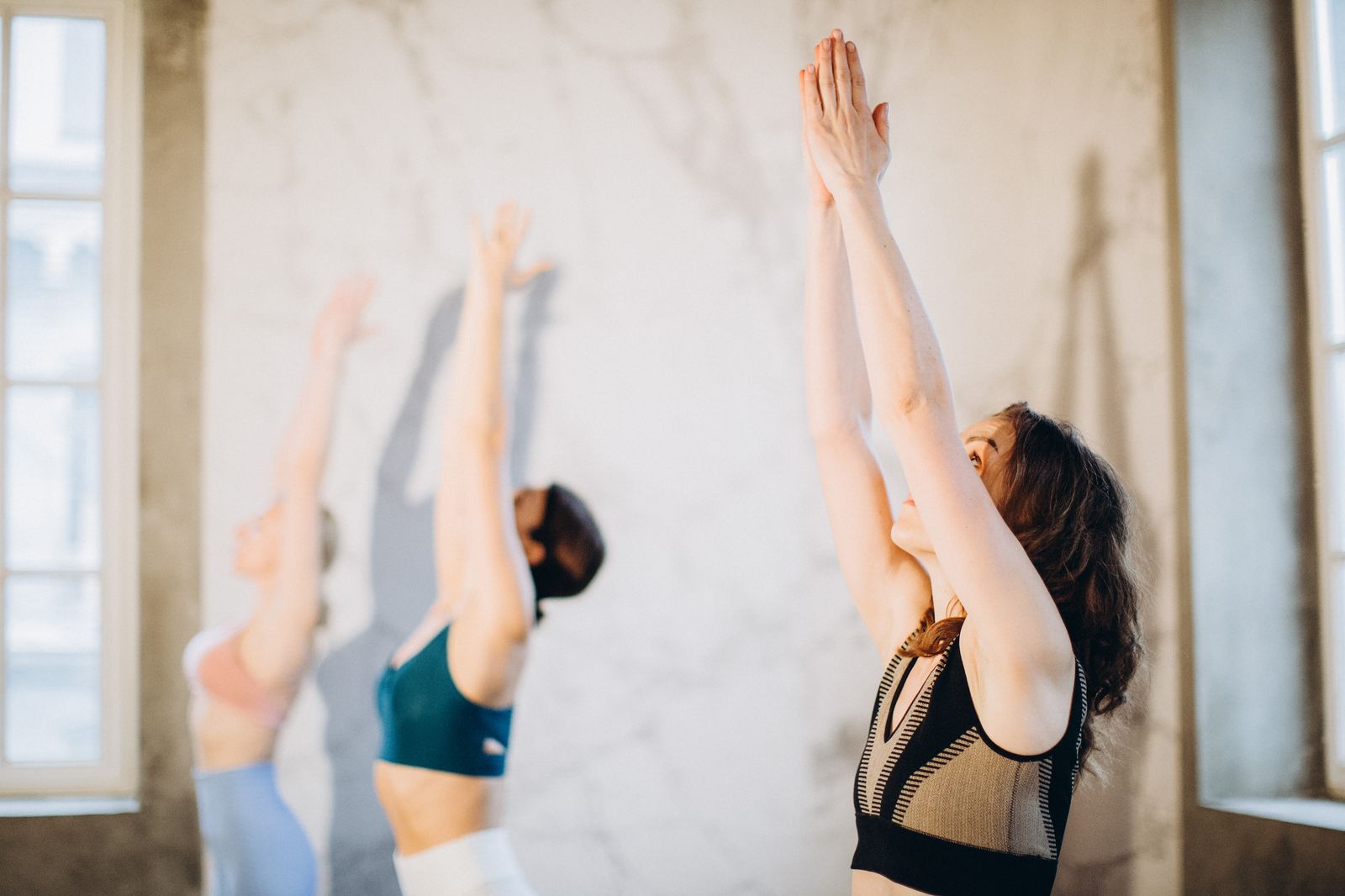
Most pain from surya namaskar comes from five repeatable errors: locked knees in the fold, a sagging lower back in plank, shrugged shoulders in cobra, collapsed wrists in downward dog, and rushing the transitions. Each has a quick fix, listed below.
| What you feel | Likely cause | Fix |
|---|---|---|
| Pulling behind the knees or low back in the fold | Locked knees, hamstrings tight | Bend the knees generously; let the belly rest on the thighs |
| Aching lower back in plank or cobra | Hips sagging, or pushing the chest up with the back | Draw the belly in, lower the knees; keep elbows bent in cobra |
| Sore wrists | Weight dumped on the heel of the hand | Spread the fingers, press through the knuckles, and shorten the hold |
| Neck and shoulder tightness | Shrugged shoulders in raised arms, plank and cobra | Pull the shoulder blades down and back before each move |
| Dizziness when you stand up | Rolling up too fast, or breath held too long | Rise slowly in step 11 and breathe continuously |
| Out of breath by round 3 | Pace too quick | Slow the movement to your breath and drop the round count |
If a joint hurts sharply, stop. Muscle effort and stretch are normal; pinching or burning pain in a joint is not.
Surya namaskar for different bodies and situations
Complete beginners and stiff bodies: Bend your knees in every forward fold and lunge, drop the knees in plank, and skip the deep cobra. The sequence still works at 50 percent depth, and depth builds with time.
Desk workers: Hours of sitting shorten the hip flexors and round the upper back. Spend extra time in the low lunge and raised arms, and keep the chin level in cobra instead of throwing the head back.
Older adults or limited mobility: Stand with a chair in front of you. Do the arms-up, fold-to-the-chair and prayer steps, and replace the floor work with a wall or chair version. A trainer on a live call can adapt it for knees or hips.
When to check with a doctor first: Please see your doctor before starting if you are pregnant, have uncontrolled high blood pressure, a hernia, a recent surgery, a slipped disc, vertigo or a heart condition. Deep forward folds, compressing the belly and keeping the head below the heart are exactly what some of these conditions need to avoid. Pregnancy practice, if cleared, should be taught by someone trained in prenatal yoga.
What are the benefits of surya namaskar, honestly?
Done regularly, surya namaskar improves flexibility in the spine, hips and hamstrings, builds endurance in the shoulders, arms and core, and helps you practise slow breathing. A steady round burns roughly 10 to 15 kcal, so 12 rounds is about 120 to 180 kcal, depending on your body weight and pace.
That calorie figure is modest, about a banana and a half, so treat it as a useful add-on rather than a weight loss plan. Where it shines is consistency: it is easy to do daily, needs no gym and leaves you feeling more mobile within a few weeks.
If your goal is fat loss, pair it with sensible meals and some strength training. Our online weight loss trainer can build that around your routine, and a 1-on-1 personal trainer can add the strength work that yoga alone does not give.
What are the 12 surya namaskar mantras?
The 12 traditional mantras each begin with “Om” and end with “Namah”, one for every step, naming a form of the sun: Mitraya, Ravaye, Suryaya, Bhanave, Khagaya, Pushne, Hiranyagarbhaya, Marichaye, Adityaya, Savitre, Arkaya and Bhaskaraya. They are optional and can be said silently.
If chanting feels unfamiliar, count breaths instead. If you want a deeper look at the hand gestures often paired with sun practice, our guide to surya mudra explains how that gesture is done and what it is traditionally used for.
When should you practise: morning, evening or after meals?
Early morning on an empty stomach is the traditional choice, but any time works if you leave about 2 to 3 hours after a full meal and 30 to 45 minutes after a light snack. A few rounds in the evening can loosen a stiff back after a day at a desk.
Learning with a teacher instead of a video
Surya namaskar is easy to get slightly wrong: hips too high, wrists too loaded, breath out of step. A live instructor spots these in seconds. Fitstrot’s online yoga classes include sun salutation, with corrections on camera.
Frequently asked questions about surya namaskar
Is surya namaskar enough exercise on its own?
For most adults, no. Ten to twelve rounds give a good mobility and light cardio base, but it does not provide enough resistance for strength or enough intensity for fitness gains over time. Pair it with brisk walking, strength training or a dance class 3 to 4 days a week.
How many calories does surya namaskar burn?
Roughly 10 to 15 kcal per round at a steady pace, or about 120 to 180 kcal for 12 rounds. This changes with your body weight, speed and how deeply you move. Treat it as an estimate, not a precise number.
Can I do surya namaskar every day?
Yes, most healthy adults can do a moderate number of rounds daily. Build up gradually, take a rest day if your wrists or lower back feel sore, and keep the form clean. If you feel sharp or lasting pain, stop and ask a trainer or doctor.
Can I do surya namaskar on an empty stomach?
Yes, and many people prefer it. Have a glass of water first. If you feel light-headed, eat a small snack such as a banana, wait 30 to 45 minutes, and then practise.
Is surya namaskar safe during pregnancy or periods?
During pregnancy, get your doctor’s approval first and learn a modified version from a prenatal-trained teacher, since deep folds and belly compression are usually avoided. During periods, gentle practice is fine if you feel well. Listen to your body, and reduce the rounds or stop if you have cramps or heavy flow.
Next step: Book a trial class with Fitstrot’s online yoga teachers and have your surya namaskar form checked live in 20 minutes.


