
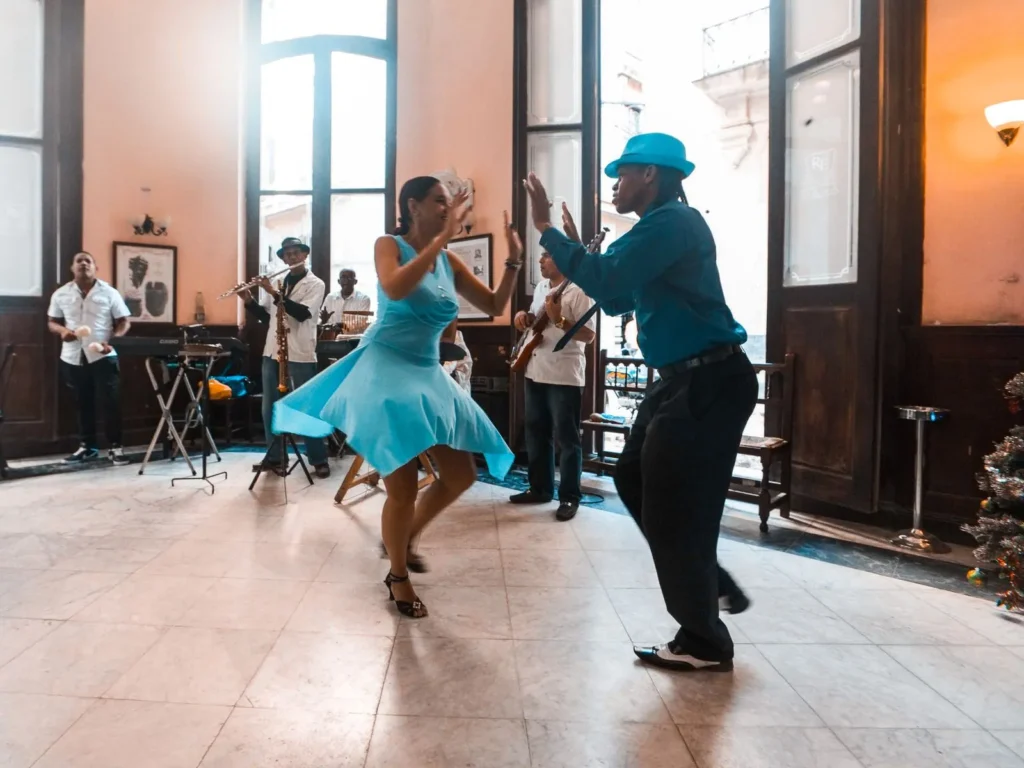
If you want zumba rhythms explained without dance jargon, start here. Every class is stitched together from a handful of Latin and world dance styles, and each style brings its own tempo, its own basic step and its own effort level. Once you can tell salsa from merengue, or reggaeton from cumbia, a new routine stops feeling like a blur and starts feeling like a pattern you can predict. This guide covers the core four, the extra styles instructors add (including Bollywood-style fusion), how to spot each one by ear, and what to do when a rhythm trips you up.
What are the main rhythms used in Zumba?
Most Zumba classes are built on four core rhythms: salsa, merengue, reggaeton and cumbia. Instructors then add styles such as bachata, samba, cha-cha, soca, hip hop and Bollywood-style fusion for variety. The music is mostly Latin, and each rhythm sets the tempo, step pattern and effort level of the song it belongs to.
Think of the core four as the grammar of a class. Instructors start with basic leg movement, add arm variations, then layer on rhythm changes, fitness intensity and personal style. That layering is why the same four rhythms can produce endless different routines, and why a class that mixes them never feels like one repeated exercise. If you are new to the format, our guide to the types of Zumba shows how class formats differ on top of these rhythms.
Zumba rhythms at a glance: origin, tempo and intensity
The table below is the quick reference most people screenshot. Origins are given in general terms, tempo is a feel rather than a strict rule, and intensity describes the usual effort when you dance at full size. Your own effort will move up or down depending on how big you make the steps.
| Rhythm | Origin (general) | Tempo feel | Main moves | Intensity |
|---|---|---|---|---|
| Salsa | Caribbean, with Cuban and Puerto Rican roots | Lively, syncopated timing | Side-to-side and forward-and-back steps, hip sway, cross-body turns | Moderate to high |
| Merengue | Dominican Republic | Fast and even, roughly 120 to 160 beats per minute | Marching, side steps, hip-to-hip sway | Moderate, but builds heart rate quickly |
| Reggaeton | Caribbean, with Puerto Rican and Panamanian influences | Mid-tempo, heavy repeating dembow beat, often around 90 to 100 beats per minute | Knee-bent bounces, hip isolations, body rolls | Moderate to high |
| Cumbia | Colombia | Steady, grounded, moderate | Forward-and-back stepping, dragging foot, small hip swing | Low to moderate |
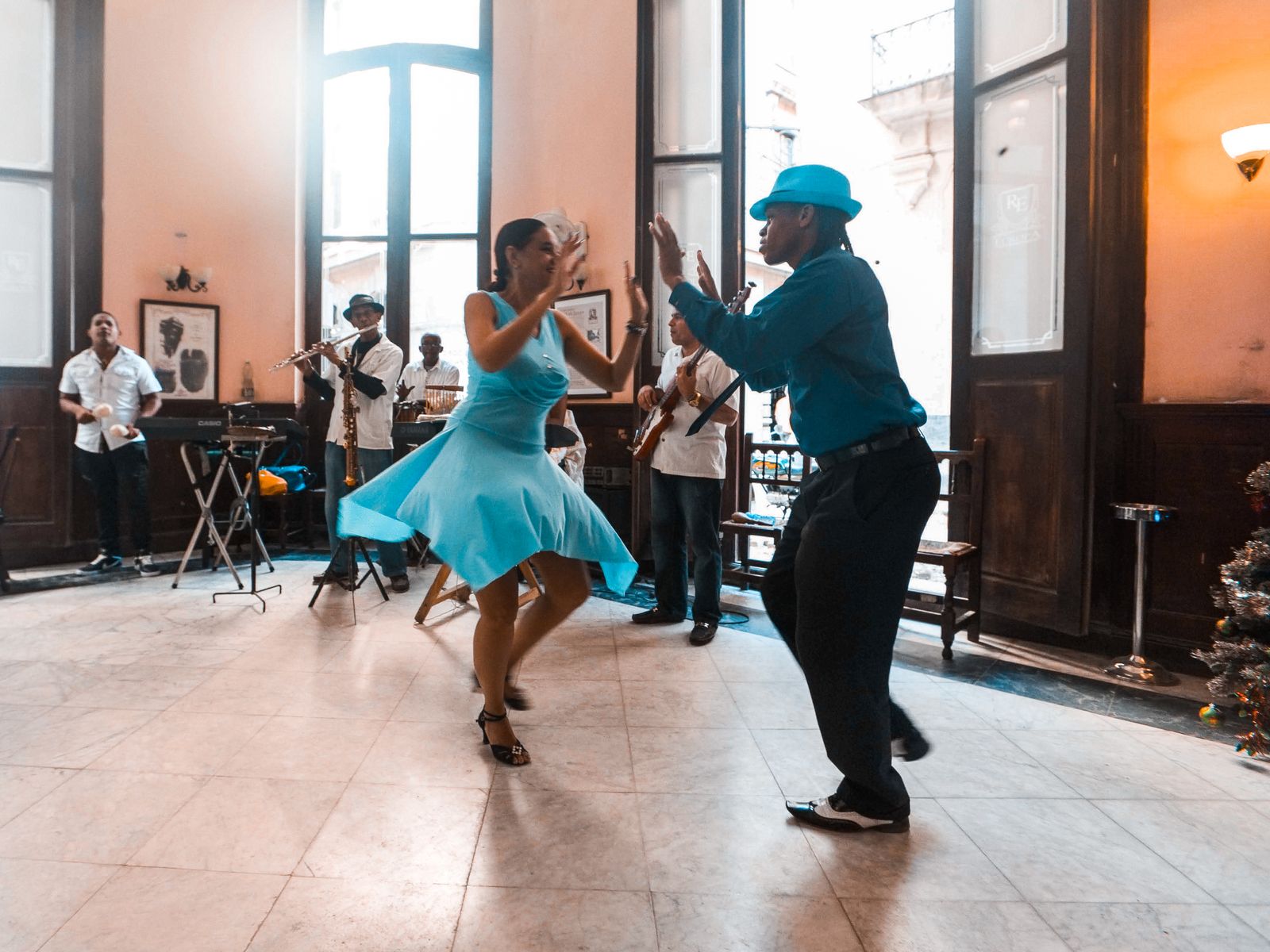
Salsa, merengue, reggaeton and cumbia: what each one feels like on the floor
Salsa is the rhythm most people associate with Latin dance. The timing is syncopated, so the steps feel quick and slightly off the obvious beat, and the hips do a lot of the work. It rewards precise feet and a relaxed upper body. Our salsa in Zumba guide breaks down the basics and how a fitness salsa differs from a partner salsa class.
Merengue is the easiest rhythm to read. Every beat carries an equal, heavy accent, so you march, step side to side and sway the hips in a steady pattern. Because it is simple and fast, instructors often use it early in a class to raise your heart rate without asking you to learn anything complicated. The merengue in Zumba guide covers the steps in more depth.
Reggaeton is built around a repeating dembow beat, which gives it a heavy, bouncing pulse. Movement stays low and loose: bent knees, hip isolations, body rolls and strong arm accents. It is usually one of the higher-effort segments of a class, partly because staying low is demanding on the thighs. Read the reggaeton in Zumba guide for the styling details.
Cumbia is the change of pace. It is steadier and more grounded than the other three, with forward-and-back stepping and a distinctive dragging foot. It still keeps you moving, but it gives your breathing a moment to settle. Our cumbia in Zumba guide explains the two most common basic steps.
Which other dance styles show up in a Zumba class?
Beyond the core four, instructors commonly add bachata, samba, cha-cha, soca, hip hop, belly dance and bhangra, plus Bollywood-style fusion in many Indian classes. Which ones appear depends on the instructor, the studio and the theme of the session, so no two classes use exactly the same mix.
| Style | Origin (general) | Tempo feel | Main moves | Intensity |
|---|---|---|---|---|
| Bachata | Dominican Republic | Slow to moderate, smooth | Side steps with a hip lift or tap on the fourth count | Low to moderate |
| Samba | Brazil | Bouncy and quick | Small bouncing steps, hip rolls, fast feet | Moderate to high |
| Cha-cha | Cuba | Moderate, playful | Triple step (cha-cha-cha), hip swivels | Moderate |
| Soca | Trinidad and Tobago | Fast and festive | Bounces, jump-ups, waist movement | High |
| Hip hop | United States | Groove-based, varies by track | Bounces, grooves, sharp arm hits | Moderate to high |
| Bhangra | Punjab, India | Fast, drum-driven | Shoulder lifts, arms overhead, jumps | High |
| Bollywood-style fusion | Indian film dance, blended with Latin and pop | Varies from song to song | Expressive arms, hand gestures, hip and shoulder accents | Moderate to high |
Bachata deserves a special mention because it often appears paired with dembow in modern classes, giving a smooth, romantic bachata verse that suddenly switches to a harder beat. Our bachata and dembow in Zumba guide explains how the two fit together.
Myth check: you need dance experience to follow the rhythms
You do not. Zumba rhythms are taught progressively, starting with simple leg movement and adding arms and styling only when the feet feel comfortable. Most beginners follow the instructor within two or three classes. What helps far more than experience is permission to do a smaller, simpler version of each step until the pattern clicks.
A second myth is that Zumba is only Latin. The core is Latin, but many Indian classes deliberately fold in bhangra and Bollywood-style fusion because they feel familiar and make the class easier to join. Both are real parts of a modern class, not a gimmick.
How can you recognise a Zumba rhythm by ear?
Listen for the pattern underneath the melody. An even, driving beat with every count equally heavy is usually merengue. A repeating “boom-ch, boom-ch” bounce is usually reggaeton. A smooth, guitar-led feel with a pause on the fourth count is bachata. A steady, grounded sway points to cumbia, and quick syncopated timing suggests salsa.
Once your ear picks up these cues, you can often guess the type of movement before the instructor shows it. Merengue signals marching and side steps. Salsa signals faster footwork. Reggaeton signals low, hip-driven bounces. Cumbia signals the grounded forward-and-back pattern. This shortens the learning curve in any unfamiliar routine, including online classes where you cannot see the whole room.
How does a class use these rhythms from start to finish?
A typical 45-minute Zumba class opens with an easy rhythm such as merengue or bachata, builds through salsa and reggaeton to a peak, uses cumbia or another steady rhythm as a breather, adds a high-energy finish, and ends with slow stretching. The exact order varies by instructor, but the shape of rising and falling effort is consistent.
| Minutes | Segment | Typical rhythm | Effort |
|---|---|---|---|
| 0 to 5 | Warm-up | Merengue or bachata | Easy |
| 5 to 15 | Build | Salsa and cha-cha | Moderate |
| 15 to 25 | Peak | Reggaeton and hip hop | High |
| 25 to 30 | Breather | Cumbia | Low to moderate |
| 30 to 40 | Finish strong | Samba, soca, bhangra or Bollywood-style fusion | High |
| 40 to 45 | Cool-down | Slow, flowing track and stretching | Easy |
This is a typical pattern, not a fixed rule. Some classes are themed around a single rhythm, and formats such as Zumba Toning add light weights to the same musical structure.
Lost in the middle of a song? Fixes for common rhythm problems
You cannot find the beat. Ignore the singing and tap the heaviest count with your foot for eight counts before you move. Merengue and reggaeton make this easiest because their beats are the most obvious.
Your feet are right but you look stiff. Hip movement in salsa, cumbia and bachata comes from bending the knees and shifting weight, not from forcing the hips sideways. Soften your knees first and the sway follows.
You run out of breath in reggaeton. Stay slightly higher than the instructor, make the bounce smaller and keep your breathing steady. Dropping to a lower position is optional, not required.
The arms confuse the feet. Do the feet alone for a full phrase, then add arms. Instructors teach in that order for a reason, and it works just as well when you practise alone.
You feel overworked after a fast segment. Take a sip of water during the cumbia or cool-down section and keep stepping. Sipping between songs is fine, and stopping completely for long breaks makes the next song harder to rejoin.
Which rhythms suit which kind of dancer?
First-timers: start by getting comfortable with merengue and cumbia. Their steps are the simplest to copy, and a class built around them leaves you free to focus on rhythm rather than footwork.
Adults who prefer lower impact: bachata, cumbia and slower salsa keep both feet close to the floor. If you want a gentler format built around these, look at Zumba Gold, which is designed for a lower-intensity pace.
People who want a higher challenge: reggaeton, soca, samba and bhangra segments take the most effort, especially when you commit to full-size movement and stay low.
Anyone who likes familiar music: Bollywood-style fusion and bhangra blocks give a recognisable base that many Indian participants find easier to join, and they still use the same fitness structure as the Latin segments.
If you have joint pain, a heart condition, are pregnant or are returning from an injury, speak to your doctor before starting any new dance exercise, and tell your instructor so they can offer low-impact options for the faster rhythms.
Learn the rhythms with a certified Zumba trainer
Fitstrot’s lead Zumba trainer, Yash Pathak, is ZIN Licensed, ACE Certified and Strong Nation Certified. Learning rhythm by rhythm with a trained instructor helps you build the same ear cues covered above, with cueing that tells you which step is coming before it arrives. If you prefer to start from the format side, our guide to online Zumba classes explains what a session looks like when you join from home.
Frequently asked questions about Zumba rhythms
What are the 4 basic rhythms of Zumba?
The four core rhythms are salsa, merengue, reggaeton and cumbia. Each has its own tempo, basic steps and effort level. Most classes also add styles such as bachata, samba, cha-cha, hip hop and Bollywood-style fusion on top of this core foundation.
Which Zumba rhythm is easiest for beginners?
Merengue is generally the easiest. Its beat is even and heavily accented, and the steps are mostly marching and side-to-side movement. Cumbia is a close second because its pace is steady and grounded. Both let beginners focus on timing before adding hip and arm styling.
How fast is the music in a Zumba class?
It varies by rhythm. Merengue is often roughly 120 to 160 beats per minute, reggaeton typically sits around 90 to 100 with a heavy beat, and bachata and cumbia feel slower and steadier. Effort depends more on step size and your own pace than on the number alone.
Is Bollywood-style fusion part of Zumba?
Yes, in many classes. Indian instructors often add Bollywood-style fusion and bhangra segments alongside the Latin rhythms, using the same warm-up, build, peak and cool-down structure. The mix depends on the instructor, so it is worth checking the class description before you book.
Can I learn Zumba rhythms without dance experience?
Yes. Zumba rhythms are taught progressively, starting with basic leg movement before arms and styling are added, so no dance background is needed. Doing smaller, simpler versions of each step for the first few classes is a normal and sensible way to start.
Next step: feel the difference in a live class
Reading about rhythms only goes so far, because the difference between salsa and cumbia shows up in your body. Book a session in Fitstrot’s online Zumba classes and try naming each rhythm before your instructor does.


