

In class, reggaeton in zumba is the part where the music drops into a heavy, bouncing groove and the choreography turns hip-led: knee bounces, hip sways, circles and body rolls on a steady beat. It looks effortless on screen and feels hard in your thighs by song three. This guide explains the beat, breaks down the core moves, and shows how to keep your hips and knees safe while you choose the intensity that suits you.
What does the reggaeton beat feel like in a Zumba class?
Reggaeton runs on the dembow rhythm: a steady kick on every beat with a repeating snare-style accent pattern that groups eight counts as 3-3-2. Tempo usually sits at roughly 85 to 100 beats per minute, slower than merengue, so the bounce feels heavy and grounded rather than rushed.
That groove is why the reggaeton zumba style feels different from the rest of class. Merengue is a quick, even march. Salsa and cumbia are built on footwork patterns. The reggaeton beat asks you to sink into your knees, bounce on every count, and let your hips answer the accents. You can move on every beat for more effort, or on every second beat (half-time) for less. Same song, two very different workouts.
Reggaeton is one of Zumba’s four core rhythms, along with merengue, salsa and cumbia. If you want to see how the full set fits together, read our Zumba rhythms explained guide, or the separate piece on cumbia in Zumba for a contrast with its grounded forward-and-back pattern.
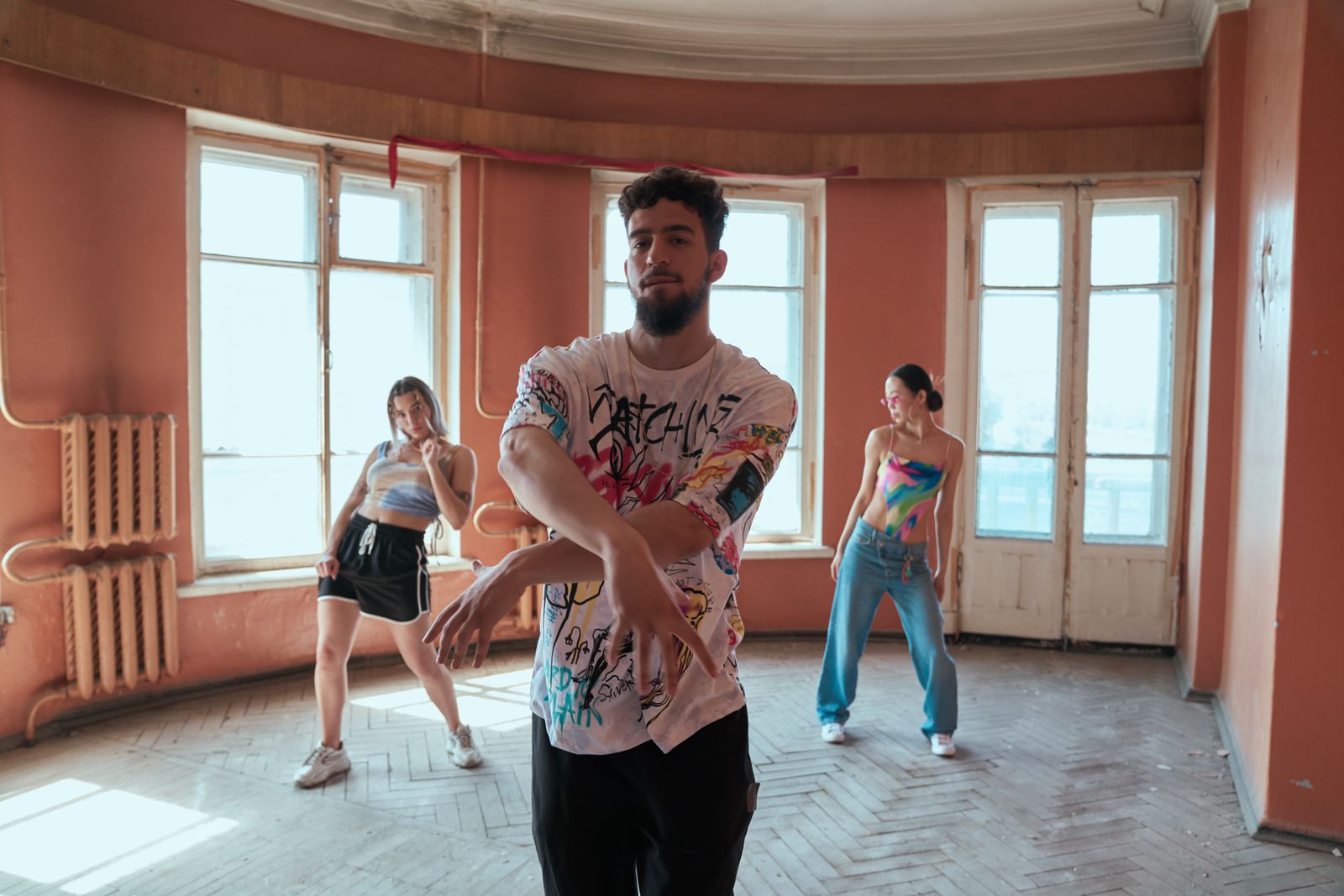
Where does reggaeton come from, and how is it changed for fitness?
Reggaeton took its recognisable shape in Puerto Rico in the early 1990s, growing out of Jamaican dancehall with hip hop and wider Latin and Caribbean influence. In Zumba, instructors keep the dembow groove and dance vocabulary but add fitness layers: deeper squats, bigger arm work and quicker direction changes. It is a workout built on a dance, not a club routine copied step for step.
This is also why a social reggaeton dance and a Zumba reggaeton routine are not the same thing. A club dancer may stay on one spot for hours. A Zumba choreography cycles through patterns every 8 to 16 counts so that your whole body gets worked and no single joint takes all the load.
The core reggaeton moves at a glance
Most reggaeton zumba steps are built from six building blocks. Learn these and nearly any routine becomes recognisable. The counts below assume full-time movement; halve the speed for a gentler version.
| Move | What you do | Count | Key cue |
|---|---|---|---|
| Dembow bounce | Soft knees, small bounce down on each beat, chest lifted, arms loose | 1 bounce per beat | Heels reach the floor; knees stay over the toes |
| Hip sway | Shift weight side to side, hips lead, ribcage stays quiet | 2 counts per side | Move from the hips, not by swinging the shoulders |
| Hip circle | Trace a slow circle with the pelvis while the knees stay softly bent | 4 counts per circle | Small and controlled beats big and jerky |
| Body roll | A wave from the chest down through the ribs to the hips | 4 counts | Bend the knees to roll; never fold the lower back |
| Stomp step | Firm, percussive steps matched to the beat, with a more upright torso | 1 step per beat | Land softly through the whole foot, not a hard heel strike |
| Squat pulse | Sit into a half squat and pulse on the beat while arms punch or sweep | 8 pulses | Hips back, knees tracking the second toe, spine long |
The stomp step is the variation some instructors use in place of the fluid hip style: rigid, percussive foot work in tight sync with the beat. Many routines blend both, so expect to switch between smooth and sharp within one song.
How do you keep your hips and knees safe in reggaeton?
Keep your knees softly bent and aligned over your second toe, move from the hips with the ribcage steady, land through the whole foot, and avoid locking joints or twisting on a planted foot. Warm up for 5 to 10 minutes first, because reggaeton’s constant knee bend loads the quads and hips more than most rhythms.
These cues matter because the style hides its demand. The bounce is small, so it looks easy, but your thighs are working on every count. Use this checklist while you move:
- Soft knees, always. Never snap to a locked leg at the top of the bounce.
- Knees track the toes. If a knee drifts inward during a squat pulse, narrow the depth or widen the stance slightly.
- Pivot, do not twist. When you turn, lift the heel and let the foot swivel on the ball. Do not grind a planted foot while the body turns.
- Hips lead, lower back follows. In body rolls and circles, bend the knees so the movement comes from the pelvis, not from an arched back.
- Quiet landings. If you can hear your feet slap the floor, you are landing too hard. Soften it.
- Stop on sharp pain. Muscle burn in the thighs is normal. Pain in the knee joint, hip crease or lower back is a signal to stop and modify.
A proper warm-up and cool-down are non-negotiable here. Spend the first song on easy bounces and sways, and finish with slow stretches for the quads, hip flexors and hamstrings. The online yoga classes are a good way to keep hips and hamstrings mobile between sessions.
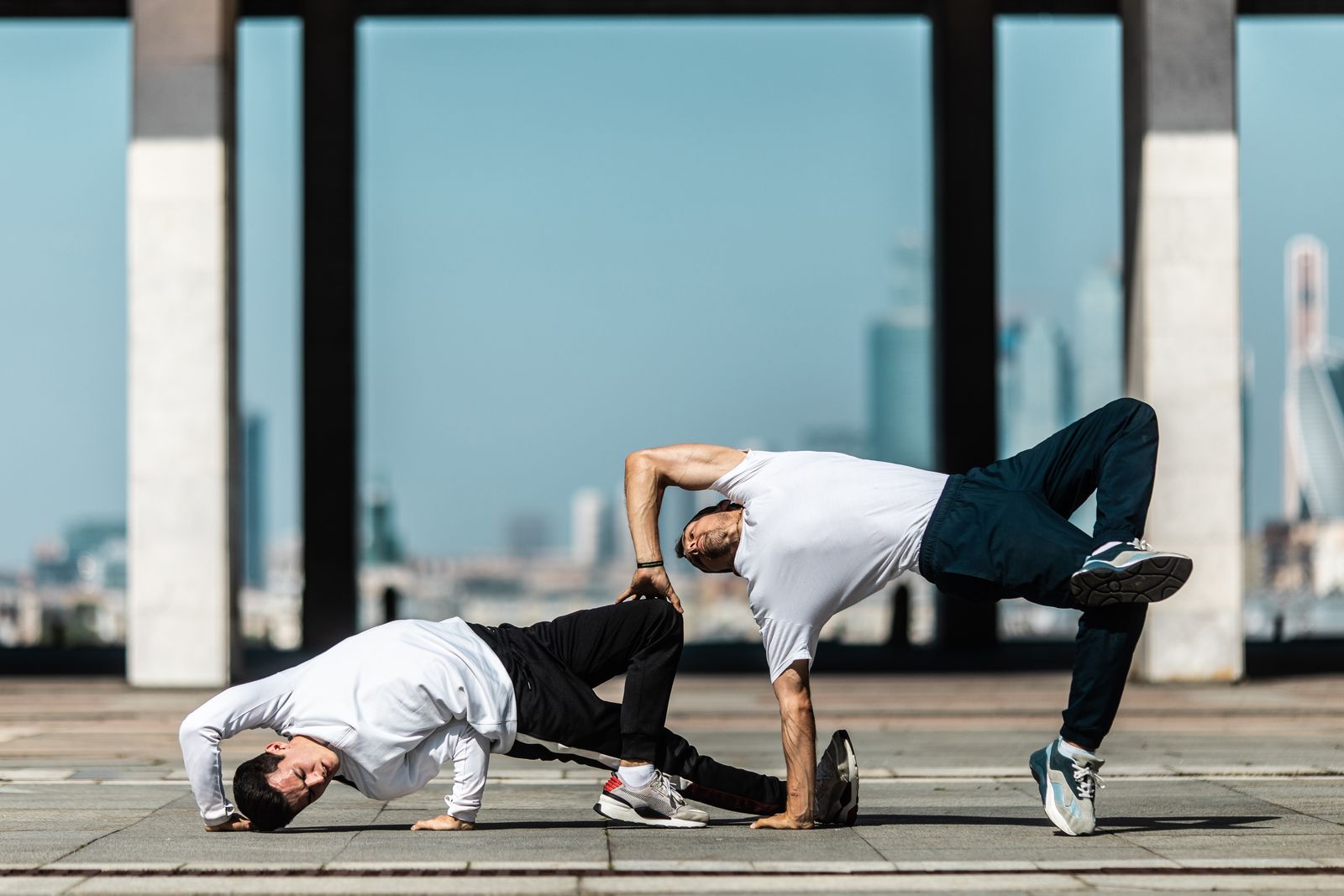
Intensity and impact options for every move
Every reggaeton move can be made lower or higher in impact without leaving the choreography. Low impact keeps one foot on the floor and shrinks the range; high impact adds depth, hops and travel. Pick the column that matches your day, and change columns mid-song if you need to.
| Move | Low impact | Medium | High impact |
|---|---|---|---|
| Dembow bounce | Half-time bounce, feet planted | Full-time bounce, small knee bend | Full-time with a deeper dip and arm drive |
| Hip sway | Slow side shift, small range | Full range with step-touch | Travelling sway with a quick weight change |
| Hip circle | Standing tall, tiny circles | Knees bent, medium circles | Wide circles into a low stance |
| Body roll | Upper-body wave only, knees soft | Roll with a gentle knee bend | Full roll from a deeper squat |
| Stomp step | Step-touch with a quiet foot | Controlled stomps in place | Stomps with travel or a small hop |
| Squat pulse | Quarter squat, hands on thighs | Half squat, arms sweeping | Deep pulse with a hop on the last count |
Choosing the low column is not a lesser workout. Keep the arms big and the pace steady and your heart rate still climbs. If you are newer to dance fitness, our pages on Zumba for women and Zumba toning explain how to scale a class to your level.
Myth: the bigger the hip movement, the better the workout
This is the most common wrong idea about reggaeton. Big, loose, whole-torso swinging looks dramatic but often means the lower back is doing work the hips should do. Smaller, isolated hip movement with the ribcage steady works the glutes, obliques and deep core more precisely, and it is much kinder to your spine.
Think of it as precision over size. A tight hip circle with soft knees beats a wild one every time. That same control is why reggaeton can be useful for core work: the hip and rotation patterns keep your midsection engaged for the whole song. For a full breakdown of that side of class, see Zumba for abs and core.
A 4-minute reggaeton song, walked through
Here is a simple way to pace one song so you finish strong instead of gassed in the first minute. Times are approximate for a typical 4-minute track; your instructor’s choreography will vary.
| Time | What to do | Effort | Focus |
|---|---|---|---|
| 0:00 – 0:30 | Dembow bounce only, find the beat | Easy | Soft knees, relaxed shoulders |
| 0:30 – 1:30 | Add hip sway and a simple step | Light to moderate | Hips lead, ribcage steady |
| 1:30 – 2:30 | Add hip circles and a body roll | Moderate | Bend the knees before you roll |
| 2:30 – 3:30 | Squat pulses and stomps, the peak | Hard | Depth only as far as your knees allow |
| 3:30 – 4:00 | Drop back to bounce, shake out legs | Easy | Slow breathing, soft landings |
The point of the map is sustained effort. Reggaeton’s continuous intensity rewards a steady build over a burst in the first 30 seconds. That is also why segments sit mid-to-late in a class: after merengue and salsa have warmed the body, not as an opener.
Common mistakes and how to fix them
Most reggaeton problems come from the same few habits. If something feels wrong, check this list before blaming the choreography.
- Locked knees. Fix: keep a permanent micro-bend, and let the bounce come from the ankles and knees together.
- Shoulders doing the rolling. Fix: start the wave in the chest and let the pelvis finish it, with the head floating quietly on top.
- Going full depth in song one. Fix: start at quarter squat and add depth only when thighs and breathing stay comfortable.
- Holding the breath. Fix: breathe out on the hardest count of each phrase. Counting out loud helps.
- Hip circles from the lower back. Fix: shrink the circle, bend the knees and tuck the tailbone slightly so the lumbar spine stays neutral.
- Heavy, noisy landings. Fix: switch to the low-impact column and roll through the foot.
- Chasing the instructor’s range. Fix: copy the rhythm, not the size. Your range is the one your joints allow today.
Who should modify reggaeton, and how?
Beginners, people with sensitive knees or hips, and anyone returning from a break should start in the low-impact column and use half-time movement. The beat is slow enough that this works well. Add depth and speed over weeks, not in one class.
If you have a diagnosed knee, hip or back condition, are pregnant, or are recovering from surgery or injury, speak to your doctor or physiotherapist before taking on deep squat pulses or intense hip movement. That is general guidance, not medical advice, and a professional who knows your history will give you a better answer than any article can. Fitstrot’s lead Zumba trainer, Yash Pathak, is ZIN Licensed, ACE Certified and Strong Nation Certified, and live online classes let you ask for modifications as you go. A smaller range on your screen at home is perfectly normal.
For wider context on class styles, from gentler formats to circuit-based sessions, our overview of the types of Zumba compares them, and the Zumba in the circuit page covers a more interval-style option.
Frequently Asked Questions About Reggaeton in Zumba
Is reggaeton in Zumba good for beginners?
Yes, if you use the low-impact options. The beat is moderate at roughly 85 to 100 beats per minute, and the core moves repeat often, so patterns are easy to pick up. Start with the bounce and hip sway in half-time, and add circles and rolls once those feel natural.
How fast is the reggaeton tempo in Zumba?
Typically about 85 to 100 beats per minute, slower than merengue. It feels intense not because it is fast but because the groove is heavy and continuous. Instructors sometimes choose quicker tracks or add faster footwork on top, so tempo varies from class to class.
Is reggaeton in Zumba the same as reggaeton dancing in a club?
The music comes from the same genre, but the movement is adapted. Zumba keeps the dembow groove and hip vocabulary and adds fitness layers such as deeper squats, arm work and direction changes, while rotating patterns often so that no single joint takes all the load.
Which muscles does reggaeton in Zumba work?
Mainly your thighs, glutes, hips and core. The constant knee bend and squat pulses load the quads and glutes, while circles, sways and rolls keep the obliques and deeper core muscles engaged. Your shoulders and arms are involved too, especially when the choreography adds punches or sweeps.
Can I do reggaeton in Zumba with knee problems?
Often with changes, but check with your doctor or physiotherapist first. Use half-time movement, quarter squats instead of deep pulses, and step-touches in place of stomps. Stop if you feel sharp pain in the joint. Muscle fatigue is normal, but joint pain is a signal to modify or rest.
Try a reggaeton segment with Fitstrot
Take the beat, the six core moves and the low-to-high options with you to a live session. Join a class through Fitstrot’s online Zumba classes, or start with the online Zumba classes guide to see what to expect before your first session.


