
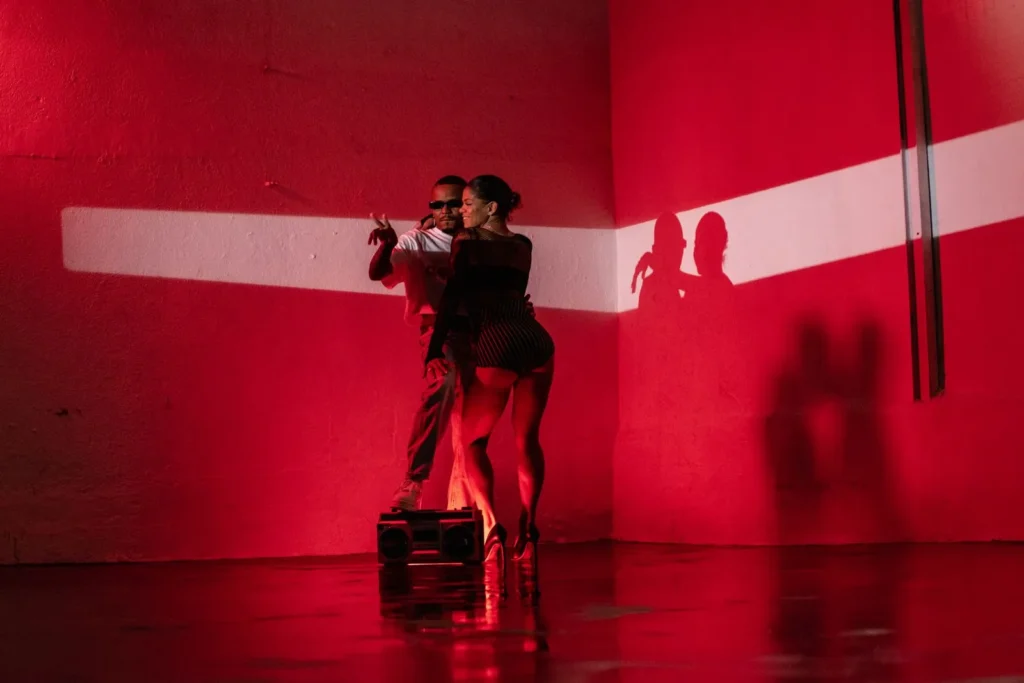
Learning salsa in zumba comes down to one repeating eight-count footwork pattern: quick, quick, slow, then a hold. Everything else, the hip sway, the arms, the turns, sits on top of that pattern. Salsa is one of the four core Zumba rhythms, alongside merengue, reggaeton and cumbia, and it asks for more timing than merengue’s steady march. Below you get the basic step count by count, arm and hip cues, the mistakes that trip up most beginners, and a four-week plan you can practise at home.
What is salsa in Zumba, and how is it different from salsa dancing?
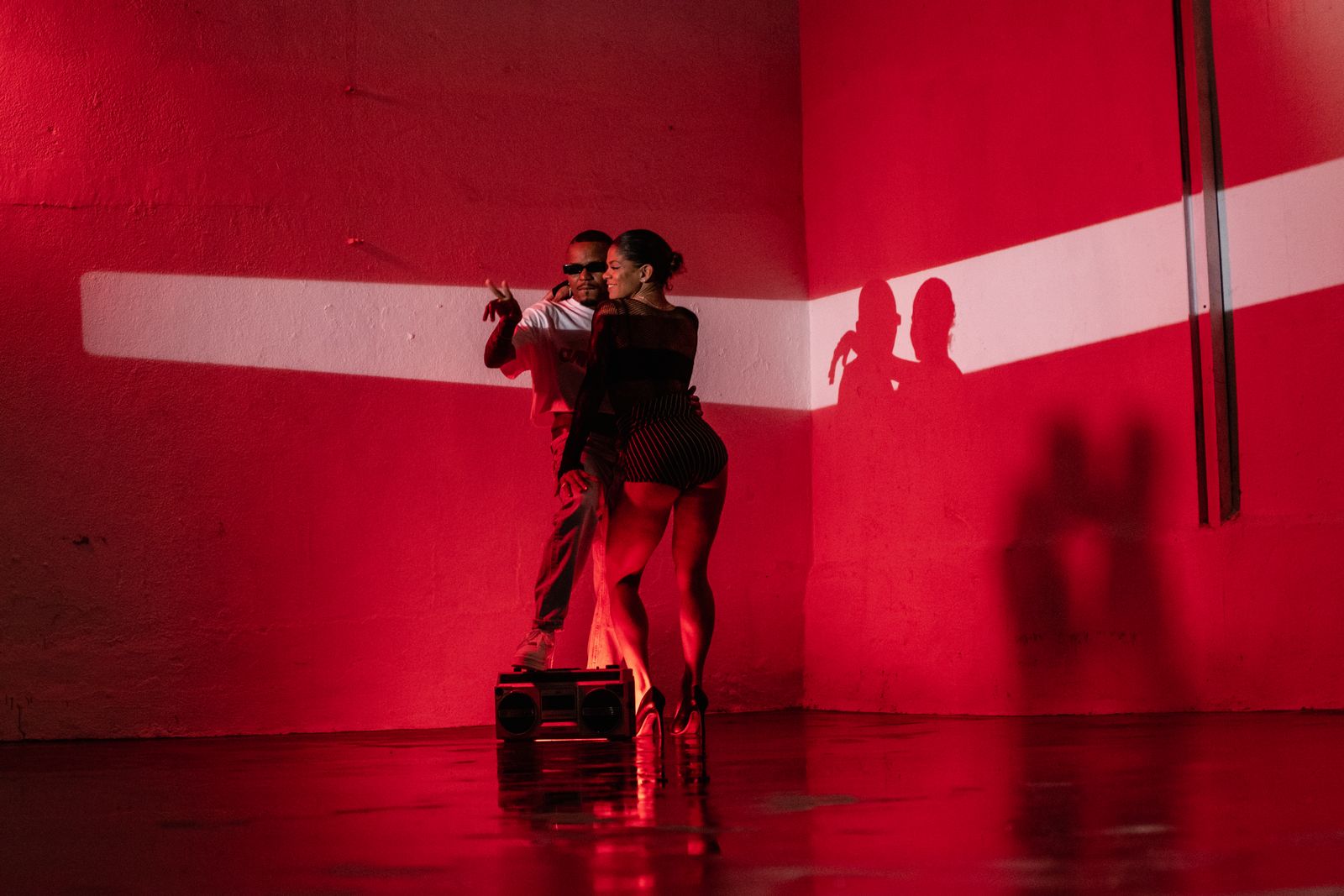
Salsa in Zumba is a solo, fitness-focused version of Latin salsa dancing. You keep the quick-quick-slow footwork, the hip movement and the syncopated feel, but drop partner work and strict technique, and add squats, knee lifts and bigger arm moves. The goal is a cardio workout with a salsa rhythm, not a social dance floor.
The rhythm has roots in Cuban and Puerto Rican dance traditions. A dedicated salsa class usually teaches partner connection, lead and follow, and a specific regional style such as Cuban, Colombian or New York. Zumba removes all of that. No partner is needed, the technical bar is lower, and the choreography is built so a first-timer can follow along within a song or two.
How do you do the basic salsa step in Zumba?
The basic salsa step in Zumba takes eight counts: step forward on 1, shift your weight back on 2, bring your feet together on 3, hold on 4, then step back on 5, shift forward on 6, close on 7 and hold on 8. Keep each step about one foot-length and your knees softly bent.
Counts 1, 2 and 3 are the “quick, quick, slow” of the pattern. Count 3 feels slow because you stay on it through the hold on 4. Start with your feet hip-width apart and your weight on your right foot.
| Count | Feet | Knees and hips | Arms | Say it as |
|---|---|---|---|---|
| 1 | Left foot steps forward, short step | Left knee soft, right hip settles back | Elbows bent, hands at waist height | “Step” |
| 2 | Weight returns to the right foot, left foot stays light | Right knee straightens, hip sits over the right leg | Hands stay relaxed and level | “Back” |
| 3 | Left foot steps back beside the right, weight on left | Both knees soft, hips level | Small, easy sway | “Together” |
| 4 | No step, feet stay put | Small hip lift, pop or pause | Hold or add a gentle sweep | “Hold” |
| 5 | Right foot steps back | Right knee soft, left hip settles | Elbows stay bent | “Step” |
| 6 | Weight returns forward to the left foot | Left knee straightens, hip over the left leg | Hands relaxed | “Back” |
| 7 | Right foot steps forward beside the left, weight on right | Both knees soft, hips level | Small, easy sway | “Together” |
| 8 | No step, feet stay put | Small hip lift, pop or pause | Hold, then reset | “Hold” |
After count 8 your weight is on the right foot, so the left foot is free to step forward again on count 1. That is why the pattern loops without a gap.
Zumba instructors often take the same pattern sideways, which is easier on small spaces and for online classes at home. The side basic goes like this: step left to the side on 1, return the weight to your right foot on 2, close the left foot beside it on 3 and hold on 4. Then step right to the side on 5, return the weight to your left foot on 6, close the right foot on 7 and hold on 8.
Hold-count options: what instructors add on counts 4 and 8
The hold counts are where Zumba salsa differs most from a plain dance basic. Instead of pausing, your instructor will often fill them with a small move. Use this table to pick a lighter or stronger version.
| Option on counts 4 and 8 | What you do | Effort | Best used when |
|---|---|---|---|
| Toe tap | Tap the free foot beside the standing foot, no weight on it | Low | You are still learning the footwork |
| Hip lift or pop | Let one hip lift slightly as the knee bends and straightens | Low | The basic step feels automatic |
| Clap or arm sweep | Clap at chest height or sweep both hands across, feet still | Low | You want to practise timing without foot changes |
| Knee lift | Lift the free knee to a comfortable height, then place it down | Medium | You are warm and your balance is steady |
| Small side lunge | Step wider, bend both knees, then return | Medium to high | You want more leg work and have healthy knees |
| Quarter turn | Use counts 5 to 7 to pivot about 90 degrees on the balls of the feet | Medium | You have the basics and a smooth, safe floor |
How do arm and hip movements work in Zumba salsa?
In Zumba salsa, your hips move because your knees bend and straighten, not because you twist your spine. Keep your elbows bent near 90 degrees, hands around waist height, and let your arms swing gently opposite to your stepping foot. Add arm styling only after the footwork feels automatic.
Hip cues that help
- Let the knees do the work. As a leg takes your weight and straightens, the hip on that side naturally sits out. As the other knee bends, that hip drops slightly. Do not force it.
- Keep the movement small. A subtle sway looks and feels more like salsa than a big swing, and it protects your lower back.
- Stay low and smooth. Slide the foot rather than lifting it high, so the upper body stays calm and the hips can move freely.
Arm cues that help
- Start with a frame. Elbows bent, hands relaxed at waist height, palms soft. This alone looks like salsa.
- Move opposite to your feet. When the left foot goes forward, let the right arm move slightly forward, like a natural walking swing.
- Use the hold counts. Counts 4 and 8 are the easiest places to add a sweep, a clap or a shoulder roll.
Myth check: you do not need a partner, dance training or perfect timing
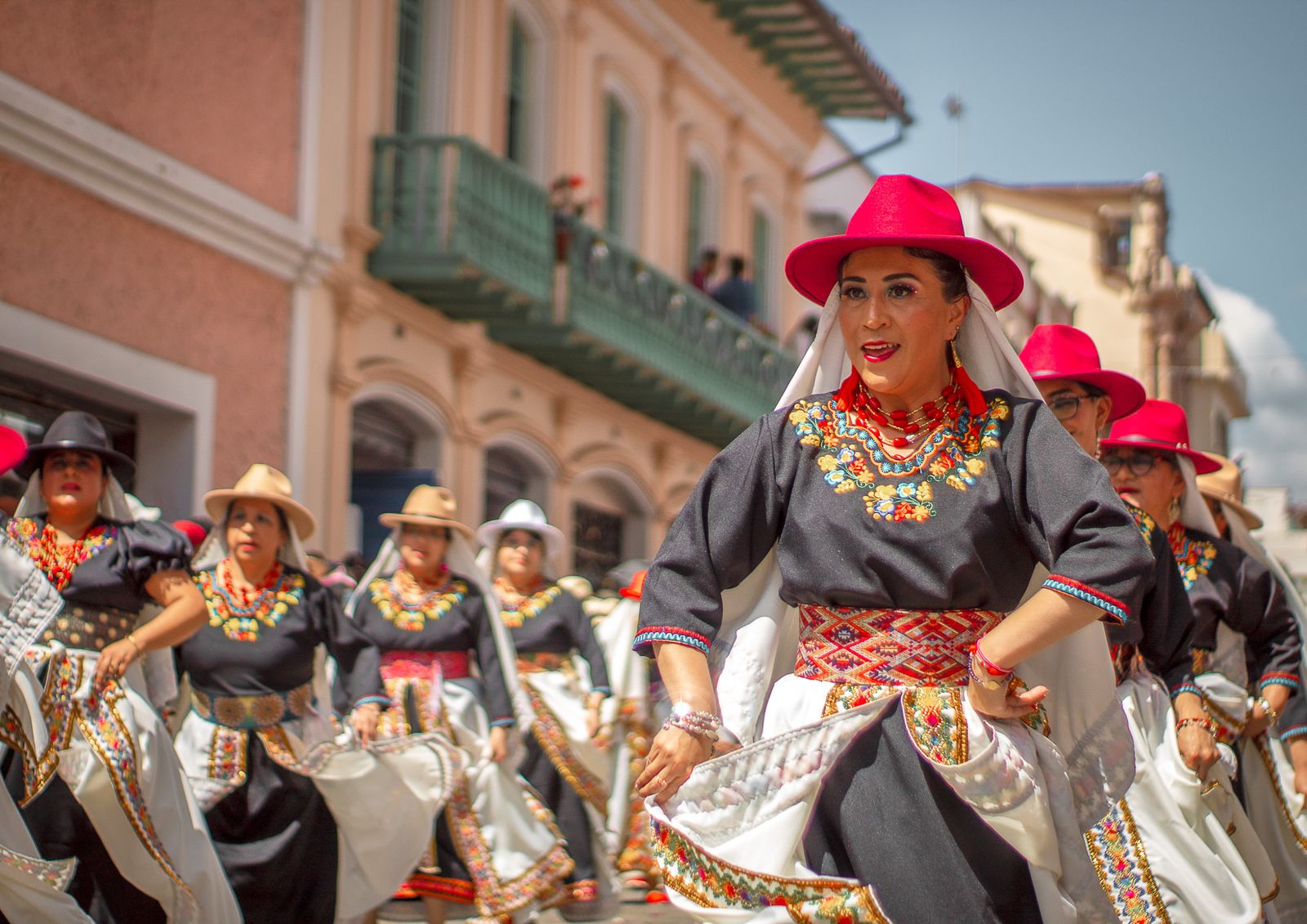
Three beliefs put people off salsa segments, and none of them is true. First, you do not need a partner: every move in Zumba salsa is danced solo. Second, you do not need prior dance training: instructors teach the basic step progressively, and the same pattern repeats across songs. Third, you do not need to hit every syncopated accent on day one. Missing a beat is normal, and the cardio and coordination benefit comes from showing up regularly, not from perfection.
Why does your salsa fall apart, and how do you fix it?
Salsa usually falls apart for three reasons: steps that are too big, locked knees, and rushing through the hold counts on 4 and 8. Shrink each step to about a foot-length, keep your knees softly bent, and count “one, two, three, hold” aloud. Fixing those three usually steadies the pattern within a few sessions.
- Stepping too far. Big steps throw you off the count and make the next step late. Fix: keep feet under your hips and travel only a little.
- Straight, locked knees. There is no hip movement without knee bend, and locked knees load the joints. Fix: keep a slight bend at all times.
- Skipping the hold. Rushing counts 4 and 8 makes you land ahead of the music. Fix: say “hold” and let the beat pass, or fill it with a toe tap.
- Twisting the spine for hips. This looks messy and can strain your lower back. Fix: bend and straighten the knees and keep the torso tall.
- Watching your own feet. You fall behind the instructor. Fix: look at the instructor’s feet for one run-through, then look up.
- Stomping on the heels. Hard landings add joint impact. Fix: land softly on the ball of the foot, then lower the heel.
How do you go from first class to confident salsa?
Most beginners can learn the basic salsa step in a few short practice sessions and feel comfortable in class within three to four weeks if they practise little and often. Spend week one on feet only, add hips in week two, arms in week three, and link moves in week four. Results vary from person to person.
| Week | Focus | Practice | You are on track when |
|---|---|---|---|
| 1 | Feet only: forward-back basic, no arms, no hip styling | 5 minutes, 3 days | You can repeat 4 cycles of 8 counts without stopping |
| 2 | Add hips through the knees; learn the side basic | 5 to 8 minutes, 3 days | Your upper body stays calm while the hips move |
| 3 | Add arms and a toe tap or clap on counts 4 and 8 | 8 to 10 minutes, 3 to 4 days | You stay on the beat while moving your arms |
| 4 | Link forward-back and side basic into a 16-count phrase; try a quarter turn | 10 minutes, 3 to 4 days | You can follow a new salsa combination after one or two run-throughs |
If you are joining an online class, give yourself roughly a yoga-mat-sized clear patch plus an arm’s length around it. Wear supportive sneakers and do turns on a smooth floor, not on a grippy mat, which can catch the foot and twist the knee. Place your screen so you can see the instructor’s feet, and check whether the instructor mirrors the moves so you follow the correct side.
Salsa for sensitive knees, new dancers and women over 40
Salsa adapts well to different fitness levels. For a low-impact version, keep your feet low and slide rather than lift, take smaller steps, skip turns and knee lifts, and use the hold counts as simple weight shifts. You still get the rhythm and the movement, with less load on the knees and hips.
If you want a gentler class format overall, our guide to Zumba Gold explains the slower, lower-impact style, and Zumba for women covers how classes suit different life stages.
See your doctor before starting if you have knee, hip or back pain, a heart condition, or any ongoing health issue. Stop if you feel sharp pain, dizziness or chest discomfort. Salsa is a workout, but no class can promise a specific result, and your progress depends on how often you practise and how you eat and rest.
Where salsa sits among the other Zumba rhythms
Salsa is one of four core rhythms that shape a typical class. Our Zumba rhythms explained guide shows how all four fit together across a full session. Salsa is often paired with merengue because the two share Latin dance roots, and our merengue in Zumba guide covers that steadier, march-like rhythm in detail. To see how these rhythms fit into the wider range of formats, browse the types of Zumba.
Merengue has an even beat you can march to, while salsa has a syncopated, rolling feel, so many instructors place it after a warm-up song rather than first.
Start with one live class
Yash Pathak, Fitstrot’s lead Zumba trainer (ZIN Licensed, ACE Certified, Strong Nation Certified), teaches in our online Zumba classes. Book a session through FitStrot’s online Zumba classes, tell the instructor you are new to salsa, and run through the eight-count table above once beforehand. To compare formats first, see our online Zumba classes guide.
Frequently asked questions about salsa in Zumba
Do I need dance experience to follow salsa in Zumba?
No. Zumba simplifies the salsa step into a repeating eight-count pattern with no partner work. Instructors teach it progressively, so you can start with feet only and add hips and arms later. Prior dance background helps, but it is not required.
Why does salsa feel harder than merengue in Zumba?
Salsa’s syncopated timing asks for quicker, more precise foot placement than merengue’s even march. That raises the coordination demand even at a similar tempo. It is a normal feature of the rhythm, not a sign you are doing it wrong, and it gets easier with repetition.
Is salsa in Zumba the same as social salsa dancing?
Not exactly. Zumba keeps the rhythm, footwork and hip feel but removes partner connection, lead-follow technique and regional styling, and adds fitness moves like squats and knee lifts. It is a workout inspired by salsa, not a replacement for social dance lessons.
What does quick-quick-slow mean in Zumba salsa?
It describes the footwork timing. The first two steps (counts 1 and 2) are quick, and the third step (count 3) is slow because you stay on it through the hold on count 4. The same pattern repeats on counts 5 to 8.
How long does it take to get comfortable with Zumba salsa steps?
Many beginners feel the basic footwork settle within a few classes of regular practice, since the pattern repeats across songs. Faster, more styled variations usually take longer. Practising 5 to 10 minutes a few days a week between classes can help.


