
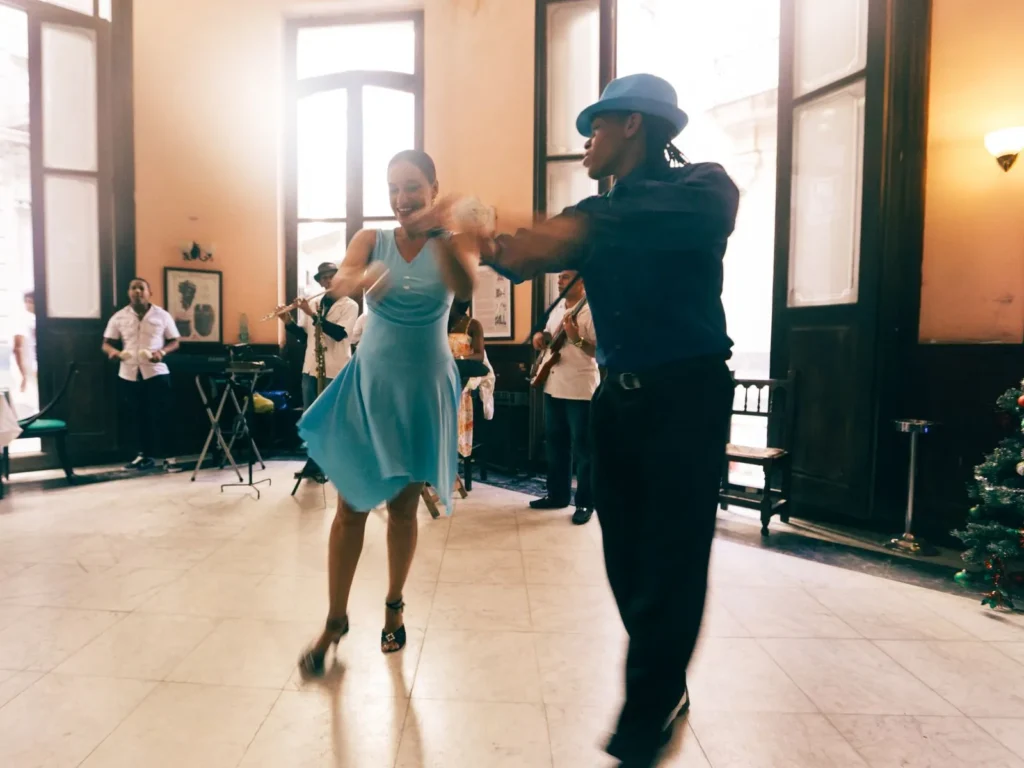
Merengue in Zumba is the fast, evenly accented Dominican rhythm that most instructors use to open a class, and it is usually the first rhythm beginners feel comfortable with. The beat is steady, the footwork is mostly marching and side-steps, and the tempo sits at roughly 120 to 160 beats per minute, so your heart rate climbs quickly without a complicated routine to memorise. This guide covers where merengue comes from, the exact steps you will do, a walkthrough of a first song, how to make it gentler or harder, and how to fix the usual beginner problems, whether you dance in a studio or in your living room.
What is merengue in Zumba, and where does it come from?
Merengue in Zumba is a Dominican dance rhythm built on a steady two-beat pulse, played at roughly 120 to 160 beats per minute and danced with marching, side-to-side steps and a gentle hip sway. It comes from the Dominican Republic, and Zumba treats it as one of its four core rhythms, alongside salsa, cumbia and reggaeton.
Merengue grew out of the Cibao valley in the north of the Dominican Republic, around the city of Santiago. Traditional merengue is driven by percussion such as the tambora drum and the metal scraper called the güira, usually with accordion or saxophone carrying the melody. Zumba kept the part that matters for fitness: a loud, regular, easy-to-hear beat that your feet can follow straight away.
That is why the rhythm shows up so often in the opening songs of a class. Zumba’s founder, Beto Pérez, built the format around Latin rhythms, and merengue is the one that lets a room of mixed experience levels start moving together in the first minute.
Basic merengue steps in Zumba: a quick-reference table
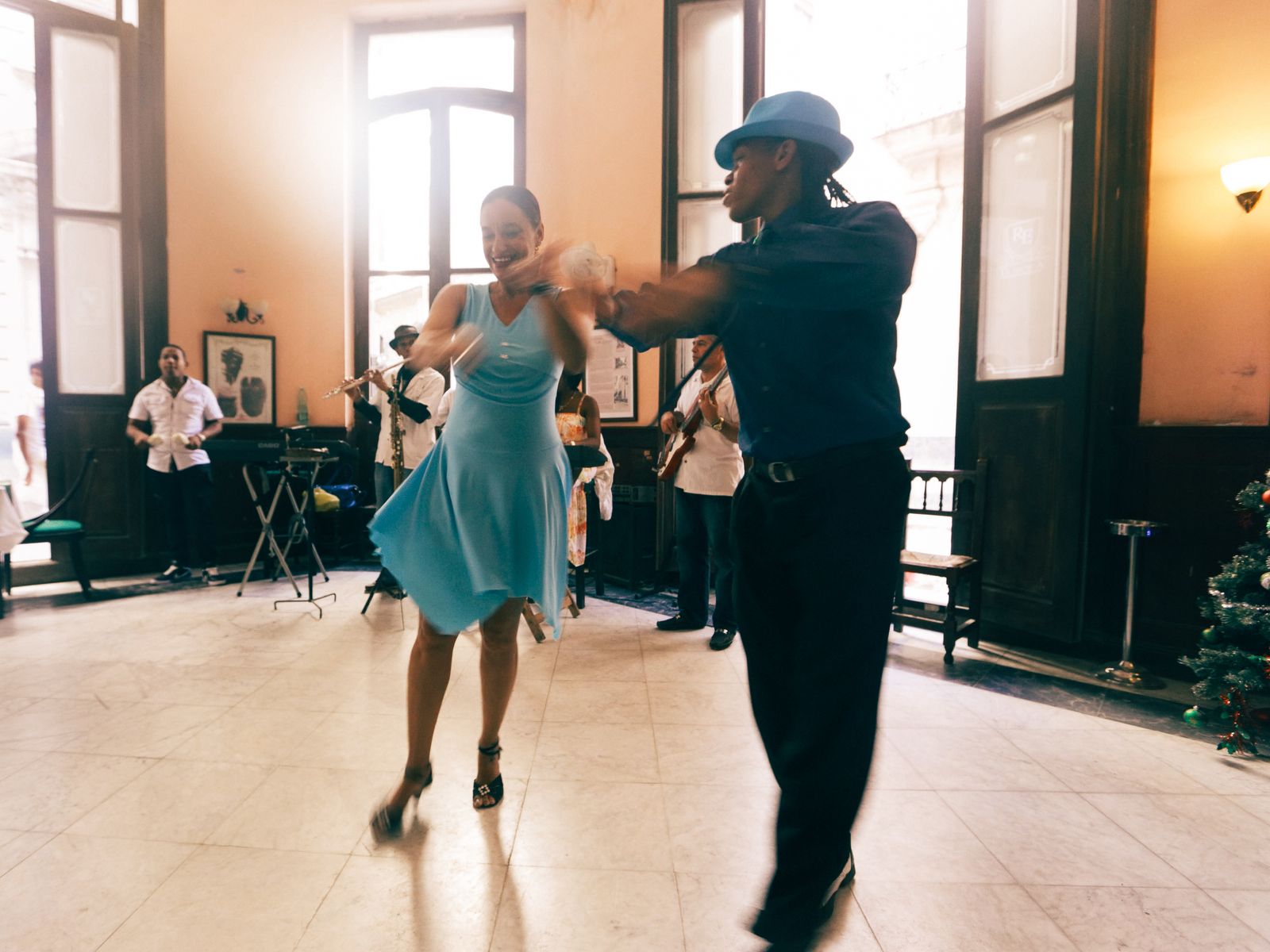
Most merengue dance steps in a Zumba class are variations on a march and a two-step. Learn the six moves below and you can follow almost any merengue segment. Instructors layer arms, squats and turns on top, but the feet stay close to this vocabulary.
| Step | How it goes | Count | Form cue |
|---|---|---|---|
| March in place | Lift one knee, then the other, like a relaxed walk on the spot | 1, 2, 1, 2 | Stay tall, land softly on the ball of the foot, then the heel |
| Side two-step | Step right, close left to it, then step left, close right, travelling side to side | 1, 2 each side | Keep steps small so you can stay on the beat |
| Diagonal or goalpost two-step | The same two-step, but travelling on a diagonal or in a square pattern | 1, 2 each direction | Turn the whole body, not just the head |
| Squat or dip two-step | Two-step with a small bend of both knees on each step | 1, 2 | Knees track over the toes, chest lifted |
| Hip sway march | March while the hips move from side to side as weight shifts | 1, 2, 1, 2 | Let the hips follow the weight; do not force them |
| Beto shuffle | A quick, relaxed shuffle-style step named after Zumba’s founder; your instructor teaches the exact version | Follow your instructor | Soft knees, light feet, no stomping |
Arms are where beginners can add flavour without adding difficulty. Pumping elbows, a simple “pull the rope” action or loose circles at shoulder height all fit the beat, and they raise the effort without changing your footwork.
How do you dance your first merengue song, step by step?
Start with a march for the first 30 seconds, move to a small side two-step once you feel the beat, then add arms and a shallow knee bend. A typical merengue track lasts about 3 to 4 minutes, so you have time to build up gradually instead of rushing into big movements.
- Find the beat first. Stand tall and just march. Count “1, 2, 1, 2” out loud if it helps. Do not worry about arms yet.
- Add a side two-step. When the pattern feels automatic, step right and close, step left and close. Keep the travel small, about the width of your hips.
- Layer in your arms. Pick one simple arm pattern and repeat it. Matching it to the beat matters more than making it big.
- Bend the knees slightly. Turn the two-step into a dip two-step. This is where merengue starts to feel like exercise.
- Follow the instructor’s changes. In a live or online class, the instructor signals the switch to a new step. Watch for the cue and change on the next phrase, not mid-phrase.
- Finish with a march. Bring the pace down on the last 20 to 30 seconds so your breathing settles before the next song.
The exact order will differ from class to class. Treat this as a pattern for learning, not a script.
Is merengue really the easiest Zumba rhythm?
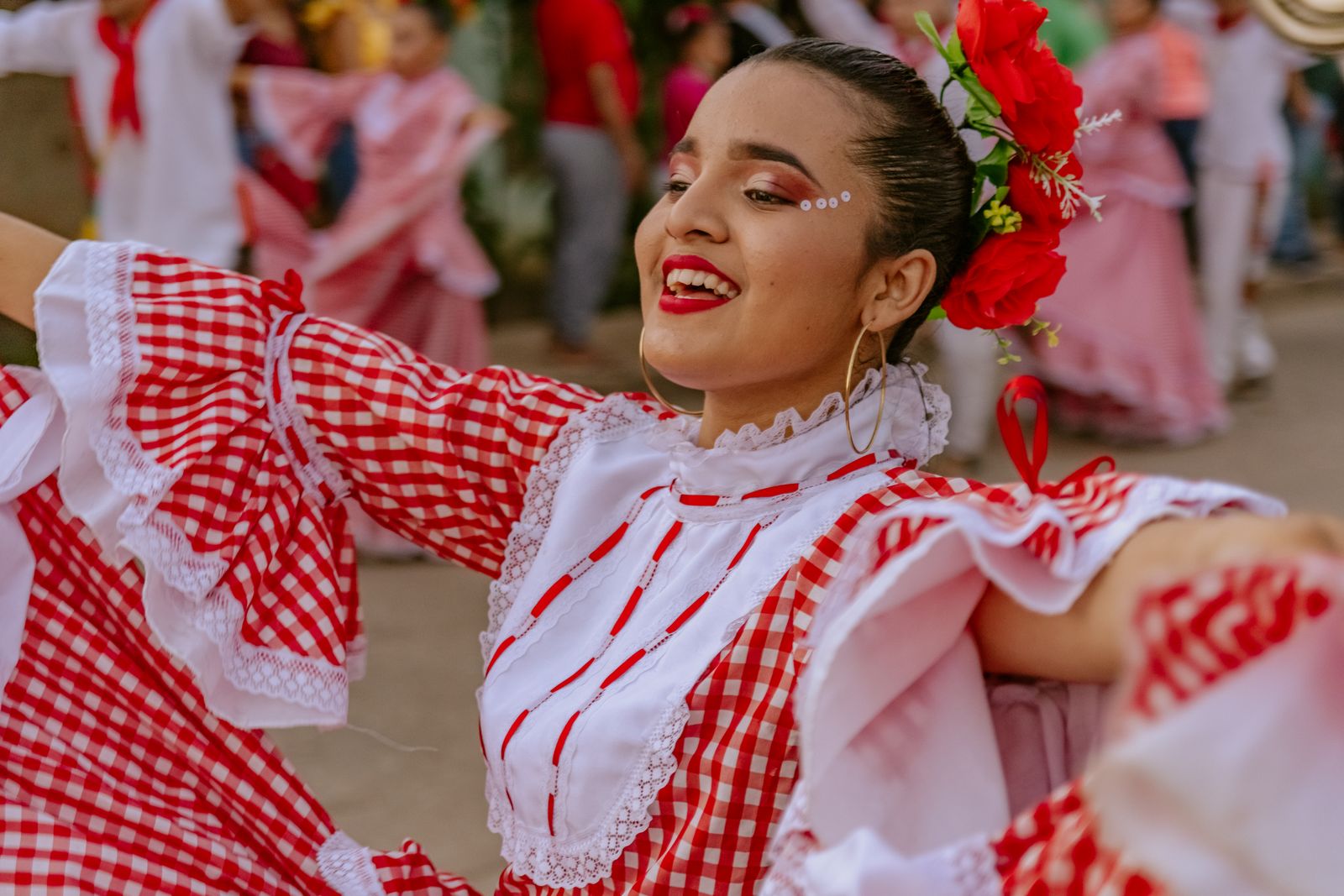
For most beginners, yes. Merengue puts an equal accent on every beat with no syncopation, so your feet can match the beat directly instead of anticipating off-beats. That makes it the easiest of Zumba’s four core rhythms to learn, but “easy to learn” does not mean “easy on the body”.
The myth: merengue is only a warm-up and does not count as real exercise. That is not accurate. Because the footwork is simple, many people stop paying attention to their range of motion and coast through it. Done with full arm movement, deeper knee bends and good posture, a merengue segment is a proper cardio block that also works your legs, glutes and core. The effort you put in decides the workout, not the label on the song.
The reverse myth matters too: do not turn merengue into a sprint. The tempo is fast, and trying to match every beat with huge, high-impact jumps usually ends in sore shins or knees. Smaller, controlled steps at the right speed are the better choice for most people.
How many calories does merengue in Zumba burn?
A full hour of Zumba typically burns roughly 300 to 500 kcal for most adults, and merengue segments sit in the moderate-to-vigorous middle of that range. Your own number depends on body weight, how deep you squat and how big your arm work is. Treat any watch figure as a rough estimate, not a promise.
You control intensity without changing the song. Use the table below to pick the version that suits your fitness and joints today.
| Level | Feet | Knees and hips | Arms | Best for |
|---|---|---|---|---|
| Gentle | Low march, feet close to the floor | Almost straight, tiny sway | Waist-height pumps | First class, joint niggles, recovery days |
| Standard | March plus side two-step, normal stride | Soft bend, visible hip sway | Shoulder-height patterns | Most regular participants |
| Challenge | Two-step with a quicker pace and wider travel | Deeper squat or dip on each step | Overhead and big circular patterns | Fit participants who warm up well |
If weight loss is your main goal, merengue helps, but it is one piece. A calorie deficit comes from consistent training and your eating pattern together. Our online weight loss trainer service can build that around a Zumba routine, and no single dance style will guarantee a particular result.
Merengue vs salsa, cumbia and reggaeton: how do they differ?
Merengue has an even two-beat pulse and the simplest footwork, salsa uses syncopated timing, cumbia has a grounded forward-and-back feel, and reggaeton is driven by the hips and lower body. Of the four, merengue is the usual starting rhythm for beginners because it asks the least of your timing.
| Rhythm | Origin | Beat feel | Typical movement | Beginner difficulty |
|---|---|---|---|---|
| Merengue | Dominican Republic | Even, fast two-beat pulse | Marching, side two-step, hip sway | Easiest |
| Salsa | Caribbean, with Cuban roots | Syncopated, with off-beat accents | Forward-and-back steps, weight shifts, turns | Moderate |
| Cumbia | Colombia | Smooth, rolling and grounded | Small forward-and-back steps, relaxed arms | Easy to moderate |
| Reggaeton | Puerto Rico and Panama | Heavy, repeating beat | Hip-driven, lower-body-focused movement | Moderate |
Our salsa in Zumba guide goes deeper on that comparison, and the Zumba rhythms explained article shows how instructors sequence all of them across a class, usually opening with merengue and building toward the harder styles. If you want to see the formats beyond the standard class, the types of Zumba overview lays them out.
Merengue feeling off? Fixes for the common problems
- You keep losing the beat. Go back to a plain march and count out loud. Add one new element at a time, whether that is arms, a side step or a turn, never two together.
- Your calves burn quickly. You are probably bouncing on your toes. Land through the whole foot and keep steps smaller. A slightly lower, flatter march is just as valid.
- Your knees complain. Check that your knees track over your toes in dips, shorten the stride and reduce the depth of the bend. Sharp or lasting pain means stop, rest and, if it repeats, speak to a doctor or physiotherapist.
- Your hips look stiff. Do not push them. Hip sway comes from shifting weight from one foot to the other. Let your knees stay soft and the movement usually appears on its own.
- You run out of breath early. Drop to the gentle version in the table above for a song, sip water, then rejoin. A fast tempo is demanding in the first few weeks.
- You are practising at home and cannot see the screen. Set the laptop at eye level, clear about two metres of floor, and wear supportive shoes rather than dancing barefoot on a hard surface.
Who should do merengue segments, and who should modify?
Beginners are the obvious audience: a steady beat, simple steps and a forgiving tempo make merengue a low-pressure way into group dance fitness. It also suits busy people who want an energetic 30 to 45 minutes without learning complicated choreography.
Adults who prefer a gentler pace can look at Zumba Gold, which keeps the Latin rhythms at a lower intensity. Women looking for a format that fits family and work schedules may find our Zumba for women article useful. If you want more muscle work on top of the dancing, the Zumba toning style adds light resistance.
Check with your doctor before starting if you have a heart condition, high blood pressure, are pregnant, or have recent joint injuries or ongoing knee, ankle or back pain. Low-impact marching with arms is the safest version to start with, and you should never push through chest discomfort, dizziness or sharp pain.
Learn merengue with a certified Zumba trainer online
Merengue is easier to pick up when someone corrects your posture and timing in real time. Fitstrot’s lead Zumba trainer, Yash Pathak, is ZIN Licensed, ACE Certified and Strong Nation Certified, and teaches beginner-friendly sessions that open with rhythms like merengue before moving to harder ones.
You can explore the online Zumba classes guide to see how sessions work, what space and gear you need, and what to expect in your first week. Pick two or three sessions a week at first and add more once your calves, knees and breathing have adapted. Consistency over a few weeks matters more than going all out on day one.
Frequently asked questions about merengue in Zumba
Is merengue the easiest rhythm in Zumba?
For most beginners, yes. Its even, heavily accented beat has no syncopation, and the main steps are marching and side two-steps. Salsa and reggaeton ask more of your timing and hips. Easy to learn does not mean low effort, though, because you can add depth, speed and arm work as you improve.
Where did merengue originate?
Merengue originated in the Dominican Republic, in the rural Cibao region around Santiago. It is known for a fast tempo and simple, repeating rhythms, usually driven by the tambora drum and güira with accordion or saxophone. Those traits made it a natural fit as one of Zumba’s four core rhythms.
What is the Beto shuffle in Zumba?
The Beto shuffle is a signature merengue-based step named after Zumba’s founder, Beto Pérez. It is part of the basic movement vocabulary taught in Zumba instructor training. Your instructor will show the exact version they use, so follow their demonstration rather than a written description.
Why do Zumba instructors start class with merengue?
Merengue’s steady, predictable beat lets people of every experience level ease into movement and raise their heart rate gradually. Simple footwork also means everyone starts on equal footing, which builds confidence before the class moves on to more technical rhythms like salsa or reggaeton.
Can I learn merengue in Zumba at home with no dance experience?
Yes. Start with a plain march, add the side two-step, then layer arms and a small knee bend. Clear about two metres of floor, wear supportive shoes and follow a live or recorded class so you can match the instructor’s counts. Begin at the gentle level and build up over a few weeks.
Want to feel merengue properly rather than read about it? Book a session on our online Zumba classes page and start with the gentle version of the steps above.


