
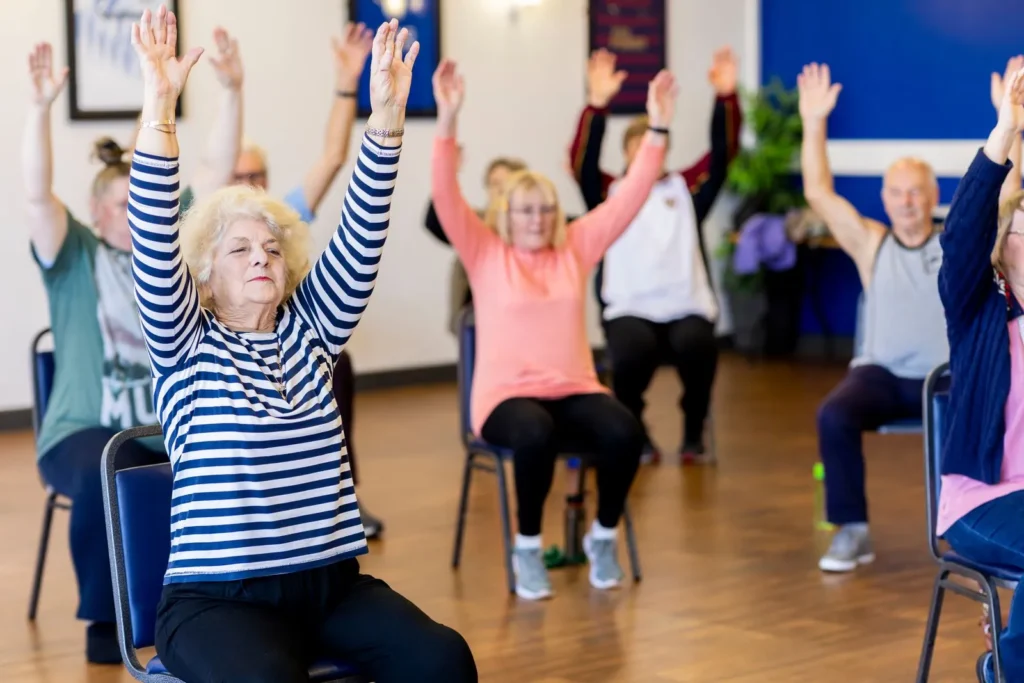
If you have typed zumba gold into a search bar, you are probably looking for a dance workout that keeps the music and the fun but drops the jumping. That is exactly what it is: Zumba’s lower-impact, slower-paced format, built for older adults, first-time exercisers and anyone whose knees, hips or confidence need a gentler start. This guide explains how a class works, who it suits, how to build up over four weeks, and how to do it safely at home in India.
What is Zumba Gold, and how is it different from regular Zumba?
Zumba Gold is a lower-intensity Zumba format designed for older adults, beginners and people with joint sensitivity. It uses the same Latin rhythms as a standard class, such as salsa, merengue and cumbia, but at a slower tempo, with simpler choreography, fewer jumps and more time to learn each move. Most classes run roughly 45 to 60 minutes.
The idea is simple: keep the part of Zumba that makes people turn up (music, rhythm, a room full of people moving together) and remove the parts that make some people quit. Instead of bouncing, turning fast and changing direction every few seconds, you step, sway, shift weight and repeat a move several times before a new one arrives. Intensity drops because the tempo and impact drop, not because the class is lazy.
You still use your whole body, and if you later want light resistance on top of the dance, Zumba Toning is the natural next format to read about.
Zumba Gold vs standard Zumba at a glance
The table below shows where the two formats actually differ. The rhythms are the same; the pace, impact and teaching style are what change.
| Feature | Zumba Gold | Standard Zumba |
|---|---|---|
| Music tempo | Slower, easier to count | Faster, often continuous |
| Impact | Low: feet mostly stay grounded | Moderate to high: jumps and hops appear |
| Choreography | Simple, repeated several times | Layered, changes quickly |
| Teaching pace | More breaks and cueing | Little pause between songs |
| Typical effort | About 4 to 6 out of 10 | About 6 to 9 out of 10 |
| Balance focus | High: weight shifts, turns, chair option | Incidental |
| Best for | Beginners, 50+, joint-sensitive, returning after a break | Fitter exercisers wanting a hard sweat |
| Next step | Longer sessions, then standard class | Add strength or toning work |
Is Zumba Gold only for senior citizens?
No. Zumba Gold is often aimed at adults over 50, but it suits anyone who wants a lower-impact start: beginners of any age, people returning after an injury or a long gap, desk workers with stiff hips, and larger-bodied exercisers who find bouncing uncomfortable. The label describes the intensity and teaching style, not a minimum age.
In practice, these groups get the most from it:
- Adults 50 and above who want a fun, social way to stay active without pounding their joints.
- Complete beginners who feel lost in a fast standard class and need time to learn the steps.
- People easing back after illness, doctor clearance or a long break, including women at different life stages.
- Anyone with sensitive knees, hips or ankles who wants rhythm and cardio without jumping.
What happens in a 45-minute Zumba Gold class?
A typical 45-minute Zumba Gold class has five parts: a 5-minute warm-up, about 25 minutes of dance songs at rising then falling intensity, a 5-minute slower song for balance work, and a 10-minute cool-down with stretching. Expect to repeat each move many times, and expect to sit or hold a chair whenever you want.
Here is a simple sample; every instructor orders things a little differently.
| Segment | Approx. minutes | What you do | Effort (out of 10) |
|---|---|---|---|
| Warm-up | 5 | Marching, shoulder rolls, gentle side steps | 2 to 3 |
| Build-up songs | 10 | Basic salsa and merengue steps, arms at chest height | 4 |
| Peak songs | 15 | Bigger arm swings, deeper knee bend, longer steps | 5 to 6 |
| Balance track | 5 | Slow weight shifts, heel-toe taps, light turns near a chair | 3 |
| Cool-down | 10 | Slow sway, calf, hip and shoulder stretches, breathing | 1 to 2 |
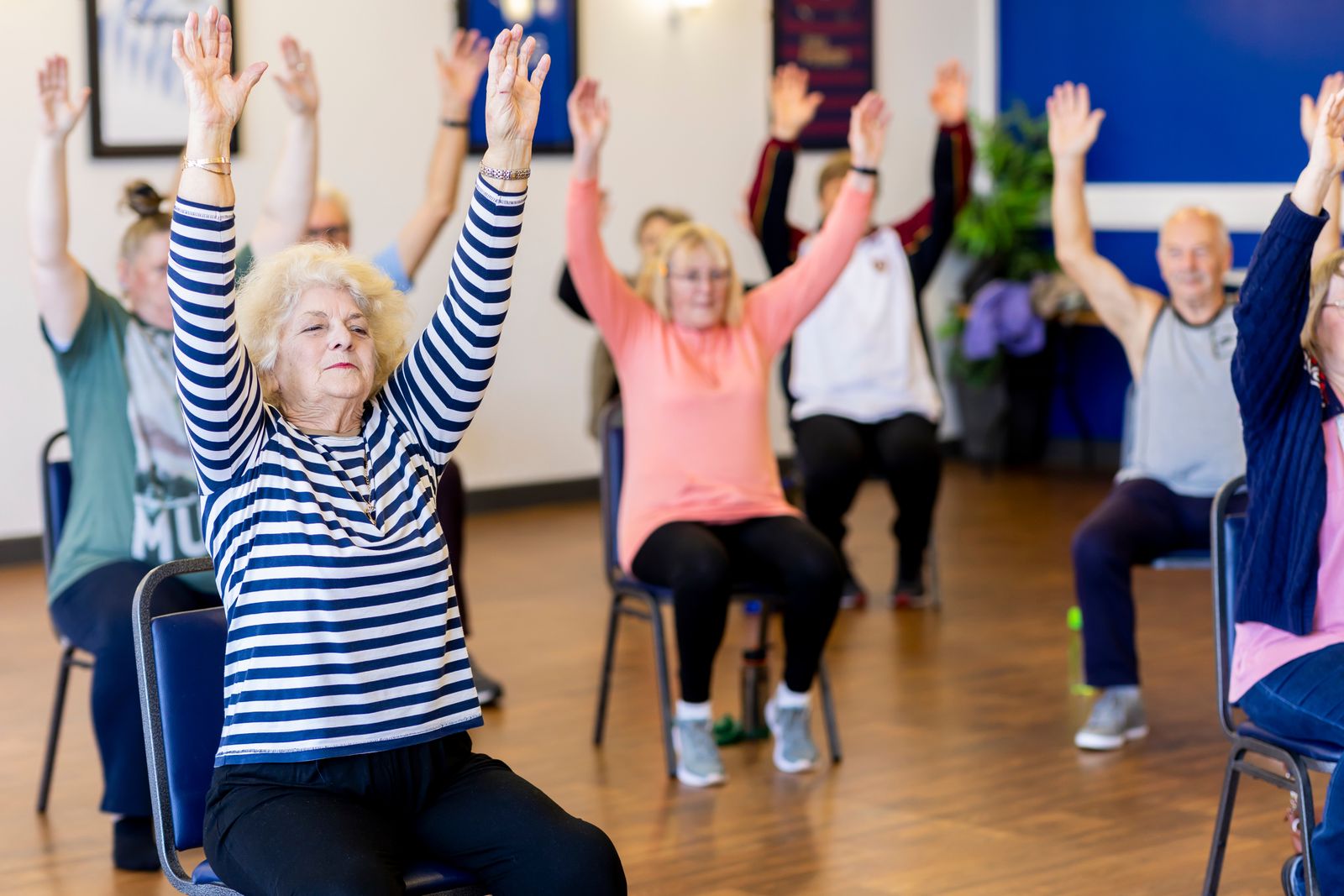
Choose your own range of motion: small steps and low arms are valid, bigger steps and higher arms raise the effort.
Does Zumba Gold count as proper cardio?
Yes, if you move with full arm and leg range. Zumba Gold sits at moderate intensity: you breathe harder, can still talk in short sentences, and sit at roughly 50 to 70 percent of your maximum heart rate (a rough estimate is 220 minus your age). A 45-minute session burns about 150 to 300 kcal, depending on body weight and effort.
Use the talk test: if you can speak a sentence but could not sing, you are in the right zone. If you cannot speak, slow down; if you could sing, add bigger arms or a deeper knee bend.
You can raise the effort without adding a single jump:
- Take longer steps and bend your knees slightly deeper.
- Bring your arms above shoulder height more often.
- Add one extra session each week once the current plan feels easy.
One honest note on weight loss: a session of about 150 to 300 kcal is a useful contribution, but it will not cancel an extra plate of biryani and a sweet. Fat loss is mostly decided by overall food intake, sleep and consistency. If that is your main goal, a plan from an online weight loss trainer pairs well with regular dance sessions. No format guarantees a particular result.
Balance, coordination and joint comfort: what to realistically expect
Much of Zumba Gold choreography is built from weight shifts, side steps, heel-toe taps and gentle turns. These movements practise the same skills you use when you step off a kerb, climb stairs or catch yourself after a stumble. Regular practice may help your balance and confidence, but it is not a medical treatment for falls.
Feet stay mostly grounded, so joints take less repeated impact than in a jumping class. Mild muscle tiredness the next day is normal; sharp, pinching or worsening joint pain is not, and means you should reduce range or stop that move.
For a deeper look at joint conditions, read our guide on whether Zumba is good for arthritis.
Should you choose Zumba Gold or Aqua Zumba?
Choose Zumba Gold if you want a gentle, land-based class you can do at home or in a studio. Choose Aqua Zumba if joint pain makes even low-impact floor work uncomfortable and you have regular access to a pool. Water supports roughly half or more of your body weight, so impact is lower still.
Zumba Gold lowers stress on joints by slowing the pace and keeping your feet grounded. Aqua Zumba uses buoyancy and water resistance instead. The practical difference for most people in India is access: Zumba Gold needs a small patch of floor and a screen, while Aqua Zumba needs a suitable pool and a trained instructor nearby.
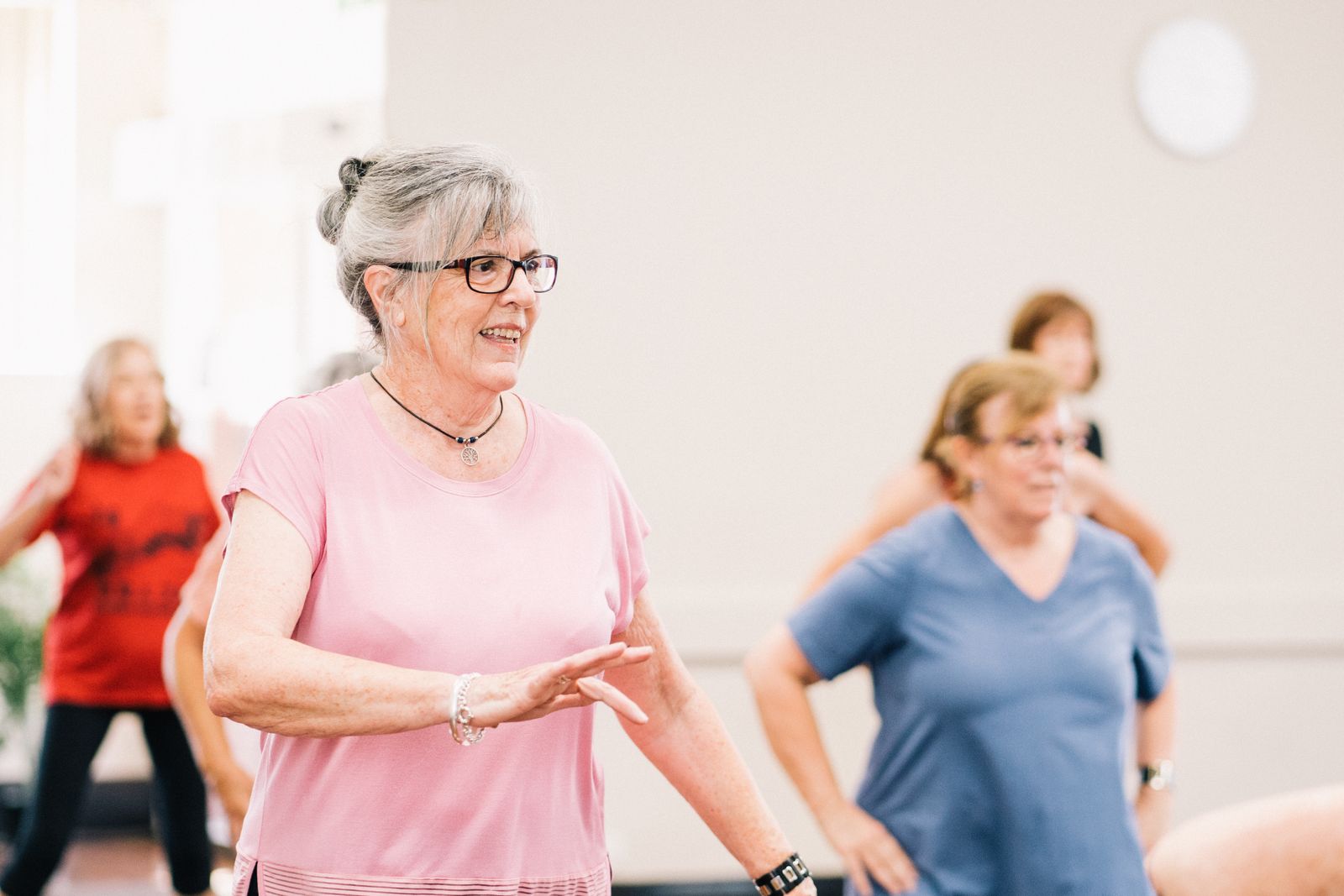
Your first four weeks: a simple Zumba Gold ramp-up
The plan below is a general guide for a healthy adult cleared to exercise. Repeat a week whenever you need to; the aim is to still want to come back in week five.
| Week | Sessions | Length | Focus | Effort cue |
|---|---|---|---|---|
| 1 | 2 | 20 to 30 min | Learn the basic steps, find the beat | 3 to 4 out of 10; full sentences easy |
| 2 | 2 to 3 | 30 min | Smoother transitions, bigger arms | 4 out of 10 |
| 3 | 3 | 30 to 40 min | Full range of motion, less chair use | 4 to 5 out of 10 |
| 4 | 3 | 40 to 45 min | Complete a full class without stopping | 5 to 6 out of 10 |
Focus on the beat first and the precise footwork second. Our Zumba for beginners guide covers that approach in full, including footwear and what to expect from the first class.
Keep rest days between sessions. For a complementary stretch session, a gentle online yoga class works well on those off days, and the blend is covered in Zumba yoga.
Can you do Zumba Gold at home with an online class?
Yes. You need about 2 by 2 metres of clear floor, supportive non-slip shoes, a stable chair within reach and a screen where you can see the instructor’s feet. Online classes let you move at your own pace, though a live instructor can correct your form in real time, which a recorded video cannot do.
A few set-up details matter more than people expect, especially in Indian homes:
- Floor: polished tiles and marble are slippery in socks. Wear shoes with a grip, or use a yoga mat on tiles, and keep the mat flat.
- Heat: keep a fan on, not pointed directly at your face, and sip water through the session. In summer, choose an early or late slot.
- Food: have a light snack such as a banana about 45 to 60 minutes before, and avoid dancing straight after a heavy meal.
- Chair: keep a sturdy chair without wheels beside you for balance tracks and rest breaks.
Fitstrot’s Zumba programme is led by Yash Pathak, our lead Zumba trainer, who is ZIN Licensed, ACE Certified and Strong Nation Certified. Tell the instructor up front that you want a low-impact pace so they can cue easier options. You can browse the online Zumba classes page, or read our overview of how online Zumba classes work. If you need adjustments for an injury or a specific health goal, 1-on-1 personal training gives you a plan built around your body.
Troubleshooting: what to do when Zumba Gold feels off
Most early problems have simple fixes. Use this list before deciding the format is not for you.
- You cannot follow the steps. Ignore the feet for two songs and copy only the arms and the beat. Add the feet once the rhythm feels natural.
- It feels too easy. Increase range before speed: longer steps, higher arms, deeper knees. Add a session before you add intensity.
- You get breathless quickly. Make everything smaller, lower your arms and take a sip of water. You should be able to speak in short sentences.
- Your knees ache. Check that your knees point in the same direction as your toes, soften the bend and shorten the step. If it persists, stop that move.
- You feel dizzy. Stop, sit down, sip water and rest. Do not carry on to finish the song.
When to speak to your doctor first
Zumba Gold is gentle, but gentle is not the same as risk-free. Check with your doctor before starting if you have heart disease, high or poorly controlled blood pressure, diabetes on treatment, osteoporosis, a recent surgery or fracture, a painful joint flare, or you have not exercised for years. Do not change any medicine based on exercise advice from a blog.
Stop immediately and seek medical help if you notice chest pain or pressure, severe breathlessness, fainting, or a sudden sharp pain.
Zumba Gold FAQ
Is Zumba Gold good for complete beginners?
Yes. Because the steps are simpler, repeated more often and taught at a slower pace, Zumba Gold is one of the friendliest ways to start dance fitness. Begin with two sessions a week of 20 to 30 minutes, and use the chair whenever you need it.
Can I lose weight with Zumba Gold?
It can support weight loss, since a session burns roughly 150 to 300 kcal, but results depend mostly on food intake, sleep and consistency. A realistic pace is about 0.25 to 0.5 kg per week, and no class can promise a specific number.
Do I need dance experience or a partner for Zumba Gold?
No. You do not need dance experience, a partner or any knowledge of Latin steps. Classes are built so you can follow the instructor and repeat each move several times. Start by matching the beat, and the footwork will follow.
Can I move from Zumba Gold to regular Zumba later?
Yes, many people do once they can finish a full 45-minute Zumba Gold class at about 5 to 6 out of 10 effort. Try one standard class a week alongside Gold, and skip the jumps until you feel confident.
Is Zumba Gold safe if I have knee or back pain?
Often it is a better fit than high-impact classes, because feet stay grounded. But safety depends on the cause of your pain. Check with your doctor first, keep movements small, stop anything that causes sharp pain, and ask your instructor for seated or reduced-range options.
Take the next step
Pick one 45-minute session this week from FitStrot’s online Zumba classes, tell the trainer you want the gentler Gold-style pace, and aim for an effort of 4 to 6 out of 10. Do that twice, then review how you feel.


