

If you have been told to “rest the joint” and you miss moving to music, the question is a fair one: is Zumba for arthritis a genuinely good idea, or a fast route to a swollen knee? The honest answer is that it depends almost entirely on which format you pick and how you load the joint. Knee osteoarthritis is not rare in India — a 2025 systematic review and meta-analysis of 16 community surveys in the Indian Journal of Orthopaedics put the pooled prevalence at 20.24% (95% CI 11.90–30.13), with age, female sex, lower socioeconomic status and previous knee injury as the leading risk factors (Indian J Orthop, 2025). That is roughly one in five adults surveyed. This guide separates what the research actually supports from what gets repeated online, and gives you a joint-by-joint modification plan you can use in class tonight.
Medical note: this is general education, not a treatment plan. Arthritis is a diagnosed medical condition. Talk to your rheumatologist, orthopaedic surgeon or physiotherapist before you start any new class, and never change or stop prescribed medication because of an article.
Is Zumba good for arthritis? The short answer
For most people with stable osteoarthritis or well-controlled rheumatoid arthritis, a low-impact Zumba format is a reasonable choice — but only with jumps removed. The CDC recommends adults with arthritis get at least 150 minutes a week of moderate aerobic activity plus muscle-strengthening on 2 days, and states plainly that physical activity is safe for people with arthritis (CDC, 2024). Zumba can be one way to hit that 150 minutes. It is not a treatment, and it is not right during an active flare.
The mechanism is not mysterious. Cartilage has no blood supply of its own; it is fed by synovial fluid that circulates when the joint moves through range. Sitting still all day does not protect an arthritic knee — it starves and stiffens it. What damages it is impact and torsion: landing from a jump, or pivoting on a planted foot. Zumba choreography contains both by default. Remove them and you are left with continuous, rhythmic, weight-shifting movement, which is close to what physiotherapists prescribe anyway.
The “Laval University Zumba study” you keep reading about does not exist
Search this topic and you will find dozens of blogs citing a “12-week Zumba study at Laval University” that reduced pain in rheumatoid arthritis patients. That claim is a distortion, and it matters because people make decisions on it. Here is what the actual research at Université Laval was.
Hélène Moffet and Luc Noreau’s group ran a dance-based exercise programme, not Zumba — Zumba did not exist as a branded format when the work was done. Their 1997 study in American Journal of Physical Medicine & Rehabilitation put 10 women (mean age 54 ± 10) with American College of Rheumatology functional class III rheumatoid arthritis through an 8-week programme, twice weekly, with a mean attendance of 14.8 out of 16 sessions (Noreau et al., 1997). The 2000 follow-up in Arthritis Care & Research reported 92.5% session attendance over 8 weeks, training at moderate intensity for up to 25 minutes, significant improvement in locomotor ability, and — the important bit — no aggravation of disease status (Moffet et al., 2000).
So the real finding is narrower and, frankly, more useful: a modified, low-ground-impact dance programme was tolerable and safe for women with severe RA, in a case series of ten people. It was never a randomised trial of Zumba, and it never reported a pain-reduction percentage. Anyone quoting one is inventing it.
What the better-quality evidence does show
The strongest data is not about Zumba specifically but about exercise for arthritic joints in general — and that evidence base is large. The table below is what you can actually stand on.
| Study / source | Year | Who | Intervention | Key result |
|---|---|---|---|---|
| Cochrane review (Lawford et al.) | 2024 | 12,468 people with knee OA across 139 trials | Land-based therapeutic exercise | Pain improved 8.7 points vs placebo and 13.1 points vs no treatment on a 0–100 scale; function improved 11.3 and 12.5 points. Authors call the clinical importance uncertain. |
| Moffet et al., Arthritis Care Res | 2000 | 10 women, RA functional class III | 8-week modified dance, low ground impact | 92.5% attendance, improved locomotor ability, no worsening of disease status |
| Noreau et al., Am J Phys Med Rehabil | 1997 | 10 women, mean age 54 | 8 weeks, twice weekly dance-based | 14.8/16 sessions attended; feasibility confirmed in severe RA |
| Biology (Zumba Gold heart-rate study) | 2024 | 23 post-menopausal women, 68.8 ± 7.2 years | Four regular Zumba Gold classes, HR monitored | Average heart rate 70.2% of maximum — squarely moderate intensity |
| Healthcare (Zumba Gold intervention) | 2025 | 43 post-menopausal women | 12-week community Zumba Gold programme | Significant gains in sit-to-stand, 6-minute walk distance, mental health, fatigue and social connectedness |
Read the Cochrane line carefully, because it is the most honest number here. Across 139 trials and 12,468 participants, exercise beat no treatment by about 13 points on a 100-point pain scale — real, but the reviewers noted this fell short of the 12-point and 13-point thresholds usually treated as clinically meaningful, so benefits were “of uncertain clinical importance” (Cochrane, 2024). Exercise helps. It is not a cure, and nobody should sell it to you as one.
Zumba Gold classes vs a regular Zumba class
Zumba Gold is the licensed lower-intensity format built for beginners, people with physical limitations and older adults — and it is the version the Arthritis Foundation names directly when discussing dance-based fitness for arthritis, alongside advice to step instead of jumping and keep both feet on the floor in higher-impact styles (Arthritis Foundation).

Intensity-wise you are not short-changing yourself. Monitored Zumba Gold classes in women averaging 68.8 years produced a mean heart rate of 70.2% of maximum — moderate intensity by any standard definition (Biology, 2024). The joints do less work; the heart still does plenty. If you want the wider cardio picture, our explainer on whether Zumba counts as cardio covers the energy-system side.
| Standard Zumba move | Why it stresses an arthritic joint | Arthritis-friendly swap | Form cue |
|---|---|---|---|
| Jump squat / hop on the beat | Landing forces peak through the patellofemoral joint | Heel lift with a toe tap — same rhythm, no flight phase | Keep one foot in contact with the floor at all times |
| Salsa pivot turn | Twisting on a planted foot shears the knee meniscus | Step-around turn in 3–4 small steps | Move the whole foot, never rotate on a fixed heel |
| Deep reggaeton squat | Compressive load rises sharply past 90° of knee flexion | Half-depth squat, chair-height stop | Knees track over the second toe; stop before pain |
| Grapevine at speed | Rapid lateral loading on an unstable ankle or hip | Slow side step-together, no crossover | Lead with the hip, not the foot |
| Arm circles with shoulder OA | Overhead range can impinge an inflamed shoulder | Keep hands below shoulder height | Elbows soft, thumbs up |
| Floor-touch cumbia dip | Loaded lumbar flexion with hip OA | Hinge to mid-shin only, hands on thighs | Hips back, spine long |
Rheumatoid arthritis exercise follows different rules from osteoarthritis
People lump these together and they should not. Osteoarthritis is mechanical wear in a specific joint; rheumatoid arthritis is systemic autoimmune inflammation that flares unpredictably and can involve many joints at once, plus fatigue that has nothing to do with deconditioning.
For osteoarthritis, the NHS is direct: exercise is one of the most important treatments, whatever your age or fitness level, combining strengthening work with general fitness — but it also warns that doing too much too quickly, or the wrong kind of exercise, may damage your joints, and advises discussing any new plan with your GP or physiotherapist first (NHS).
For rheumatoid arthritis, the additional rule is flare management. During an active flare with hot, swollen joints, aerobic dance is not the answer — gentle range-of-motion work is. Between flares, the Laval dance work suggests a modified low-impact programme is tolerable even in functional class III disease. Your rheumatologist decides which phase you are in, not your class schedule.
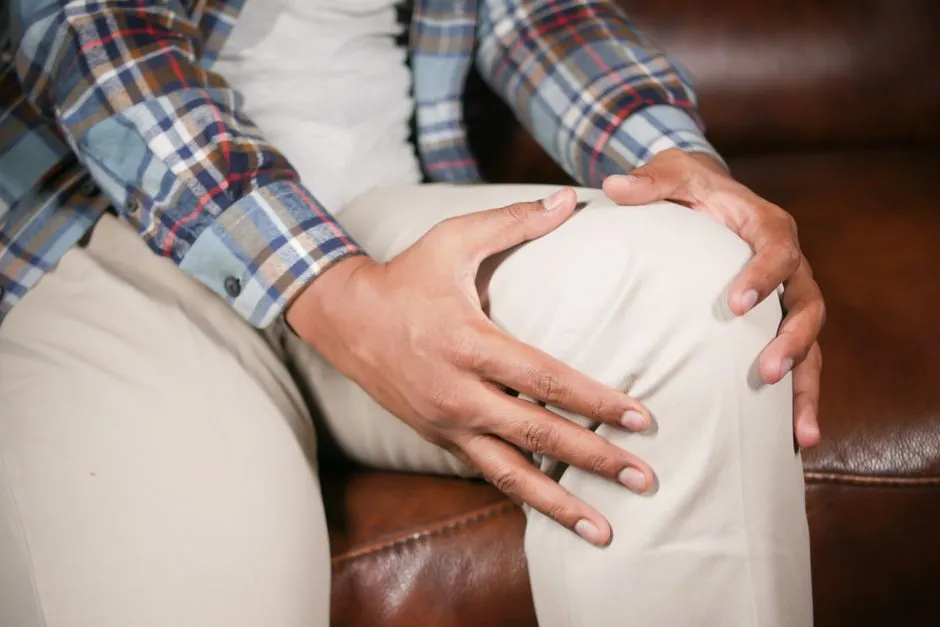
A 4-week plan for low impact exercise for arthritis
Here is the progression that matches CDC’s guidance of building toward 150 minutes a week, using its own permission to break activity into 5- or 10-minute blocks. Nobody with an arthritic knee should start at a 60-minute class. Mayo Clinic advises starting slowly and warming up with 5–10 minutes of range-of-motion work, since doing too much too fast increases pain (Mayo Clinic).
| Week | Zumba sessions | Length per session | Target intensity | Strength days | Rule for the week |
|---|---|---|---|---|---|
| 1 | 2 | 15 min (seated warm-up + standing tracks) | Can talk in full sentences | 1 day, chair-based | No move that lifts both feet off the floor |
| 2 | 2–3 | 20–25 min | Slightly breathless, still conversational | 2 days | Add one turn pattern, stepped not pivoted |
| 3 | 3 | 30 min | Moderate — roughly 65–70% of max heart rate | 2 days | Only progress if week 2 caused no next-morning swelling |
| 4 | 3 | 40 min, or 2 × 20 min split across the day | Moderate | 2 days | Now at ~120 min/week; hold here for a month before adding more |
Two practical notes for Indian homes. First, dance on a hard, level surface — a rug over tile is a slip risk, and a mattress or a thick dhurrie destabilises the ankle. Second, wear proper cross-training shoes indoors, not chappals and not bare feet; cushioned, laterally stable shoes are doing real work here. If timing is your sticking point, our piece on the best time of day to do Zumba is worth a read, since arthritic stiffness is usually worst first thing in the morning.
Arthritis exercise for knee pain: three add-ons for non-dance days
Aerobic work alone will not rebuild the quadriceps strength that protects an arthritic knee. The CDC’s 2-days-a-week strength target exists for a reason. These three are low-load and do not require equipment.
| Exercise | Sets × reps | Rest | Form cue |
|---|---|---|---|
| Sit-to-stand from a dining chair | 3 × 8–10 | 60 sec | Nose over toes, no hand push-off once you can manage it |
| Straight-leg raise, lying on back | 2 × 10 each leg | 45 sec | Tighten the thigh before you lift; keep the knee locked straight |
| Standing calf raise, hand on wall | 2 × 12 | 45 sec | Slow 3-second lower — that is where the strength is built |

Troubleshooting: what to do when the joint complains afterwards
Some soreness after starting something new is normal — the CDC says so explicitly, while advising you contact a healthcare provider if the pain does not settle over time. The practical filter most physiotherapists use is the two-hour rule: if joint pain is still noticeably worse two hours after you finish, that session was too much. Cut the next one by a third.
Mayo Clinic’s own guidance is useful here too: apply heat for about 20 minutes before exercise to relax muscles and ease pain, and use ice on the joint for up to 20 minutes afterwards if there is swelling. Warm towels or a warm shower before class is a small habit that changes how the first ten minutes feel.
Warm-up is not optional with arthritis
Give yourself 5–10 minutes of range-of-motion work before any Zumba Gold track starts: ankle circles, seated knee extensions, hip marches, shoulder rolls. Mayo Clinic lists range-of-motion work as safe to do daily. If your class starts cold and goes straight into a fast merengue, join two songs late.

Red flags: stop the class and call your doctor
Exercise is not the right answer to every joint signal. Stop and get medical advice if you notice any of the following:
- A joint that is hot to touch, visibly red or swollen before you start
- Sudden sharp pain during a movement, as opposed to a gradual ache
- Joint pain still clearly worse two hours after the session, repeatedly
- The knee giving way, locking or catching
- New swelling that appears overnight after a class
- Chest pain, unusual breathlessness or dizziness at any point
- An RA flare with morning stiffness lasting well over an hour, or fever
None of these mean “push through”. They mean get assessed. If you are managing arthritis alongside other conditions, a 1-on-1 personal training setup where one coach knows your full history is safer than dropping into a general group class.
Zumba Gold for seniors — and for the Indian parent told to “just rest”
This is the group that benefits most and gets the worst advice. Complete rest for an arthritic joint accelerates quadriceps wasting, which raises knee load, which worsens pain — a loop that is entirely avoidable.
The 2025 Healthcare trial is encouraging on exactly this population: 43 post-menopausal women, 12 weeks of community Zumba Gold, and significant improvements not just in sit-to-stand and 6-minute walk distance but in mental health, general and physical fatigue, and social connectedness (Healthcare, 2025). The qualitative arm found participants valued a “non-judgmental place” and a sense of belonging. For someone who has stopped going out because of a knee, that is not a soft outcome.
Online classes remove three specific Indian barriers at once: travel with a painful joint, the cost and time of a studio commute, and the self-consciousness of being the slowest person in a 25-year-old’s class. Fitstrot’s lead Zumba trainer, Yash Pathak, is ZIN Licensed, ACE Certified and Strong Nation Certified — worth checking for any instructor you join, because a licensed instructor is the one who will actually give you the low-impact alternative instead of telling you to keep up.

On frequency, three moderate sessions a week is a sensible ceiling to hold for the first couple of months; our guide on how often to do Zumba explains why more is not automatically better when recovery is the limiting factor.
Frequently asked questions
Is Zumba safe if I have knee osteoarthritis?
For most people with stable knee osteoarthritis, yes — in a low-impact format with jumps and pivot turns removed. The CDC states physical activity is safe for people with arthritis and recommends 150 minutes of moderate aerobic activity weekly plus strengthening on 2 days. Get clearance from your doctor or physiotherapist first, especially if you have had a knee injury or surgery.
Should I do Zumba during a rheumatoid arthritis flare?
No. During an active flare with hot, swollen joints, aerobic dance is the wrong tool. Switch to gentle range-of-motion movement, which Mayo Clinic notes can be done daily, and return to class once the flare settles and your rheumatologist agrees. The Laval dance research was conducted between flares, not during them.
How is Zumba Gold different from a regular Zumba class?
Zumba Gold is the licensed lower-intensity format designed for beginners, older adults and people with physical limitations. The music and choreography stay; the impact, speed and range drop. Monitored classes in women averaging 68.8 years still reached 70.2% of maximum heart rate, so it remains genuine moderate-intensity exercise.
How long before Zumba helps my arthritis pain?
Expect 8 to 12 weeks before meaningful change, based on the trial durations in this field. The Laval dance programmes ran 8 weeks; the Zumba Gold intervention ran 12. Cochrane’s 2024 review of 139 exercise trials found pain improvements of roughly 9 to 13 points on a 100-point scale, which the reviewers judged to be of uncertain clinical importance.
How many days a week should someone with arthritis do Zumba?
Start with two sessions of 15 minutes and build to three sessions of 30 to 40 minutes over four weeks. That lands near the CDC’s 150-minute weekly target. Add two separate strength days. Hold that volume for a month before increasing anything, and never add duration and intensity in the same week.
My knee hurts the day after class. What should I change?
Apply the two-hour rule: if joint pain is still clearly worse two hours after a session, that session was too long or too intense. Cut the next one by about a third, remove any remaining jumps, and check your footwear and floor surface. Mayo Clinic suggests ice on the joint for up to 20 minutes after activity if there is swelling.
Can I do online Zumba Gold classes at home in India?
Yes, and for many people with arthritis it is the more practical option — no commute on a painful knee, and no pressure to keep pace with a room. You need about 2 metres of clear hard floor, cross-training shoes rather than chappals, a chair for balance and seated tracks, and an instructor who can see you and call modifications live.
Do I need my doctor’s clearance before starting?
Yes. Arthritis is a diagnosed medical condition and the NHS specifically advises discussing any new exercise plan with your GP or physiotherapist, warning that doing too much too quickly or the wrong kind of exercise may damage your joints. Ask specifically about impact tolerance, any joint you should not load, and whether your current medication affects exercise.
Curious whether a low-impact class actually suits your joints? Try one online Zumba class with a licensed instructor who will give you the modification before you have to ask for it — and bring your doctor’s advice to the first session so the choreography is built around it.


