

Yoga for seniors is yoga slowed down and made safer: fewer deep stretches, more support, and far more attention to balance, joint movement and breathing. You do not need to touch your toes, sit on the floor or have any yoga background. A sturdy chair, a wall and 10 to 15 minutes, two or three days a week, are enough to begin. This guide gives you a first-week plan, a 15-minute sequence, adjustments for common conditions and a clear list of when to speak to your doctor first.
Is Yoga Safe After 60, and Who Should Check With a Doctor First?
Gentle yoga is generally safe for older adults when poses are supported, slow and pain-free. Check with your doctor first if you have osteoporosis, uncontrolled blood pressure, heart disease, a recent hip or knee replacement, vertigo or past falls. Chair-supported practice is usually approved, though deep twists, deep forward folds and head-low poses may be restricted.
Stop and get medical advice if you notice chest pain or pressure, sudden breathlessness, dizziness that does not settle within a minute of sitting down, new numbness, or sharp joint pain. A mild stretching sensation in the muscle is fine; sharp, pinching or lingering pain is not. Yoga sits alongside your medical care and never replaces it, and nothing here is a reason to change or skip any medicine. If you take medicines for blood pressure or diabetes, tell your doctor you are starting, and ask how to time sessions around meals and tablets.
What Can Yoga Do for Older Adults, and What Can It Not Do?
Regular gentle yoga can ease everyday stiffness, build modest leg and core strength, improve balance confidence and help you relax. It cannot cure arthritis, quickly rebuild bone density or guarantee you will never fall. Think of it as one piece of an active routine, alongside walking and strength work. Our overview of the benefits of yoga covers the wider picture.
A Day-by-Day First Week of Yoga for Seniors
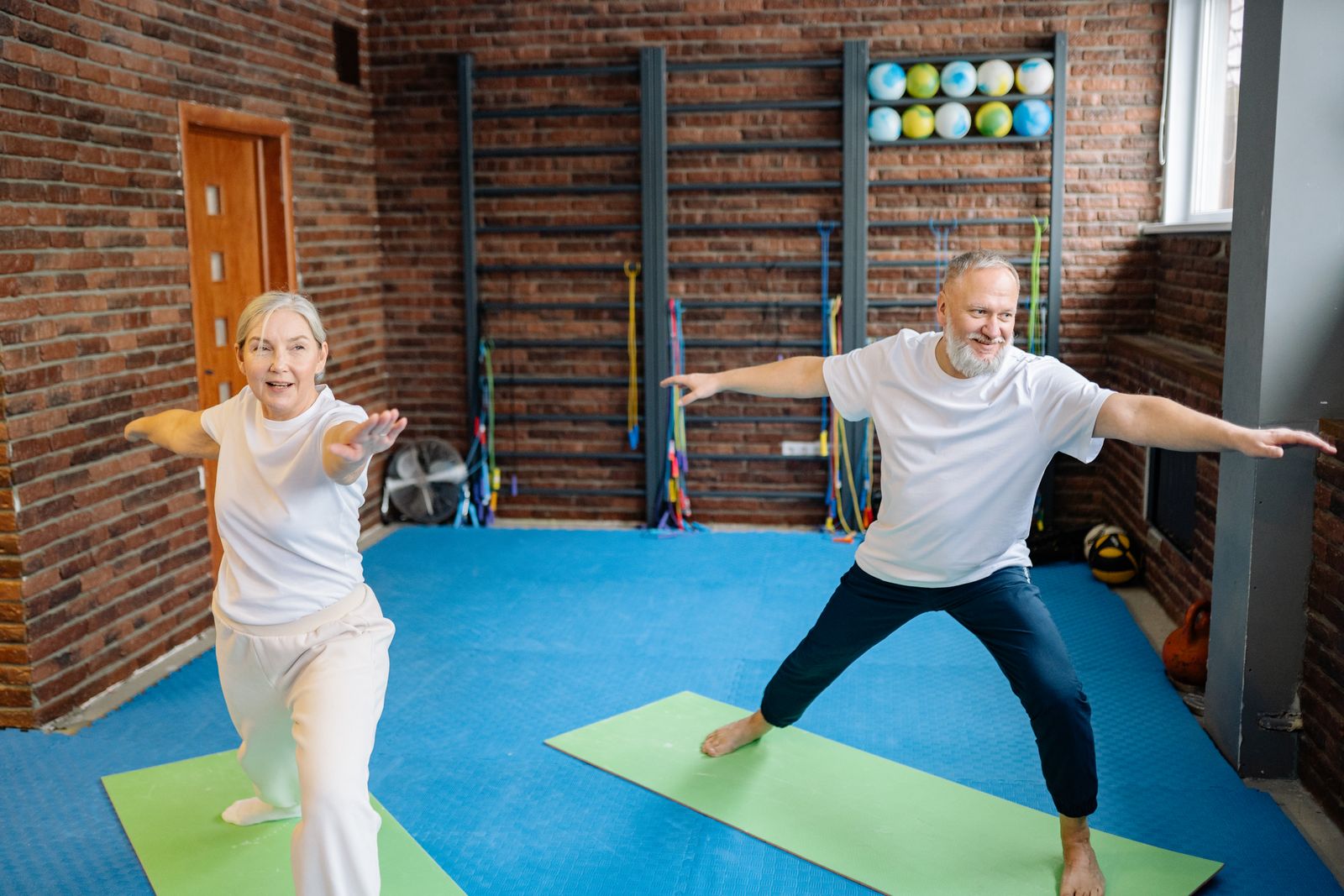
The first week is about learning the movements and noticing how your body responds the next morning, not about effort. Keep every session easy enough to hold a conversation, with a wall or counter within arm’s reach for anything standing.
| Day | Time | What you do | Support needed |
|---|---|---|---|
| Day 1 | 10 min | Seated belly breathing, shoulder and neck rolls, ankle and wrist circles | Chair only |
| Day 2 | 10 min walk | Easy walk at your normal pace; no yoga | None |
| Day 3 | 12 min | Seated cat-cow, seated side stretch, gentle seated twist | Chair |
| Day 4 | 5 min | Belly breathing before bed, 10 slow breaths | Bed or chair |
| Day 5 | 15 min | Day 3 moves plus heel raises and chair-supported mountain pose | Chair and wall |
| Day 6 | 15 min | Repeat Day 5, adding five slow sit-to-stand repeats from the chair | Chair and wall |
| Day 7 | Rest | Light walk or complete rest; note any stiffness | None |
If a move leaves you sore for more than a day, repeat it with a smaller range next time rather than pushing through.
What Does a 15-Minute Chair-Supported Sequence Look Like?
A good 15-minute sequence starts seated, moves to chair-supported standing and finishes with rest. Spend about 3 minutes on breathing and joint circles, around 9 minutes on gentle poses held for 5 to 8 slow breaths each, and 3 minutes relaxing. Stay inside a pain-free range throughout. Our chair yoga guide goes deeper into seated work.
| Step | How to do it | Hold or reps | Form cue |
|---|---|---|---|
| Belly breathing | Sit tall, one hand on belly, breathe in through the nose | 10 slow breaths (about 2 min) | Breathe out slightly longer than you breathe in; no breath holding |
| Neck and shoulder rolls | Roll shoulders back, then tilt the ear toward each shoulder | 5 small rolls each way | Keep movements small; skip neck circles if dizzy |
| Seated cat-cow | Hands on knees, arch gently, then round gently | 8 rounds | Move with the breath, never to the end of the range |
| Seated side stretch | One arm overhead, lean gently sideways | 5 breaths each side | Stay tall; do not collapse forward |
| Seated twist | Hold the chair back, turn from the ribs | 5 breaths each side | Keep both hips on the seat; skip deep twists with osteoporosis |
| Seated hinge | Hands on thighs, tip forward from the hips with a long back | 5 breaths | Do not round the spine to reach lower |
| Heel raises | Stand behind the chair, both hands on the back, rise onto toes | 8 slow reps | Eyes on a fixed point; lower slowly |
| Supported tree | One foot resting low against the other shin or ankle, hands on chair | 5 breaths each side | Never rest the foot against the knee joint |
| Rest | Lie on a bed or mat with a pillow under the knees, or sit back | About 3 min | Let the breath return to normal; get up slowly |
Myth Check: Do You Need to Be Flexible, and Is Chair Yoga Real Yoga?
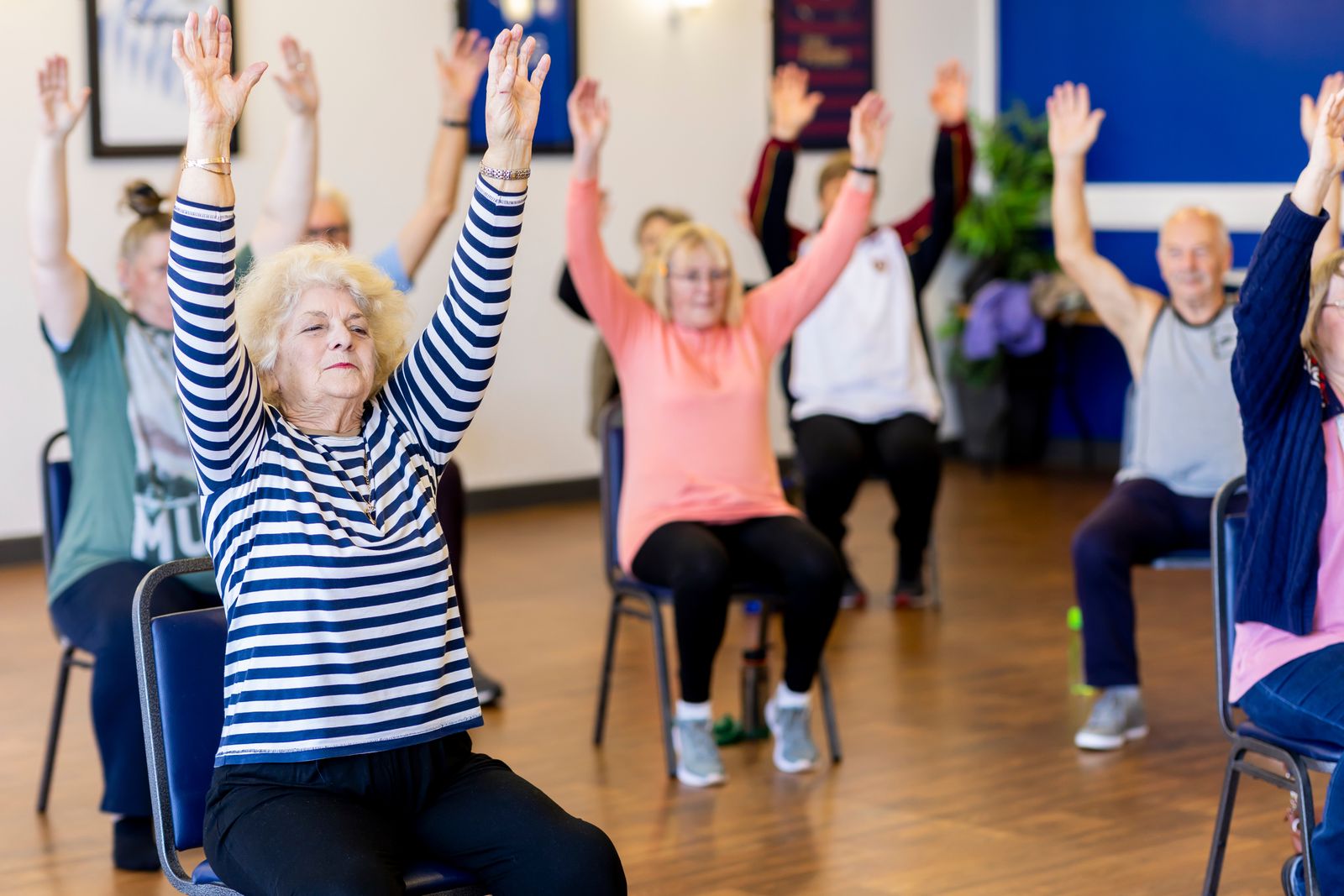
No to both. Flexibility is built slowly, not required at the start. Chair yoga for seniors is real yoga because it keeps mindful movement, steady breathing and alignment; the chair simply removes the risk of getting down to the floor and back up.
- “No pain, no gain.” Wrong at any age. Pain is a signal to ease off, not a sign of progress.
- “It is too late to start.” People begin in their 60s, 70s and beyond and improve everyday movement such as standing from a low seat. If you are in your late 70s or 80s, our guide to yoga for the elderly covers more supported options.
How Is a Senior Yoga Class Different From a Regular One?
A senior class holds each shape for several breaths, offers at least two versions of every pose, and avoids fast transitions, inversions and deep knee bends. A fast vinyasa yoga flow changes poses every few breaths, which is a poor starting point after 60. Gentle hatha or restorative classes suit better.
How Do You Start Yoga for Seniors at Home?
Start with 10 to 15 minutes, two or three times a week, using a sturdy armless chair, a wall and a non-slip floor. Practise at least two hours after a heavy meal. Add one new move every week or two, and after about four weeks build toward 20 to 30 minutes on three days.
A few home checks matter more than fancy equipment:
- Chair: Choose a heavy, steady chair with a flat seat. Avoid wheeled office chairs and light plastic chairs that can slide or flex.
- Floor: Remove loose mats, dhurrie edges and anything that bunches underfoot. Wear grippy socks or go barefoot on a dry floor, never in socks on smooth tiles.
- Props: A folded blanket for the seat, a towel or dupatta as a strap, and two firm cushions are plenty. A yoga mat is only needed once you add floor work.
For a wider home-practice setup, see our guide to yoga at home, and if you are brand new to yoga in general, yoga for beginners explains the basic vocabulary.
Which Health Conditions Need Adjustments?
Most common conditions allow gentle practice with modifications, but the adjustments are specific. The table below shows what is usually fine, what to change and what to raise with your doctor or physiotherapist. It is general guidance, not a prescription, so your own clinician’s advice always takes priority.
| Condition | Usually fine | Adjust or avoid | Ask your doctor or physio |
|---|---|---|---|
| Arthritis (knees, hands, hips) | Seated joint circles, slow range-of-motion moves, chair work | Forcing stretches, long kneeling, weight on painful wrists | Which joints to avoid loading during a flare-up |
| Osteoporosis or low bone density | Tall seated posture, heel raises, supported standing | Deep forward folds that round the spine, deep or forceful twists | Whether any spinal bending is safe for you |
| High blood pressure | Seated work, slow belly breathing, rising slowly | Head lower than the heart for long, breath holds, forceful breathing such as kapalabhati or bhastrika | Which breathing practices are acceptable |
| Hip or knee replacement | Only what your surgeon or physio has approved | Deep hip bending and crossing the legs in the early months | Exact movement limits and when to begin |
| Vertigo or dizziness | Seated poses with steady support nearby | Quick head turns, looking up, fast position changes | Whether standing balance work is advisable |
| Diabetes | Gentle seated and supported standing work | Practising when shaky or sweaty; ignoring numb feet | Timing around meals and medicines |
If shoulder stiffness limits your reach overhead, read yoga for shoulder pain before trying arm-raising poses. For yoga for seniors with joint pain in particular, our guide to yoga for arthritis breaks down which sequences tend to feel kindest.
Can Yoga Help With Balance and Fall Prevention?
Yoga cannot guarantee you will not fall, but slow balance work builds ankle, hip and core strength that help you stay steady. Aim for 2 to 5 minutes of balance practice on three days a week, always beside a wall or chair, progressing gradually from two hands to one hand to fingertips.
Useful starting points include heel raises, a heel-to-toe stance with the chair beside you, supported tree pose and slow sit-to-stand repeats, which mirror rising from a chair or stepping off a kerb. Never practise balance in socks on a slippery floor. Many older adults also enjoy pairing yoga with low-impact dance; our guide to Zumba for seniors shows how that works.
Troubleshooting: What If Something Feels Wrong?
Most problems in the first month come from doing too much, too soon, or from poor support. These quick fixes cover the usual ones, but anything severe, sudden or lasting belongs with your doctor.
- Knees ache after standing poses: Reduce the time on your feet, keep the knees soft rather than locked, and use more chair support.
- Dizzy when you stand up: Sit back down, breathe out slowly and wait about 30 seconds. Rise in two stages next time. Repeated dizziness needs a doctor’s review.
- Stiff the next morning: Mild stiffness that fades within a day is common. If it lasts longer, shorten the session and use a smaller range.
- Wobbly in balance poses: Hold the wall with two hands, shorten the hold and practise on a firm, non-slip surface.
- Losing motivation: Fix the same days and time, for example right after your morning tea.
Should You Join Online Yoga Classes or Go In Person?
Both work, so choose by mobility, travel and comfort. Online sessions save travel and let you practise with your own chair; in-person classes offer hands-on adjustment and social contact. A live online instructor who can see you on camera gives much of the same feedback.
For a specific concern such as a knee or back, choose a live format where the teacher can watch and correct you. Fitstrot’s online yoga classes are taught live, and our blog on online yoga classes explains what to look for. If you would rather build strength with one-to-one attention, 1-on-1 personal training can complement your yoga practice.
Frequently Asked Questions About Yoga for Seniors
What is the best yoga for seniors who are complete beginners?
Chair-based yoga or a gentle hatha class is the best start. Both use slow pacing, supported poses and clear instruction instead of flowing sequences. Begin with 10 to 15 minutes and add one new pose every week or two.
How often should seniors do yoga?
Two or three sessions a week of 15 to 30 minutes is a sensible target for most older adults. Shorter, regular sessions beat one long class and give your joints time to adapt.
Can seniors do yoga if they cannot sit on the floor?
Yes. Nearly every pose has a seated or supported version, so a full practice can be built around a chair. A chair sequence can move the spine, shoulders, hips and legs without any floor transition.
Is yoga safe for seniors with high blood pressure or arthritis?
Often yes, with modifications and your doctor’s agreement. With high blood pressure, avoid keeping the head below the heart, holding the breath or forceful breathing practices, and rise slowly. With arthritis, stay within a pain-free range. Never change medication because of yoga.
Is morning or evening better for yoga for seniors?
Both help. A short morning session loosens overnight stiffness, so warm up with small circles first. Evening sessions can use slower, restful poses to help you wind down. Avoid practising straight after a heavy meal.
Next step: Book a gentle, supported session with a Fitstrot instructor through Online Yoga Classes this week, and mention any knee, back or blood pressure concerns before you begin.


