

Zumba for seniors works best when the dance is slowed down, kept close to the ground and built around steady, safe movement: no jumps, no sharp spins, and a sturdy chair or wall always within reach. Done that way, it can be a cheerful, social way to keep moving after 60. It is not a treatment for any condition, though, and it should start with your doctor’s okay.
Is zumba for seniors safe, and who should ask a doctor first?
For many healthy older adults, low-impact Zumba is a reasonable way to stay active, but safety depends on your health, your medicines and how the class is run. Anyone over about 60, or younger with a heart, blood pressure, bone or joint concern, should get a doctor’s okay first and begin with short, slow sessions.
See your doctor before your first class if any of these apply to you:
- Heart: a heart condition, a past heart procedure, chest tightness, or palpitations.
- Blood pressure: high or unsteady readings, or you take medicines for it.
- Joint replacement: a new hip or knee. Your surgeon or physiotherapist must tell you which movements to avoid and when you can start.
- Osteoporosis or a past fracture: ask which twists, forward bends and impact to avoid.
- Dizziness or falls: light-headedness, fainting, poor balance, or a fall in the past year.
- Medicines or diabetes: some medicines can cause low blood sugar or a drop in pressure on standing. Ask when to take them around exercise, and never skip or change a dose because of a dance class.
- Breathing problems or long gaps in activity: if you have not exercised regularly for years, get a check first.
Stop and sit down straight away if you feel chest pain or pressure, severe breathlessness, dizziness, or sudden sharp pain. If chest pain does not ease within a few minutes of resting, call emergency services (112 in India) rather than waiting it out.
How is zumba gold different from a regular class?
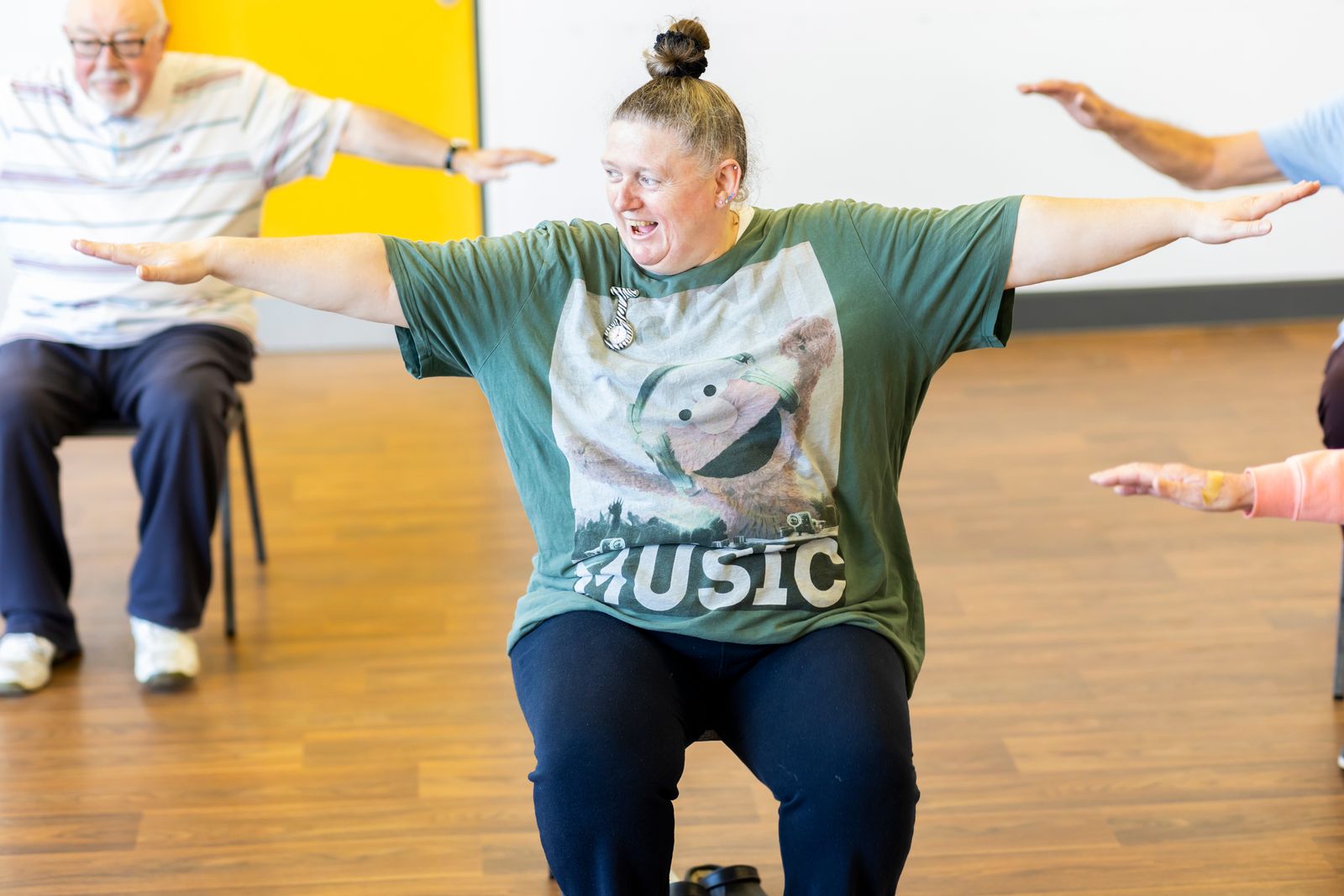
Zumba Gold is the slower, lower-impact format designed for older adults and complete beginners. It keeps the Latin and Bollywood-style music but uses smaller steps, no jumping, longer breaks and a gentler pace, and many moves can be done seated. Regular classes are faster and often include hops, quick turns and longer stretches without a pause.
When you search for a senior zumba class, look for words like “Gold”, “low-impact”, “gentle” or “chair”. Our guide to Zumba Gold covers the format in detail.
| Feature | Regular Zumba | Zumba Gold style | Chair Zumba |
|---|---|---|---|
| Music pace | Fast, high energy | Slower, easier to follow | Slow to medium |
| Jumps and hops | Common | Left out or replaced with steps | None |
| Balance support | Not usually planned for | Option to hold a chair or wall | Seated, so none needed |
| Effort level (out of 10) | 6 to 8 | 3 to 5 | 2 to 4 |
| Good starting point for | Fit, regular exercisers | Most beginners over 60 | Unsteady balance, recovery phases, joint pain days |
How should a beginner over 60 build up in the first 8 weeks?
Start with about 15 to 20 minutes, two days a week, at an easy effort where you can still talk in full sentences. Add roughly 5 minutes every two weeks, and a third day only if you feel fine the next morning. Many people reach 30 to 40 minutes, three days a week, by around week eight, if their doctor agrees.
Repeating a week is completely normal. Keep a rest day between sessions and skip a day when you feel unwell.
| Weeks | Days per week | Minutes per session | Effort (out of 10) | What to focus on |
|---|---|---|---|---|
| 1 to 2 | 2 | About 15 to 20 | 2 to 3 | Chair version, marching, weight shifts, learning the basic step |
| 3 to 4 | 2 to 3 | About 20 to 25 | 3 to 4 | Standing with a chair beside you, side steps, simple arm patterns |
| 5 to 6 | 3 | About 25 to 30 | 3 to 5 | Slow quarter turns, a little more footwork, full songs |
| 7 to 8 | 3 | About 30 to 40 | 4 to 5 | A complete class with water breaks and a slow cool-down |
On rest days, a gentle stretch or breathing session is a good companion. Our online yoga classes include slower options, and the post on combining Zumba and yoga shows how the two fit into one week.
How do you do chair zumba at home?
Chair zumba means dancing the upper body and feet while seated on a sturdy, non-wheeled chair placed against a wall, with both feet flat on a non-slip floor. Sessions usually run 15 to 25 minutes: about 5 minutes of warm-up, 10 to 15 minutes of easy dance and 5 minutes of slow stretching.
- Set up: sit tall with your back supported, feet hip-width apart, water within reach.
- Warm up: shoulder rolls and marching feet at a talking pace.
- Dance: pick 3 or 4 moves from the table below and rest after each slow song.
- Cool down: slow the music and stretch arms, calves and wrists without bouncing.
| Move | How to do it | Safety cue |
|---|---|---|
| Seated march | Lift one knee a few inches, then the other, swinging the arms gently | Keep your back tall, do not lean back |
| Side tap and reach | Tap one foot out to the side and reach the same-side arm out at shoulder height | Keep arms at or below shoulder height if you feel strain |
| Heel dig | Press one heel forward, toes up, then switch with a small clap or hand swing | Small range, no locking the knee |
| Seated grapevine | Step one foot out, bring the other to meet it, then reverse | Stay seated and keep both heels grounded between steps |
| Slow salsa sway | Rock gently from one hip to the other with the arms swaying | Move within comfort and do not twist the spine sharply |
Myth check: is Zumba too fast and risky after 60?
No. Speed and impact are adjustable, so Zumba is only as intense as you choose to make it. The real risks come from skipping the warm-up, slippery floors, ignoring warning signs or copying a full-speed version.
- “If I cannot keep up, I am doing it wrong.” Smaller steps and marching on the spot are valid versions of every move.
- “A bit of pain is normal.” Mild muscle tiredness the next day can be normal. Sharp, joint or chest pain is not, and means you stop.
How do you keep balance and fall risk in check during a class?
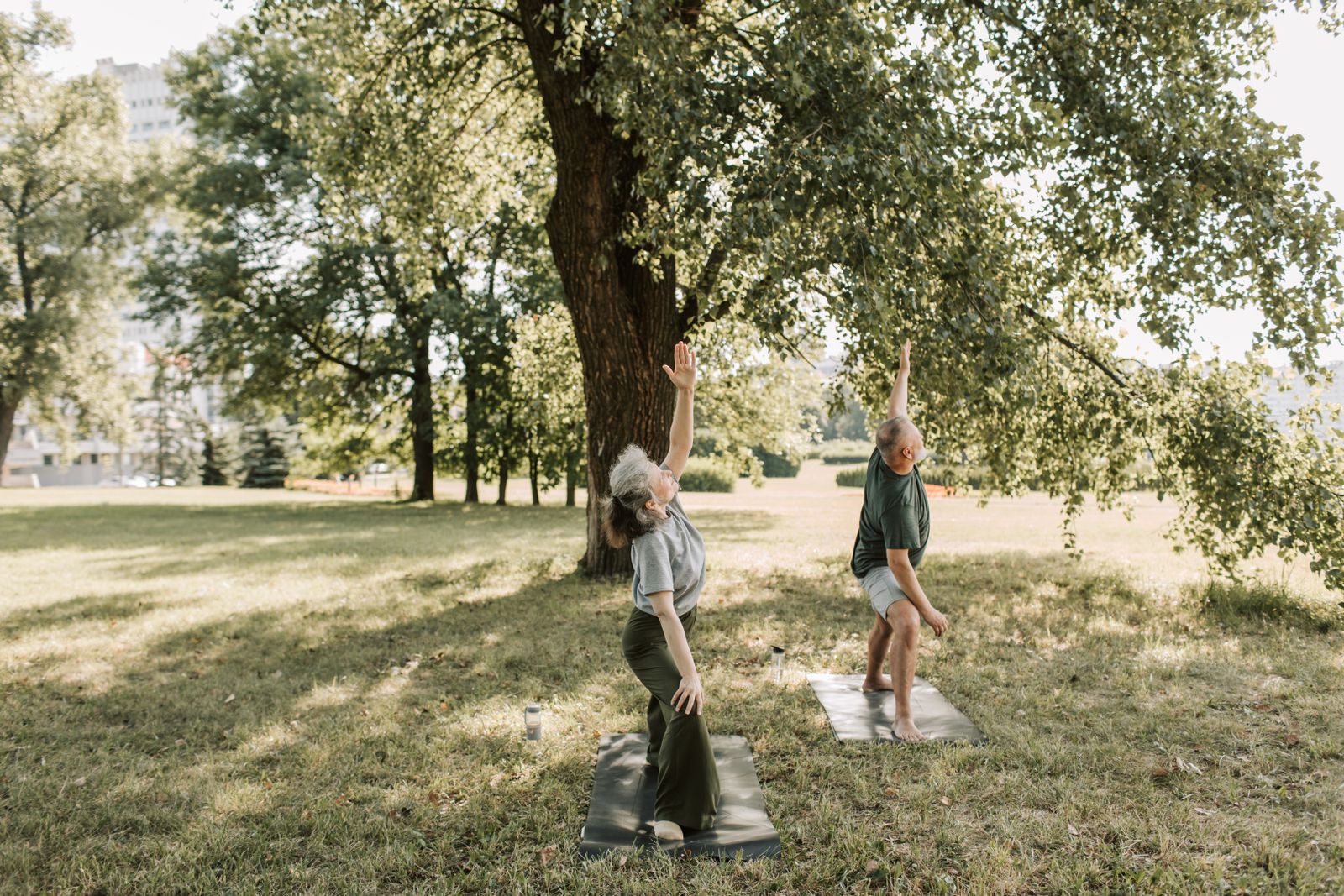
Dance beside a sturdy chair, counter or wall you can grip, on a dry non-slip floor with about two metres of clear space. Wear closed, flat shoes, turn by lifting your heels rather than twisting on planted feet, and stand up slowly. Balance practice may help steadiness over time but cannot guarantee you will not fall.
- Start any new step while holding the chair, then let go with one hand, then both, only when it feels steady.
- If you have fallen in the past year or feel unsteady most days, ask your doctor about a balance check or physiotherapy review before joining any dance class.
What if you feel dizzy, breathless or sore during class?
Stop, sit down and sip water. Mild breathlessness should ease within a minute or two of slowing down to a march. If dizziness returns, or comes with chest pain, fainting, a very fast or irregular heartbeat or sudden weakness, end the session and get medical help instead of trying to push through.
- Light-headed on standing: sit, breathe slowly and rise gradually next time. Mention it to your doctor, especially if you take blood pressure medicines.
- Too breathless to talk: drop to marching or the chair version. You should be able to speak in short sentences throughout.
- Knee or hip ache: make the steps smaller, keep feet flatter and skip bending deeply. If pain is sharp, or still there the next day, rest and ask your doctor or physiotherapist.
- Swelling, a hot joint or worsening pain afterwards: do not dance through it. Book a medical review.
Zumba for older adults with arthritis, high blood pressure or a joint replacement
Each of these needs an individual plan from your own doctor. The points below are general ideas to discuss with them, not medical advice, and they never replace what your doctor or physiotherapist tells you.
- Arthritis: many people find small, flat-footed steps comfortable on good days. Ask your doctor what to do on flare days. Our post on whether Zumba is good for arthritis goes into more detail.
- High blood pressure: keep taking your medicines exactly as prescribed, avoid holding your breath, stand up slowly, and ask your doctor what effort level is suitable for you.
- Joint replacement: do not start until your surgeon clears you. Ask which movements to avoid, because deep bends, crossed legs and twists may be restricted depending on the surgery.
What should you wear, eat and keep nearby?
Wear supportive, closed, flat shoes with non-slip soles, never bare feet, socks alone or slippers, plus loose, breathable cotton clothes that do not drag on the floor. Have water and a chair within reach. Eat lightly beforehand, such as a banana or a small bowl of curd about an hour earlier, unless your doctor has advised otherwise.
Our guide on what to wear for Zumba covers shoes in more depth. If you manage diabetes, kidney or heart issues, a registered dietitian can guide your meals, and Fitstrot’s online nutritionist consultation is one place to ask.
What can you realistically expect from zumba for older adults?
Realistically, regular gentle dance can improve stamina, steadiness and mood over several weeks to a few months, and the music and company help many people stay consistent. It will not cure any condition, replace treatment or promise weight loss, and results vary from person to person.
Moving to music with others, even on screen, can lift spirits and keep you consistent. Our post on Zumba for mental health looks at the mood and stress side across ages. If low mood or loneliness is weighing on you, talk to your doctor too, because dance is a supportive habit, not a treatment.
How do you find a senior-friendly Zumba class online?
Choose a live or recorded class where the trainer names the level, shows a chair or low-impact option and lets you pause or rest freely. Tell the trainer about any health conditions before you start. A class you can follow with a chair nearby and your trainer able to see you on camera is far safer than a fast video made for young adults.
Fitstrot’s Zumba classes are led by Yash Pathak, the platform’s lead Zumba trainer, who is ZIN Licensed, ACE Certified and Strong Nation Certified. You can browse the options on the online Zumba classes guide, or choose 1-on-1 personal training if you want one trainer watching your form and pace closely.
Common questions about zumba for seniors
Is zumba good for seniors over 60?
For many healthy older adults, a gentle, low-impact class is a good way to stay active, raise stamina and enjoy music with others. It suits people best when the pace is slow, there is no jumping and a chair is nearby. Check with your doctor first, particularly if you have heart, blood pressure, bone or joint concerns.
Can seniors do zumba sitting down?
Yes. Chair Zumba uses a sturdy, non-wheeled chair, with seated marching, arm patterns, heel digs and side taps. It suits people with unsteady balance, joint pain or low confidence, and it can be a first step before standing. Keep sessions to about 15 to 25 minutes and stay at a comfortable effort.
Do I need a doctor’s permission before starting zumba at 60?
It is a sensible step for almost everyone, and strongly advised if you have a heart condition, high blood pressure, osteoporosis, a joint replacement, dizziness or you take regular medicines. Ask which movements and effort levels are suitable, and do not change any medicine because of exercise unless your doctor says so.
How do I know if I am working too hard?
Use the talk test. At the right effort you can speak in short sentences while dancing. If you cannot talk, feel dizzy, get chest discomfort or notice sharp pain, stop and sit. A comfortable effort for beginners is roughly 3 to 5 on a scale where 10 is the hardest you could possibly work.
Can seniors with knee pain or arthritis do zumba?
Many can with modifications, such as small flat-footed steps, no jumping and plenty of breaks, but it depends on the person. Ask your doctor or physiotherapist first, avoid dancing through sharp pain or swelling, and choose a trainer who is happy to adjust moves. Chair-based moves are a gentler place to start.
Next step: book a first low-impact session through Fitstrot’s online Zumba classes, tell the trainer about any health conditions beforehand and start with the chair option.


