
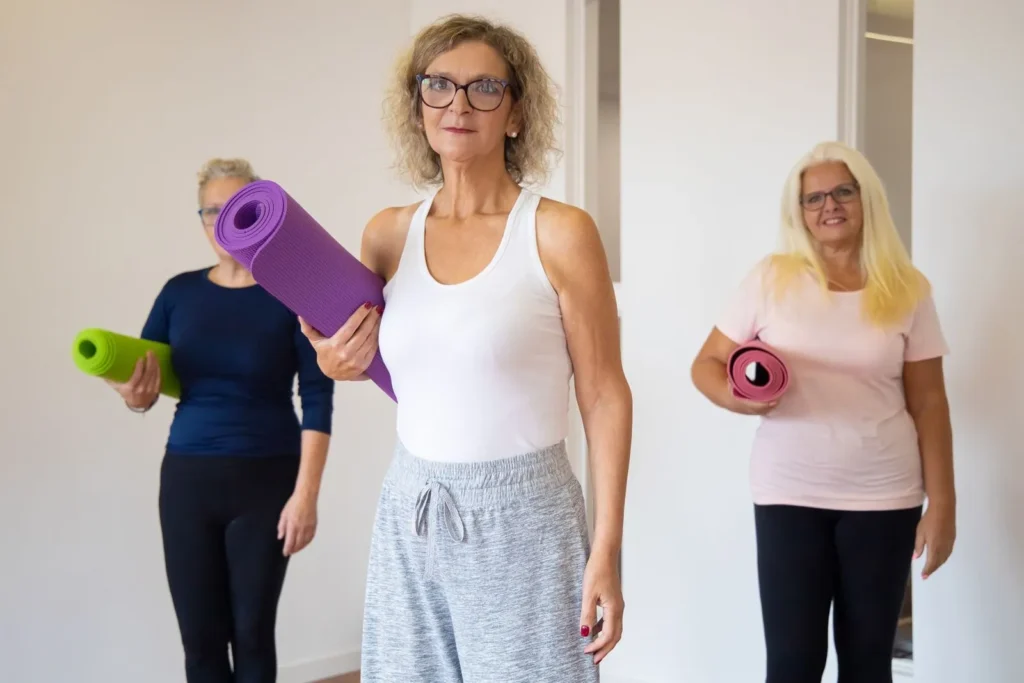
Good yoga for elderly practitioners is slow, supported and shaped around the body you have today, not the pose on a poster. This guide covers chair-based and wall-supported options, how to practise balance without taking risks, how to move between positions slowly, and who should speak to a doctor first or skip certain poses. It is general education, not medical advice, and it does not promise that yoga will prevent falls, protect bones or slow memory loss.
Is Yoga Safe for Elderly People, and Who Should Check First?
Gentle, supported yoga is a low-impact option many older adults can do, but safety depends on your health. Chair-based and wall-supported practice carries the lowest risk. If you have heart disease, uncontrolled blood pressure, recent surgery, vertigo or severe osteoporosis, talk to your doctor before starting and ask which movements to avoid.
Check with your doctor, and ideally an instructor who works with older adults, before you begin if any of these apply:
- Recent surgery (hip, knee, spine, abdomen, eye or heart). Wait for your surgeon’s or physiotherapist’s go-ahead and follow their movement limits.
- Uncontrolled or unstable blood pressure, or a drop in pressure and lightheadedness when you stand up.
- Vertigo, frequent dizziness or fainting. Standing and balance work needs medical advice first.
- Severe osteoporosis or a past spine or hip fracture. Bending forward and twisting under load can be risky.
- Glaucoma or other eye conditions where keeping the head below the heart is discouraged.
- Heart conditions, a recent cardiac event, or breathlessness while resting.
- New, sharp or unexplained pain anywhere, especially in the back, chest or a joint.
See your doctor first. If you take medicines for blood pressure, diabetes, heart rhythm or bone health, tell your doctor you are starting yoga. Do not change any medicine or its timing because of yoga. Stop and get urgent medical help for chest pain, fainting, sudden severe breathlessness, or sudden weakness or confusion.
What Does a Safe 20-Minute Session Look Like?
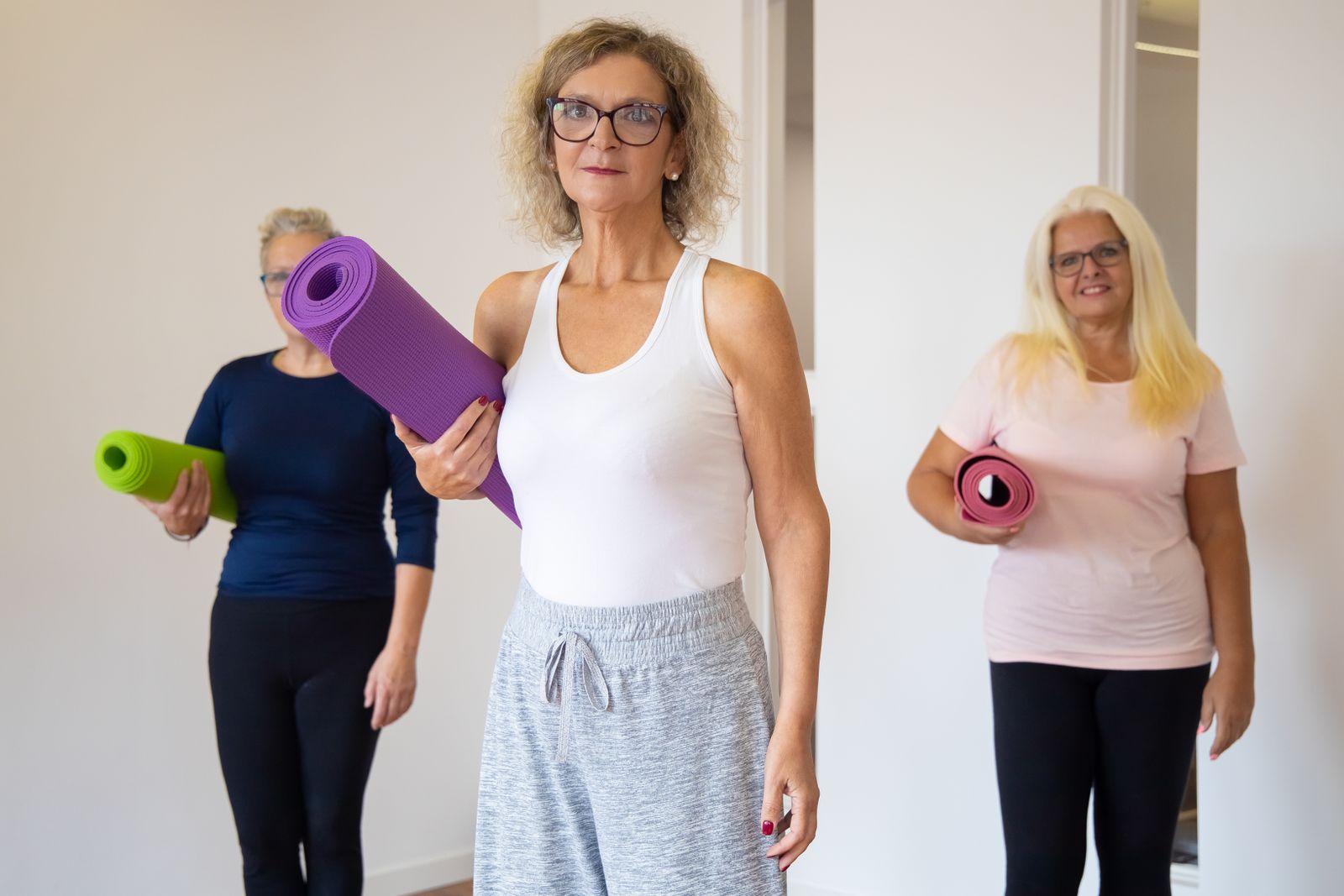
A safe 20-minute session for an older adult has five parts: about three minutes of settling and breathing, three of joint warm-up, four of seated movement, five of supported standing, and a closing rest. Everything can be done with a sturdy chair and a wall, and any block can be shortened.
| Minutes | Block | What you do | Support |
|---|---|---|---|
| 0-3 | Settle and breathe | Sit tall, hands on belly, breathe slowly through the nose | Chair with back support |
| 3-6 | Joint warm-up | Ankle circles, wrist circles, shoulder rolls, small neck turns | Chair |
| 6-10 | Seated movement | Seated mountain, small cat-cow, gentle side bend | Chair |
| 10-15 | Supported standing | Weight shifts, heel raises, chair sit-to-stand, 5-6 reps each | Chair back or wall |
| 15-20 | Close | Sit, let the shoulders drop, breathe out longer than you breathe in | Chair |
Skip any block that does not feel right on the day. A shorter session you can finish comfortably is better than a full one that leaves you sore or dizzy.
Which Chair Yoga Poses Suit Elderly Beginners?
Seven chair poses suit most elderly beginners: seated mountain, small cat-cow, gentle twist, side bend, ankle and wrist circles, seated march, and chair sit-to-stand. Hold each for three to five slow breaths, or repeat five to eight times, using a sturdy armless chair placed against a wall so it cannot slide.
| Pose | How to do it | Hold or reps | Safety cue |
|---|---|---|---|
| Seated mountain | Sit near the front edge, feet flat, spine long, hands on thighs | 5 slow breaths | Do not lean back on the chair |
| Small cat-cow | Breathe in, lift the chest slightly; breathe out, round gently | 5-8 rounds | Keep the range small if you have back pain or low bone density |
| Gentle seated twist | Turn the chest toward the chair back, holding it lightly | 3 breaths each side | Turn only as far as comfortable; no forcing |
| Side bend | One arm rises overhead, lean a little to the other side | 3 breaths each side | Stay facing forward |
| Ankle and wrist circles | Lift one foot, circle slowly; then each wrist | 8 circles each way | Stop if a joint clicks painfully |
| Seated march | Lift one knee, lower it, switch | 10-16 steps | Keep the back tall |
| Chair sit-to-stand | Lean slightly forward, stand using the legs, sit back slowly | 5-8 reps | Hand on a wall or counter if needed |
If forward bends are on your doctor’s avoid list, do not do them. Many clinicians advise people with low bone density to avoid deep forward folds and strong twists, so ask which ones are acceptable for you. For more seated routines, see our guide to chair yoga.
How Do You Practise Balance Without Risking a Fall?
Practise balance next to a wall or a heavy counter, with a chair behind you, and progress in small steps: feet hip-width apart, then weight shifts, then heel raises, then lifting one toe. Never start with single-leg poses unsupported. Balance practice builds skill and confidence, but it does not guarantee you will not fall.
- Stand tall at the wall. Feet hip-width apart, a fingertip on the wall or chair back, soft knees. Breathe for five slow breaths.
- Shift your weight. Slowly move weight onto the right foot, then the left, five times each side.
- Raise your heels. Rise onto the balls of the feet for a count of two, lower for a count of three. Repeat 5-8 times.
- Try the kickstand. Rest the toes of one foot lightly on the floor beside the other ankle, like a gentle tree pose with the foot still down. Hold three breaths, switch sides.
- Stay at this level as long as you need. Lifting the foot higher is optional, never required.
Be honest about the limits. Falls have many causes, including medicines that cause drowsiness, poor eyesight, loose footwear and slippery floors. Yoga is one part of staying steady, alongside walking, strength work, vision checks and a safe home.
How Slowly Should Older Adults Move Between Poses?
Move slowly enough to pause for two to three breaths between positions. Older bodies adjust blood pressure more slowly when you change position, so standing up fast can cause lightheadedness. Rise from a chair in stages: sit tall, lean forward a little, stand, then wait a few seconds with a hand on support before walking.
- Before standing, take three slow breaths seated.
- After standing, count to five before letting go of the support.
- Avoid dropping the head below the heart or rising quickly from any bent position.
- If you feel lightheaded, sit down immediately, breathe slowly and rest.
Myth: Real Yoga Means Sitting on the Floor
Yoga is not defined by floor poses. Breath, attention and slow movement are the core of the practice, and all three work in a chair. Sitting cross-legged on the floor is common in many Indian homes, but getting down and up again is where many older people strain a knee or lose balance. Chair, wall and standing options are not a lesser version; for most older adults they are the better starting point.
If you do enjoy floor work, keep a chair or sofa nearby as a hand support and talk to your doctor first if you have had a knee or hip replacement.
Troubleshooting: What If You Feel Dizzy, Stiff or Sore?
Mild stiffness the next day is common after starting any movement habit, but dizziness, sharp pain or breathlessness mean you should stop. Use the table below to decide whether to adjust the practice or speak to a professional.
| What you notice | Possible reason | What to do |
|---|---|---|
| Lightheaded when standing | Rising too fast, or skipped water or food | Sit, breathe slowly, rise in stages; mention it to your doctor if it repeats |
| Knee ache after standing poses | Too deep a bend or too long a hold | Shorten the hold, bend less, add chair support |
| Lower back tightness | Forward bends or twists beyond comfort | Return to seated mountain and reduce the range |
| Shaky balance | Fatigue, poor footwear or a slippery floor | Stop standing work; fix the setup; keep one hand on the wall |
| Short of breath | Moving too quickly or holding the breath | Slow down, breathe naturally; seek care if it does not settle |
| Chest pain, fainting, sudden weakness | Could be serious | Stop and get urgent medical help |
How Often Should Older Adults Practise Yoga?
Most beginners do well with two to three sessions a week of about 15 to 20 minutes, with rest days in between. Gradually build up to short daily practice only if you feel good the next day. Regular, gentle sessions suit older bodies better than occasional long classes.
A sensible progression is chair-only work for the first two weeks, then supported standing from weeks three and four, then slightly longer holds in month two, always led by how you feel. If you live with a particular condition, these related guides may help: yoga for arthritis, yoga for back pain and yoga for high blood pressure. Our broader overview of yoga for seniors and the benefits of yoga add context, and yoga for beginners explains the basics.
Breathing and Calm: Keep It Simple
Stick to easy, natural breathing: breathe in through the nose for about three or four counts and out for about four to six counts, never straining. Skip breath-holding and forceful breathing techniques, which are not suitable for people with high blood pressure, heart or eye conditions unless a doctor approves them.
A few quiet minutes at the end of practice give a break from worry and noise. If you like that part, meditation for beginners is a gentle next step.
How Can You Set Up Yoga for Elderly Practice at Home?
For safe home practice, use a sturdy armless chair (not a plastic chair or one on wheels) against a wall, a clear space of about two metres, a non-slip mat on tile or marble floors, and good lighting. Keep a phone within reach, have water nearby, and let someone at home know when you are practising.
- Practise a couple of hours after a meal, not straight after one, and not when you are hungry or tired.
- Wear well-fitting non-slip socks or shoes instead of loose slippers.
- Keep a counter, sink edge or wall within arm’s reach for standing work.
Our guide to yoga at home has more setup ideas. Many older adults also find it easier to learn through live online yoga classes, where an instructor can see your form and adjust the pace. If you have complex health needs, 1-on-1 personal training allows more individual adaptation.
Frequently Asked Questions About Yoga for Elderly Adults
What is the best yoga for elderly beginners?
Chair yoga with wall-supported standing work is the safest start for most elderly beginners. It removes floor transitions and unsupported balance poses. Begin with five to ten minutes of seated breathing and gentle movement, build slowly, and get medical clearance first if you have a heart, blood pressure, bone or balance condition.
Can elderly people do yoga every day?
Some can, if sessions are short and gentle, about 10 to 15 minutes, and they feel well the next day. Most beginners do better with two to three sessions a week and rest days in between. If you feel unusual tiredness, pain or dizziness, reduce frequency and speak to your doctor.
Which yoga poses should elderly people avoid?
Avoid headstands and other inversions, deep backbends, forceful twists, unsupported single-leg balance and any fast movement into or out of a pose. People with low bone density should also avoid deep forward folds. If a pose causes pain, dizziness or breathlessness, stop. Your doctor or instructor can adjust the list for your conditions.
Is yoga safe with arthritis or high blood pressure?
It can be, with modifications and medical approval. Gentle range-of-motion work and chair support are usual for arthritis, and slow breathing and restorative poses for blood pressure. Avoid strain, breath-holding and positions with the head below the heart, and never adjust medicines yourself. Check with your doctor first.
How long before an older person feels a difference?
Many people feel calmer and a little looser after the first few sessions. Steadier movement and easier stiffness usually take several weeks of regular practice, but results differ with age, health and consistency. Treat yoga as a long-term habit alongside medical care, walking and strength work, not a quick fix.
Next step: If you want a plan matched to your mobility, try a live session with Fitstrot’s online yoga classes and tell the instructor about your conditions before you start.


