

A routine of yoga for high blood pressure works best as a gentle, regular habit that sits alongside your doctor’s plan, never in place of it. Slow stretching, calm breathing and long rests help settle the stress response that often keeps readings high, and all you need is a mat and about 20 minutes. This guide covers the safest poses, a simple home routine, a four-week plan, what to skip, and the warning signs that mean stop.
See your doctor before you start
Check with your doctor before starting any yoga routine if you have been diagnosed with high blood pressure. Ask which poses and intensity suit your health, especially if you also have heart, kidney or eye problems, diabetes or are pregnant. Keep taking your prescribed medicines exactly as advised. Yoga is an add-on, and any change to medicine is a decision only your doctor can make.
Stop and rest straight away if you feel:
- dizziness or light-headedness
- chest pain, pressure or tightness
- a severe or sudden headache
- unusual breathlessness, a pounding heartbeat, blurred vision or fainting
Chest pain, a severe headache with confusion, or weakness on one side of the body needs urgent medical help, not more yoga.
How does yoga help with high blood pressure?
Yoga helps by calming the stress response. Slow breathing and gentle movement nudge the body from “fight or flight” towards “rest and digest”, which lets blood vessels relax and the heart rate settle. It supports, but does not replace, medicine, healthy eating, weight management and regular walking. Think of it as one tool in a larger plan.
A calm 20-minute session gives the nervous system a daily chance to switch off. Over several weeks, many people report better sleep and less jaw and shoulder tension. Those changes are real, but they are not a cure, and results vary.
Which yoga asanas are best for high blood pressure?
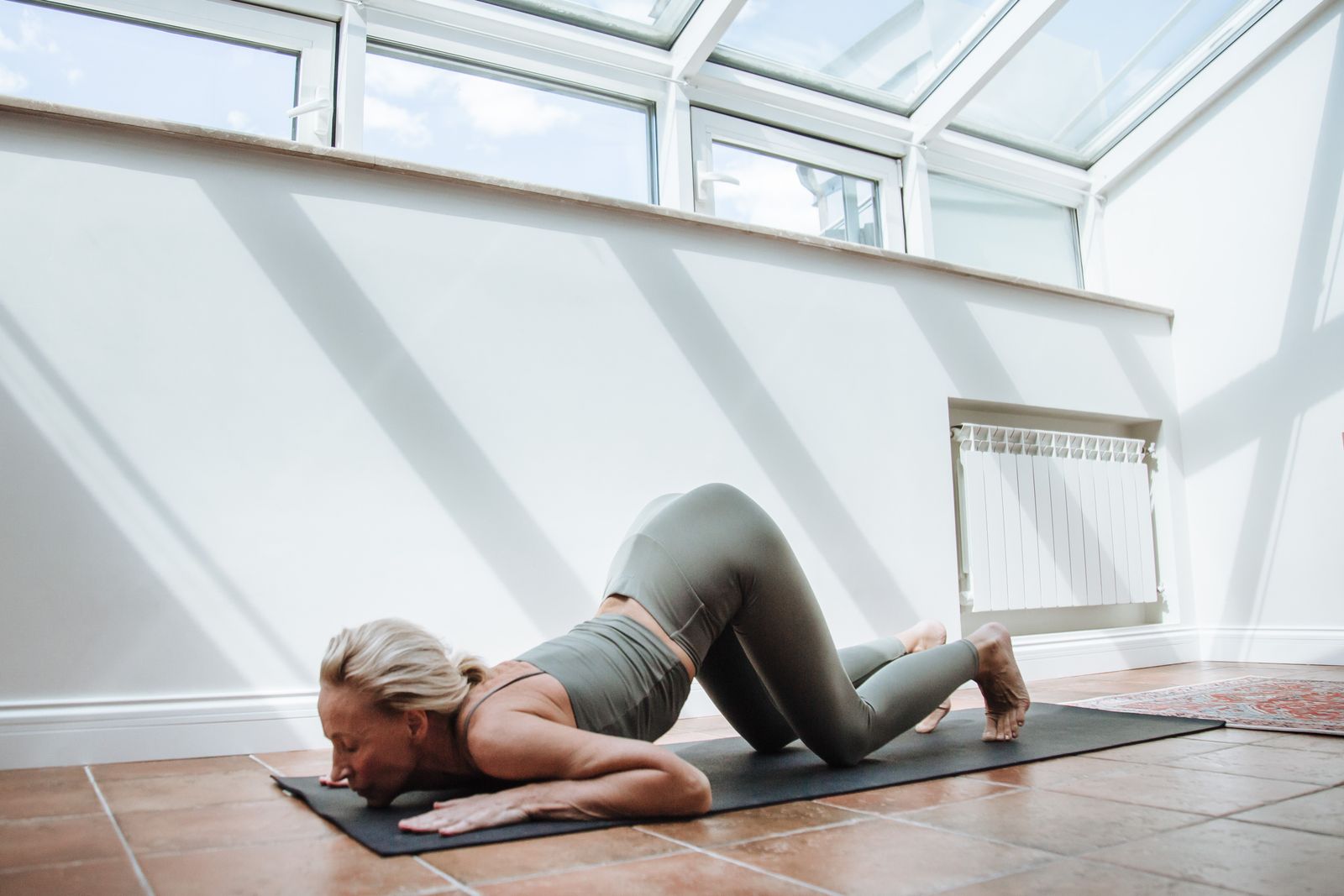
The best yoga poses for high blood pressure are calm, low and supported: child’s pose, seated forward bend, cat-cow, gentle bridge, reclined butterfly and final relaxation. Hold each for about 30 seconds to 3 minutes, breathe slowly through the nose, and keep your head at or below heart level only when it feels comfortable.
| Pose | Hold | Form cue | Go easy if |
|---|---|---|---|
| Marjariasana (cat-cow) | 8 to 10 slow rounds | Move with the breath, shoulders away from ears | Wrists hurt: rest on forearms |
| Balasana (child’s pose) | 1 to 3 minutes | Knees wide, a pillow under the chest, forehead supported | Knees are stiff: sit on a folded blanket |
| Paschimottanasana (seated forward bend) | 1 to 2 minutes | Bend knees, fold from the hips, stop before you strain | Face feels flushed or pressure builds in the head |
| Setu Bandhasana (gentle bridge) | 20 to 30 seconds, 3 rounds | Lift only a little, breathe freely, never hold the breath | Neck discomfort or dizziness |
| Supta Baddha Konasana (reclined butterfly) | 3 to 5 minutes | Cushions under both knees, head slightly raised on a pillow | Groin or hip pain |
| Shavasana (final rest) | 5 to 10 minutes | Arms away from the body, jaw soft, breath natural | Lower back aches: bolster under the knees |
Legs-up-the-wall (Viparita Karani) is often listed for blood pressure, but it is a mild inversion. Try it only if your doctor agrees, and keep it short, or rest your calves on a chair seat instead. If you want to compare gentle styles first, our guide to types of yoga explains which ones stay calm and low-strain, and our Marjariasana guide shows the cat-cow movement step by step.
What does a 20-minute home routine for high BP look like?
A safe home routine takes about 20 to 25 minutes: 5 minutes of slow seated breathing, 3 minutes of cat-cow, 2 minutes in child’s pose, 2 minutes of seated forward bend, a short gentle bridge, 5 minutes of reclined butterfly and 5 minutes of final rest. Practise it 5 to 6 days a week, unhurried.
- Sit and settle (5 minutes). Sit on a chair or cushion with a tall, relaxed spine. Breathe in through the nose for a count of 4 and out for 6. Do not pause or hold between breaths.
- Cat-cow (3 minutes). On hands and knees, move slowly with the breath.
- Child’s pose (2 minutes). Support the forehead and let the shoulders drop.
- Seated forward bend (2 minutes). Knees soft, fold only as far as is comfortable.
- Gentle bridge (3 short rounds). Lift slightly, lower slowly, breathe the whole time.
- Reclined butterfly (5 minutes). Let the cushions do the work.
- Final rest (5 minutes). Lie flat, eyes closed. When you finish, roll to one side and sit up slowly, pausing for a few breaths before standing.
Getting up fast after lying down is a common cause of light-headedness, so a slow exit is part of the practice.
Which pranayama is safe for high blood pressure?
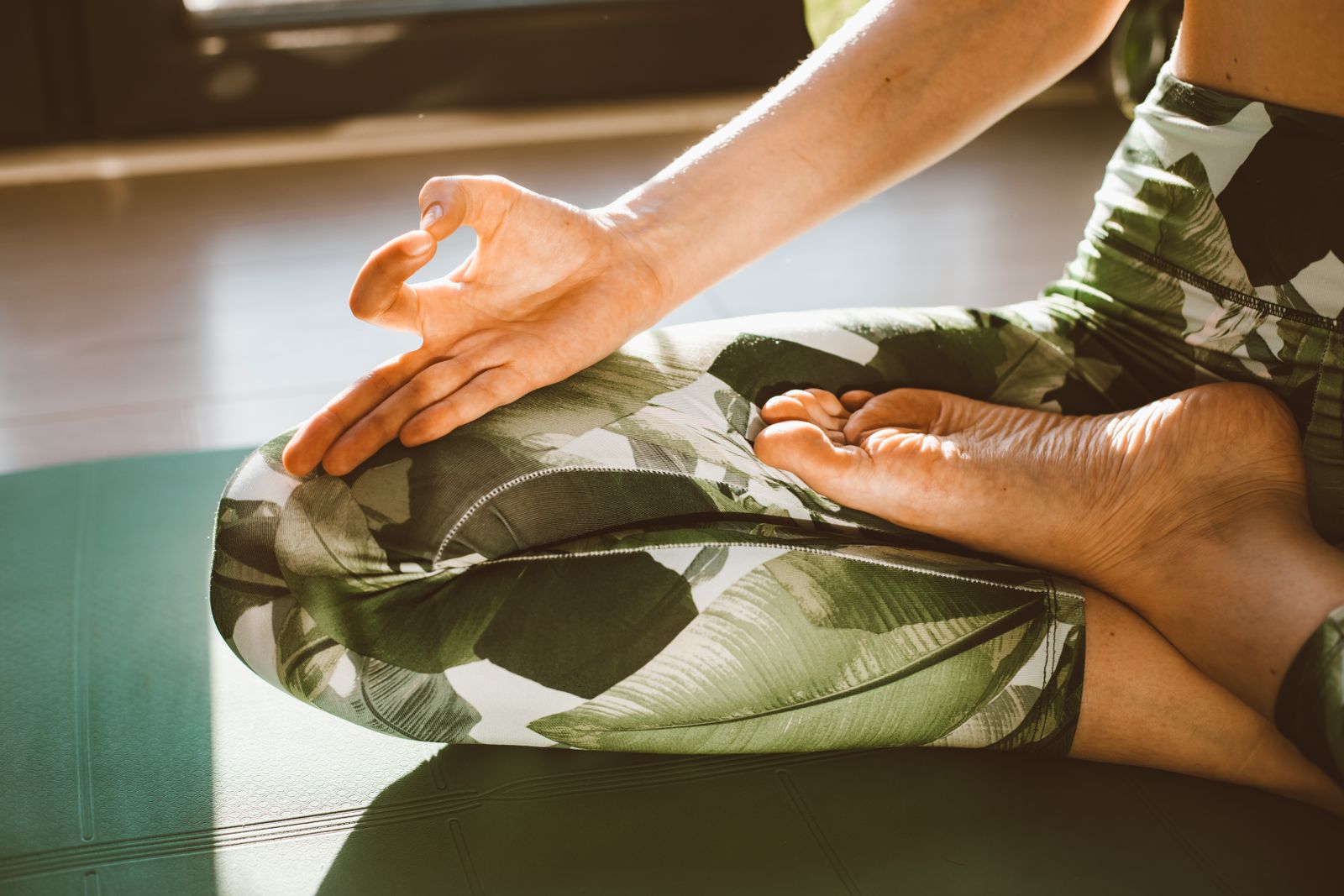
Slow, gentle pranayama is the safe choice: easy diaphragmatic breathing with a longer exhale (for example in for 4, out for 6), Anulom Vilom without any breath retention, and Bhramari (humming bee breath). Practise 5 to 10 minutes a day, seated, and skip anything fast, forceful or held.
Easy belly breathing: one hand on the belly, breathe in through the nose so the belly rises, then breathe out slowly. A longer exhale is what tells the body to relax. Anulom Vilom (alternate nostril breathing): breathe in through one nostril and out through the other, with no pause at the top or bottom. Bhramari: breathe in, then hum softly on a long exhale for 5 to 8 rounds. Humming should feel soothing, not strained.
Fast and forceful techniques such as Kapalabhati and Bhastrika, and any practice that asks you to hold the breath, are best avoided unless a doctor who knows your condition says otherwise. If you want a wider introduction to breath-led calm, our guide to the benefits of yoga puts breathing in context, and restorative yoga is a natural next step for long, supported holds.
What should you avoid in yoga with high blood pressure?
With high blood pressure, avoid strong inversions such as headstand and shoulder stand, deep or intense backbends, breath-holding, forceful breathing, hot yoga and any pose that leaves you red-faced or straining. Choose supported, slow alternatives and always keep the breath moving.
| Avoid | Why it is a concern | Safer swap |
|---|---|---|
| Headstand, shoulder stand | Strong inversions put pressure on the head, neck and eyes | Reclined butterfly with a pillow under the head |
| Full wheel, deep backbends | Strain and a tendency to hold the breath | Gentle bridge, a small lift only |
| Breath-holding (kumbhaka) | Holding the breath is a strain on the system | Anulom Vilom with no pause |
| Kapalabhati, Bhastrika | Fast, forceful breathing is stimulating, not calming | Bhramari or a 4-in, 6-out breath |
| Hot yoga, heated rooms | Heat plus exertion adds load on the heart and can cause dizziness | A cool, well-ventilated room, easy pace |
| Fast flows, power styles | Quick transitions and effort spike heart rate | Slow hatha or restorative classes |
Myth check: what yoga will and won’t do for your blood pressure
Myth: yoga can cure hypertension. It cannot. High blood pressure is a long-term condition shaped by genes, weight, salt intake, sleep, stress and age. Yoga may support the lifestyle side of it.
Myth: if I practise yoga, I can skip my tablets. This is the most dangerous belief on the topic. Never stop or reduce medicine on your own because you feel calmer. Only your doctor decides that, based on your readings over time.
Myth: harder yoga works faster. The reverse is usually true. Gentle and regular beats intense and occasional.
Dizzy, flushed or breathless during practice? Troubleshooting
If something feels off, ease off instead of pushing through. Most problems come from moving too fast, holding poses too long or skipping meals and water.
- Light-headed when you stand up: pause on your side for 3 to 5 breaths, then rise slowly, one hand on a wall.
- Pressure in the head while folding: bend your knees, raise your hands onto a block or chair, and shorten the hold.
- Breath feels short: lengthen the exhale, shorten the inhale, drop the count to 3 in and 4 out and keep it easy.
- Anxious about readings: do not test mid-practice. Rest first, and if worry is a regular companion, try our yoga for anxiety sequence.
If symptoms do not settle with rest, stop and seek medical help.
What does a beginner’s first month of yoga for hypertension look like?
A beginner’s first month builds the habit before the effort: week one is breathing only, week two adds cat-cow and child’s pose, week three adds forward bend and gentle bridge, and week four combines everything into the full 20-minute routine. Aim for 4 to 6 days per week, and keep a simple log.
| Week | Focus | Session length | Days per week |
|---|---|---|---|
| 1 | Easy belly breathing and Bhramari, seated | 5 to 10 minutes | 5 to 7 |
| 2 | Add cat-cow, child’s pose and final rest | 10 to 15 minutes | 4 to 6 |
| 3 | Add seated forward bend and gentle bridge | 15 to 20 minutes | 4 to 6 |
| 4 | Full routine with reclined butterfly and 5 minutes of rest | 20 to 25 minutes | 5 to 6 |
Most research on yoga and blood pressure follows people for roughly two to three months, so give it that long before judging results. Some people feel calmer within two to three weeks, but changes in readings, if any, are gradual. Your doctor is the judge of whether your readings are improving.
Yoga for hypertension in real life: three common situations
Desk workers. Long sitting and screen stress tighten the neck and shoulders. Add a 5-minute seated breathing break at your desk mid-afternoon, and do the full routine in the evening.
Adults over 50. Use a chair, a wall and extra cushions freely. Shorter holds, slower transitions and one extra minute of rest at the end are all sensible. Ask your doctor about balance and joint concerns first.
People managing weight or hormones too. Blood pressure often shares company with extra weight, thyroid issues or PCOS. Gentle yoga can help with consistency and stress, and our guides to yoga for weight loss, yoga for thyroid and yoga for PCOS cover those angles. Men dealing with circulation worries linked to stress can also read yoga for erectile dysfunction. None of these replaces medical care.
What else supports blood pressure alongside yoga?
Yoga works best next to everyday habits your doctor already recommends: less salt, more vegetables and fruit, regular walking, steady sleep, limited alcohol and no tobacco. In Indian kitchens, the biggest quiet salt sources are pickles, papad, namkeen, packaged snacks and extra salt at the table.
Our guide to foods to avoid with high blood pressure lists the usual culprits, and the diet plan for high blood pressure shows how to build a day of Indian meals around them. A brisk 30-minute walk on most days, if your doctor agrees, adds the cardio conditioning that gentle yoga does not provide on its own.
Questions about yoga for high blood pressure
Can yoga cure high blood pressure?
No. High blood pressure is a long-term condition, and yoga cannot cure it. A regular, gentle practice may support your overall plan by easing stress and improving sleep, but it works alongside medical treatment, diet and activity, not in place of them. Your doctor should guide any decision about treatment.
Which yoga pose is best for high BP?
There is no single best pose, but calm, supported ones are the usual choice: child’s pose, reclined butterfly with cushions and final relaxation (Shavasana). They are low-effort and keep your breathing easy. Check with your doctor before starting, and skip strong inversions and intense backbends.
How long does it take for yoga to help blood pressure?
Many people notice calmer feelings and better sleep within two to three weeks of regular practice. Changes in readings, if they come, are gradual, and most studies follow people for around two to three months. Results vary, so keep monitoring and share your log with your doctor.
Is yoga safe if I already take blood pressure medicine?
Gentle yoga is commonly done alongside medicine, but speak to your doctor first and keep taking your prescribed tablets exactly as advised. Rise slowly from lying or folding poses, as some medicines can make dizziness more likely. Never change or stop medicine because of yoga.
Which breathing exercise is best for high blood pressure?
Slow belly breathing with a longer exhale than inhale, such as in for 4 and out for 6, is the usual starting point, along with Bhramari and Anulom Vilom without any breath holding. Avoid fast, forceful breathing such as Kapalabhati and Bhastrika, and stop if you feel dizzy.
Start with a guided class
A gentle, guided practice is easier to stick with and easier to keep safe. Join FitStrot’s online yoga classes, tell your instructor about your blood pressure on day one, and carry your doctor’s advice into every session.


