

If you are searching for yoga for erectile dysfunction, the honest starting point is this: yoga is a gentle, supportive habit, not a cure. Slow movement, steady breathing and pelvic floor awareness can ease stress and help you feel more at home in your body. But erectile dysfunction (ED) can also be an early warning sign of heart disease or diabetes, so a doctor’s check-up comes first. This guide covers what yoga can realistically do, which practices are gentle enough to try, and who should skip them.
Read this first: when to see a doctor about ED
ED is common and treatable, and it is often the first visible sign of something else going on in the body. Book a visit with a physician, urologist or andrologist (online consultations are fine) if any of these apply:
- ED has lasted more than a few weeks, or it began suddenly rather than gradually.
- You have diabetes, high blood pressure, high cholesterol, heart disease, or you smoke or chew tobacco.
- You feel chest pain, unusual breathlessness or dizziness when you exert yourself.
- It began around the time you started a new medicine. Do not stop or change any medicine on your own; ask your doctor.
- You have pain, curvature, an injury, or very low desire along with ED.
Emergency: an erection that is painful and lasts more than about 4 hours needs urgent hospital care. Tell your doctor you are doing yoga, and let them guide what is safe for you.
Can yoga cure erectile dysfunction, or only support it?
No. Yoga cannot cure erectile dysfunction, and no pose should be sold as a fix. What it can do is lower everyday stress, improve sleep and body awareness, and keep you moving, all of which support general health. Treat it as a companion to medical evaluation, never a replacement for it.
An erection depends on healthy blood vessels, nerves, hormones and a calm mind working together. Stress and worry push the body into “fight or flight”, which works against arousal. Slow, steady practice can help the mind-body part of that picture. It cannot unblock arteries, correct diabetes or replace a hormone, so results vary and nothing here is guaranteed.
What causes erectile dysfunction, and where does yoga fit?
ED rarely has a single cause. Common causes include reduced blood flow and heart health, diabetes and hormones, nerve problems and medicines, and stress, anxiety or poor sleep. Yoga can only reach the stress, sleep, activity and body-awareness part. The other causes need tests and treatment from a doctor, and most men have a mix.
| Cause group | What is going on | Where gentle yoga can fit | First step |
|---|---|---|---|
| Blood flow and heart | Narrowed or stiff vessels reduce blood supply | Regular easy movement, calmer breathing | BP, cholesterol and heart check |
| Diabetes and metabolism | High sugar can damage vessels and nerves | Activity habit, stress control | Fasting sugar and HbA1c test |
| Hormones | Low testosterone or thyroid problems can lower desire and erections | Sleep and stress routine only | Blood hormone tests |
| Nerves and medicines | Spine or pelvic nerve problems, some tablets | Very limited | Doctor review of all medicines |
| Stress, anxiety, sleep | Alarm response and fatigue block arousal | Breathing, relaxation, pelvic floor awareness | Talk to a doctor or counsellor if it persists |
| Lifestyle | Tobacco, alcohol, inactivity, excess waist fat | Daily movement and routine | Small, steady habit changes |
Hormones affect both sexes. Our guides on yoga for thyroid and yoga for hormonal imbalance explain the gentle-practice side, and if your partner has PCOS, yoga for PCOS covers her side of the picture.
Which yoga poses for erectile dysfunction are gentle enough to try?
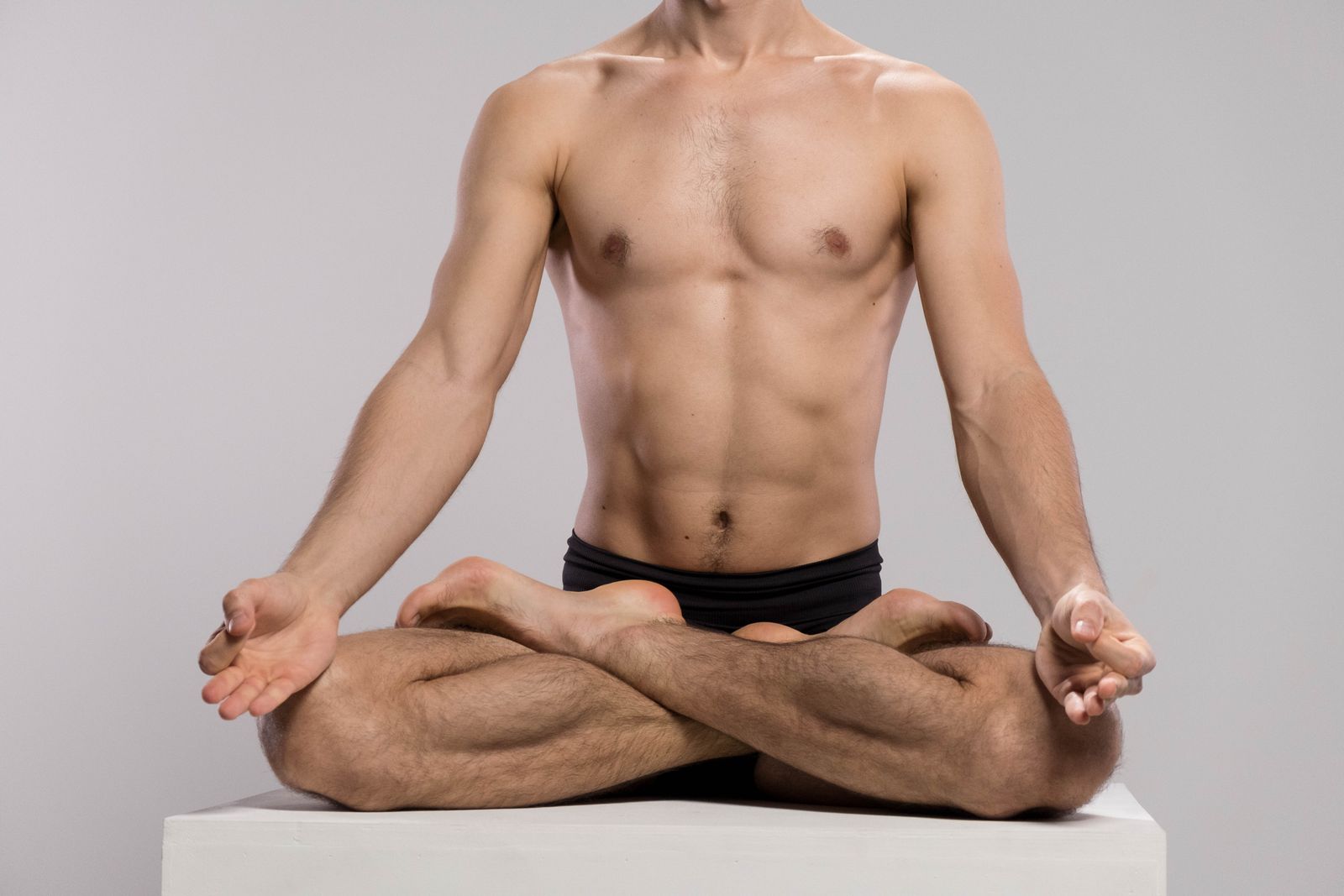
Start with slow, supported poses: Baddha Konasana, a supported Malasana, Setu Bandhasana, Supta Baddha Konasana and Balasana. Hold each for about 5 to 8 slow breaths, keep the effort comfortable, and aim for 15 to 20 minutes in total. Stop at any pain, numbness or dizziness.
| Pose | How to do it | Hold | Form cue | Skip or modify if |
|---|---|---|---|---|
| Baddha Konasana (bound angle) | Sit with soles together, knees dropping out | 5 to 8 breaths | Sit on a folded blanket and keep the spine tall; never press the knees down | Groin or knee pain |
| Malasana (supported garland squat) | Squat with a bolster or stack of cushions under the hips | 5 to 6 breaths | Knees track over the toes; heels on a rolled blanket if they lift | Knee, ankle or hernia concerns |
| Setu Bandhasana (bridge) | Lie down, feet hip-width, lift the hips halfway | 4 to 5 breaths, 3 rounds | Keep the neck relaxed and knees parallel; lift only as high as is easy | Neck injury, lower back pain |
| Supta Baddha Konasana (reclined) | Lie back, soles together, cushions under both knees | 1 to 3 minutes | Let the belly soften and exhale fully | Groin pain or recent pelvic surgery |
| Balasana (child’s pose) | Knees wide, forehead down, hips back | 5 to 8 breaths | Place a pillow under the chest if the hips do not reach the heels | Knee pain or stiff ankles |
New to the floor? Begin with our yoga for beginners guide. If a bridge or forward fold bothers your lower back, read yoga for back pain first. For the slowest, most supported options, restorative yoga is a good fit.
How do you practise pelvic floor awareness safely?
Pelvic floor awareness means learning to gently lift and fully release the muscles between the pubic bone and tailbone, in time with your breath. Use about a quarter of full effort, hold for 3 to 5 seconds, then release for twice as long. Stop if you feel pain, and never hold your breath.
- Get comfortable. Lie on your back with knees bent, or sit on a chair with feet flat.
- Find the muscles. Imagine gently holding back wind while also stopping the flow of urine. You should feel a small lift inside, not a clench in the buttocks or thighs.
- Lift on the exhale. Breathe out slowly and lift softly for 3 to 5 seconds. This is the idea behind Mula Bandha, kept deliberately light.
- Release fully on the inhale. Let the area soften for twice as long as you lifted.
- Keep it short. A few gentle rounds inside your session is plenty. More is not better.
Troubleshooting: if you feel pelvic, groin or lower back pain, burning when passing urine, or you cannot relax the area, stop. An over-tight pelvic floor is real and forcing more contractions can make it worse. A urologist or pelvic floor physiotherapist can assess you properly. Skip intense squeezes and rapid contraction techniques; they are not needed here.
Do breathing and stress practices help with ED?
They can help when stress, performance worry or poor sleep is part of the picture. Slow breathing with a longer exhale, about 4 seconds in and 6 seconds out for five minutes, calms the body’s alarm response. It will not fix blocked blood vessels or hormonal causes, so use it alongside a medical check-up.
Three simple options, all without breath-holding:
- Long-exhale breathing: sit or lie down, breathe in through the nose for 4 counts and out for 6, for about five minutes.
- Nadi Shodhana (alternate nostril breathing): keep the pace slow and even, with no holding between breaths.
- Bhramari (humming bee breath): a soft hum on the exhale, 5 to 6 rounds, before bed or before intimacy to settle the mind.
Avoid forceful breathing such as Kapalabhati and any long breath retention, especially if you have high blood pressure or a heart condition. If worry about performance is the main loop, yoga for anxiety and online yoga for stress relief go deeper, and talking to a counsellor can help just as much.
A gentle 4-week starter plan
Do this only after your doctor has seen you, or after they have said gentle yoga is fine. Practise in the evening after work or in the morning, on a mat or folded dari, and keep every session easy.
| Week | Sessions | Focus | Length | Check-in |
|---|---|---|---|---|
| 1 | 3 days | Long-exhale breathing, Balasana, Supta Baddha Konasana | 15 minutes | Is sleep or stress easing? |
| 2 | 3 days | Add Baddha Konasana and Bhramari | 15 to 20 minutes | Any groin or knee strain? |
| 3 | 3 to 4 days | Add bridge and light pelvic floor awareness | 20 minutes | Can you fully relax the area? |
| 4 | 3 to 4 days | Add supported Malasana and Nadi Shodhana | 20 minutes | Note mood, sleep and energy; share with your doctor |
After each session, note sleep, stress and energy. Measure those, not performance; watching results in the bedroom turns practice into pressure.
Myths about yoga and ED worth dropping
Several beliefs do more harm than good, and dropping them makes the practice safer and kinder:
- “One secret pose fixes ED.” No single pose does.
- “It is all in the head.” Stress matters, but ED often has a physical cause, which is exactly why a check-up comes first.
- “ED means I am less of a man.” It is a health symptom, common with age, stress and conditions like diabetes.
- “Miracle capsules, oils and wall-poster cures work faster.” They are unregulated, and some products are known to contain undeclared ingredients that can be dangerous with heart or diabetes medicines.
Who should avoid these practices, or ask a doctor first
Skip this routine, or get your doctor’s go-ahead first, if any of these apply:
- Chest pain, uncontrolled blood pressure, a recent heart event, or unexplained dizziness or fainting.
- A hernia, or recent abdominal, groin, prostate or pelvic surgery.
- Pelvic, groin or testicular pain, a prostate infection, or burning while passing urine.
- Knee, hip or ankle injury (modify Malasana and Baddha Konasana), or sciatica and disc problems (go gently with bridge and forward bends).
- Diabetes or blood pressure medicines, because standing up quickly after floor work can cause dizziness.
- Low mood, loss of interest in things you used to enjoy, or severe anxiety. A mental health professional should be part of the plan.
Daily habits that matter more than any single pose
Habits that protect your heart and blood sugar also protect erections:
- Move daily: aim for roughly 150 minutes of brisk walking or similar activity a week. Our yoga for heart health guide shows the gentle side of this.
- Sleep 7 to 8 hours on a steady schedule.
- Quit tobacco (cigarettes, bidis, gutka) and keep alcohol low.
- Watch your waist: a slow, steady drop in weight helps. See yoga for weight loss or work with an online nutritionist for a plan built around dal, roti, sabzi and curd rather than crash diets.
- Get yearly checks for blood pressure, sugar and cholesterol.
How long before yoga makes a difference?
Most men notice calmer breathing, better sleep and less tension within about 2 to 4 weeks of steady practice. Any physical change takes longer, often 8 to 12 weeks, and may not happen at all if the cause is medical. If nothing improves after about 3 months, see a doctor.
Some situations call for a tailored approach. If you sit at a desk all day, hip stiffness and low activity are the usual culprits, so favour short walking breaks and hip openers. If you are over 50, keep poses supported, avoid deep squats and get your heart and prostate checked. If you live with diabetes, practise after meals are settled, carry a snack, and rise slowly from the floor.
Frequently asked questions about yoga for erectile dysfunction
Can yoga cure erectile dysfunction?
No. Yoga is not a cure for erectile dysfunction. It may reduce stress, improve sleep and support general health, which can help when stress is part of the cause. If ED has a medical cause such as diabetes or heart disease, it needs proper medical treatment alongside any yoga practice.
Which yoga pose is best for erectile dysfunction?
There is no single best pose. Gentle, supported options such as Baddha Konasana, supported Malasana and Setu Bandhasana are commonly used because they ease the hips and encourage relaxation. Choose the ones that feel comfortable for your body, and never force a stretch.
How often should I practise yoga for ED?
Three to four short sessions a week of 15 to 20 minutes is a sensible, sustainable pattern. Steady repetition matters more than long or intense sessions. Pause and speak to your doctor if you feel pain, dizziness or chest discomfort.
Are Kegel exercises or yoga better for the pelvic floor?
Neither is better for everyone. Kegel exercises train the pelvic floor muscles directly, while yoga adds breathing, relaxation and movement. A pelvic floor physiotherapist can tell you whether your muscles are weak or too tight, which decides what suits you.
Is it safe to do yoga while taking medicine for ED, diabetes or blood pressure?
Gentle yoga is usually compatible with treatment, but ask your doctor first. Never stop or change medicine because of yoga. Move slowly from lying to standing to avoid dizziness, and avoid hot, forceful or breath-holding styles unless your doctor approves.
Next step: once your doctor has cleared you, book a beginner session in Fitstrot’s online yoga classes and tell the instructor you want a gentle, pelvic-friendly sequence with your health conditions noted.


