

Gentle yoga for periods is not about pushing harder. It is slow, supported movement with longer exhales, and for many women it takes the edge off cramps, lower back ache and that heavy, tired feeling around their flow. Think 10-20 minutes of gentle poses, not a power class. This guide gives you a simple sequence, a symptom-by-symptom table, a cycle plan and clear signs that it is time to see a doctor instead. New to yoga? Start with the basics in our yoga for beginners guide. This is general wellness information, not medical advice.
Can Yoga Help With Period Cramps and Period Pain?
Gentle yoga may help ease mild to moderate period cramps for some women. Slow stretching through the hips and lower back, paired with deep breathing, can relax tight muscles and calm the stress response that makes pain feel sharper. It is not a cure, and it does not replace medical care for severe or worsening pain.
Results differ from person to person, and nobody can promise you a particular outcome. Many women who try yoga for menstrual cramps feel calmer and looser during or right after a session. Others notice that a regular habit across the month leaves them less tense going into their next period. Yoga also pairs well with simple comforts such as a warm water bag on the lower belly, a short walk and good sleep.
One firm rule: do not stop or change any medicine you take because of yoga. If you use pain relief or any prescribed treatment, keep following your doctor’s advice and treat yoga as an extra, not a swap.
Gentle Yoga Poses for Periods: A 15-20 Minute Sequence
These yoga poses for periods are chosen because they are low effort, easy to support with pillows and kind to the lower belly. Do them in order, breathe in for about four counts and out for about six, and stop any pose that does not feel right.
| Pose | Time | How to do it | Comfort cue |
|---|---|---|---|
| Easy seated breathing | 2 min | Sit on a cushion, one hand on the belly, breathe in for 4 counts and out for 6 | Keep shoulders and jaw soft |
| Cat-Cow | 1-2 min | On hands and knees, round and arch the spine slowly with the breath | Make the movement smaller if cramps spike |
| Child’s Pose, knees wide | 1-2 min | Knees apart, a pillow under the chest, forehead resting on stacked hands | Add a cushion if the belly feels squeezed |
| Supine Twist | About 1 min per side | Lie on your back, drop both bent knees to one side, arms open | Rest the knees on a pillow, do not force them down |
| Reclined Butterfly | 3-5 min | Soles of the feet together, knees falling apart, a cushion under each knee | Support the knees until the thighs feel heavy |
| Supported Bridge | 3 rounds of 5 breaths | Feet hip-width apart, lift the hips a little, rest on a folded blanket if you like | Lower down if the lower back pinches or cramps increase |
| Final rest (Savasana) | 3-5 min | Lie flat with a pillow under the knees and a light blanket over you | Let the breath return to normal |
You do not need to be flexible for any of this. For a weekly structure, our yoga routine guide shows how to stack short sessions, and the yoga poses library explains the poses in more detail.
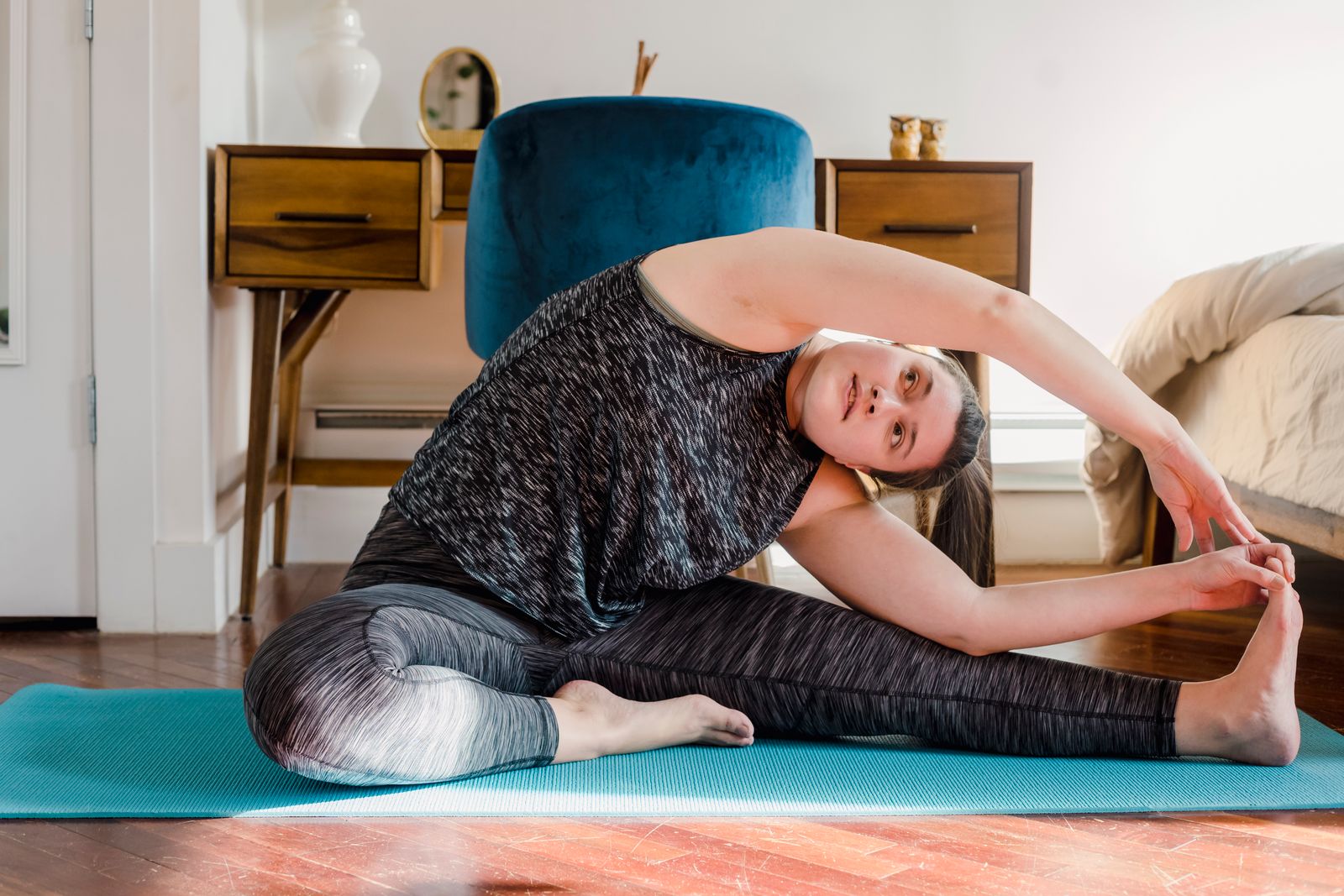
Which Poses Suit Which Symptom?
Use this as a menu, not a prescription. Pick one or two options for what you feel today and leave out the rest. It is a quick way to choose yoga for period cramps, backache or low energy without following a full class.
| What you feel | Gentle options | Go easy on |
|---|---|---|
| Lower belly cramps | Child’s Pose with knees wide, Reclined Butterfly, slow 4-in 6-out breathing | Long plank or boat holds, deep backbends |
| Lower back ache | Cat-Cow, Supine Twist, knees-to-chest rocking | Deep standing forward folds, heavy lifting |
| Bloated, heavy belly | Easy seated twists, Cat-Cow, a slow walk | Tight waistbands, deep belly-compressing poses |
| Tired or low mood | Supported Bridge, supported rest, 5 minutes of breathing | Fast flows, long hot classes |
| Irritable or tense before your period | Slow forward folds, Reclined Butterfly, long exhales | Competitive or high-intensity sessions |
| Heavy, achy legs | Supine Twist, gentle ankle circles, a short walk | Long standing holds |
Some women also use this window for yoga for PMS, since the same slow breathing and hip-opening work in the days before bleeding starts.
Should You Avoid Inversions During Your Period?
Views differ. Traditional teachers often suggest skipping full inversions such as headstand and shoulder stand on heavy-flow days, while others see gentle ones as fine. There is no firm proof either way, so listen to your body. Skip anything that adds cramping or dizziness, and ask your doctor if you are unsure.
Legs up the wall is the mildest version, and some women find it soothing for heavy legs. If you try it, keep it short, around 3-5 minutes, come down slowly and stop if you feel pressure, light-headedness or more pain. That is a personal call, not a rule in either direction.
What many people do find uncomfortable on heavy days:
- Deep backbends that squeeze the lower belly.
- Long core holds such as plank or boat pose.
- Hot or fast-paced classes, where heat and low energy can leave you drained.
None of this means stopping completely. It usually means a softer, shorter version of what you normally do.
Myth: Yoga Poses Can Bring On a Late Period
No pose can make a period arrive early or stop one that has started. Your cycle is run by hormones, and yoga cannot override them. What yoga can do is help you relax, and stress is only one of several reasons a period runs late. Do not use yoga as a way to control your cycle.
Common reasons for a late period include stress, illness, travel, big changes in weight or training load, and conditions such as PCOS or thyroid problems. If there is any chance you could be pregnant, take a pregnancy test rather than trying poses. For patterns that keep repeating, read our guide on yoga for irregular periods, and speak to a doctor about missed or unpredictable cycles instead of relying on yoga alone.
When to See a Doctor Before You Roll Out the Mat
Period discomfort is common, but some symptoms need a medical check, not a stretch. Please see a doctor if you notice any of these:
- Severe pain that is new, getting worse over time, or not eased by your usual comfort measures.
- Pain that disrupts daily life, meaning you miss school, work or normal activities.
- Very heavy bleeding, such as soaking through a pad or tampon every hour or two for several hours, or passing large clots.
- Missed periods, very irregular cycles, or bleeding between periods.
- Periods lasting well over a week, or bleeding after intercourse.
- Dizziness, fainting, fever or unusual weakness alongside your period.
If you are pregnant, may be pregnant, or recently gave birth, follow your doctor’s guidance instead of a general routine. Do not change any medicine on your own because of yoga.
Walkthrough: A 10-Minute Cramp-Day Routine in Bed or on the Sofa
On the hardest day you may not want a mat at all. This version works from your bed or sofa, and you can practise it anywhere, as our yoga at home guide also explains.
- Minutes 1-2: Lie on your back, knees bent, hands on the belly. Breathe in for 4 counts and out for 6.
- Minutes 3-4: Hug one knee at a time toward the chest, then rock very gently side to side.
- Minutes 5-6: Let both knees fall to one side for a supine twist. Switch sides after about a minute.
- Minutes 7-8: Bring the soles together and let the knees open onto pillows for Reclined Butterfly.
- Minutes 9-10: Stretch the legs out, a pillow under the knees, and rest with slow breathing.
Finish by rising slowly and sipping some water.
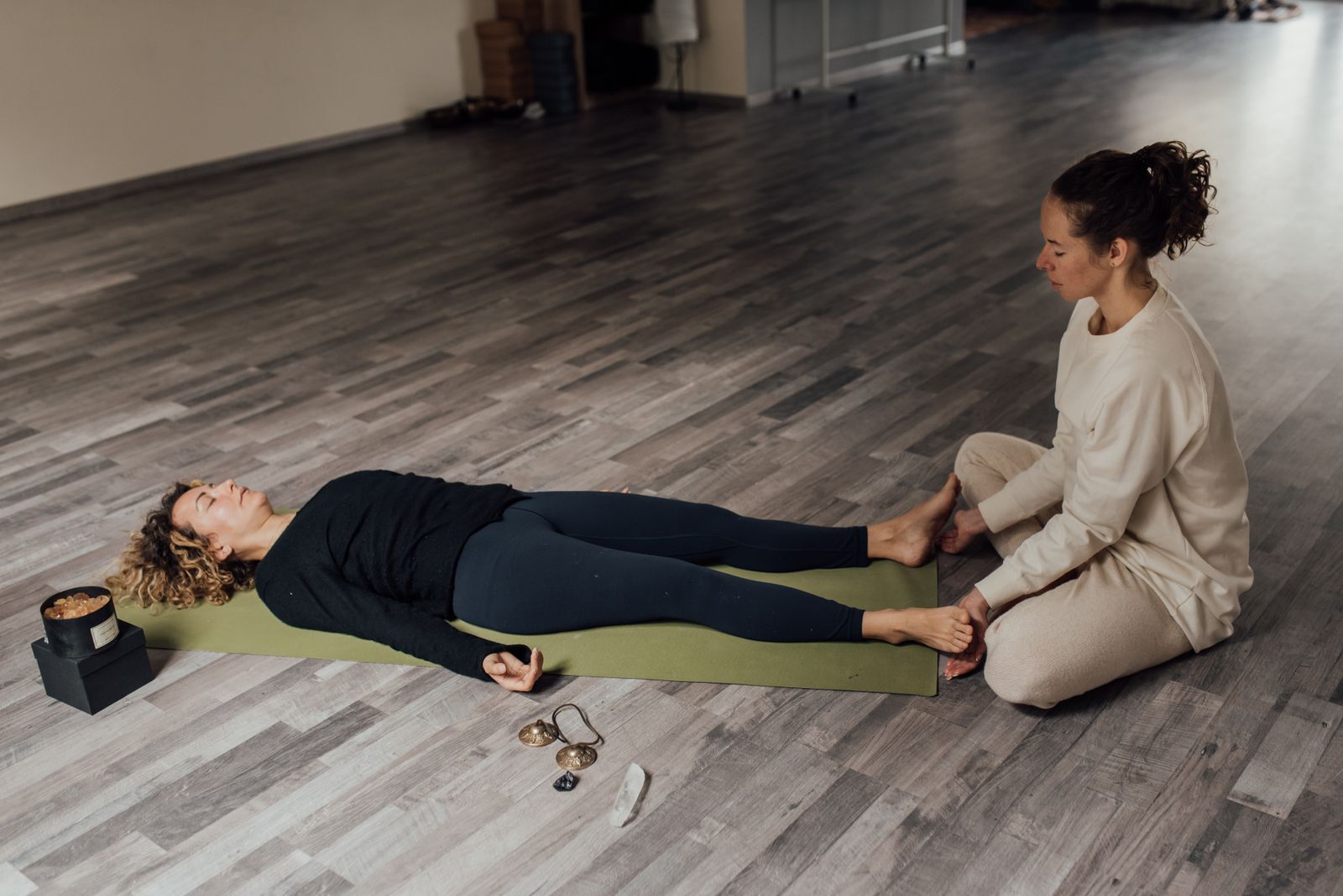
How Should You Change Your Practice Across the Cycle?
A simple approach is to match your effort to your energy: softer when you are bleeding or tired, stronger when you feel strong. Cycles run from about 21 to 35 days, and energy varies a lot between women, so treat this as a template to test, not a rule.
| Phase | Rough days | Typical feel | Suggested practice |
|---|---|---|---|
| Period | About days 1-5 | Lower energy, cramps or backache for some | 10-20 min restorative or yin-style, breathing, long rests |
| After the period | About days 6-13 | Energy often builds | Moderate flows or a steady hatha class, 30-45 min |
| Mid-cycle | Around day 14 | Many feel their strongest | Your usual practice, including stronger sessions if you enjoy them |
| Before the period | About days 15-28 | Tension, bloating or tiredness for some | Slower practice, forward folds, hip openers, longer exhales |
For a bigger picture of building practice around your life, see our yoga for women guide. Faster styles like vinyasa yoga and power yoga often feel best in the middle of the cycle and less appealing on period days. For yoga during periods, a steadier hatha yoga class is usually an easier fit, and restorative or yin-style sessions are gentler still.
Troubleshooting: When a Pose Makes Things Worse
- Cramps get sharper in Child’s Pose: Widen the knees, put a pillow under the chest, or switch to lying on your side with knees drawn in.
- Dizzy when you stand up: Come up in stages, sit for a moment first, and sip water. Skip long holds and anything upside down that day.
- Lower back pinches in Bridge: Lower the lift or skip it, and rest with knees bent instead.
- Worried about leaks: Change your product before you start and use a dark towel under you.
- Feeling flat or tearful: Shorten the session to five minutes of breathing. That still counts.
If a pain does not ease when you stop moving, that is a signal to rest and, if it repeats, to speak to a doctor.
Yoga for Periods by Life Stage
Teenagers: Gentle poses and breathing are usually fine, but strong or disruptive pain should be checked by a doctor and not simply endured. Working women: Even two minutes of seated breathing and a gentle twist at your desk can help, and a lunch-break stretch beats skipping everything. Perimenopause: Cycles can turn heavier, lighter or unpredictable, so any unusual bleeding deserves a medical check. Our guide to yoga for menopause covers softer practice for this stage. After childbirth: Follow your doctor’s advice on when and how to restart movement.
If travel to a studio is the barrier, a guided online class helps. Our online yoga classes guide explains what to look for, and you can ask the instructor for softer options on period days.
Frequently Asked Questions About Yoga for Periods
Can I do yoga on the first day of my period?
Yes, if you feel up to it. Keep it gentle and short, around 10-15 minutes of Cat-Cow, Child’s Pose with knees wide, a supine twist and a long rest. If cramps, dizziness or heavy bleeding make moving unpleasant, rest instead. Resting on a heavy day is a perfectly good choice.
How often should I practise yoga for periods?
A short, gentle session on most days of your period is a sensible target, with two or three easy sessions a week the rest of the month. Consistency matters more than length. Ten calm minutes you actually repeat beat one long session you dread, and you can skip any day that feels wrong.
Can yoga replace period pain medicine?
No. Yoga can sit alongside other comfort measures, but it should not replace advice from your doctor. Never stop or change any medicine because of a yoga routine. If pain is strong enough that you are thinking about swapping treatments, book a medical check first and mention the yoga you are doing.
Which yoga poses should I go easy on during my period?
Many people find deep backbends, long plank or boat holds, fast jumping flows and hot yoga uncomfortable on heavy days. There is no universal rule, so listen to your body. If a pose adds cramping, dizziness or a pulling feeling in the belly, ease out of it and choose something softer.
Can I follow an online yoga class during my period?
Yes, and many women find it easier because you can practise from a bed, sofa or mat at home and pause freely. Tell the instructor it is a period week so they can offer softer options, and pick a gentle or restorative session over a power or hot class.
Next step: Join a live online yoga class with Fitstrot and tell your instructor it is a period week, so they can give you softer options and set the pace around your cramps.


