
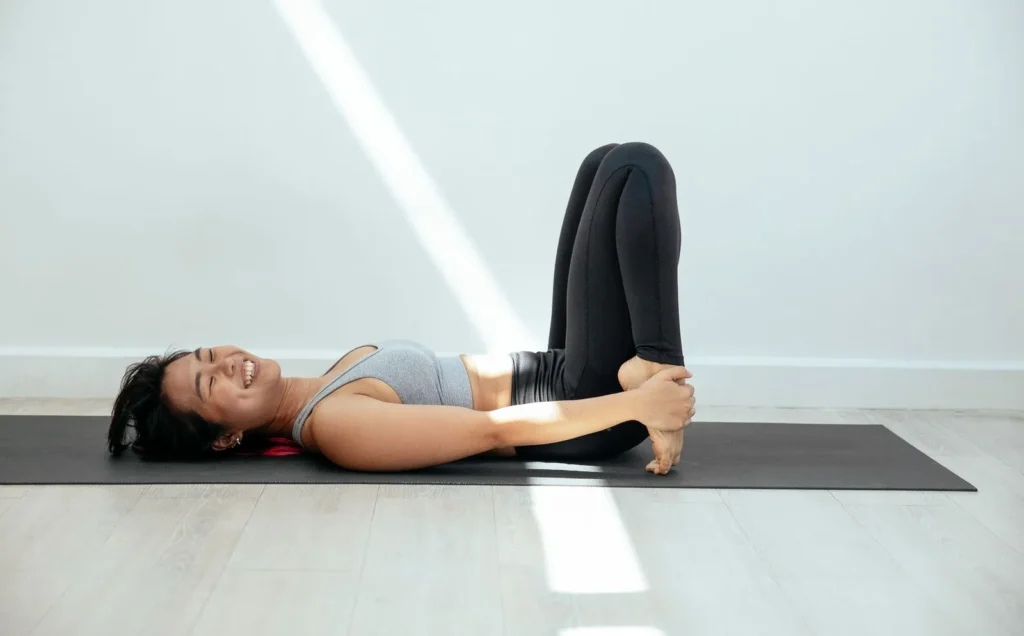
Yoga for irregular periods can ease the stress, poor sleep and lifestyle strain that often sit behind an unpredictable cycle, but it is supportive care, not a cure. It will not fix PCOS, a thyroid problem or fibroids. What it can do is calm your stress response and give you a steady routine to run alongside medical care. Below: causes, a pose sequence, a weekly plan, who should avoid what, and when to see a doctor.
See a doctor first if you have missed three or more periods, bleed very heavily or beyond 7 days, bleed between periods or after sex, or have severe pelvic pain. Rule out pregnancy first. Never stop or change medicine because of yoga.
What counts as an irregular period?
A typical adult cycle runs about 21 to 35 days, counted from the first day of one period to the next, with bleeding lasting roughly 2 to 7 days. A cycle is usually called irregular when its length swings by more than about 7 to 9 days, or when periods stop for 90 days or more.
Very heavy bleeding and spotting between periods also count. Context matters, though. In the first few years after a first period, teenage cycles of up to about 45 days can still be normal, and cycles often turn erratic in the years before menopause. A previously clockwork cycle that suddenly becomes unpredictable deserves a check-up.
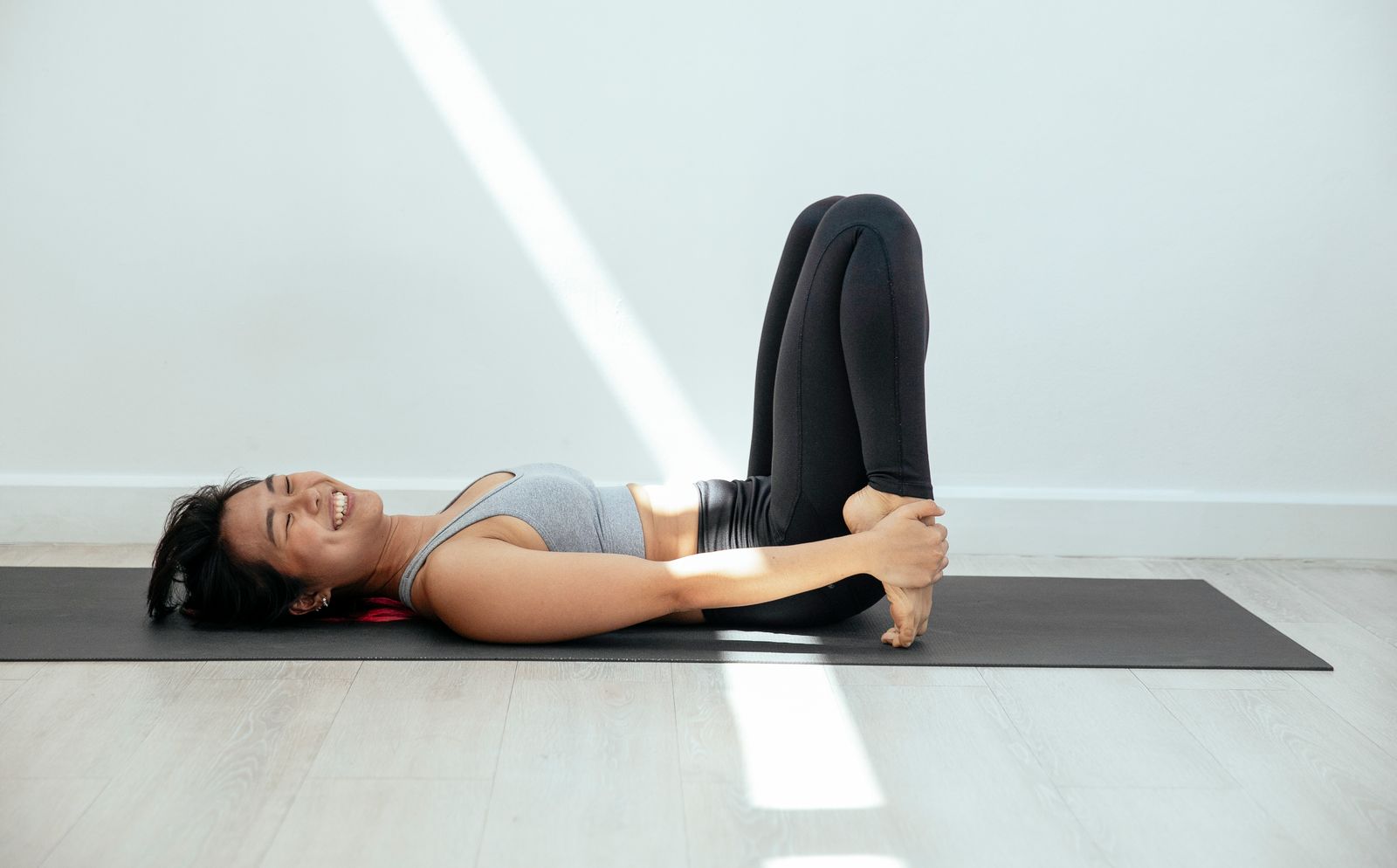
Why periods go irregular, and where yoga fits
Yoga is not equally useful for every cause. This table shows the common ones and how much a mat practice can realistically do.
| Common cause | Typical clues | Can yoga help? | What still needs a doctor |
|---|---|---|---|
| Chronic stress, poor sleep | Late periods in exams or night shifts | Yes, this is where yoga is most useful | If cycles stay off after stress settles |
| PCOS | Long gaps, acne, extra body hair | Supportive only: stress and habits | Diagnosis, tests and a treatment plan |
| Thyroid disorder | Fatigue, hair fall, weight change | Mood and stress support only | Blood tests and medical treatment |
| Weight loss, under-eating, over-training | Periods fade after strict dieting or hard training | Gentle yoga fits; harder exercise does not | Doctor or dietitian review |
| Perimenopause | Age 40s, hot flushes, night sweats | Sleep and mood support | Confirmation and symptom management |
| Fibroids, polyps, other uterine causes | Heavy or prolonged bleeding | No, it cannot treat these | Scan and specialist care |
Myth check: poses cannot “reset” your hormones
You will see claims that one pose “balances” the ovaries or thyroid in a week. Poses cannot target a single gland, and no sequence can promise a regular cycle. A consistent practice can lower stress and improve sleep, which may help a stress-linked cycle settle over months. Treat any programme that guarantees results as a red flag.
How does yoga help irregular periods?
Yoga may help by lowering chronic stress, which can disturb the brain-to-ovary signalling that times ovulation. Slow movement, breathing and relaxation shift the body toward its rest-and-digest state. Practising about 20 to 30 minutes, four to five days a week, for three or more months is a realistic, low-risk starting point.
Your cycle runs on a feedback loop between the brain and the ovaries. Prolonged stress and poor sleep can disturb it, which is why a hard exam season or rough work phase can push a period late. Research on yoga and menstrual health is limited and mostly small, so be wary of dramatic promises. The dependable gains are calmer mood, better sleep and less cramping.
Which yoga poses for irregular periods are worth doing?
The most useful yoga asanas for irregular periods are gentle ones: Butterfly, Child’s Pose, Cobra, Bridge, a seated forward fold, Reclining Butterfly and Legs-Up-the-Wall. Together they take about 25 minutes and combine a hip opener, a mild backbend and a long supported rest. Stop at any sharp pain or dizziness.
| Pose | Hold | Form cue | Easier option |
|---|---|---|---|
| Balasana (Child’s Pose) | 1 to 2 minutes | Knees wide, forehead down, breathe into the back ribs | Bolster or folded blanket under the torso |
| Baddha Konasana (Butterfly) | 1 to 2 minutes | Sit tall, soles together, let knees fall without forcing | Sit on a cushion; support each knee with a block |
| Bhujangasana (Cobra) | 5 breaths, twice | Elbows close, lift with the back, keep the neck long | Sphinx pose on the forearms |
| Setu Bandhasana (Bridge) | 5 to 8 breaths, twice | Feet hip-width, press through heels, do not squeeze the neck | Small pillow under the lower back |
| Paschimottanasana (Seated Forward Fold) | 1 minute | Hinge from the hips, back long, never yank the toes | Bend the knees or loop a scarf around the feet |
| Supta Baddha Konasana (Reclining Butterfly) | 3 to 5 minutes | Bolster along the spine, soles together, arms open | Pillows under both knees |
| Viparita Karani (Legs-Up-the-Wall) | 5 minutes | Hips near the wall, legs relaxed, shoulders soft | Rest calves on a chair seat instead |
With a history of neck or lower-back trouble, read our guide to yoga for back pain before adding Cobra or Bridge, and skip deeper backbends like Camel Pose. The reclining and wall poses are the heart of restorative yoga; protect them even on days you only have ten minutes.
Does pranayama for irregular periods work?
Gentle pranayama may help indirectly by lowering stress. Five to ten minutes of slow alternate-nostril breathing (Nadi Shodhana) or humming-bee breath (Bhramari) at the same time daily activates the body’s calming response. It will not change hormones on its own, and forceful techniques are not for everyone.
- Nadi Shodhana: breathe in through the left nostril, out through the right, then reverse. Keep it smooth, with no breath holding.
- Bhramari: after a slow inhale, hum softly on the exhale. Stop if you feel dizzy.
- Skip for now: breath retention, Kapalabhati and Bhastrika, especially with high blood pressure, heart or lung conditions, or possible pregnancy.
A weekly routine for yoga asanas for irregular periods
Consistency beats intensity. Shift the days to suit your schedule and keep sessions short enough to repeat.
| Day | Practice | Time | Notes |
|---|---|---|---|
| Monday | Full 7-pose sequence plus Nadi Shodhana | 30 min | Morning or early evening |
| Tuesday | Walk, 20 to 30 minutes | 30 min | Light movement only |
| Wednesday | Child’s Pose, Butterfly, forward fold, Legs-Up-the-Wall | 20 min | Gentler day |
| Thursday | Full 7-pose sequence plus Bhramari | 30 min | Hold restful poses longer |
| Friday | Reclining Butterfly and Legs-Up-the-Wall only | 15 min | Evening wind-down |
| Saturday | Full sequence, slower, plus breathing | 35 min | One extra round of Cobra |
| Sunday | Rest, or an easy stroll | 0 to 20 min | Note sleep and mood in your diary |
How long does yoga take to regulate periods?
Expect to practise for at least three months, or three full cycles, before judging any change in cycle length. Better sleep, lower stress and easier cramps often show up sooner than a shift in timing. If nothing improves after four to six months of steady practice, go back to your doctor rather than extending the trial.
Log the first day of every period in a diary or app, with a line on sleep and stress. Your doctor will find a three-month log far more useful than memory.
Troubleshooting: nothing is changing, or you feel worse
- Your cycle has not shifted after three months. That is common. Keep the routine for its stress and sleep benefits, and get the cause checked.
- You feel dizzy or faint. Come out slowly and avoid practising on an empty stomach or in a hot room.
- Your periods have become heavier or more painful. Stop the practice for now and see a doctor. This is not a “detox” effect.
- You train hard and your periods are fading. Over-exercising and under-eating can stop ovulation. Cut intensity and ask a registered dietitian to review your intake.
- You keep skipping sessions. Shrink the goal to 10 minutes of Legs-Up-the-Wall and slow breathing.
Is it safe to do yoga during your period?
For most people, yes. Gentle yoga during bleeding is generally safe and can ease cramps and low mood. Favour restorative shapes such as Child’s Pose, Reclining Butterfly and gentle twists. Some teachers suggest skipping headstand on heavy-flow days, a comfort-based tradition, so listen to your body.
If cramps are your main complaint, our yoga for periods guide has a pain-relief sequence to use alongside this routine.
Who should avoid or modify this routine
Check with your doctor before starting if any of these apply to you:
- You are pregnant or there is a chance you could be. A missed period can be pregnancy, so test first.
- You have very heavy bleeding, severe pelvic pain or an unexplained lump. Get a diagnosis first.
- You have uncontrolled high blood pressure, heart disease or glaucoma. Avoid inversions and breath holding.
- You have a recent abdominal or pelvic surgery, or a neck or spine injury. Skip backbends and deep twists until cleared.
- You are prone to dizziness, vertigo or fainting, or are anaemic. Keep poses low and rise slowly.
- You have, or are recovering from, an eating disorder, or your weight is very low. Gentle yoga should be done under medical supervision only.
- You take hormonal, thyroid or blood-thinning medicines. Keep taking them as prescribed and tell your doctor about your practice.
Choosing a yoga style for hormonal health
Slower styles generally suit cycle concerns better than fast, heat-building ones. Gentle Hatha and restorative classes offer long holds and plenty of relaxation, and yin yoga adds passive holds that quieten the nervous system. Vinyasa yoga suits higher-energy days, but ease off in the week before a period when energy often dips. Compare the full range of types of yoga to find your fit.
Beginners, teens, women in their 40s and regional-language learners
Complete beginners: spend two to four weeks on basic alignment and breathing first. Our yoga for beginners guide covers that foundation.
Teenagers: irregular cycles are common early on, so gentle practice is fine, but persistent gaps or severe pain still need a doctor.
Women in their 40s: shifting cycles may point toward perimenopause. Our yoga for menopause guide covers sleep and hot-flush support for that stage.
Tamil, Hindi, Gujarati or other regional-language learners: the poses stay the same, with Sanskrit names. What matters is instruction you fully understand, since safety cues get lost in translation. An online yoga class in your language beats a copied pose list.
Lifestyle habits that matter as much as the poses
Keep sleep and wake times steady, since ovulation hormones follow a daily rhythm. Eat regular, balanced Indian meals with dal, vegetables, curd, roti or rice and enough protein, rather than crash dieting. Keep exercise moderate, because both inactivity and extreme overtraining can disturb cycles. For a wider view, see the benefits of yoga and our overview of yoga for women.
When to see a doctor instead of relying on yoga
Yoga complements care; it is never a diagnosis or a replacement for treatment. Book a gynaecologist or physician visit if:
- You have missed three or more periods in a row and a pregnancy test is negative.
- Your cycles are consistently shorter than about 21 days or longer than about 35 days.
- Bleeding is very heavy (soaking a pad every hour for several hours), lasts beyond 7 days, or happens between periods or after sex.
- You have severe pelvic pain, fever, dizziness or fainting.
- You notice new facial hair, persistent acne, hair thinning or unexplained weight change.
- You have been trying to conceive for 12 months (6 months if 35 or older).
A registered dietitian can help if weight, strict dieting or heavy training may be involved. Never alter prescribed medicines because of yoga.
Frequently asked questions
Can yoga alone fix irregular periods?
No. Yoga can support cycle regularity by lowering stress and improving sleep, but it cannot treat PCOS, thyroid disorders or fibroids. Treat it as a low-risk addition to medical care.
How often should I do yoga for irregular periods?
A sensible target is 20 to 30 minutes, four to five days a week, for at least three months. Short, frequent sessions are easier to sustain than occasional long ones.
Which yoga pose is best for hormonal balance?
No single pose does it. Butterfly Pose and its reclining version are the most commonly taught for relaxation and hip opening. Pair a hip opener with a gentle backbend and a calming finish like Legs-Up-the-Wall.
Is it okay to do inversions with irregular periods?
Gentle inversions like Legs-Up-the-Wall are fine for most people. Avoid full headstand or shoulderstand if you have high blood pressure, glaucoma or neck problems, and consider skipping them on heavy-flow days.
Can stress really cause irregular periods?
Yes. Prolonged stress and poor sleep can disrupt the hormonal signalling that times ovulation, so cycles may run late or skip. That is why stress reduction is suggested alongside a medical check-up.
Next step: Join a live online yoga class with FitStrot and tell your instructor about your cycle and any medical conditions on day one.


