

Good yoga for women is not a separate set of poses. It is the same practice, paced around things women’s bodies go through: monthly cycle changes, pregnancy and the months after it, pelvic floor strength, and bone and joint changes after menopause. This guide covers what yoga can reasonably do, how to hold key poses with safer alignment, who needs modifications, and a 30-minute routine you can start at home this week.
What is yoga for women, and how is it different from regular yoga?
Yoga for women uses the same poses, breathing and relaxation as any yoga class, but selects and paces them around life-stage needs: gentler, restorative work on heavy period days, strength and balance work for bone health, and pelvic floor awareness around childbirth. Nothing in it is exclusive to women. The emphasis is what changes.
In practice, a woman in her twenties and one in her fifties may both do warrior poses, but one holds them for energy and the other for balance and bone loading, with a wall nearby. You do not need to be flexible to begin; yoga builds flexibility slowly.
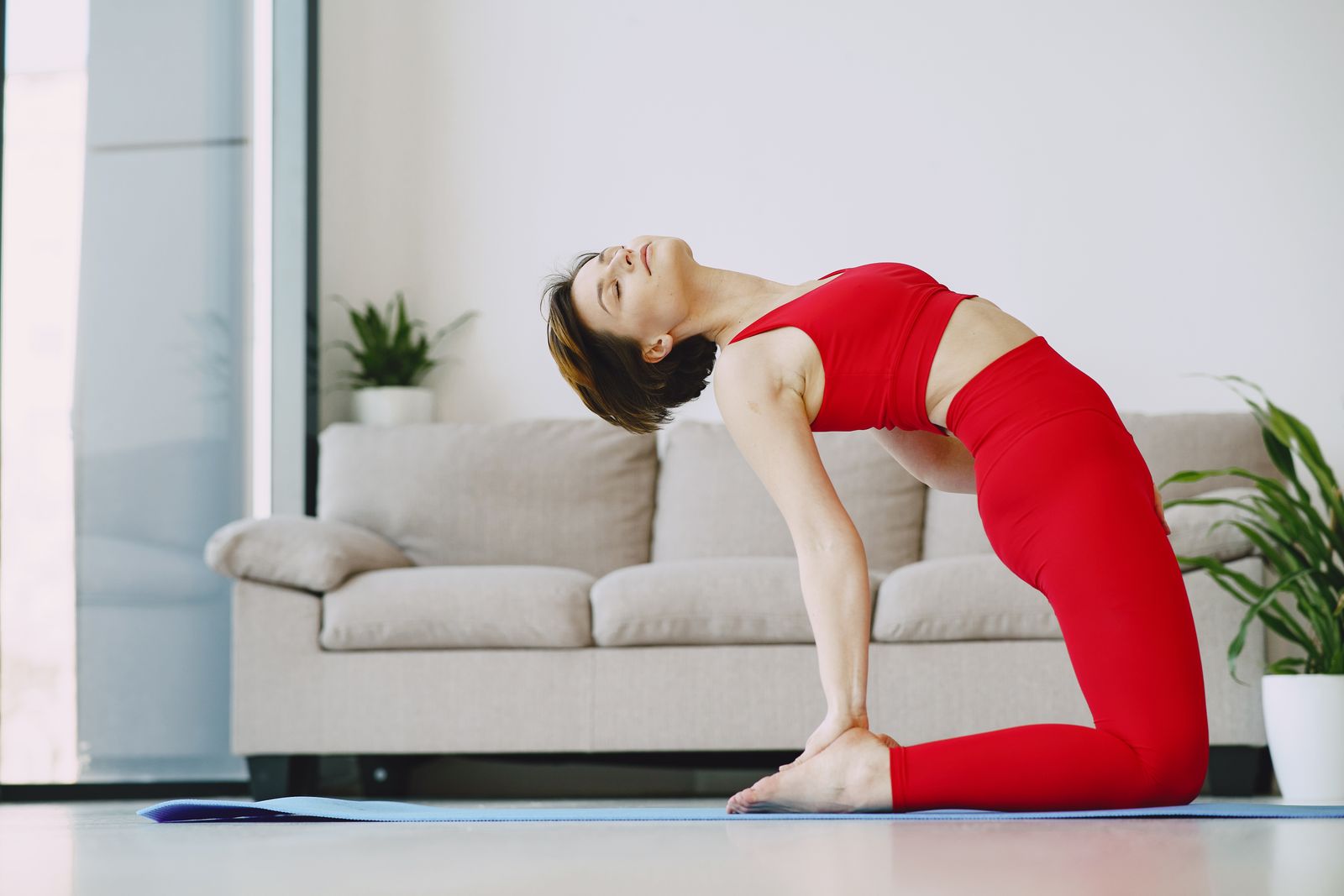
What are the benefits of yoga for women?
Regular yoga is associated with lower perceived stress, better sleep, improved flexibility and balance, and steadier mood for many women. Stress and sleep often change within a few weeks of practising three to four times a week, while strength and mobility take longer. Results vary, and yoga complements medical care.
- Stress and sleep: slow breathing with a longer exhale tends to calm the body. An evening yin yoga session is a popular wind-down for light or broken sleep.
- Mobility: poses like cat-cow and butterfly move the spine, hips and pelvis through comfortable ranges, which helps with desk-bound stiffness.
- Balance and strength: standing poses such as warrior and tree use your own body weight. They build useful leg and core strength, though modestly compared with progressive resistance training.
- Mood: movement, breath and quiet attention are linked with feeling calmer. It helps alongside, not instead of, professional support for anxiety or low mood.
Myth check: what yoga cannot do for women
It cannot spot-reduce fat. No pose burns fat from the belly, thighs or arms specifically. Fat loss depends on your overall food intake and activity over weeks and months. Yoga can support that by adding movement, improving sleep and, for some women, reducing stress-driven snacking. Flowing styles like vinyasa yoga and power yoga use more energy than a slow hatha yoga class, but none is a quick fat-loss tool.
It does not “fix” hormones. Yoga can ease stress and improve sleep, but it does not treat PCOS, thyroid disorders or early menopause. Those need a doctor’s assessment.
It is not a fertility treatment. Gentle practice can lower day-to-day stress while you try to conceive, but it should never delay a specialist visit.
It does not fully replace strength training. Bone and muscle respond best to gradually heavier loads, so many women pair yoga with two weekly strength sessions.
Yoga for women at every life stage
Treat this table as a starting map, not a prescription. Your doctor’s advice comes first.
| Life stage | What to prioritise | Suitable styles | Sessions per week | Take extra care with |
|---|---|---|---|---|
| Teens and 20s | Strength, mobility, a regular stress habit | Vinyasa, hatha, power | 3 to 4 | Forcing deep stretches; loose joints that over-bend |
| 30s | Strength plus stress relief around work and family | Vinyasa, beginner ashtanga, one yin session | 3 | Training hard on tired weeks; skipping rest days |
| Pregnancy | Pelvic mobility, easy breathing, gentle strength | Prenatal classes only | As your doctor clears | Deep twists, belly-compressing poses, lying flat on the back late in pregnancy |
| After childbirth | Slow breathing, pelvic floor awareness, gradual core return | Restorative, gentle hatha | After doctor’s clearance | Strong core work and deep backbends too early; recovery is slower after a C-section |
| Perimenopause and menopause | Weight-bearing poses, balance, sleep, cooling breath | Hatha, restorative, light vinyasa | 3 to 4 | Overheating in warm rooms; deep forward folds if bone density is low |
| 60 and above | Balance, mobility, confidence on the floor | Chair yoga, gentle hatha | 3 to 5 short sessions | Getting up quickly from the floor; dizziness |
If you are expecting, read our prenatal yoga guide before choosing a class, and get your obstetrician’s go-ahead first. For the menopause years, the yoga for menopause guide covers sleep, hot flushes and bone-friendly sequencing in more detail.
How should yoga change across the menstrual cycle?
Yoga does not need a rigid cycle plan. A practical approach is to match effort to how you feel: restorative or slow flow on days with cramps or heavy flow, and steadier strength work when energy is higher. Listen first, then adjust.
Our yoga for periods guide lists comfortable options, and yoga for irregular periods explains what to track. Cycles that stay irregular for several months, or periods that are very heavy or painful, deserve a medical check rather than another yoga class.
How do you hold key yoga poses with safe alignment?
Safe alignment comes down to three habits: keep joints soft rather than locked, move only as far as you can breathe smoothly, and stack knees over ankles and wrists under shoulders. If a pose pinches a joint or makes you hold your breath, back out and use the easier modification instead of pushing through.
| Pose | Alignment cue | Easier modification | Skip or check with a doctor first if |
|---|---|---|---|
| Cat-cow | Wrists under shoulders, knees under hips; let the spine move with each breath | Do it seated on a chair, hands on knees | You have wrist pain (use fists or forearms) |
| Child’s pose | Sit hips back toward heels, forehead down, arms long or beside the body | Cushion between thighs and calves; bolster under chest | Knee injury, or late pregnancy (open the knees wide) |
| Bridge | Feet hip-width and parallel, press through heels, lift until shoulders, hips and knees form one line; keep the head still | Smaller lift, or a folded blanket under the hips | Neck problems, or later pregnancy (lying on the back) |
| Butterfly | Sit tall on a folded blanket, soles together, fold forward from the hips | Cushions under both knees | Groin, knee or pelvic girdle pain |
| Warrior II | Front knee over the ankle, back foot turned slightly in, shoulders stacked over the pelvis | Shorter stance | Knee pain, or balance concerns (stay near a wall) |
| Tree | Foot on calf or inner thigh, never on the knee; press foot and leg together | Toes on the floor with the heel against the ankle; fingertips on a wall | Dizziness or ankle injury |
| Legs up the wall | Hips near the wall, legs relaxed, shoulders and head resting on the floor | Bend the knees, or place a cushion under the hips | Glaucoma, uncontrolled high blood pressure or reflux |
What does a 30-minute yoga routine for women look like?
A balanced 30-minute home routine is: 3 minutes of breathing, 7 minutes of gentle warm-up, 10 minutes of standing strength and balance, 5 minutes of floor hip and spine work, and 5 minutes of rest. Done three to four times a week, it covers strength, mobility and recovery in one sitting.
| Minutes | Practice | How to do it |
|---|---|---|
| 0 to 3 | Seated breathing | Sit on a cushion; breathe in for 4 counts and out for 6 through the nose. No breath holding. |
| 3 to 7 | Cat-cow | 8 to 10 slow rounds, one breath per movement |
| 7 to 10 | Warm-up | Shoulder rolls, hip circles and gentle standing side bends |
| 10 to 14 | Warrior II | Five slow breaths on each side, then rest |
| 14 to 20 | Tree and chair pose | Five breaths each side in tree; three holds of five breaths in chair pose |
| 20 to 24 | Bridge | Three rounds, lifting on the inhale and lowering on the exhale |
| 24 to 25 | Butterfly | Stay upright or fold forward only as far as feels comfortable |
| 25 to 30 | Final relaxation | Lie on your back with a cushion under the knees, or place legs up the wall; breathe naturally |
Wait roughly two to three hours after a full meal, or about an hour after a light snack. New to all this? Start with the simpler sequences in yoga for beginners and build up from there.
Who should modify yoga or check with a doctor first?
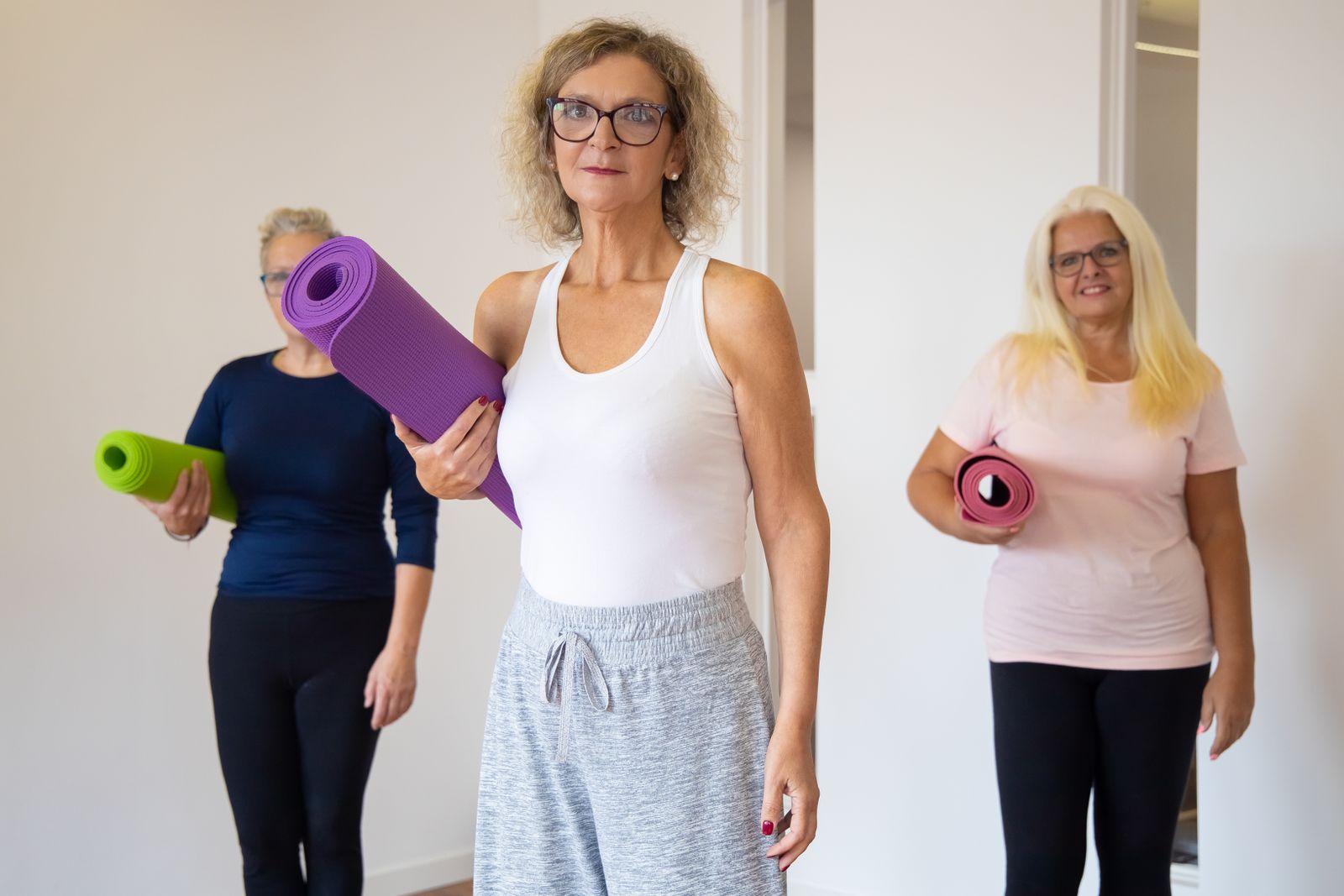
Women who are pregnant, recovering from childbirth or surgery, or living with osteoporosis, high blood pressure, glaucoma, pelvic organ prolapse or joint instability should talk to a doctor before starting or changing a yoga routine. Most can still practise with modified poses.
- Pregnancy: use classes designed for it. Avoid deep twists, lying flat on the back for long in later months, and anything that compresses the belly.
- Heavy periods or strong cramps: choose comfort over challenge; some teachers skip long inversions on heavy-flow days.
- Osteoporosis or low bone density: keep the spine long. Avoid deep, rounded forward folds and forceful twists, and ask your doctor or physiotherapist which poses suit you.
- High blood pressure or glaucoma: avoid long holds with the head below the heart and avoid holding your breath.
- Pelvic floor symptoms: heaviness, a bulge or leaking when you cough or lift means you should pause strong core work and deep squats until you have been assessed.
- Very flexible joints: stop short of your end range and build muscle control.
See your doctor if you notice chest pain, dizziness that does not settle, numbness or tingling, sharp joint pain, or pain that lingers more than a day or two after practice.
How often should women practise yoga?
Three to four sessions of 20 to 45 minutes a week is a realistic target for most women, with a few minutes of breathing or stretching on the other days. Even two sessions a week beat none. Consistency matters more than session length, and one restorative day weekly helps prevent fatigue.
A simple weekly pattern is two flowing sessions (vinyasa or hatha), one yin or restorative session, and one optional strength day. Demanding styles like ashtanga yoga suit women who have a base, so build up gradually. Anchoring practice to a fixed time, such as ten minutes before morning chai, keeps it going when schedules get busy.
Troubleshooting: why does my yoga practice hurt or fizzle out?
- Wrists ache in plank or downward dog: spread your fingers, press through the knuckles, bend the knees to lighten the load, or come down to forearms.
- Lower back pinches in bridge or backbends: lift lower, keep knees hip-width, and press through the heels instead of arching.
- Knees complain in butterfly or cross-legged sitting: sit on a blanket, put cushions under the knees, or use a chair. Never force a knee down.
- Dizzy when you come up: rise slowly and sip water. If it keeps happening, ask your doctor to check.
- Motivation fades after two weeks: shrink the session to 10 minutes, fix a time, and book a live class so someone is expecting you.
Questions about yoga for women
Is yoga good for women’s hormonal balance?
Yoga can lower everyday stress and improve sleep, and both influence how you feel across the month. It is not a hormone treatment. If you have irregular cycles, symptoms of thyroid problems or early menopause signs, get a medical assessment and treat yoga as a supportive habit alongside that care.
Can yoga help with PCOS symptoms?
Regular movement, including yoga, supports general health in women with PCOS, and stress and sleep often improve with practice. It does not treat PCOS itself. Keep working with your doctor on diagnosis and treatment.
What is the best time of day for women to practise yoga?
The best time is the one you can repeat. Mornings suit energising flows, evenings suit yin or restorative practice. Leave about two to three hours after a heavy meal, and choose a lighter session if you are tired.
Is it safe to do yoga during pregnancy?
For many healthy pregnancies, yes, with a qualified prenatal teacher and your obstetrician’s approval. Prenatal classes avoid deep twists, belly compression and long periods lying flat on the back. Stop if you feel dizzy, short of breath or have any pain or bleeding, and call your doctor.
Can yoga replace strength training for women?
Not completely. Yoga builds useful bodyweight strength in the legs, core and shoulders, but bone and muscle respond best to gradually increasing loads. A balanced week might include two or three yoga sessions and one or two strength sessions, whether at home with dumbbells or with a trainer.
Where to start
Book a session with Fitstrot’s online yoga classes, tell the instructor your life stage and any health conditions before you begin, and ask for modifications from the first pose. If you also want a strength plan for the other days, a 1-on-1 personal training programme fits alongside it.


