
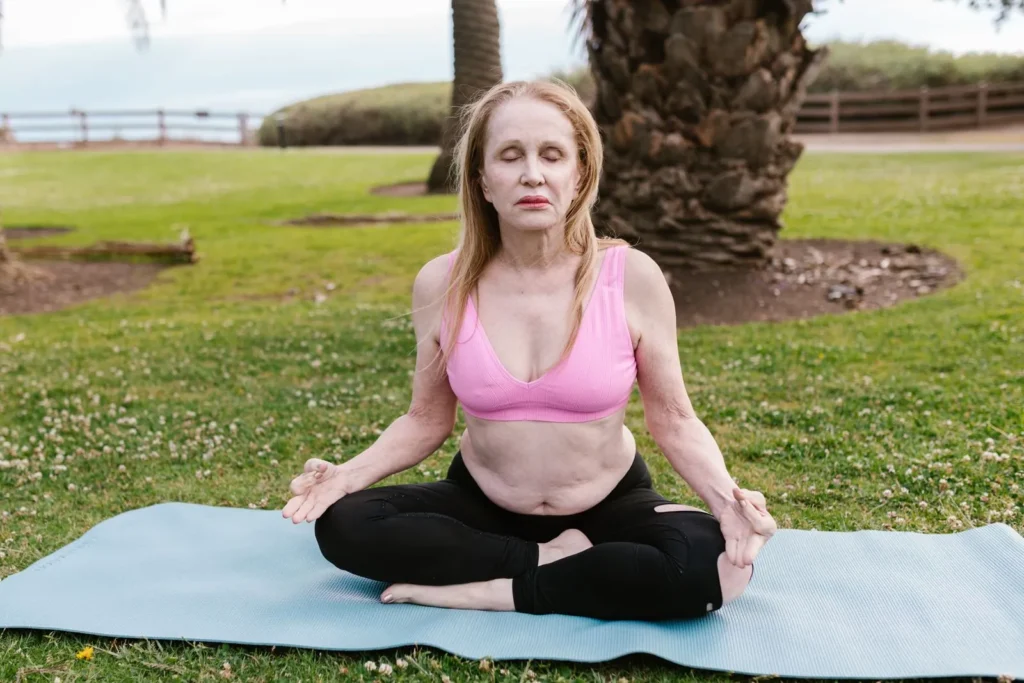
Done well, yoga for menopause means a slower, cooler, better-supported practice that eases tension, steadies sleep and gives you a calmer way to ride out hot flashes, mood swings and stiff joints. It supports comfort. It does not treat menopause, replace hormone therapy or stand in for your gynaecologist’s advice. This guide covers poses, a 20-minute sequence, bone-safety changes and a weekly plan for home. If you have never practised before, start with our yoga for beginners guide.
Please read first. Talk to your doctor or gynaecologist before starting if you have osteoporosis or osteopenia, high blood pressure, heart disease, glaucoma, heavy or unusual bleeding, or if you take regular medicine. Never reduce or stop hormone therapy or any prescribed medicine because you have started yoga. Yoga is a companion to medical care, not a substitute for it.
Can yoga for menopause really help with symptoms?
Yoga can make menopause symptoms easier to live with, mainly by improving relaxation, sleep and mood while keeping joints and muscles moving. Many women notice small changes within 4 to 8 weeks of regular practice. It does not stop hot flashes outright, reverse bone loss, or replace hormone therapy or other medical treatment.
The likely reason it helps is simple. Slow, breath-led movement calms the body’s stress response, and a calmer body tends to feel hot flashes, anxiety and broken sleep less sharply. Many women say a flash still comes but bothers them less, which is a realistic goal. Severe symptoms deserve proper medical attention.
What is the difference between perimenopause and menopause?
Menopause is confirmed after 12 months in a row without a period, and in India it commonly arrives in the late 40s, with a usual range of roughly 45 to 52. Perimenopause is the run-up: often a few years of irregular cycles and swinging hormones before periods stop completely.
The split matters for practice. In perimenopause, cycles can still be unpredictable, so you may want the adjustments in our yoga for periods and yoga for irregular periods guides on some days. After menopause, lower oestrogen shifts the focus towards bone strength, balance and joint comfort.
Which yoga poses for menopause help with hot flashes, sleep and stiffness?
Supported, low-effort poses work best for hot flashes and sleep: Reclined Bound Angle, Legs Up the Wall and Child’s Pose, held 2 to 5 minutes each. For stiffness, Cat-Cow and gentle standing poses held 5 to 8 breaths per side keep the spine and hips moving without heating you up.
| Symptom | Poses to try | How long | Practical note |
|---|---|---|---|
| Hot flashes, night sweats | Reclined Bound Angle (Supta Baddha Konasana), Child’s Pose (Balasana) | 2 to 5 minutes each | Practise in a cool, ventilated room in a light cotton outfit |
| Poor sleep | Legs Up the Wall (Viparita Karani), supported Savasana | 4 to 6 minutes | Do it 45 to 60 minutes before bed, lights low, phone away |
| Anxiety, low mood | Supported Fish (rolled blanket under the chest), slow Cat-Cow, gentle Bridge | 5 to 8 breaths per round | Keep the breath slow; stop if you feel dizzy |
| Stiff back, hips, knees | Cat-Cow, Thread the Needle, Warrior II | 5 to 8 breaths per side | Move only in a pain-free range |
| Balance and bone support | Tree Pose near a wall, Chair Pose, Triangle Pose | 5 to 8 breaths per side | Keep a wall or chair within reach |
One caution on Legs Up the Wall: if you have high blood pressure, glaucoma or a hernia, ask your doctor first, or rest your legs on a low chair instead.
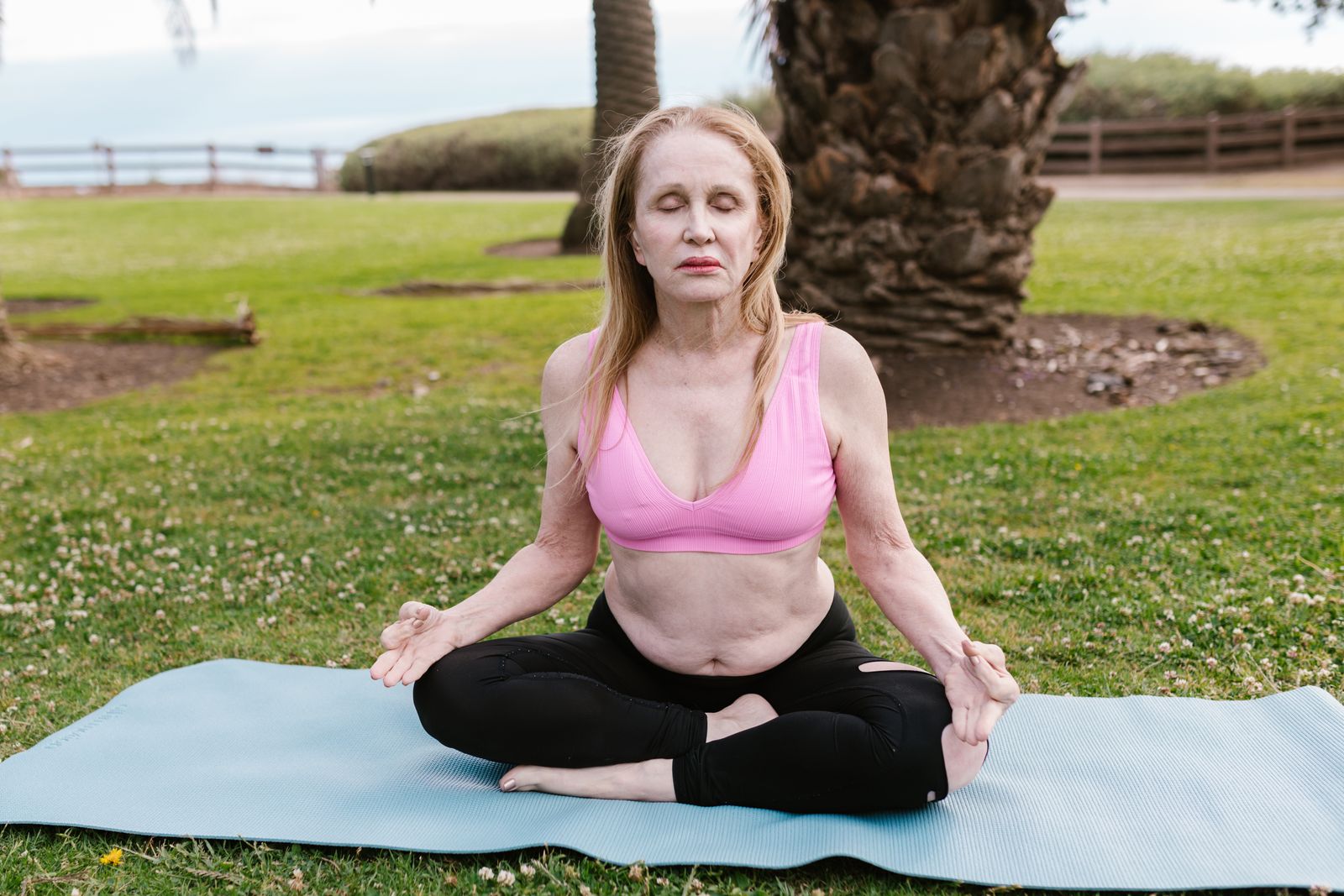
A 20-minute yoga for menopause sequence, step by step
This sequence suits most beginners with no known bone or blood pressure concern. Move slowly and rest whenever you need to.
- Easy seat, 2 minutes. Sit on a folded blanket, hands on knees, and take 8 to 10 slow breaths.
- Cat-Cow, 2 minutes. About 10 slow rounds, one breath per movement.
- Child’s Pose with knees wide, 2 minutes. Rest the forehead on a pillow or folded arms.
- Warrior II, 3 minutes. Five to six breaths each side, back leg strong, front knee over the ankle.
- Tree Pose, 2 minutes. Fingertips on a wall, foot on the calf or ankle, never on the knee.
- Gentle Bridge, 2 minutes. Three rounds of five breaths, lifting only as high as feels comfortable.
- Reclined Bound Angle, 3 minutes. Support both knees with pillows so the hips can release.
- Legs Up the Wall, 4 minutes. Breathe in for 4 counts and out for 6 to 8, then roll to one side and sit up slowly.
If you prefer guidance over a printed list, a live online yoga class lets an instructor adjust the pace to your symptoms that day.
Myth check: do you have to sweat it out?
No. A common belief is that heat and intensity will burn menopause symptoms away. For many women the opposite happens: a heated room or a fast, strong flow can bring on or worsen hot flashes and leave you wired at bedtime. Hot yoga is generally best avoided while symptoms are active.
Fast styles such as vinyasa yoga and power yoga are not forbidden if you already practise them and feel fine, but ease off on flare-up days. Yoga alone will not fix menopause weight gain either, though better sleep and lower stress can help. If you want a cardio day too, a low-impact option like Zumba for menopause pairs well with a calmer yoga routine.
Which yoga poses need care if your bones are thinner?
After menopause, falling oestrogen speeds up bone loss, so poses that round the spine under load carry the most risk. If you have osteopenia or osteoporosis, avoid deep forward folds and strong twists, skip headstand and shoulderstand, and keep the spine long. Weight-bearing standing poses are generally encouraged.
| Pose | Why it needs care | Safer version |
|---|---|---|
| Seated Forward Fold (Paschimottanasana) | A rounded spine puts pressure on the front of the vertebrae | Sit on a folded blanket, bend the knees, hinge from the hips with a flat back |
| Standing Forward Fold | Same spinal rounding, plus a dizziness risk on coming up | Hands on a chair or wall, back flat, knees soft |
| Deep seated twist (Ardha Matsyendrasana) | Forceful rotation with a bent spine can stress the vertebrae | A small upright twist from the mid-back, no cranking with the arm |
| Plough and Shoulderstand | Heavy load on the neck and upper spine | Legs Up the Wall |
| Headstand | Fall risk and neck loading | Skip it; Dolphin at a wall only with a teacher’s guidance |
Ask your doctor whether a bone density scan makes sense for you, especially if you have a family history of fractures, have had an early menopause, or have lost height. Food matters for bones too, and a plan built around calcium, protein and vitamin D is a job for a dietitian, such as our online nutritionist consultation.
Adjusting yoga for menopause to your stage and situation
Yoga for perimenopause. Energy and mood swing from week to week, so keep two routines: a 20-minute standing sequence for better days and a 10-minute restorative one for rough nights.
After periods have stopped. Give bones and balance more attention: standing poses near a wall, slow weight shifts, and the safer forward-fold and twist versions above.
If you are new to yoga or over 55. Choose a chair-supported or beginner restorative class and learn the basics first. A gentle Hatha yoga pace gives time to breathe in every pose.
If you take medicines for blood pressure, thyroid or diabetes. Rise slowly from lying or folded positions, practise after eating lightly, and keep your doctor informed. Our yoga for women guide covers how practice changes across life stages.
How does cooling breath work, and when should you skip it?
Sitali, the cooling breath, means inhaling through a rolled tongue for about 4 counts and exhaling through the nose for 6 to 8, for 5 to 10 rounds. It can feel cooling and slow the heart rate during a flash. Skip it in cold or dusty air, or with a cold or chest congestion.
If you cannot curl your tongue, use Sitkari: inhale through slightly parted teeth, tongue resting behind them, and exhale through the nose. The simplest option needs no technique: breathe in for 4 and out for 6 to 8, which suits bedtime and night waking. Avoid long breath holds if you have heart or blood pressure concerns, and stop if you feel light-headed.
Troubleshooting: what to do when practice does not go to plan
- A hot flash arrives mid-session. Come down to Child’s Pose or sit, switch to extended-exhale breathing, sip water, and resume only when the flash passes (often within a few minutes).
- You feel dizzy standing up. Come up slowly in stages, pause with your hands on a chair, and shorten forward folds. Ongoing dizziness needs a doctor’s check.
- Evening practice leaves you wide awake. Move it earlier or make it gentler, with no standing poses within an hour of bed.
- Knees or hips ache. Shorten holds, pad with folded blankets, and reduce range. Sharp or lasting pain means stop and get it assessed.
- Nothing seems to change. Give it 6 to 8 weeks, log sleep and flashes, and see your doctor if things worsen.
How often should you do yoga for menopause?
Aim for three to four sessions of 20 to 30 minutes a week, with 5 to 10 minutes of breathwork on the remaining days. Mix weight-bearing standing practice for bone and balance support with restorative evenings for sleep. Regular short sessions usually help more than one long weekend class.
| Day | Session | Time | Focus |
|---|---|---|---|
| Monday | Standing sequence: Warrior II, Tree, Chair | 25 minutes | Bone and balance support |
| Tuesday | Restorative: Reclined Bound Angle, Legs Up the Wall | 15 minutes | Evening wind-down |
| Wednesday | Cooling breath and extended exhale, easy walk | 10 minutes breathing | Calm and flash management |
| Thursday | Standing sequence with a wall for balance | 25 minutes | Strength and joints |
| Friday | Restorative: Child’s Pose, supported Fish | 15 minutes | Mood and sleep |
| Saturday | Gentle Hatha or live online class | 30 to 40 minutes | Full-body practice with guidance |
| Sunday | Rest, or 5 minutes of slow breathing | 5 minutes | Recovery |
When should you see a doctor or gynaecologist instead of relying on yoga?
See a gynaecologist or doctor if hot flashes disrupt sleep or work, if you bleed after 12 months without a period, if periods become very heavy or last longer than usual, or if low mood, palpitations or bone pain appear. Yoga can sit alongside treatment, but it should never replace it.
Seek help promptly for chest pain, breathlessness, fainting, severe headaches, or thoughts of harming yourself. Hormone therapy and other treatments are medical decisions that depend on your health history, and only your doctor can weigh them with you. Tell your yoga teacher about your diagnosis and medicines so they can adjust poses. This page is general information, not personal medical advice.
Frequently asked questions about yoga for menopause
What is the best yoga for menopause hot flashes?
Restorative poses such as Reclined Bound Angle, Child’s Pose and Legs Up the Wall, paired with slow cooling breath, are the usual starting point. Practise in a cool room, avoid heated or fast classes while symptoms are active, and rest as soon as a flash begins.
How long does yoga for menopause take to work?
Some women feel calmer after a single session, but sleep and mood changes usually take 4 to 8 weeks of regular practice. Hot flashes may feel less bothersome rather than disappear. Results vary, so track your symptoms and share them with your doctor.
Can yoga replace hormone therapy?
No. Yoga can support sleep, stress and comfort, but it does not replace hormone therapy or other prescribed treatment. Whether you need medication is a decision for you and your doctor, and you should not stop or change any medicine because you have started yoga.
Is hot yoga safe during menopause?
Hot yoga often triggers or worsens hot flashes, and heat can cause dizziness, so many women find it uncomfortable. It is best avoided while symptoms are active. Cooler styles such as restorative, yin or gentle Hatha are usually a better fit, and your doctor can advise if you have heart or blood pressure concerns.
Can I practise yoga for menopause at home?
Yes. A mat, two pillows, a folded blanket, a belt or dupatta and a wall are enough for the sequences above. Begin with the gentle options, keep a chair nearby for balance, and join a guided class if you are unsure about form or have a bone or blood pressure concern.
Next step: Book a beginner-friendly online yoga class with Fitstrot, tell your instructor about your symptoms and any bone or blood pressure concerns, and start with the 20-minute sequence above.


