

Yoga for cyclists is a short, targeted mobility routine that works on the places a bike tightens up: hips, hamstrings, lower back, shoulders, neck and wrists. You do not need to be flexible or have any yoga background. A 5 to 8 minute warm-up before a ride and a 10 to 15 minute stretch after it, done on most riding days, is a sensible place to begin. This guide gives you both routines as tables, plus clear stop rules and honest limits on what yoga can and cannot do.
What does yoga for cyclists actually do?
Yoga for cyclists gently lengthens the muscles that stay shortened or held in one position during a ride, mainly the hip flexors, hamstrings, glutes and upper back. Done for 10 to 15 minutes after most rides, it can ease stiffness and help you move more comfortably on and off the bike. It is a supplement to riding, not a treatment.
Think of a ride as thousands of identical repetitions. Your hips open and close through a small range, your back holds a rounded or forward-leaning shape, and your hands carry part of your body weight on the bars. The body adapts to what it repeats, so stiff hips, a tight lower back and sore wrists are common complaints. Yoga adds the movements cycling leaves out: hip extension, spinal extension and rotation.
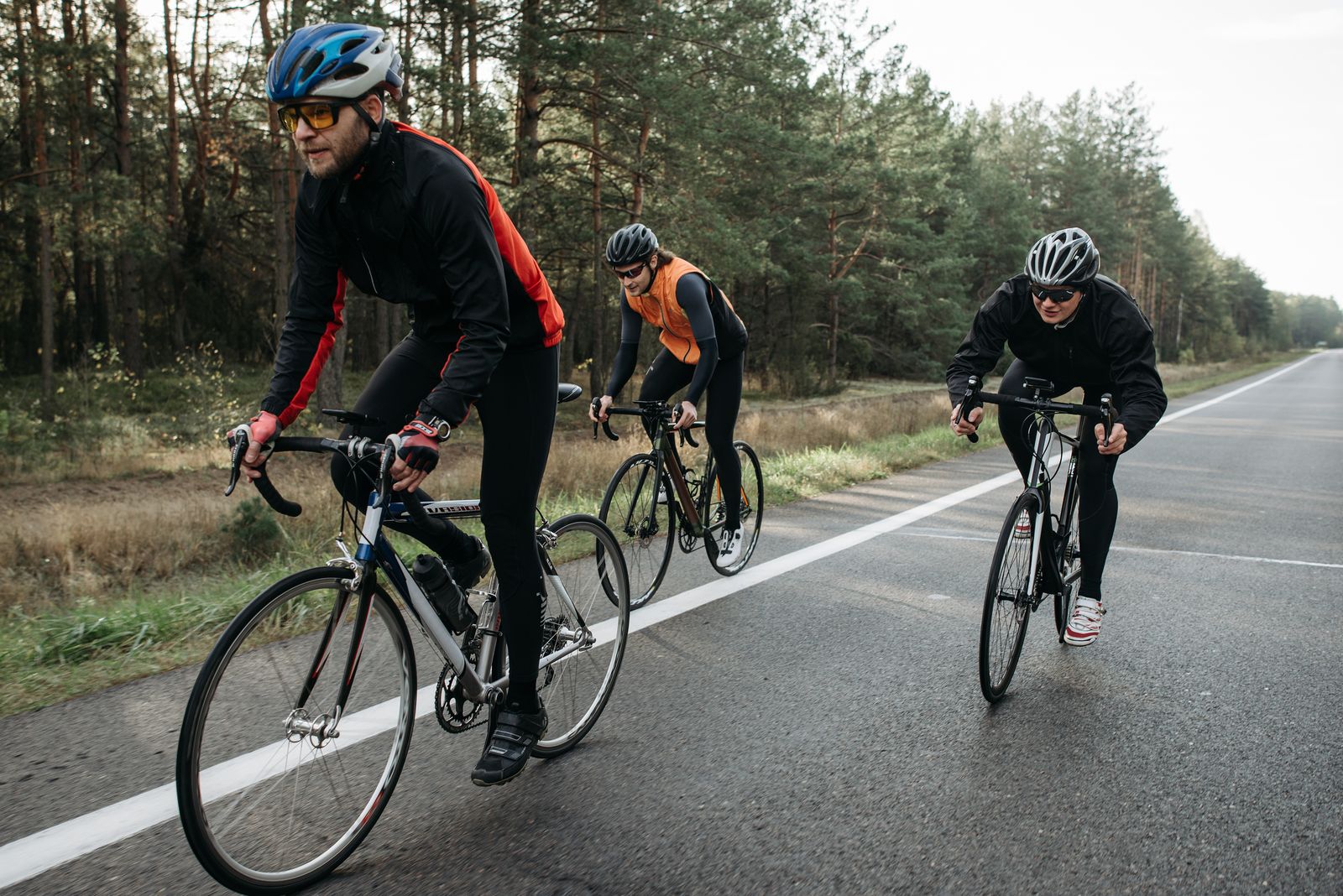
Which parts of a cyclist’s body get tight, and what helps?
Hips, hamstrings, lower back, upper back, neck and wrists are the usual trouble spots for cyclists. The table below matches each area with what riders commonly feel and one simple yoga move to try. Individual bodies and bike fits differ, so treat it as a starting map rather than a diagnosis.
| Area | Why a bike loads it | Easy yoga move |
|---|---|---|
| Hip flexors | Stay bent and shortened through every pedal stroke | Low lunge, 5 to 8 breaths per side |
| Hamstrings | Work on every upstroke and in a leaned-forward position | Reclined hamstring stretch with a strap |
| Glutes and outer hips | Drive the downstroke and stabilise the pelvis | Reclined figure-four (eye of the needle) |
| Lower back | Holds a forward-leaning shape for long periods | Gentle cat-cow, supine twist |
| Upper back and neck | Rounded shoulders, head lifted to see the road | Thread the needle, sphinx pose, gentle neck stretches |
| Wrists and hands | Carry body weight through the handlebars | Wrist circles and light palm presses |
If the same area hurts every ride, the cause may be saddle height, reach or handlebar setup rather than flexibility, and a professional bike fit can help. Our general guide to yoga for flexibility covers broader mobility if you want to go beyond the bike-specific areas.
Pre-ride routine: a 5 to 8 minute warm-up
Before a ride, keep the movements slow, small and moving rather than held. The goal is to wake up the hips, spine and shoulders, not to stretch deeply. Skip long static holds on cold muscles.
| Move | Time or reps | How to do it | Form cue |
|---|---|---|---|
| Cat-cow | 8 slow rounds | On hands and knees, round the back, then lift the chest | Move with your breath, never force the end range |
| Low lunge with gentle sway | 5 breaths per side | Back knee down, rock the hips forward and back a little | Front knee stays over the ankle |
| Thread the needle | 5 breaths per side | From all fours, slide one arm under the chest and rest the shoulder down | Hips stay over the knees |
| Wrist circles and palm presses | 30 seconds | Circle both wrists, then press palms together lightly | Stay pain-free, no hard pressing |
| Neck half-circles | 4 per side | Drop the chin, roll the ear toward the shoulder slowly | Never roll the head backward |
This takes about 6 to 8 minutes. If you are short on time, cat-cow and the low lunge alone are better than nothing. Riders who also run can compare the logic with yoga for runners, which follows the same moving-first, holding-later pattern.
Post-ride routine: a 15 minute stretch for tired legs
After a ride your muscles are warm, so this is the time for longer holds. Stay in each pose for 30 to 45 seconds, or 5 to 8 slow breaths, and aim for a mild pulling feeling rather than pain. Do both sides every time.
| Pose | Hold | Area it targets | Form cue |
|---|---|---|---|
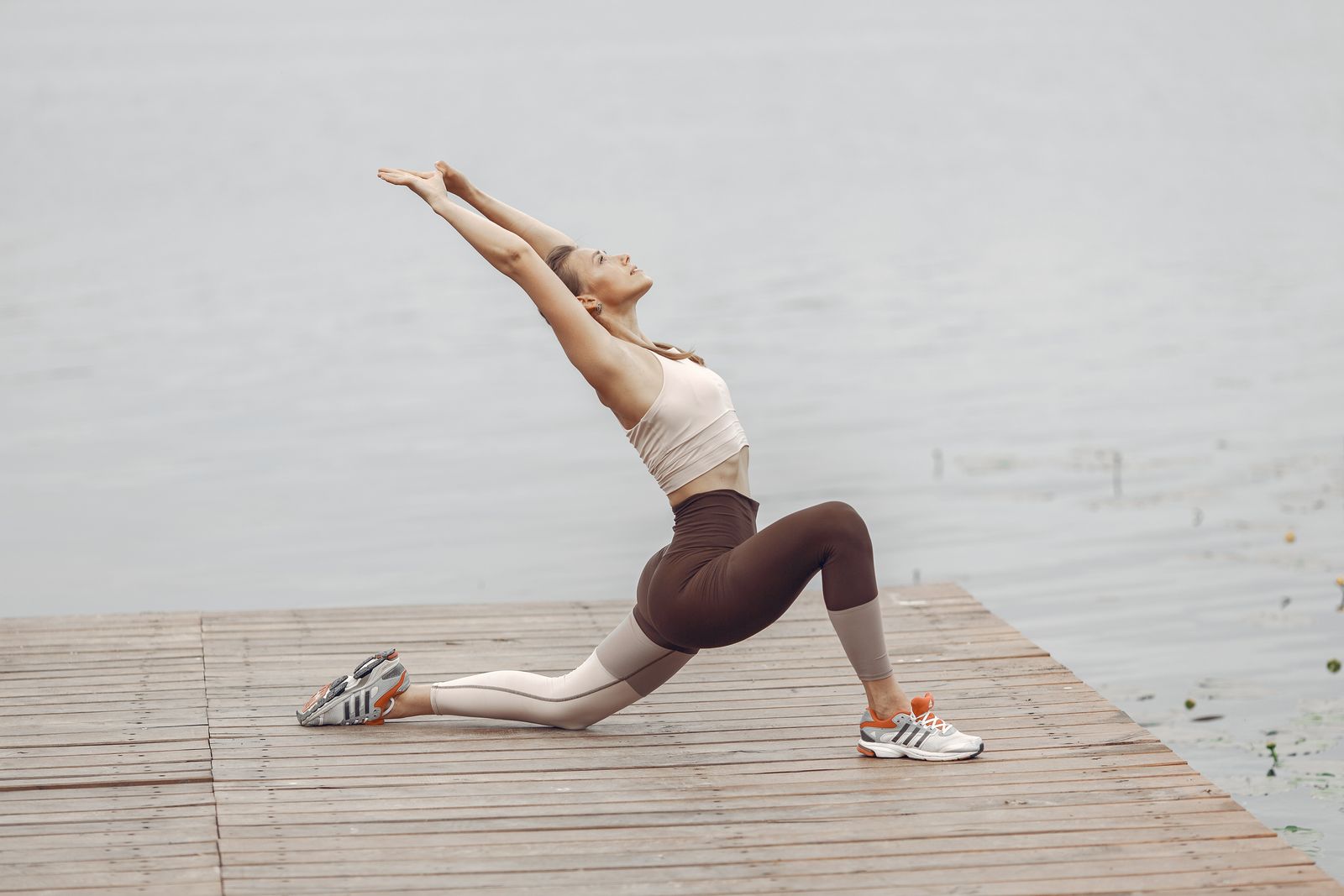
| Low lunge (Anjaneyasana) | 5 to 8 breaths per side | Hip flexors, front of the thigh | Tuck the tailbone slightly, keep the lower back long |
| Half split (Ardha Hanumanasana) | 5 to 6 breaths per side | Hamstrings, calves | Keep the spine long, bend the front knee a little if needed |
| Reclined figure-four | 30 to 45 seconds per side | Glutes, outer hip | Flex the top foot to protect the knee |
| Reclined hamstring stretch with strap | 30 to 45 seconds per side | Back of the thigh | Soften the knee, keep the head down |
| Supine twist | 30 seconds per side | Lower back, outer hips | Let the knees fall only as far as is comfortable |
| Bridge pose (Setu Bandhasana) | 5 breaths, 2 rounds | Glutes, front of the hips, chest | Press evenly through both feet, avoid over-arching |
| Sphinx pose | 5 to 8 breaths | Upper back, chest | Shoulders away from the ears, stay pain-free in the lower back |
The full sequence runs to roughly 15 minutes with transitions. If time is short, pick the first three. More pose ideas are in our guide to yoga poses, and a home setup is in yoga at home.
Neck, shoulders and wrists: the parts riders forget
Most routines for cyclists stop at the legs, yet the neck, shoulders and hands carry real load on long rides, especially on a road or gravel bike with a low front end.
For the neck, sit tall and let one ear drift toward the same shoulder, holding for 20 to 30 seconds per side. Do not pull on the head with your hand. For the shoulders and upper back, try thread the needle or a gentle open-chest stretch with the hands clasped behind you. For the wrists, kneel on the mat, turn the palms up with fingers pointing back toward the knees, and lean back only a little. Sore, tingling or numb hands deserve attention, so read the doctor section below before pushing through.
Myth check: what yoga will not do for cyclists
Yoga is helpful, but it is easy to oversell.
- Myth: yoga prevents cycling injuries. No routine can promise that. Injuries depend on bike fit, training load, rest and your own body. Yoga may make riding feel more comfortable, nothing more.
- Myth: yoga will make you faster. Time on the bike builds speed. Mobility work may help you hold a comfortable position, but it is no shortcut to better results, and we make no such promise.
- Myth: the deeper the stretch, the better. Pushing into sharp pain does not speed anything up. Mild tension that eases as you breathe is the target.
If you want strength and stability alongside stretching, a slower vinyasa yoga flow or our notes on yoga for strength pair well with the pre-ride and post-ride routines above.
When should you stop, and who should avoid these poses?
Stop any pose immediately if you feel sharp, stabbing, pinching or electric pain, numbness or tingling, dizziness, or pain in a joint such as the knee. A mild stretch that fades as you breathe is normal. Pain that rises or lingers is a signal to come out of the pose and rest.
Use this stop-if-pain rule on every session: ease off by a third, try an easier version, and if the same pain returns in the next session, leave that pose out until a professional has checked you.
Speak to a doctor or physiotherapist before starting, and ask which poses suit you, if any of these apply:
- Recent surgery or a fracture, especially around the hip, knee, spine or wrist.
- A known disc problem, sciatica or spinal condition.
- Osteoporosis or low bone density, where deep forward folds and twists may need changing.
- High blood pressure that is not well controlled, or heart or lung conditions.
- Pregnancy, where poses lying flat or deep twists need adapting.
When should you see a doctor or physiotherapist?
See a doctor or physiotherapist if knee pain, back pain or numbness lasts more than a couple of weeks, keeps coming back every ride, or is getting worse. Do not try to stretch it away. Persistent symptoms need a proper assessment first, and yoga should be fitted around their advice.
Book an appointment sooner if you notice any of the following:
- Knee: pain on the front, inside or outside of the knee that returns every ride, swelling, locking, or a feeling that the knee gives way. Our yoga for knee pain notes are no substitute for an assessment.
- Back: pain that travels into the buttock or leg, comes with tingling or weakness, or wakes you at night. Our yoga for back pain guide covers only mild, everyday stiffness.
- Numbness: numb or tingling fingers, or numbness in the groin or saddle area that lingers after a ride. Bike fit, handlebar height and saddle choice are often involved, and a professional can help.
- Anything urgent: chest pain, unusual breathlessness, fainting, or sudden severe pain needs immediate medical care, not a stretch.
How often should cyclists do yoga, and which style fits?
Most riders do well with two to four short sessions a week: the pre-ride warm-up on ride days, a 10 to 15 minute post-ride stretch, and one longer 30 to 40 minute session on a rest day. Short and regular beats long and occasional,.
For style, slower practices usually suit tired legs. Hatha and restorative classes allow longer holds with support, while a gentle vinyasa class adds strength and flow for rest days. Yin-style holds of two to five minutes suit the hips, but use props and go carefully. Our overview of the types of yoga explains how each style feels, and the broader benefits of yoga article covers why a steady habit matters beyond the bike. Riders who play other sports will also find ideas in yoga for athletes.
Yoga for cyclists in India: commutes, weekend rides and heat
Many Indian riders cycle to work, then sit at a desk for eight or nine hours, which keeps the hips bent most of the day. Weekend club rides in summer or monsoon add heat and humidity, so sip water before you stretch and avoid long holds when you are overheated or dizzy.
A practical pattern: a 5 minute lunge-and-cat-cow set before the commute, a 10 minute floor stretch after you reach home, and a longer session on Sunday after the group ride. If you prefer guidance, FitStrot’s online yoga classes run from home, so you can follow a trainer without travelling after a ride.
Frequently asked questions about yoga for cyclists
How long should yoga for cyclists take after a ride?
A post-ride session of about 10 to 15 minutes is enough for most riders. Cover the hip flexors, hamstrings, glutes and lower back, holding each stretch for 30 to 45 seconds or 5 to 8 slow breaths per side. On rest days you can stretch the session to 30 to 40 minutes.
What is the best yoga pose for cyclists?
If you only have time for one, choose low lunge (Anjaneyasana). It opens the hip flexors, which stay shortened while you pedal. Hold it for 5 to 8 breaths per side, keep the front knee over the ankle, and stop if you feel pinching in the front of the hip or any knee pain.
Should I do yoga before or after cycling?
Do both, but keep them different. Before a ride, spend 5 to 8 minutes on gentle, moving drills such as cat-cow and light lunges. After a ride, use longer holds of 30 to 45 seconds when the muscles are warm. Avoid deep, long stretches on cold muscles.
Can yoga fix back pain from cycling?
Yoga cannot promise to fix it, but gentle hip and spine work can ease the stiffness many riders feel after long rides. Back pain that is sharp, travels down a leg, comes with tingling, or lasts more than a couple of weeks needs a doctor or physiotherapist, not more stretching.
Is yoga safe for beginners who cycle?
Yes, for most healthy adults, if you start gently. Use only the easy versions, stay inside a comfortable stretch, and never push into sharp or pinching pain. People with recent surgery, a spinal disc problem, osteoporosis, uncontrolled blood pressure or pregnancy should speak to their doctor first.
Start gently, and keep it simple
Try the 6-minute pre-ride table before your next ride and the post-ride sequence afterwards for one week, noting how your hips and back feel. If you want a trainer to check your form, book a session with FitStrot’s online yoga classes, and mention that you cycle.


