

Yoga for knee pain works when it does three things: strengthens the thigh and hip muscles that hold the joint steady, loosens the tight hamstrings and calves that tug on it, and teaches you to load the knee evenly while standing, sitting and climbing stairs. A practice of 15-25 minutes, 3-4 days a week, built on supported and low-bend poses, is a sensible starting point for mild, long-standing aches. It is not a treatment for a fresh injury, a swollen knee or a joint that locks.
Is Yoga Safe If Your Knees Already Hurt?
Yoga is generally safe for dull, activity-related knee pain when you avoid deep knee bending, use props and keep pain at or below about 3 out of 10 during practice. It is not safe as a first step for sudden pain, visible swelling, a knee that gives way, or pain after a fall or surgery. Those need a doctor first.
Most chronic knee pain falls into a few groups: wear-and-tear arthritis after 40, kneecap pain (patellofemoral pain) in younger active people, and strain from weak hips, tight muscles or extra body weight. Yoga cannot regrow cartilage or repair a torn ligament. What it can do is improve the muscle support and movement habits around the joint, which often reduces how much the knee complains day to day. For a wider look at what regular practice offers, see the benefits of yoga.
A stiff lower back and tight hips also change how the thigh bone sits over the knee, so if your back aches too, see yoga for back pain.
Which Yoga Poses for Knee Pain Are Worth Doing? A Quick Reference
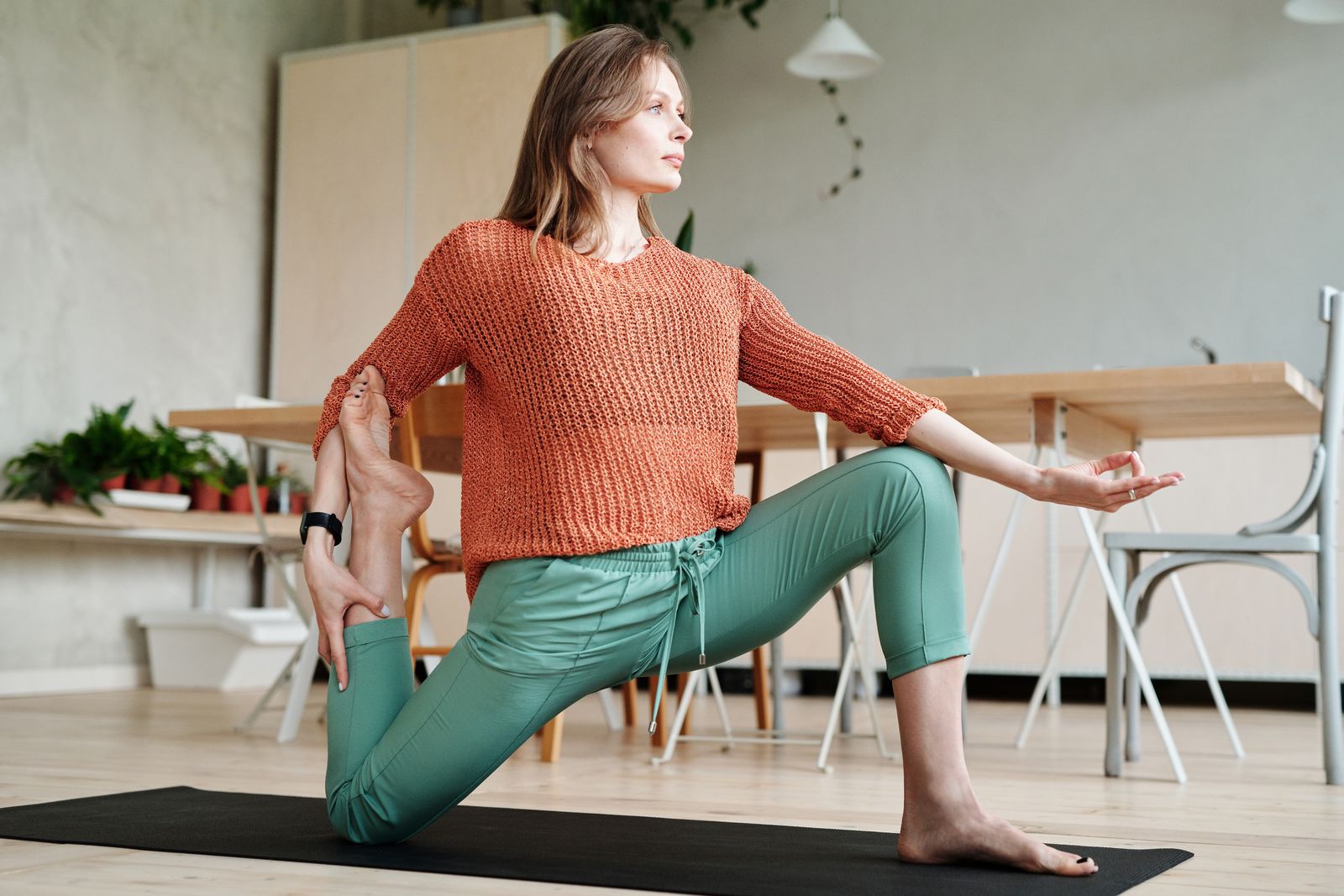
The safest yoga poses for knee pain keep the knee bent less than about 90 degrees and let the floor, wall or a chair carry part of your weight. Start with lying and standing poses, hold each for 20-30 seconds or 5-8 slow breaths, and repeat 2-3 times per side. The table below gives the cue that matters most for each.
| Pose | What it works | Hold and repeats | Knee-safe form cue |
|---|---|---|---|
| Setu Bandhasana (Bridge) | Glutes, hamstrings, thighs | 5-8 breaths, 3 rounds | Feet hip-width, knees stacked over ankles, press through the heels |
| Supta Padangusthasana (Reclined leg stretch, with strap) | Hamstrings, calves | 30 seconds per leg, 2 rounds | Keep a soft bend in the raised knee; never lock it |
| Wall Chair (Utkatasana against a wall) | Quadriceps, glutes | 10-20 seconds, 3 rounds | Slide down only to a shallow squat; knees track over the second toe |
| Tadasana (Mountain) | Posture, even weight-bearing | 1 minute | Weight equal on both feet; keep knees soft, not pushed back |
| Virabhadrasana II (Warrior II, short stance) | Hip stabilisers, quadriceps | 5 breaths per side, 2 rounds | Front knee never passes the ankle; short stance beats a deep lunge |
| Salabhasana (Locust) | Lower back, glutes | 5 breaths, 3 rounds | Lift only as high as is comfortable; the knees stay straight and relaxed |
| Marjaryasana-Bitilasana (Cat-Cow) | Spine, knee mobility | 8-10 slow cycles | Fold a blanket under the knees; hips stay above the knees |
A 15-Minute Knee-Care Sequence, Step by Step
Use a non-slip mat and keep a folded blanket, a strap and a wall nearby. Move slowly, and stop any step that produces sharp pain.
- Warm up (3 minutes). Sit on a chair or the floor edge. Rotate each ankle 10 times each way, then gently straighten and bend each knee 10 times without force.
- Cat-Cow on a padded floor (2 minutes). Blanket under the knees; inhale as the belly drops, exhale as the back rounds.
- Bridge (3 minutes). Three rounds of 5-8 breaths, resting flat between rounds.
- Reclined leg stretch with a strap (3 minutes). A dupatta or belt works as a strap. 30 seconds per side, twice.
- Wall chair (2 minutes). Three short holds.
- Mountain and settle (2 minutes). Stand tall, feel both feet, then lie down for a minute of slow breathing.
Slow, steady breathing keeps muscles from clenching around a sore joint. The same principle is used in other pain-sensitive practices such as yoga for migraine, where calming the body first makes the targeted work easier.
Myth: You Must Stop Kneeling and Squatting Completely
Many people with knee pain are told never to kneel, sit cross-legged or squat, but that advice is usually too blunt, especially when daily life in India involves floor seating and squat toilets. Kneeling can often be kept with padding, a smaller range and shorter holds. A folded blanket or a 12-15 mm yoga knee pad under the knee spreads pressure across a wider area than a standard 4-6 mm mat. If kneeling still hurts, swap in a seated or lying version of the same pose.
Yoga Asanas for Knee Joint Pain: What to Modify or Skip
Poses that twist the lower leg, fold the knee fully or drop your body weight onto the kneecap are the usual troublemakers. During a flare-up, modify or skip them; the table gives a safer swap for each.
| Pose | Why it stresses the knee | Safer swap |
|---|---|---|
| Padmasana (Lotus) | Twists the knee when the hips are tight | Sit on a folded blanket or chair; cross the ankles loosely |
| Virasana (Hero, sitting between the heels) | Deep knee bend and rotation | Sit on a high block or bolster, or use a straight-leg seat |
| Vajrasana (Thunderbolt) without support | Full knee flexion under body weight | Roll a towel behind the knees, or sit on a block |
| Deep Pigeon (Eka Pada Rajakapotasana) | Strong sideways pull on the folded knee | Reclined figure-four on the back |
| Ustrasana (Camel) | Loads the kneecap directly | Locust or Bridge |
| Balasana (Child’s Pose) | Deep knee fold; can pinch | Rolled blanket behind the knees, or knees wide with a bolster |
| Deep lunges | Forward knee drifts past the toes | Short-stance Warrior II or a wall chair |
What to Do If Your Knee Hurts During or After Yoga
A mild muscle ache that fades within a day is normal. Sharp, pinching or clicking pain with swelling is not. If pain climbs above about 3 out of 10, back off. If it is still worse the next morning, cut your sessions by half for a week.
- Sharp pain on the inner or outer knee while bending: reduce the bend, widen your stance and use a prop under the knee.
- Pain at the front of the kneecap on stairs or squats: shorten holds and build thigh and hip strength with Bridge and Wall Chair before adding anything deeper.
- Swelling, warmth or a feeling of giving way: stop yoga and get the knee examined.
- Tight calves or hamstrings pulling on the knee: add gentle yoga for flexibility work, because tight muscles around the knee are one of the commonest reasons discomfort lingers.
How Should Yoga for Knee Pain in Old Age Be Adjusted?
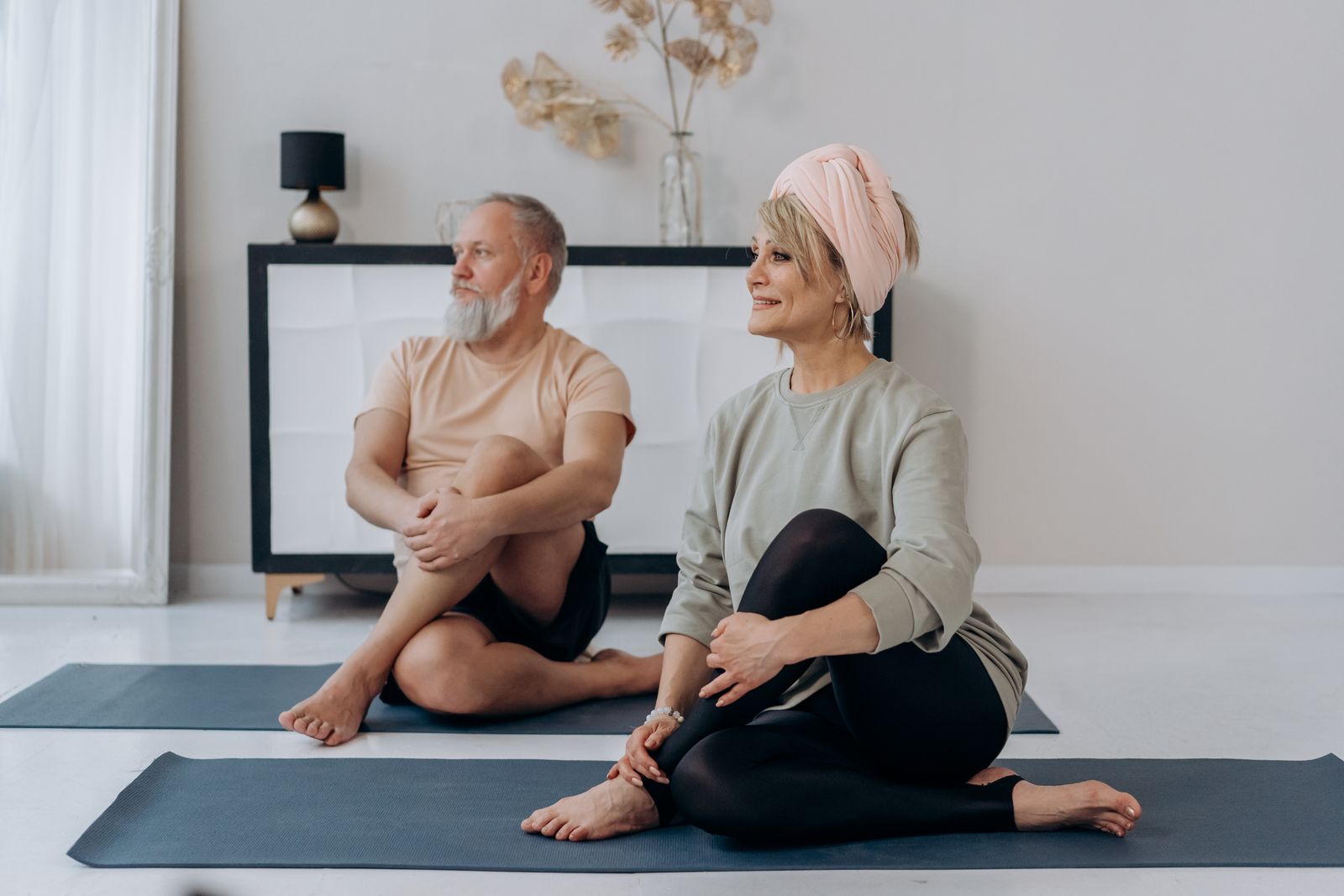
For yoga for knee pain in old age, use slower transitions, a chair or wall for support, shorter holds of 15-20 seconds and more rest between poses. Balance and falls matter as much as joint comfort, so pair knee-friendly poses with supported standing work. Check with your doctor first if you have osteoporosis.
Chair yoga lets you work legs, hips and ankles without getting down to the floor, and yoga for seniors covers balance and safe transitions. Use a firm, non-slip mat and keep a sturdy chair within reach.
What Works for Knee Arthritis and Knee Joint Stiffness?
Yoga for knee arthritis should put gentle range of motion first and strength second. Cat-Cow with padding, seated hamstring stretches with a bent knee, ankle pumps and short Bridge holds keep the joint moving through a comfortable arc. A short daily routine of 10-15 minutes usually serves arthritic knees better than one long weekly class.
Morning stiffness is common, so a few minutes of ankle circles and seated knee bends before getting up can help; see yoga for arthritis for other joints. Yin yoga and restorative yoga can suit sensitive knees if the long holds avoid deep bending and you use bolsters. The types of yoga overview explains the main styles.
Can Yoga Help With Knock Knees and Kneecap Tracking?
Yoga for knock knees cannot straighten adult bones, but it can reduce strain by training the outer hip muscles and foot arches that stop the knee collapsing inward. Practise Warrior II, Goddess Pose and Tree Pose while keeping each knee pointed over the second toe.
Standing poses held for 5 slow breaths are central to Hatha yoga, a good style for building this tracking habit.
Does Body Weight Change How Your Knees Feel?
Yes. Each extra kilogram of body weight adds several kilograms of force through the knee with every step, and more on stairs or when squatting. A modest, steady reduction in weight can therefore ease knee load noticeably over time. Crash diets are not the answer; steady change of roughly 0.25-0.5 kg a week is safer.
Alignment matters too: standing on one leg, locking the knees and turning the feet out all create uneven load. If weight is part of your picture, yoga for weight loss pairs well with the poses above.
How Often Should You Practise Yoga for Knee Pain Relief?
For yoga for knee pain relief, aim for 3-4 sessions a week of 15-25 minutes rather than one long class. Frequent gentle input suits joints better than occasional deep stretching. Expect stiffness to ease within two to four weeks if you stay consistent, but build strength slowly and allow up to two to three months for stronger changes. There are no guaranteed outcomes.
| Day | Session | Time | Focus |
|---|---|---|---|
| Monday | Knee-care sequence (above) | 15-20 min | Warm-up, Bridge, strap stretch, wall chair |
| Tuesday | Gentle walk plus ankle and calf stretches | 20 min | Circulation and ankle mobility |
| Wednesday | Standing alignment: Mountain, Warrior II, Tree | 20 min | Hip strength and knee tracking |
| Thursday | Rest or breathing and relaxation only | 10 min | Recovery |
| Friday | Knee-care sequence plus hamstring stretches | 20-25 min | Strength and flexibility |
| Saturday | Guided online class with instructor feedback | 30-40 min | Alignment check |
A weekly guided session catches alignment slips you would miss alone. FitStrot’s online yoga classes let an instructor watch your knees in real time and adjust the pose.
When Should You See a Doctor or Physiotherapist First?
See a doctor or physiotherapist before starting yoga if you have swelling, warmth, redness, a knee that locks or gives way, trouble bearing weight, pain that wakes you at night, or a recent injury or surgery. Also check first if you have been told to avoid certain movements. This post is general information and does not replace a diagnosis. Never change prescribed medicines or rehab instructions because of a yoga routine, and tell your instructor about every knee issue so poses can be adapted.
A physiotherapist can tell whether the cause is arthritis, the kneecap, a ligament or the meniscus, which changes which poses suit you.
Questions People Ask About Yoga for Knee Pain
Can yoga make knee pain worse?
Yes, if poses involve deep knee bending, unsupported kneeling or twisting under load. The fix is usually modification, not avoidance: use props, shorten holds, and stop at sharp or pinching pain. A mild stretch is fine, but pain above roughly 3 out of 10 means ease off.
How long does it take for yoga to help knee pain?
Many people notice less stiffness within two to four weeks of regular practice, with fuller changes in strength and comfort over two to three months. Results vary by cause and age. Three to four short sessions a week beat one long session, and persistent pain deserves a medical check.
Is downward dog bad for knee pain?
Not usually, because the kneecap is not loaded. Keep a slight bend in the knees, press through the hands and spread weight evenly through the feet. If your wrists, hamstrings or knees complain, rest in a gentle supported forward fold, or try the pose with hands on a wall instead.
What yoga props help most with knee pain?
A knee pad or folded blanket, a strap and a block cover most needs. The pad cushions kneeling poses, the strap lets you stretch hamstrings without bending the knee, and the block raises the seat in poses such as Hero, so you do not force range the knee does not have.
Can beginners with knee pain start yoga safely?
Yes, if the pain is mild and long-standing and a doctor has not told you to avoid exercise. Begin with lying and seated poses, skip deep kneeling and twists at first, and progress gradually. A guided class helps you avoid alignment errors in the first few weeks.
Want a knee-friendly routine adapted to your own joints? Book a session with FitStrot’s online yoga classes and tell the instructor which knee hurts and what makes it worse, so every pose is modified to suit you.


