
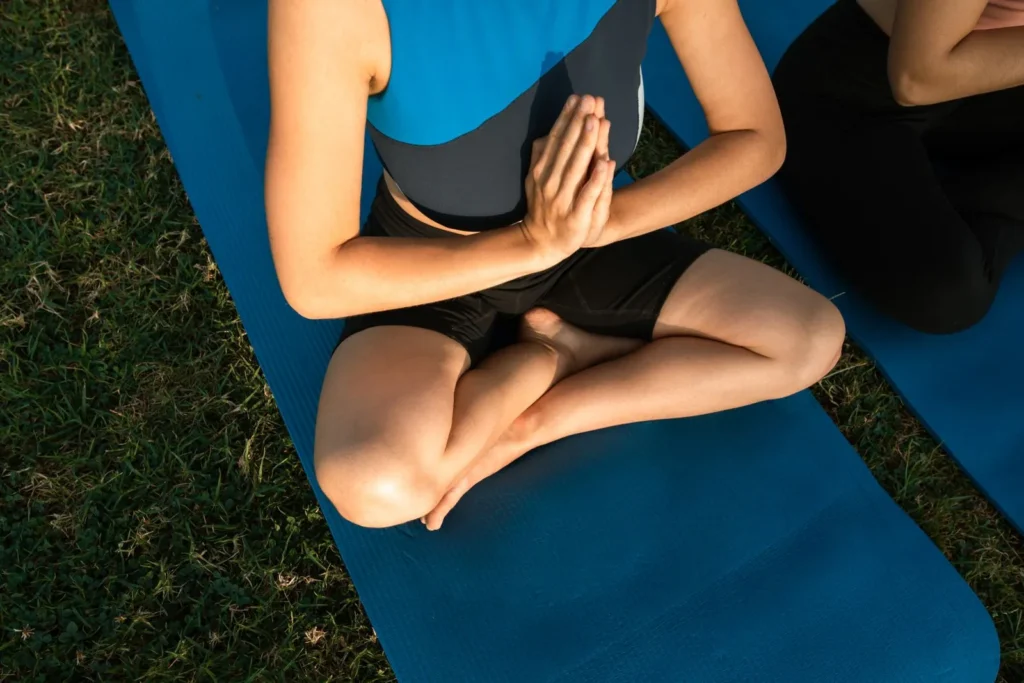
Sukhasana, or easy pose, is the simple cross-legged seat that most yoga classes begin and end with. You sit on a folded blanket, cross your shins, stack your spine tall and breathe. It sounds easy, yet tight hips, sore knees and a stiff lower back make many people fidget within a minute. This guide covers the steps, props, fixes and safety limits so you can sit longer and more comfortably.
What does sukhasana mean, and is it just sitting cross-legged?
Sukhasana means “easy seat”: sukha is ease or comfort, and asana is a seat or posture. It looks like everyday cross-legged sitting, but the difference is alignment and intent. In easy pose you lift the hips above the knees, lengthen the spine, soften the shoulders and breathe evenly, so the seat can be held calmly for several minutes.
Classical hatha texts list it among the basic seated postures, next to padmasana (lotus) and siddhasana. It is rarely a peak pose. It is the foundation for breathing and meditation, and “easy” describes the goal, a steady seat, not how it feels on day one. Our guide to yoga poses gives the bigger picture.
How to do sukhasana step by step
Here is how to do sukhasana with clean alignment.
- Fold a firm blanket into a pad roughly 5 to 10 cm thick. Sit on its front edge with your legs stretched out in front.
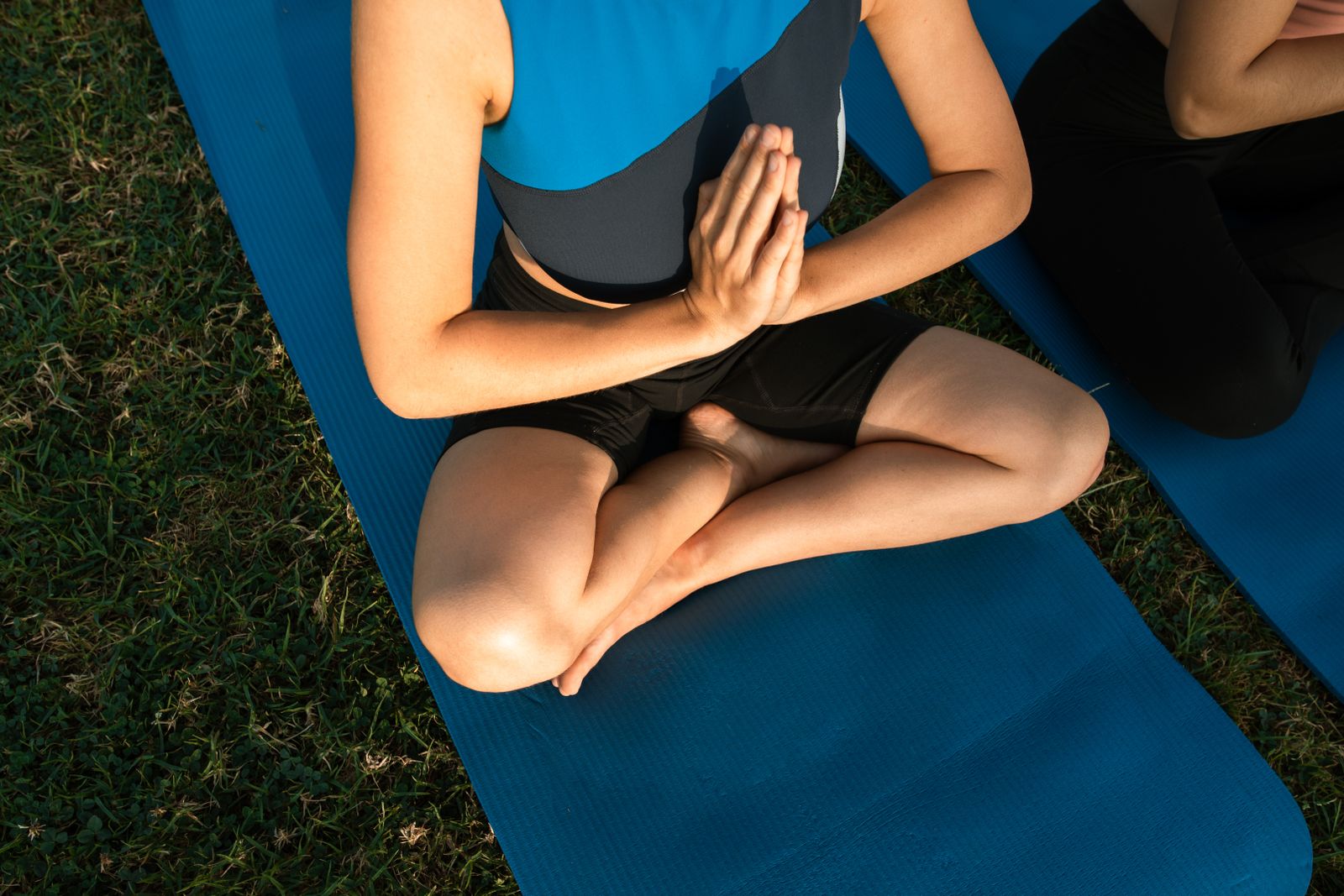
- Bend both knees and cross your shins so each foot rests under the opposite knee. The feet stay loose on the mat, not stacked on the thighs.
- Check your knees. They should sit level with or below your hips. If they are higher, add more height under the seat.
- Rock gently from side to side to find your sit bones, then settle your weight evenly across both.
- Lengthen your spine by lifting through the crown of the head, keeping the ribs stacked over the pelvis. Do not over-arch the lower back.
- Roll the shoulders back and down, rest your hands on your thighs, palms down or in gyan mudra, and keep the chin level or very slightly tucked.
- Soften the jaw, tongue and eyes. Breathe slowly through the nose, about four to five seconds in and out if that feels natural.
- Halfway through your time, switch which shin is in front. To exit, uncross, extend the legs and shake them out for a few breaths.
Use this table as a one-minute self-check.
| Checkpoint | What to aim for | Common fault | Quick fix |
|---|---|---|---|
| Hips and knees | Hips level with or above the knees | Knees far higher than hips | Sit higher on a blanket or cushion |
| Pelvis | Neutral, weight on both sit bones | Tucked under, back rounds | Sit on the front edge of the seat and tilt the pelvis slightly forward |
| Spine | Tall and relaxed | Slumped, or arched and rigid | Imagine a thread lifting the crown, then let the ribs soften down |
| Shoulders and neck | Shoulders down and back, neck long | Shrugged shoulders, chin poking forward | Roll the shoulders once, tuck the chin slightly |
| Feet and ankles | Loose, resting without strain | Ankles twisted or feet crammed in | Pad under the ankles, leave a small gap between feet and thighs |
Which props and sukhasana modifications work for tight hips or knees?
Height is the most useful fix. Sit on a folded blanket or cushion about 5 to 15 cm thick so the hips rise above the knees, then put a block or rolled towel under any knee that hangs in the air. If cross-legged still hurts, use a chair. Props are a normal part of the pose, not a downgrade.
| What you feel | Prop or change | How to set it up |
|---|---|---|
| Tight hips, knees pointing up | Thicker seat | Add folded layers until the knees are level with or below the hips |
| Hanging knees pull on the hip | Knee support | Place a block, rolled towel or small cushion under each knee |
| Lower back rounds or aches | Tilted seat | Fold a blanket into a wedge, higher at the back, or sit on the front edge only |
| Ankles or feet ache | Ankle padding | Fold a thin cloth under the ankles and avoid cramming the feet in |
| Knee dislikes the crossed shins | Parallel shins | Place one foot in front of the other on the mat, shins roughly parallel, not crossed |
| Floor sitting is not comfortable | Chair version | Sit forward on a firm chair, feet flat and hip-width apart, same tall spine |
These are the same prop habits used in restorative yoga and yin yoga, where long seated holds depend on support rather than effort.
Troubleshooting: why do my knees, back or ankles hurt in easy pose?
Pain in easy pose usually comes from a seat that is too low, tight hips or a pelvis that is not supported. Knee strain is typically the hips compensating, back ache is the pelvis tipping backwards, and sore ankles need padding. Raising the seat by 5 to 15 cm fixes many cases. Sharp or lingering pain needs a doctor.
Knees: when the hips are tight and the seat is low, the knee twists to compensate. Raise the seat and support the knees.
Lower back: lift the seat or sit on the front edge, and avoid arching hard to compensate.
Ankles and feet: pad them and let the feet relax.
Pins and needles: a tingling foot means pressure on a nerve or reduced circulation. Uncross, stretch the legs out and wait for the feeling to return. Numbness that keeps returning is a reason to see a doctor.
Who should skip or adapt sukhasana?
Check with a doctor or physiotherapist before sitting cross-legged if you have a knee injury, recent knee or hip surgery, hip pain, sciatica, or are pregnant. Sharp, pinching, burning or tingling pain means stop. A mild stretch through the inner thighs is normal. Pain inside the joint is not.
- Knee problems: meniscus or ligament injuries and arthritis can make crossed shins uncomfortable. Use a high seat, parallel shins or a chair, and get advice first if the knee hurts now.
- Hip problems: after a hip replacement or hip surgery, ask your surgeon which positions are safe. Many people are told to avoid deep external rotation for a period.
- Sciatica: long floor sitting can aggravate shooting pain down the leg. Try a chair version, keep sessions short and see your doctor if the pain or numbness continues.
- Pregnancy: see your doctor before practising. If you are cleared, use a thick seat, keep the knees supported and avoid forcing the legs into position.
This is general guidance, not a diagnosis.
Myth check: three things people get wrong about sukhasana
Myth 1: your knees must touch the floor. They do not. How far they drop depends largely on the shape of your hip joints, not just flexibility. Supporting them beats forcing them down.
Myth 2: it burns belly or thigh fat. Sitting still uses very little energy, and no pose can pull fat from one chosen area. Fat loss comes from overall eating, daily movement and consistency.
Myth 3: lotus is the “real” meditation seat. A steady spine and a comfortable body matter more than leg shape. Forcing lotus before the hips are ready can strain the knees, so easy pose is a perfectly valid meditation seat.
Sukhasana vs padmasana, vajrasana and baddha konasana: which seat suits you?
Sukhasana is the most forgiving of the common seats because it asks for only moderate hip rotation. Padmasana demands deep hip and ankle rotation, vajrasana loads the knees and ankles instead, and baddha konasana puts the soles together. Choose the seat that lets you keep a tall spine without joint strain.
| Pose | Leg position | Main demand | Best suited to |
|---|---|---|---|
| Sukhasana (easy pose) | Shins crossed, feet under opposite knees | Moderate hip rotation | Beginners, longer meditation or breathing sits |
| Padmasana (lotus) | Each foot on the opposite thigh | Deep hip rotation, flexible knees and ankles | Experienced practitioners with open hips |
| Vajrasana (thunderbolt) | Kneeling, hips resting on the heels | Knee and ankle flexibility | Those who find crossed legs uncomfortable but kneel well |
| Baddha konasana (bound angle) | Soles together, knees open | Inner-thigh and groin flexibility | Hip-opening work, short seated holds |
How long should you hold sukhasana, and how can beginners build up?
Beginners can start with 1 to 2 minutes and add roughly a minute every few days, as comfort allows. Many people reach 5 to 10 minutes within a few weeks of regular practice, but there is no required target. Switch which shin is in front halfway through each sit, and stop if pain rather than stretch appears.
For sukhasana for beginners, a simple build-up looks like this:
- Week 1: 1 to 2 minutes, once a day, on a thick seat.
- Week 2: 3 minutes, switching the crossed shin at the halfway point.
- Week 3: 4 to 5 minutes, pairing it with slow nose breathing.
- Week 4 onward: 5 to 10 minutes if it feels easy, and lower the seat height only gradually.
If a week feels like too much, repeat it.
What are the real benefits of sukhasana?
Regular practice may gently open the hips and inner thighs, build endurance in the muscles that hold you upright, and give you a steady base for slow breathing. Many people find it calming. It is a posture for mobility, posture awareness and focus, not a calorie-burning or spot-reduction exercise, and results differ from person to person.
Physically, the pose stretches the hip rotators and adductors (inner thigh muscles) and asks the deep core and the muscles along the spine to hold you tall without a backrest. Those same postural muscles work in standing poses such as tadasana, so the two pair naturally. A quiet seat with nothing to balance also leaves attention free for the breath.
Sukhasana for desk workers: a 3-minute reset
After hours in a chair, easy pose makes a short reset. Try this once or twice a day:
- Minute 1: sit on a cushion on the floor, or forward on your chair, and set the spine tall.
- Minute 2: breathe slowly through the nose, letting the shoulders drop on each exhale.
- Minute 3: switch the crossed shin, or change to the chair version if the knees complain, and notice how you are sitting.
If back stiffness is a regular problem, see our page on yoga for back pain, and get persistent pain assessed by a doctor.
Where easy pose fits in a yoga session
Sukhasana usually opens a class for a few quiet breaths before the warm-up, such as surya namaskar. It returns near the end, before final relaxation. Standing basics like tadasana and vrksasana build posture that makes long sits easier.
It is also the standard seat for pranayama (breathing practices) and for mindfulness meditation. If you are learning from home, the online yoga classes at Fitstrot use this pose as the seated anchor, which makes it easy to ask for feedback on your setup.
Sukhasana FAQ
Is sukhasana suitable for beginners?
Yes. Sukhasana needs no balance or strength, which is why it is one of the first seated poses most teachers introduce. Start with 1 to 2 minutes on a raised seat, keep the knees below hip level, and stop if you feel joint pain. Tight hips usually feel easier after a few weeks of regular, gentle practice.
Can I do sukhasana if I have knee pain?
Often you can, with changes, but check with a doctor or physiotherapist first if the pain is recent, sharp or follows an injury or surgery. Raise your seat, support the knees with blocks, keep the shins parallel instead of crossed, or sit on a chair. Never push through pinching or joint pain.
Is sukhasana safe during pregnancy?
Many pregnant women are advised that a supported seat is fine, but this depends on your pregnancy and your body, so ask your doctor before starting or continuing. If cleared, sit on a thick cushion, avoid deep crossing, keep the knees supported and come out if you feel pelvic pain, dizziness or numbness.
Can sukhasana reduce belly fat?
No. Sitting still burns very little energy, and no pose can remove fat from one chosen area. Fat loss comes from your overall food intake, daily movement and time. Sukhasana is useful for hip mobility, posture awareness and calm breathing, which can support a routine, but it is not a fat-burning exercise.
Can sukhasana help with stress and sleep?
Many people find that sitting tall and breathing slowly for a few minutes feels calming, and it is a common way to wind down in the evening. Results vary, and it is not a treatment for anxiety or insomnia. If stress or sleep problems persist for weeks, speak to a doctor.
Want your setup checked live? Join an online yoga class with Fitstrot and ask your instructor to review your seat height and knee position in the first session.


