
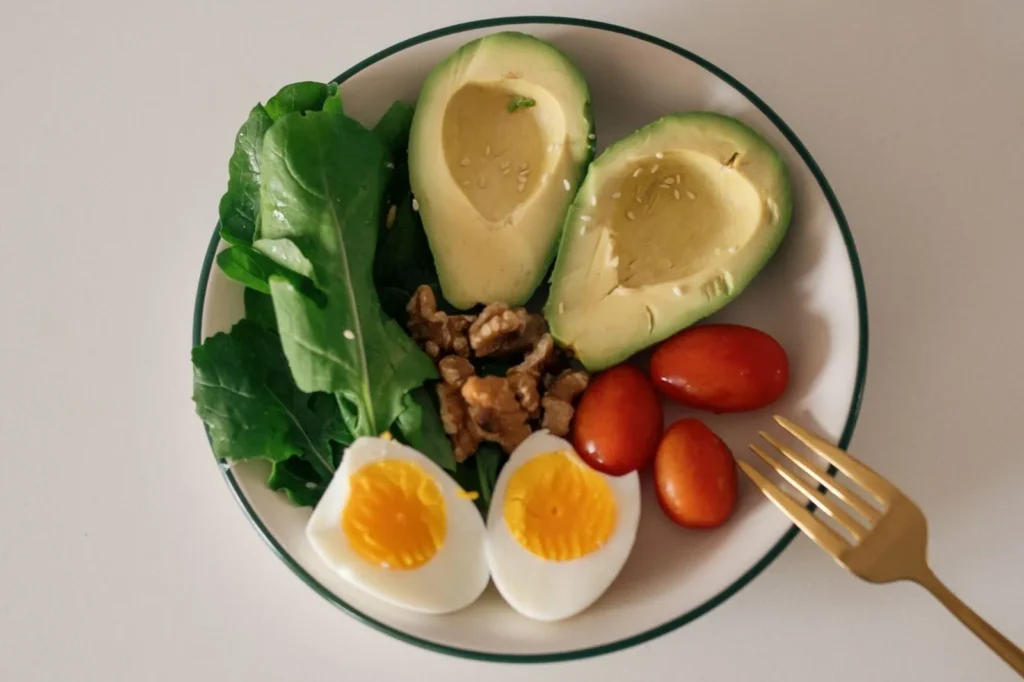
Good nutrition for weight gain is not about eating more of everything. It means eating roughly 300 to 500 kcal a day above what your body burns, getting most of that extra from protein-rich, nutrient-dense food, and giving it a few weeks to show on the scale. A safe pace is about 0.25 to 0.5 kg a week.
This guide is for adults with no known medical reason for being underweight. If you have lost weight without trying, read the doctor section first. If you are under 18, pregnant, breastfeeding or managing a condition such as diabetes or kidney disease, use these numbers only to start a talk with your doctor or dietitian.
What is the best nutrition for weight gain?
The best nutrition for weight gain is a steady calorie surplus built from whole foods: protein at every meal (about 1.4 to 2 g per kg of body weight a day), carbohydrates such as rice, roti, oats and potatoes for energy, and fats such as ghee, nuts and peanut butter. Spread it over five or six eating occasions, not three.
Think of it as three levers. Protein builds and repairs muscle: eggs, paneer, curd, milk, dal, soya chunks, chicken and fish all count. Carbohydrates such as rice, poha, oats and bananas supply most of the surplus cheaply. Fats pack the most calories into the least volume, about 9 kcal a gram against about 4 for protein or carbohydrate.
Quality still matters. A good filter is whether a food brings protein, fibre or micronutrients along with its calories. A 30 g handful of peanuts gives about 170 kcal with about 8 g protein; a 330 ml can of cola gives about 140 kcal of sugar and little else. Treats are fine now and then, but a surplus built on them mostly adds fat.
If appetite is small, eat three meals plus two or three snacks, and drink some calories: a glass of milk blended with a banana is about 250 kcal and goes down easier than a third roti.
How many calories do you need to gain weight safely?
To gain weight safely, eat about 300 to 500 kcal a day above your maintenance level. That usually adds about 0.25 to 0.5 kg a week, or roughly 1 to 2 kg a month. Faster gains tend to be mostly fat and can upset digestion, so slow and steady is safer.
Every figure below is a rough guess; the scale corrects it.
- Estimate maintenance. Use about 30 to 35 kcal per kg if you sit most of the day, and 35 to 40 if you are on your feet or train. For a fairly active 52 kg person, that is about 1,800 to 2,100 kcal.
- Add the surplus. Add 300 to 500 kcal. The same person aims for about 2,100 to 2,600 kcal.
- Set protein. Multiply your weight by 1.4 to 2: about 75 to 105 g a day at 52 kg. Our protein and nutrition guide shows how to split it.
- Weigh weekly. Same morning, same clothes. Daily swings of 0.5 to 1 kg are mostly water, so judge by a three or four week trend.
- Adjust slowly. If nothing has moved after two to three weeks, add about 150 to 200 kcal, such as one banana shake.
For the arithmetic behind maintenance, see our piece on nutrition calories.
Weight gain foods in an Indian kitchen: portion, calories and protein
Values are rounded and vary with brand, recipe and cooking oil, so treat every figure as “about”.
| Food | Portion | About kcal | About protein (g) | Easy way to add it |
|---|---|---|---|---|
| Full-cream milk | 1 glass (250 ml) | 150-170 | 8 | Blend with banana, or drink at bedtime |
| Paneer | 100 g | 270-300 | 18 | Bhurji, stuffed paratha, curry |
| Eggs, boiled | 2 whole | 140-150 | 12 | Bhurji, egg curry, sandwich |
| Peanuts, roasted | 30 g | 170 | 8 | Snack, or stir into poha and upma |
| Peanut butter | 1 tbsp (16 g) | 95 | 4 | On roti, in shakes |
| Cooked dal | 1 katori (150 g) | 130-170 | 8-10 | Finish with a ghee tadka |
| Cooked rice | 150 g | 190-200 | 4 | Khichdi, pulao, rice with ghee |
| Ghee | 1 tsp (5 g) | 45 | 0 | On rice, roti or dal |
| Banana | 1 medium | 100-110 | 1 | Shake, or with peanut butter |
| Soya chunks, dry | 30 g | about 100 | 15 | Pulao, curry, cutlets |
Ghee and paneer are rich in saturated fat, so if you have high cholesterol, heart disease or fatty liver, ask your doctor before leaning on them. For a longer shopping list, see nutrition food for weight gain.
Myth check: four habits that stall healthy weight gain
Myth: calories are calories, so eat anything. A surplus built on cold drinks, samosas and biscuits brings little protein, so more of it ends up as fat. Keep treats a small share of the day.
Myth: you need a mass gainer or a tonic. Many mass gainers are largely carbohydrate. The same calories come from milk, bananas, peanut butter and oats for far less money. Our herbal nutrition for weight gain guide covers Ayurvedic tonics, but check with your doctor before taking any, since quality varies and some can interact with medicines.
Myth: avoid exercise so you do not burn calories. Without strength training, more of the surplus tends to be stored as fat. Two or three short sessions a week steer it toward muscle.
Myth: three huge meals are the fastest route. With a small appetite, giant plates leave you stuffed and skipping the next meal. Smaller, frequent meals work better.
A sample day of weight-gain meals, hour by hour
This vegetarian-plus-eggs plan lands at roughly 2,300 to 2,600 kcal and about 95 g protein without the bedtime milk, so it fits the 52 kg example above. Add the milk if your target is higher.
| Time | Meal | What to eat | About kcal |
|---|---|---|---|
| 7:30 am | Breakfast | 2 parathas cooked with 1 tsp oil, 150 g full-fat curd, 1 banana | 450-500 |
| 10:30 am | Mid-morning | 1 glass full-cream milk, 20 g roasted peanuts | 260-290 |
| 1:30 pm | Lunch | 150 g cooked rice, 1 katori dal, 75 g paneer bhurji, salad, 1 tsp ghee | 580-650 |
| 5:00 pm | Evening shake | 250 ml milk blended with 1 banana and 1 tbsp peanut butter | 340-380 |
| 8:30 pm | Dinner | 3 rotis with 1 tsp ghee, egg curry (2 eggs), seasonal sabzi | 680-760 |
| 10:30 pm | Bedtime (optional) | 1 glass full-cream milk | 150-170 |
Swaps are easy. Replace the paneer with about 120 g of cooked chicken or fish, or swap the egg curry for soya chunks curry (about 40 g dry) or a katori of rajma. For more structure, see our nutrition diet for weight gain guide. A perfect day is not the goal; hitting close to your target on most days is.
How do you gain muscle and not just belly fat?
To gain muscle rather than mostly fat, pair your surplus with resistance training two to three times a week and eat about 1.4 to 2 g of protein per kg of body weight daily. Keep the surplus around 300 to 500 kcal and spread protein over three or four meals of roughly 20 to 30 g.
Be realistic: you cannot choose where new weight goes, and some fat always comes with muscle. A modest surplus, enough protein and regular training only tilt the balance, and no result is guaranteed.

Start with two or three full-body sessions a week: squats, push-ups, dumbbell rows, glute bridges and overhead presses. Do 2 to 3 sets of 8 to 12 reps, rest 60 to 90 seconds, and add a rep or a little weight when sets feel easy. Sleep 7 to 9 hours.
Our weight gain workout lays out a full routine, and a 1-1 personal training coach can check your form on video. Once you train regularly, sports nutrition covers meal timing around sessions.
Troubleshooting: small appetite, flat scale, bloating and tight budgets
Change one thing at a time and give it two weeks before judging.
| Problem | Likely reason | What to try |
|---|---|---|
| Full after two rotis | Bulky, low-calorie meals | Eat five or six small meals, add ghee, nut butter and milk drinks, and sip water after meals |
| Scale flat for 3 weeks | Real intake is lower than you think | Add about 150 to 200 kcal a day and keep weighing weekly |
| Waist growing, strength not | Surplus too big, low protein, or no training | Trim toward a 300 kcal surplus and lift 2 to 3 times a week |
| Bloating or acidity after eating more | Sudden jump in portions or fat | Raise intake gradually over one to two weeks; see a doctor if it persists |
| Budget is tight | Supplements cost more per calorie | Lean on milk, eggs, bananas, peanuts, soya chunks and dal-rice with ghee |
| Losing weight despite eating more | May be medical, not dietary | Book a doctor’s visit before adding more food |
To review the basics, see our diet and nutrition guide.
Who needs a different approach? Vegetarians, teenagers and people with health conditions
Vegetarians and Jain eaters. Lean on milk, paneer, full-fat curd, dal, soya chunks, sprouts and peanuts, and pair dal with rice or roti. Eat protein at every sitting, not only at dinner.
Students and busy professionals. Pack foods that need no cooking: bananas, roasted peanuts, boiled eggs and a bottle of milk or lassi. Set phone alarms for snacks.
Teenagers, pregnancy and breastfeeding. The surplus here is for healthy adults. Growing teenagers and pregnant or breastfeeding women have different needs, so ask a doctor or registered dietitian first.
Diabetes, kidney, heart, liver or digestive conditions. Do not use these figures on your own; a doctor or registered dietitian must set limits that fit your tests and medicines. Never change a medicine to gain weight.
When should low weight send you to a doctor first?
See a doctor before changing your diet if you have lost weight without trying, if your BMI is under 18.5 with no clear reason, or if low weight comes with constant tiredness, missed periods, persistent loose stools or night sweats. Unexplained weight loss can have medical causes that eating more will not fix.
BMI is weight in kg divided by height in metres squared, and below 18.5 is the usual underweight cut-off for adults. It ignores muscle and frame size, so it is a first screen only. Our BMI and nutrition guide shows how to read it.
Being underweight is linked with anaemia, weaker bones, lower resistance to infection and, in women, missed periods. Losing about 5% or more of your body weight over 6 to 12 months without trying is a common reason for doctors to look deeper.

See your doctor or a registered dietitian if you have lost weight without trying, eaten more for two to three months with no change on the scale, have ongoing diarrhoea, vomiting or stomach pain, feel unusually weak or breathless, or your periods have stopped. A doctor may suggest tests for thyroid, blood count, blood sugar and nutrient absorption before any diet plan makes sense. Trying to out-eat an undiagnosed condition rarely works and can delay diagnosis.
Frequently asked questions
How much weight can I gain in a month?
A safe target for most adults is about 1 to 2 kg a month, which comes from a daily surplus of roughly 300 to 500 kcal. Faster gains are usually more fat than muscle. Judge progress over four to six weeks.
Does ghee help with weight gain?
Yes, because a teaspoon of ghee adds about 45 kcal without adding bulk. Two or three teaspoons a day on rice, roti or dal is a practical boost. If you have high cholesterol, heart disease or fatty liver, ask your doctor how much suits you.
Can vegetarians gain weight without eggs or meat?
Yes. Milk, paneer, curd, dal, soya chunks, rajma, peanuts and nuts supply both the calories and the protein. Aim for about 20 to 30 g of protein at each main meal and add a milk-based drink between meals.
Do protein shakes and mass gainers help?
A protein shake can fill a gap if you struggle to reach your protein target, and one scoop usually gives about 20 to 25 g. It supplements meals, not replaces them. Mass gainers are mostly carbohydrate, so milk and banana often do the same job. Check with a doctor first if you have kidney problems.
Is it normal to not gain weight even when eating a lot?
Sometimes, because lean and very active people can need more food than expected. But if two to three months above your target brings no change, or you are losing weight, see a doctor to check for thyroid, absorption or other medical causes.
For a plan built around your appetite, budget and the food your family cooks, book an online nutritionist consultation with Fitstrot.


