
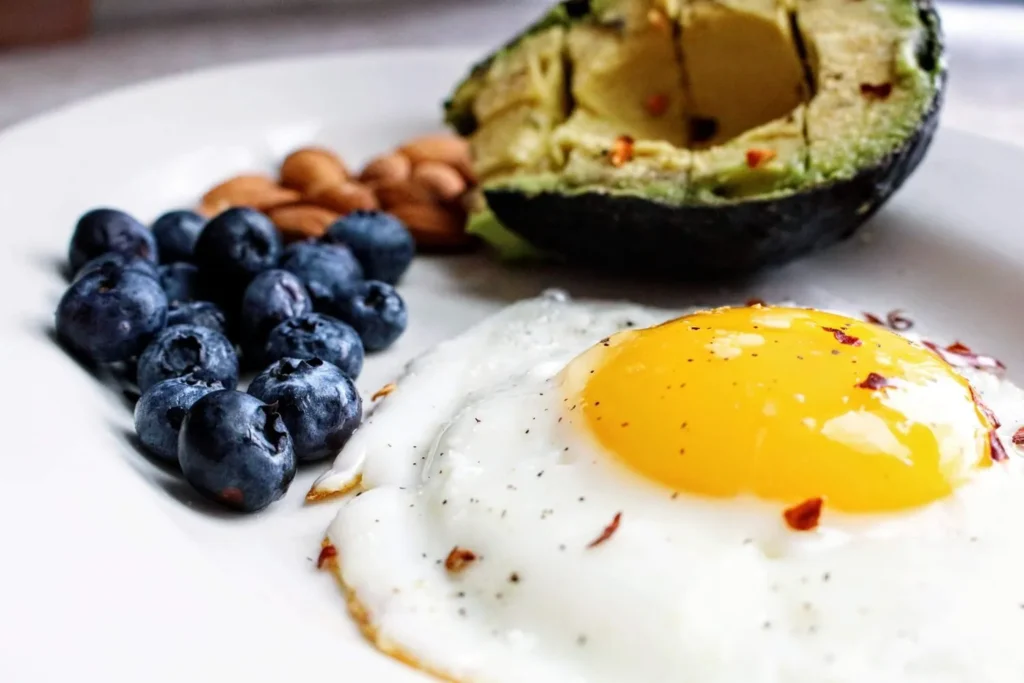
Calories and nutrition are two sides of the same plate. Calories tell you how much energy a food carries, while nutrition tells you what comes with that energy: protein, fibre, vitamins and minerals. This guide shows you how to estimate your own daily needs, what a roti, a katori of rice or a samosa roughly costs in energy, and why the same calories can feel completely different on your plate. Every figure below is a rough estimate to start from, not a prescription.
What is a calorie, and why does it matter for nutrition?
A calorie, written as kcal on Indian food labels, is a unit of energy. Carbohydrate and protein supply about 4 kcal per gram, fat supplies about 9 kcal per gram, and alcohol about 7 kcal per gram. Your body uses this energy to breathe, move, think and repair itself, so calories are fuel, not a moral score.
That gram-for-gram difference explains a lot. A small handful of peanuts, which is mostly fat, can carry more energy than a large bowl of cucumber and tomato salad, which is mostly water and fibre, even though the salad looks like far more food. When people search for nutrition calories, they usually want two answers: how much should I eat, and what does this food cost me in energy? The next sections answer both.
Calories in Indian food: a quick reference table
Here is a screenshot-friendly list of everyday foods. Sizes and cooking methods vary from home to home, so treat each number as “about”, and remember that the oil or ghee in the pan often matters more than the vegetable itself.
| Food | Typical portion | About kcal | Worth knowing |
|---|---|---|---|
| Phulka / roti (no ghee) | 1 medium, about 30 g flour | about 90 | A teaspoon of ghee on top adds about 40 |
| Cooked white rice | 1 katori, about 150 g | about 200 | Brown rice is similar in energy, with more fibre |
| Cooked dal | 1 katori, about 150 g | about 140 | Also gives about 7 to 9 g protein; a heavy tadka adds more |
| Mixed vegetable sabzi | 1 katori, about 150 g, cooked with 1 tsp oil | about 90 | Each extra teaspoon of oil adds about 40 |
| Plain curd (whole milk) | 1 katori, about 100 g | about 60 | Easy protein and calcium source |
| Paneer | 50 g | about 140 | Dense in energy and protein |
| Boiled egg | 1 large | about 75 | About 6 g protein |
| Idli | 1 medium | about 60 | Steamed, so no added oil |
| Plain dosa | 1 medium | about 130 | Potato filling and extra oil push it higher |
| Aloo paratha with ghee | 1 medium | about 280 | Closer to a full meal than a side |
| Samosa | 1 medium, fried | about 250 | Energy-dense, low in protein and fibre |
| Banana | 1 medium | about 100 | Portable and filling for its size |
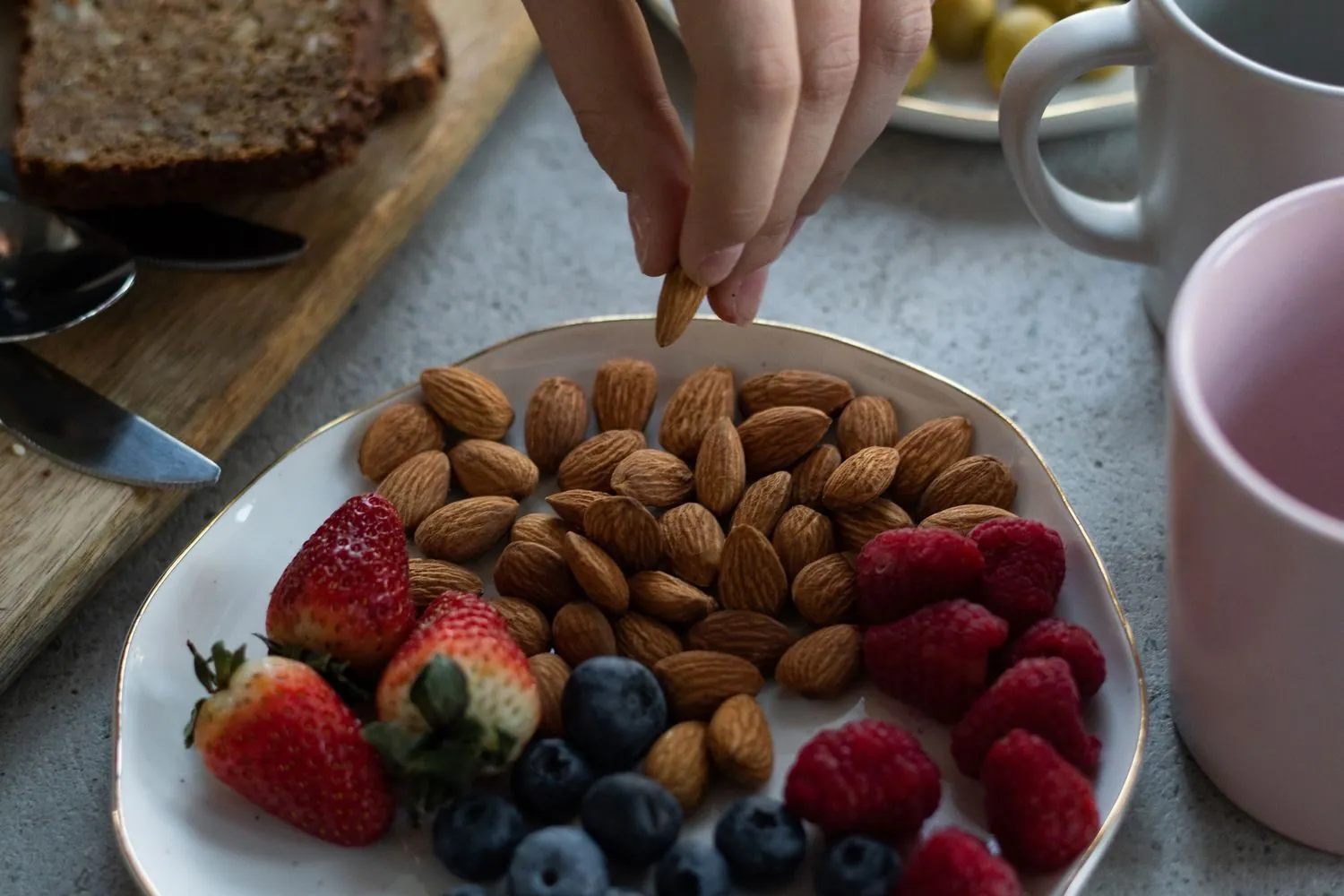
| Almonds | 10 pieces | about 70 | Healthy fat, but portions add up quickly |
| Masala chai with sugar | 1 cup, about 150 ml | about 70 | Three cups a day adds about 200 kcal |
The pattern is easy to spot. Foods with a lot of water and fibre, such as dal, sabzi, curd and idli, deliver a large volume for few calories. Fried snacks, sweets, ghee and nuts pack a lot of energy into a small bite. Neither group is “bad”; you simply need to know which one your hand is reaching into. Measuring cooking oil with a teaspoon for a week is one of the most eye-opening experiments you can run.
How many calories do I need each day?
Most adults need about 1,600 to 2,800 kcal a day. Smaller, less active people sit near the bottom of that range, while taller or very active people sit near the top. To estimate your own number, work out your basal metabolic rate (BMR), multiply it by an activity factor to get your daily energy expenditure (TDEE), then adjust for your goal.
Here is the walkthrough, using a widely used estimating equation for BMR and TDEE.
- Estimate your BMR. BMR is the energy your body burns at complete rest, usually about 60 to 70 percent of a day’s total. For men: (10 x weight in kg) + (6.25 x height in cm) – (5 x age) + 5. For women: (10 x weight in kg) + (6.25 x height in cm) – (5 x age) – 161.
- Apply an honest activity factor. Multiply BMR by the factor in the table below. Pick the level that matches a typical week, not your best week or your goal week. If you are torn between two levels, choose the lower one.
- Adjust for your goal. Eating at about your TDEE maintains weight. For gradual loss, many people aim for about 300 to 500 kcal below TDEE, which usually means roughly 0.25 to 0.5 kg a week. For gradual gain, about 250 to 400 kcal above is a sensible start.
- Check the trend and adjust. Track your weight on the same scale, at the same time, for 2 to 3 weeks. If nothing moves, change intake by only about 100 to 150 kcal and test again.
The examples below use a 35-year-old woman (65 kg, 165 cm) and a 30-year-old man (70 kg, 172 cm).
| Activity level | Factor | Woman example, about kcal/day | Man example, about kcal/day |
|---|---|---|---|
| BMR (complete rest) | none | about 1,345 | about 1,630 |
| Sedentary: desk job, little exercise | roughly 1.2 | about 1,615 | about 1,955 |
| Lightly active: exercise 1 to 3 days a week | roughly 1.375 | about 1,850 | about 2,240 |
| Moderately active: exercise 3 to 5 days a week | roughly 1.55 | about 2,085 | about 2,525 |
| Very active: hard training 6 to 7 days a week | roughly 1.725 | about 2,320 | about 2,810 |
Even a good equation can be off by roughly 10 to 15 percent for an individual, because muscle mass, genetics, sleep and daily movement all differ. If you would rather skip the arithmetic, our nutrition calorie calculator does the same sums from your own stats. Your BMI is a useful companion number too, and BMI and nutrition explains how to read it without over-trusting it.

Myth check: is “calories in, calories out” the whole story?
Calories in, calories out is true as accounting: eating more energy than you use leads to weight gain over time, and eating less leads to loss. It is incomplete as advice, because food type changes hunger. Four hundred kcal of dal and roti and 400 kcal of fried snacks are equal in energy but very different in fullness.
Compare two plates that both come to about 400 kcal.
| Plate | What is on it | About protein | About fibre | How it usually feels |
|---|---|---|---|---|
| Plate A | 2 phulkas, 1 katori dal, 1 small katori sabzi | about 16 g | about 6 to 8 g | Full for several hours |
| Plate B | 1 fried samosa, 1 cup sweet chai, 2 biscuits | about 7 g | about 2 g | Hungry again within an hour or two |
The maths is identical, but living with Plate B means a harder afternoon. Protein is the most filling nutrient gram for gram, fibre and water add volume without many calories, and whole foods take longer to chew and digest. That is why sound diet and nutrition planning is not only about hitting a number, but about choosing foods that make that number comfortable to follow. For a deeper look at the most filling nutrient, read protein and nutrition.
A second popular rule needs a reality check. A kilogram of body fat holds roughly 7,700 kcal of stored energy, so a steady gap of 500 kcal a day suggests a loss of about 0.45 kg a week. In real life, results come slower and less evenly. A smaller body burns less energy, water weight swings by a kilo or more from day to day, and appetite rises when you diet. Use the rule as a rough planning tool, not a promise.
Troubleshooting: why am I hungry or stuck even when I eat “enough”?
Hunger and plateaus usually come from low-protein, low-fibre meals, uncounted oil, ghee and sweet drinks, or a calorie target that has not been updated since your weight changed. Check these common causes first, before cutting your calories any further.
- Hidden fats and sugars. A generous tadka, a spoon of ghee on every roti and two or three sweet chais can quietly add about 300 to 400 kcal a day.
- Low-protein meals. Many Indian breakfasts, such as poha, upma or plain toast, are mostly carbohydrate. Adding curd, an egg, paneer or sprouts helps most adults reach roughly 20 to 30 g of protein per main meal.
- Liquid calories. A glass of packaged juice or a sweetened lassi can be about 100 to 150 kcal and rarely makes you feel full.
- Weekend drift. Five careful days followed by two relaxed ones can erase most of a weekly gap.
- An outdated target. Recalculate after every 4 to 5 kg of change, because a lighter body needs less energy.
- Impatience. Two or three weeks of steady eating with no movement on the scale is a plateau; three days is usually water. If you need a structured plan, our guide to nutrition for weight loss covers adjusting targets, and nutrition for weight gain covers building a sustainable surplus instead.
Who needs a different calorie approach?
The formulas above are meant for healthy adults. Some groups need a different approach, and an honest answer is sometimes “do not diet at all”.
- Women. Needs are usually lower than a man of the same age because of smaller body size and less muscle on average, but that is not a reason to eat below about 1,200 kcal without professional guidance. Our women nutrition guide covers iron, calcium and life-stage needs.
- Adults over 40. Muscle shrinks slowly with age, and so does BMR. Strength training twice a week and steady protein intake protect your energy needs. A coach in 1-1 personal training can build this into a routine you can keep.
- Regular gym-goers and athletes. Hard training raises needs sharply, and under-eating shows up as poor recovery and low energy. See sports nutrition for fuelling basics.
- Vegetarians and vegans. The calorie maths is the same, but protein needs planning around dal, curd, paneer, soy and sprouts.
- Children, teenagers, pregnant and breastfeeding women. Do not use adult formulas or a calorie deficit. Growth and pregnancy raise needs, and any change should be guided by a doctor or dietitian.
See your doctor or a registered dietitian if you have diabetes, thyroid problems, kidney or heart disease, PCOS, or any condition that affects how you eat. Also go if you take regular medication, have a history of disordered eating, feel anxious when you track food, or are losing weight without trying. Do not change any medicine because of a calorie target; that decision belongs to your doctor.
If you simply want accountability alongside your plan, an online weight loss trainer can help you turn a calorie estimate into weekly habits.
FAQ
Is BMR the same as the number of calories I should eat?
No. BMR is only the energy your body uses at complete rest, usually about 60 to 70 percent of a typical day’s burn. It leaves out walking, work, exercise and digestion. Your maintenance target is TDEE, which is BMR multiplied by an activity factor, and eating at BMR alone is a deficit for most people.
How many calories are in a roti, a katori of rice and a katori of dal?
A medium phulka without ghee is about 90 kcal, a katori of cooked rice (about 150 g) is about 200 kcal, and a katori of cooked dal is about 140 kcal. Together that is about 430 kcal, before any ghee, tadka oil or sabzi. Portion size and oil change these numbers noticeably.
Do all calories affect the body the same way?
For energy balance, yes: a calorie is a calorie. For hunger and eating habits, no. Protein-rich, high-fibre, minimally processed foods keep you full longer, so 400 kcal of dal and roti behaves very differently from 400 kcal of fried snacks, even though the energy is the same.
How often should I recalculate my calorie needs?
Recalculate after every 4 to 5 kg of weight change, when your activity level shifts clearly (a new job, starting a gym), or if your weight has not moved for 2 to 3 weeks despite steady eating. Age and muscle changes shift needs slowly, so a yearly check is sensible too.
Do I need to count calories to manage my weight?
No. Many people do well by building plates around dal, sabzi, curd and one or two rotis. Counting for 1 to 2 weeks is still a useful reality check on portions, oil and snacks, even if you stop afterwards. If counting makes you anxious or obsessive, stop and speak to a professional.
Want a calorie target built around your own body, health history and Indian meals instead of a generic formula? Book an online nutritionist consultation with Fitstrot and leave with a starting number you can adjust.


