

Good nutrition for elderly parents rarely needs a complicated diet. In most homes it comes down to three practical things: food that is easy to chew, small meals eaten in company, and fluids placed within arm’s reach all day. This guide is written for families in India who notice that Amma left half her thali untouched, or that Papa is living on tea and toast. It covers what to feed, how to soften and fortify familiar dishes, and the signs that mean a doctor or dietitian should step in.
See your doctor before changing an older person’s diet if they have diabetes, kidney disease, heart failure, liver problems, or a swallowing difficulty, or if they take regular medicines such as blood thinners, BP tablets, diuretics or diabetes medicines. This article is general information, not a prescription. Never stop, skip or adjust a medicine because of a food change, and ask the doctor or a registered dietitian to confirm any plan first.
What does good nutrition for elderly people look like?
Healthy older adults generally need fewer calories than they did at 40, about 1,500 to 2,000 kcal a day depending on size and activity, but just as much protein, often about 1 to 1.2 g per kg of body weight. That means meals must be smaller yet denser: dal, curd, eggs, milk, vegetables and soft whole grains in every meal.
The table below is a rough daily pattern, not a target to force; a smaller person or one with a medical condition will need different numbers.
| Food group | Rough daily amount | Easy Indian examples | Why it matters |
|---|---|---|---|
| Protein foods | 3 to 4 servings (a serving is about 1 katori dal, 1 egg, or 50 g paneer) | Moong dal, masoor dal, egg bhurji, soft paneer, fish curry, curd | Helps hold on to muscle, which supports balance and strength |
| Milk and curd | 2 to 3 servings (about 200 ml milk or 1 katori curd each) | Warm milk, thin chaas, lassi, curd rice | Calcium and protein in a soft, easy form |
| Vegetables | About 2 to 3 katori, well cooked | Lauki, pumpkin, carrot, spinach dal, mashed bhindi sabzi | Fibre, vitamins and minerals, plus fluid |
| Grains | About 4 to 6 small servings (1 roti or half a katori cooked rice each) | Soft phulka, khichdi, daliya, idli, upma | Steady energy; mixing millets or whole grains adds fibre |
| Fluids | About 6 to 8 glasses in total, unless the doctor has set a limit | Water, buttermilk, nimbu pani, soup, tea | Thirst fades with age, so drinking has to be planned |
Myths that quietly hurt an older person’s diet
Myth: “At this age they should just eat light.” Light is fine for spices and oil; it is not fine for protein. Eating very little protein is one reason strength and balance drop faster in later life, which raises the chance of falls.
Myth: “Weight loss is good at this age.” Many families celebrate a thinner parent. In older adults, losing weight without trying is a warning sign, not an achievement. Only a doctor should advise dieting at this age.
Myth: “A glass of milk is all the calcium they need.” One glass helps, but bone health depends on calcium foods across the day, enough protein, and often a vitamin D check, which is a question for the doctor. Our guide to calcium nutrition lists food sources that suit small appetites.
Why do older parents stop eating enough?
Appetite in older adults usually drops because several small problems stack up: weaker taste and smell, sore gums or loose dentures, medicine side effects, constipation, low mood, loneliness, and feeling full quickly. Over a few months, even a modest dip of about one-fifth to one-third of normal intake can cause visible weight and strength loss.
You do not have to diagnose the cause. Watch the pattern: smaller portions, skipped meals, avoiding meat or raw salad, or eating alone more often. Each points to a different fix, which is why “just eat more” rarely works. For the biology behind these changes, our guide to geriatric nutrition goes deeper.
How can I make food easier to chew and swallow?
Cook foods until they are fork-tender, add moisture such as dal, gravy, curd or ghee, and chop or mash instead of fully pureeing. Most older adults with mild chewing trouble do well on soft, moist, mechanically softened food. Coughing while eating or a wet, gurgly voice needs a doctor’s assessment, not just softer food.

| Hard to eat | Softer swap | Rough protein in the swap |
|---|---|---|
| Dry roti or bhakri | Soft phulka dipped in dal, or daliya porridge | About 3 g per roti, about 7 to 9 g per katori of cooked dal |
| Tough mutton or chicken pieces | Minced keema, soft chicken stew, or fish curry with boneless pieces | About 20 to 25 g per 100 g cooked |
| Raw salad and sprouts | Grated, steamed carrot or lauki, or well-cooked sprouts in khichdi | Small, but adds fibre and vitamins |
| Whole nuts | Powdered almonds or til stirred into porridge, kheer or warm milk | About 2 to 3 g per tablespoon of powder |
| Hard-boiled egg | Soft egg bhurji, steamed egg or egg curry | About 6 g per large egg |
Dental problems are among the most fixable barriers. A dental visit can sometimes solve what looked like an appetite problem but was actually a pain problem.
A sample day of soft, protein-rich Indian meals
This is a walkthrough for a parent with a small appetite who eats about five times a day. The protein figures are rough and the portions are small on purpose. Check with a doctor first if your parent has diabetes, kidney disease or a salt or fluid limit.
| Time | What to serve | Rough protein |
|---|---|---|
| 7:30 am | Warm milk or a weak chai, plus 2 soft idlis with sambar | About 10 g |
| 10:30 am | 1 ripe banana or papaya bowl with a small katori of thick curd | About 4 g |
| 1:00 pm | 1 to 2 soft phulkas, 1 katori moong dal, 1 katori well-cooked sabzi, a little curd | About 15 to 18 g |
| 4:30 pm | Thin buttermilk with a small handful of soft murmura or a boiled, mashed sweet potato | About 3 to 4 g |
| 7:30 pm | Vegetable khichdi with ghee, or egg bhurji with 1 roti, and a small katori of soup | About 12 to 16 g |
| 9:00 pm (optional) | Half a glass of warm milk if it sits well | About 3 g |
That adds up to roughly 45 to 55 g of protein, which fits the usual range for many healthy older adults. For more on building protein into small plates, see our guide to protein and nutrition, and for the minerals that often run low on smaller diets, read about magnesium nutrition and general vitamin nutrition.
Troubleshooting: my parent still refuses to eat
If the soft-food swaps are not enough, change the situation around the meal rather than pushing the plate. Small, practical changes tend to work better than lectures or pleading.
- Smaller plates, more often. Five or six mini-meals feel easier than three heavy thalis, especially for someone who fills up fast.
- Boost flavour without extra salt. Jeera, hing, coriander, curry leaves, lemon and ginger make food taste stronger without raising sodium. If your parent has high BP, ask the doctor about salt.
- Fortify instead of adding volume. A spoon of ghee on dal, milk powder stirred into porridge, or ground nuts in kheer adds calories and protein without a bigger portion. Check with the doctor first if there is diabetes or high cholesterol.
- Serve their old favourites. This is not the time for experiments. Bring back the dish they grew up with and add variety gradually.
- Add light movement. A short walk before a meal can nudge appetite. Our yoga for elderly guide has chair-friendly options, and online yoga classes or 1-on-1 personal training can add supervised, low-impact strength work if the doctor agrees.
Loneliness at the table
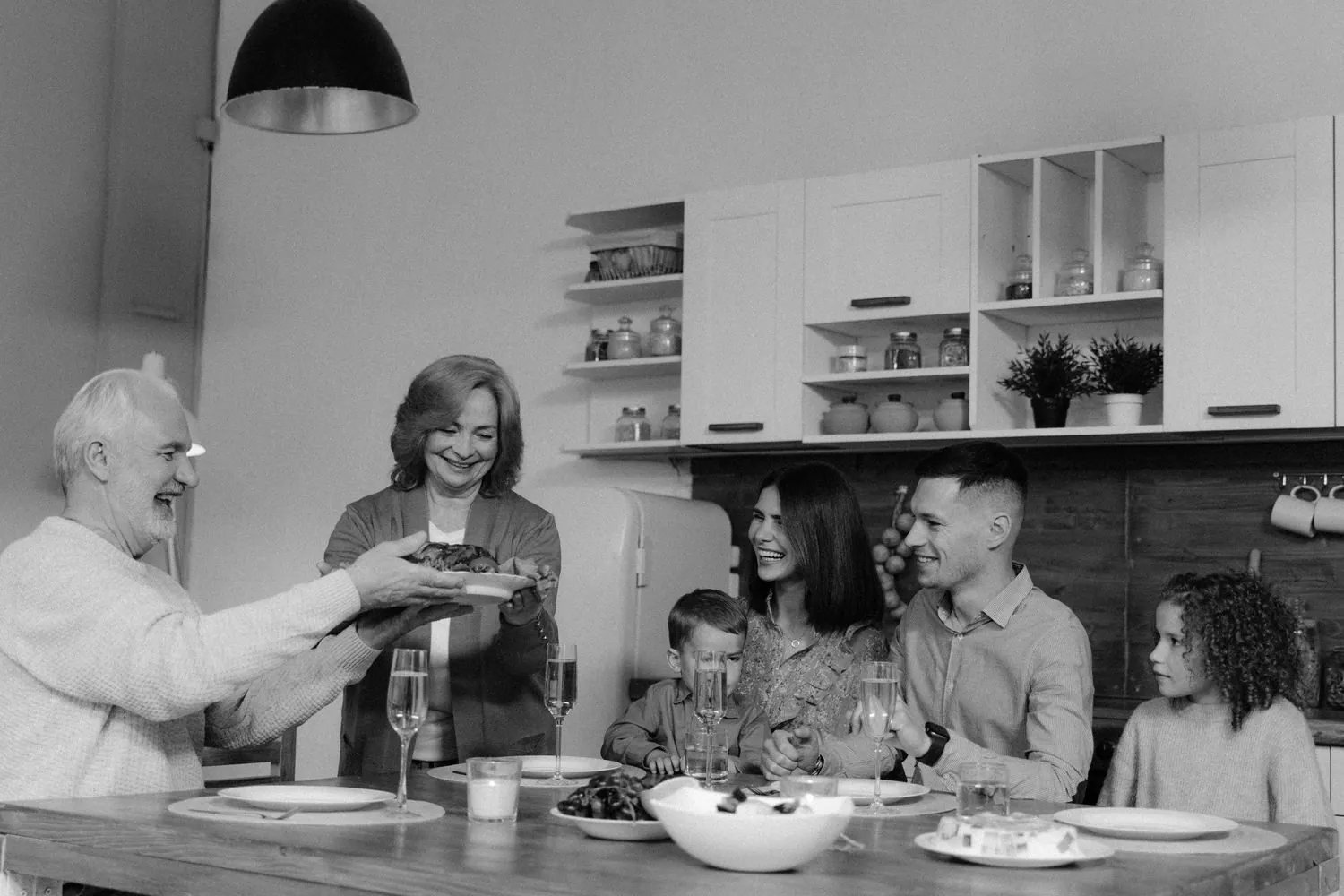
People who eat alone often eat less and choose less variety. After a spouse passes away, a full meal can start to feel pointless. Try one shared meal a day, even on a video call, and let your parent help choose the menu. Our guide to nutrition in old age shows how to build a routine that still works on days nobody visits.
How much water does an older adult need each day?
Most healthy older adults do well with about 1.5 to 2 litres of fluid a day, roughly 6 to 8 glasses, counting water, buttermilk, tea, soup and watery fruit. Thirst weakens with age, so waiting for a request is unreliable. Build drinking into the routine, unless a doctor has set a fluid limit.
Watch for early signs of dehydration: dry mouth, dark yellow urine, dizziness, headaches, unusual tiredness and constipation. Confusion or severe weakness needs medical care the same day.
- Keep a filled glass or bottle within reach and refill it at set times.
- Tie water to existing habits, such as one glass with each medicine dose and one before each meal.
- Offer variety: nimbu pani, buttermilk, soup, watermelon and cucumber all count.
- Do not use these general figures if your parent is on a fluid restriction for heart failure or kidney disease. Follow the doctor’s number.

When health conditions change the plan
The advice above suits a generally healthy older adult. Several common conditions mean the rules change, and the person’s own doctor should set the specifics.
- Diabetes: the timing and amount of carbohydrates, including rice, roti, sweets and fruit, matter, and they interact with diabetes medicines. Do not cut meals or adjust tablets or insulin on your own, because skipping food while on medicine can lead to dangerously low sugar.
- Kidney disease: protein, potassium, phosphorus and fluids may need limits. The usual “eat more protein” advice can be wrong here, so ask the nephrologist or a renal dietitian before changing anything.
- Heart disease or high BP: salt and fluids may need limits, and some BP tablets and diuretics affect potassium and fluid balance.
- Blood thinners: some, such as warfarin, work differently depending on how much green leafy vegetable you eat. Keep intake steady and ask the doctor rather than avoiding greens altogether.
- Medicine and food interactions in general: grapefruit, antacids, high-fibre meals and certain supplements can change how some medicines work. Ask the pharmacist or doctor to check your parent’s list.
When should you see a doctor or dietitian about an older person’s eating?
Contact a doctor or registered dietitian if your parent loses about 5% of body weight over roughly six months without trying, which is about 3 kg for a 60 kg person. Also seek help for repeated coughing while eating, skipped meals most days, or new confusion.
See your doctor or registered dietitian if you notice:
- Unintended weight loss, loose clothes or dentures, or a visibly thinner face
- Coughing, choking, a wet voice, or food stuck in the cheek during meals
- Skipping multiple meals a week, or going long periods without fluids
- New dizziness, confusion, weakness or falls
- Ongoing sadness, withdrawal or loss of interest in food
These signs can come from medical causes that diet cannot fix, such as thyroid problems, infections, medicine side effects or depression. If symptoms are severe or sudden, seek urgent care.
FAQ
What is the best diet for elderly people?
There is no single best diet. A balanced pattern works for most: small, frequent meals with protein at every meal, soft well-cooked vegetables, milk or curd, whole grains, and regular fluids. Conditions like diabetes or kidney disease change the details, so ask your doctor or dietitian.
How much protein does an older adult need each day?
Healthy older adults are often advised about 1 to 1.2 g of protein per kg of body weight daily, which is roughly 55 to 70 g for a 55 to 60 kg person. People with kidney disease may need less, so check with a doctor first.
What can an elderly person eat when they have no appetite?
Offer small, soft, calorie-dense foods they like: khichdi with ghee, curd rice, milk-based porridge, egg bhurji, soup and fruit. Serve five or six mini-meals instead of three large ones. If poor appetite lasts more than a week or two, ask their doctor.
How can I tell if my parent is dehydrated?
Look for dry mouth, cracked lips, dark yellow urine, dizziness, headache, tiredness and constipation. Confusion or unusual weakness can also be signs, because thirst weakens with age. If symptoms are more than mild, contact their doctor the same day.
Are nutrition shakes a good substitute for meals in old age?
They can help as an addition when someone eats very little, but they should not fully replace home food over the long term. Ask the doctor or dietitian which product suits your parent, especially with diabetes or kidney problems.
Every parent’s health picture is different, and the safest next step is a plan built around their medicines, conditions and swallowing ability. Book an online nutritionist consultation to get a simple, Indian-food meal plan for your parent that you can follow from this week.


