
Good vitamin nutrition is the part of eating well that most people get wrong in one of two directions: they ignore it until they feel tired, or they buy a shelf of capsules without knowing what they lack. The body needs 13 vitamins in small amounts, and a normal Indian thali can supply most of them if it is varied. This guide shows where each vitamin comes from, which gaps are common here, and when food alone is not enough.
What are the 13 vitamins, and where do you find them in Indian food?
The body needs 13 essential vitamins: four fat-soluble (A, D, E, K) and nine water-soluble (vitamin C plus eight B vitamins). Each does a different job, from vision and bone strength to energy release and blood formation. Every one of them has familiar Indian food sources, listed below.
| Vitamin | Type | Main job | Common Indian sources |
|---|---|---|---|
| A | Fat-soluble | Vision, skin, immunity | Carrot, papaya, sweet potato, palak, eggs, milk, ghee |
| D | Fat-soluble | Calcium use, bones, muscles | Morning and midday sun, egg yolk, oily fish, fortified milk or oil |
| E | Fat-soluble | Protects cells from damage | Almonds, sunflower seeds, groundnuts, cooking oils |
| K | Fat-soluble | Blood clotting, bones | Palak, methi, sarson, cabbage |
| C | Water-soluble | Collagen, iron absorption, immunity | Amla, guava, capsicum, lemon, orange |
| B1 (thiamine) | Water-soluble | Turns carbs into energy | Whole wheat, dals, groundnuts |
| B2 (riboflavin) | Water-soluble | Energy release, skin | Milk, curd, paneer, eggs |
| B3 (niacin) | Water-soluble | Energy release, nerves | Groundnuts, whole grains, chicken, fish |
| B5 | Water-soluble | Energy and hormone production | Dal, curd, eggs, mushrooms |
| B6 | Water-soluble | Protein use, mood chemicals | Banana, chana, potato, chicken |
| B7 (biotin) | Water-soluble | Fat and carb metabolism | Eggs, nuts, seeds |
| B9 (folate) | Water-soluble | Cell division, red blood cells | Palak, methi, rajma, chana, dal |
| B12 | Water-soluble | Nerves, red blood cells | Milk, curd, paneer, eggs, fish, chicken |
Minerals such as calcium, magnesium and zinc are a separate group, but they work alongside vitamins. Vitamin D, for example, is what lets the gut absorb calcium properly.
Fat-soluble vs water-soluble vitamins: why the difference matters
Fat-soluble vitamins (A, D, E, K) are absorbed with dietary fat and stored in the liver and body fat for weeks or months. Water-soluble vitamins (C and the B group) are not stored much and mostly leave through urine within a day or two, so you need a steady supply from daily meals.
This has two practical effects. First, a little fat at the meal helps you absorb A, D, E and K, so a tadka of oil or ghee on palak or carrot sabzi is not a flaw. Second, fat-soluble vitamins can build up when taken in high doses for a long time. Vitamin A from supplements is the clearest example, with the safe daily ceiling for preformed vitamin A at about 3,000 mcg for adults. Water-soluble vitamins are more forgiving, though very high B6 intake from supplements can still irritate nerves.
The rule that follows: food rarely causes an overdose, supplements can. Take them at label strength, and never stack two products that contain the same vitamin without checking with a professional.
What does a day of vitamin-rich Indian eating look like?
A day that covers most vitamins needs roughly five colours on the plate: a green leafy vegetable, an orange or yellow vegetable or fruit, a sour fruit, a dairy or egg item, and a whole grain or dal. The sample day below uses ordinary home foods and fits a vegetarian pattern with eggs optional.
| Meal | Example | Vitamins it adds |
|---|---|---|
| Breakfast | Vegetable poha with peanuts and a squeeze of lemon, plus a glass of milk (or a masala omelette) | B1, B2, B12, C, E |
| Mid-morning | One guava or a bowl of papaya | C, A |
| Lunch | 2 rotis, dal, palak or methi sabzi, a bowl of curd, salad with capsicum and carrot | Folate, K, A, B-group, B12, C |
| Evening | A small handful of almonds and roasted chana | E, B6, folate |
| Dinner | Paneer bhurji with mixed vegetables and a roti, or fish curry with rice and a green sabzi | B12, B2, A, K, D (if fish) |
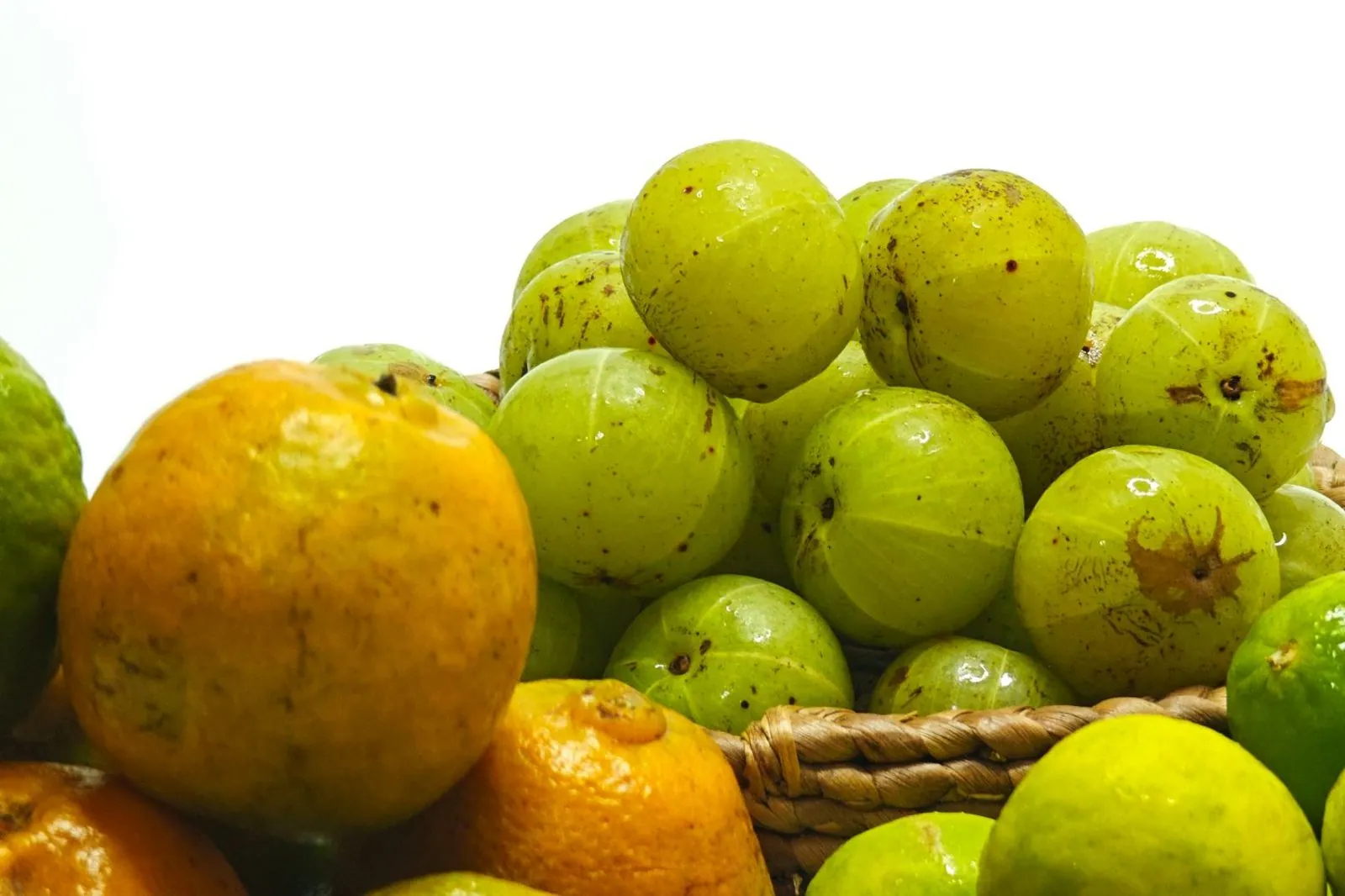
Notice how little of this is exotic. Amla, guava and capsicum cover vitamin C easily: amla carries several hundred milligrams per 100 g, and guava and capsicum each carry roughly two to three times what an orange does. Eat them raw or lightly cooked, since vitamin C is damaged by long heat.
Myth check: four vitamin beliefs that quietly mislead people
Myth 1: “India is sunny, so vitamin D deficiency is not an issue.” It is common here. Indoor jobs, covered clothing, sunscreen, air pollution and darker skin all reduce what the skin makes. A short stretch of midday sun on bare arms and legs, roughly 15 to 20 minutes a few days a week, helps, but results vary by skin tone, season and city.
Myth 2: “Idli, dosa and sprouts give enough B12.” Fermenting and sprouting do not reliably create B12. The dependable sources are milk, curd, paneer, eggs, fish and meat, plus fortified foods or a supplement where advised.
Myth 3: “Extra vitamin C prevents colds.” Regular vitamin C from food keeps your intake adequate, but megadoses are not a shield, and the excess just leaves in urine. Sleep, hydration and handwashing matter more.
Myth 4: “Cooking destroys all vitamins.” Only some are heat-sensitive. Carotenoids in carrot and tomato become easier to absorb with gentle cooking and a little oil. The table below shows what to protect and how.
| Vitamin | What damages or blocks it | Kitchen fix |
|---|---|---|
| C | Long boiling, cutting vegetables hours ahead | Eat amla, guava, capsicum raw; add lemon at the end |
| Folate, B1 | Heavy boiling in lots of water that gets discarded; repeated rice washing | Use less water, reuse dal or vegetable water, rinse rice lightly |
| A, E, K | Eating them with almost no fat | Add 1 to 2 teaspoons of oil or ghee to sabzi and salad |
| B2 | Strong light on stored milk | Keep milk covered and refrigerated |
| B12 | Absent from plant foods, so cooking is not the issue | Include dairy or eggs daily, or discuss fortified foods |
Which vitamin gaps are most common in India?
The most common gaps in India are vitamin D, vitamin B12 and folate, with vitamin C running short in people who eat very few fruits. Vitamin D is low in many urban adults, B12 is low in many vegetarians, and folate drops when diets lack greens and dal.
These gaps tend to arrive quietly. Vitamin D is the one most affected by lifestyle, which is why people who work indoors can be low despite the climate. B12 is the one most tied to diet pattern. If you eat little or no dairy, eggs, fish or meat, it deserves attention even when you feel fine, and our guide on vitamin B12 deficiency and nutrition counselling goes deeper. Folate matters especially before and during pregnancy, so anyone planning a pregnancy should speak to a doctor rather than self-prescribe.
Gaps rarely appear alone. Low vitamin D often sits next to low calcium, and poor intake of one nutrient usually points to a pattern. Read more about the wider picture in nutritional deficiency, and how untreated shortages can progress in nutritional deficiency diseases and nutritional deficiency disorders.
Tired, tingling or aching? How to troubleshoot a possible vitamin gap
Signs of a gap are vague and overlap with many other causes, so treat them as a reason to test rather than a diagnosis. Here is a simple way to think it through:
- Constant tiredness, bone or back aches, muscle weakness: can point to low vitamin D, but also to poor sleep, anaemia or thyroid issues.
- Tingling or numbness in hands and feet, pale skin, breathlessness on stairs, a sore tongue: can point to low B12 or folate, especially if you eat few animal foods.
- Bleeding gums, easy bruising, slow-healing cuts: can point to low vitamin C, usually in people who eat very few fruits and vegetables or who smoke.
- Dry skin, poor night vision: can point to low vitamin A.
If two or more of these persist for several weeks, book a blood test rather than starting capsules blindly. A doctor can check vitamin D and B12 along with related markers. Tingling, numbness or trouble walking should be checked promptly, because nerve problems from a long B12 gap do not always fully reverse.
See your doctor or a registered dietitian first if you are pregnant or breastfeeding, have a long-term illness, take regular medication, have had stomach or bowel surgery, or are giving vitamins to a child or an older parent. Do not change any prescribed medicine on your own because of something you read online.
Should you get vitamins from food or from a supplement?
Food should be the default, and a supplement should fill a gap you have identified. Meals deliver vitamins together with fibre, minerals and plant compounds that a capsule lacks, and it is very hard to overdose from food. Supplements make sense when a gap is confirmed or diet cannot realistically close it.
Vitamin D is the usual candidate, because few foods supply much and sunlight is unreliable for many people. B12 is the usual candidate for vegans and strict vegetarians. Vitamin C rarely needs a supplement, since amla, guava and lemon are cheap and everywhere.
A multivitamin can act as a safety net on weeks when meals are irregular, but it does not make up for a poor diet. Healthy fats in your meals also help absorb the fat-soluble group, and sources such as those in our guide to omega-3 nutrition fit neatly into that pattern.
Who needs to pay extra attention?
Vegetarians and vegans: B12 is the priority, then iron-friendly pairing of dal and greens with vitamin C foods. See vegan nutrition for a fuller plan.
Office workers and night-shift staff: little daylight means vitamin D is the likely gap. Take a short sunlit walk when you can and ask about a test.
Older adults: appetite and stomach acid fall with age, which can reduce B12 absorption, so periodic testing is sensible.
Women who are pregnant or planning pregnancy: folate, iron and D needs rise, and the plan should come from a doctor or dietitian.
People training regularly: a balanced diet usually covers B vitamins, but heavy dieting while exercising can leave gaps.
Frequently asked questions
Can you get too much vitamin D from sunlight?
No. The skin limits how much vitamin D it makes from sunlight, so sun exposure alone does not cause toxicity. Excess vitamin D almost always comes from high-dose supplements taken for long periods, which is why supplement strength should be guided by a blood test.
Is it safe to take vitamin C every day?
For most healthy adults, yes. Vitamin C is water-soluble, so the extra leaves in urine. Very large amounts can cause loose stools or stomach cramps. Eating amla, guava or citrus daily usually covers the roughly 65 to 80 mg most adults need without any capsule.
Why do vegetarians need to watch vitamin B12?
B12 occurs almost entirely in animal foods such as milk, eggs, fish and meat. Plant foods do not supply it reliably, so vegans and strict vegetarians can run low over time. Dairy and eggs help lacto-vegetarians, while vegans usually need fortified foods or a supplement.
Can too much vitamin A be harmful?
Yes. Vitamin A is stored in the liver, and long-term intake of preformed vitamin A well above about 3,000 mcg a day can harm the liver and, in pregnancy, the baby. This risk comes from supplements and liver, not from carrots or papaya, where the body converts carotenoids only as needed.
How long does it take to correct a vitamin D or B12 gap?
It depends on how low you start and on how well you absorb the vitamin. Under medical guidance, many people see blood levels improve over weeks to a few months, and energy often lifts before the numbers fully normalise. A repeat test tells you whether the plan is working.
Vitamin gaps are common, quiet at first and usually fixable, but guessing which one you lack is how money gets wasted. For a plan built around your own meals, test results and food preferences, book an online nutritionist consultation with Fitstrot.


