
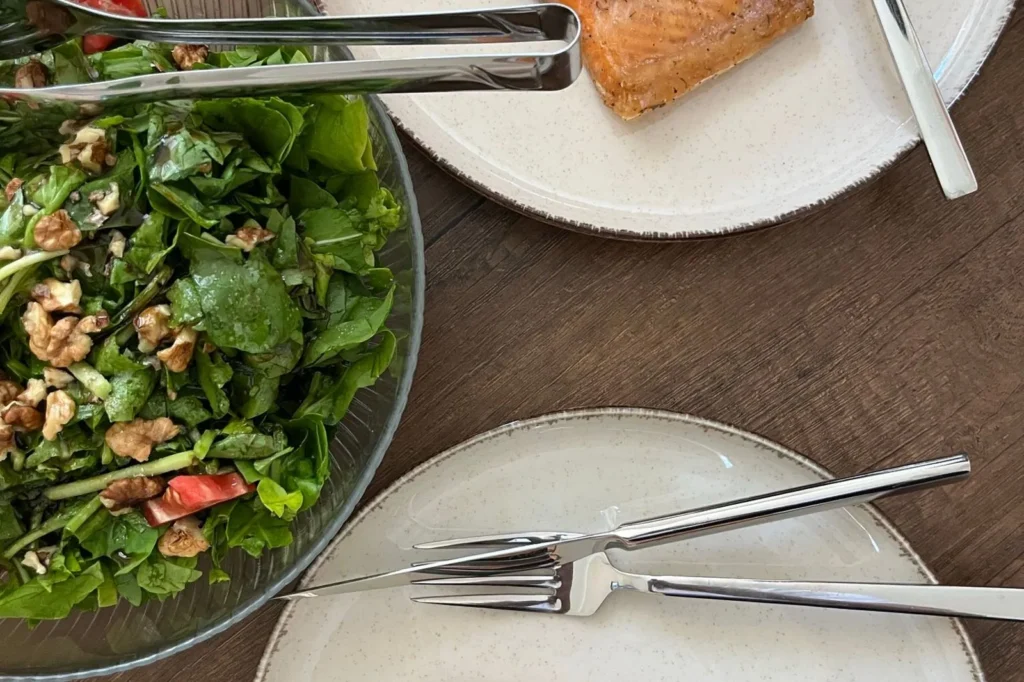
The most useful list of omega 3 foods splits them into two camps, because your body treats them very differently. Fatty fish such as sardines, mackerel, hilsa and salmon supply EPA and DHA ready-made. Flaxseed, chia and walnuts supply ALA, which your body converts only in small amounts. This guide gives you real gram figures, Indian fish ranked by oiliness, a one-week plan and honest limits on what these fats can do.
What are omega 3 foods, and which omega-3 does each one give you?
Omega 3 foods are foods rich in omega-3 fatty acids. Oily fish and algae provide EPA and DHA directly, while flaxseed, chia seeds, walnuts and some cooking oils provide ALA. Adults need roughly 1.1 to 1.6 g of ALA daily, and ideally two fish meals a week for EPA and DHA.
Here is how the three omega-3 fatty acids differ:
- ALA is the plant form and the only one that is strictly essential, meaning you must eat it. Sources are flax, chia, walnuts, canola and soybean oil.
- EPA comes from oily fish and algae. It is the one people usually associate with managing inflammation and supporting heart health.
- DHA comes from the same sources and is a structural fat in the brain and retina, which is why it matters so much in pregnancy and early childhood.
Your body can turn some ALA into EPA and then DHA, but the yield is low. For most adults it is a small fraction, often cited in the single digits for EPA and lower still for DHA. So a spoon of flaxseed counts as a good fat, but it is not a fish substitute.
Omega 3 rich foods compared: grams per serving
All figures below are rounded and approximate. Natural foods vary with variety, season and how they are grown or farmed, so treat each number as a guide rather than a label.
| Food | Typical serving | Omega-3 type | Approx. omega-3 per serving |
|---|---|---|---|
| Flaxseed oil (alsi oil) | 1 tablespoon (about 14 g) | ALA | About 7 g |
| Chia seeds | 1 tablespoon (about 12 g) | ALA | About 2 g |
| Walnuts (akhrot) | About 28 g (7 whole walnuts) | ALA | About 2.5 g |
| Ground flaxseed | 1 tablespoon (about 7 g) | ALA | About 1.5 g |
| Canola oil | 1 tablespoon | ALA | About 1.3 g |
| Soybean oil | 1 tablespoon | ALA | About 1 g |
| Salmon, cooked | 100 g | EPA + DHA | Roughly 1.5 to 2.5 g |
| Mackerel (bangda), cooked | 100 g | EPA + DHA | Roughly 1 g or more |
| Sardines (mathi), cooked | 100 g | EPA + DHA | Roughly 1 g or more |
| Algae oil capsule | Per label | DHA, sometimes EPA | Read the label |
One tablespoon of flax oil clears your whole day’s ALA target several times over, yet delivers no ready-made EPA or DHA. That gap is why you plan in two layers: ALA for your daily baseline, fish or algae for EPA and DHA.
Which Indian fish are actually rich in omega-3?
Oily, fatty fish are the richest: sardines (mathi), mackerel (bangda) and hilsa (ilish) usually give about 1 g or more of EPA plus DHA per 100 g cooked. Lean fish such as rohu, catla and prawns give far less. Fat content decides omega-3 content, so oilier fish win.
Many people eat fish regularly in India and still miss out, because the common river fish are lean. Use this as a rough ranking, not a lab report, since season, size and wild versus farmed all shift the numbers.
| Fish | Also called | EPA + DHA band (per 100 g cooked) | Cooking note |
|---|---|---|---|
| Sardine | Mathi, tarli, pedvey | High (about 1 g or more) | Curry, steam or shallow-fry |
| Mackerel | Bangda, ayala | High (about 1 g or more) | Masala fry on a tawa or curry |
| Hilsa | Ilish, palla | High (very oily) | Steamed in mustard is a classic |
| Salmon | Imported, pricier | High (about 1.5 to 2.5 g) | Bake or pan-sear |
| Seer fish, pomfret | Surmai, paplet | Moderate (about 0.3 to 1 g) | Grill or light fry |
| Bombay duck | Bombil | Low to moderate | Mostly water; do not count on it |
| Rohu, catla, prawns | Rui, bhakur, jhinga | Low (under about 0.3 g) | Good protein, weak omega-3 source |
Be careful with labels. Fish sold as “Indian salmon” (rawas) is a different species, so do not assume salmon-level omega-3 from it. Also, deep-frying in refined oil adds a lot of omega-6 and calories, which blunts the point of choosing an oily fish.
Myth: flaxseed makes up for skipping fish
Flaxseed is a good food, and the myth is only about what it can do. Because conversion of ALA to EPA and DHA is low, flaxseed alone will not reliably raise your EPA and DHA. It fills your ALA need, adds fibre and lignans, and that is its real job.
Three things make conversion even weaker. Heavy omega-6 intake from refined sunflower, groundnut or palm-blend oils competes for the same enzymes. Genetic differences change how well people convert. And ground flax that has gone stale loses quality quickly. If you eat no fish and no eggs from fortified flocks, plan a specific source of DHA rather than hoping flax covers it. Our guide on fibre-rich foods shows how to keep flax and chia in rotation for digestion too.
How much omega 3 per day do adults need?
Adequate intake for total omega-3 as ALA is about 1.6 g a day for adult men and 1.1 g for women, rising to about 1.4 g in pregnancy and 1.3 g while breastfeeding. For EPA and DHA, two servings of oily fish weekly is the common food-first advice.
No single global number exists for EPA and DHA in healthy people, so be wary of any plan that claims one. People with existing heart disease are sometimes advised by their doctor to take around 1 g of combined EPA and DHA daily, but that is a medical decision. If you have a heart condition, take blood thinners or have a bleeding disorder, speak to your doctor before using fish oil capsules, because high doses can affect clotting.
In practical terms, one tablespoon of ground flax or about 7 walnuts covers most adults’ ALA for the day. Anything you eat beyond that is a bonus, not a requirement.
A week of omega 3 foods on an Indian plate
This walkthrough is built from ordinary Indian meals. The fish days deliver EPA and DHA, and the plant days keep ALA topped up. Swap days freely to fit your routine and budget.
| Day | Non-vegetarian option | Vegetarian option | Approx. omega-3 delivered |
|---|---|---|---|
| Monday | Mackerel curry with rice, 100 to 120 g fish | 1 tbsp ground flax stirred into chaas or raita | About 1 g EPA+DHA / about 1.5 g ALA |
| Tuesday | Dal, sabzi, 1 tbsp chia in a morning smoothie | Same | About 2 g ALA |
| Wednesday | Sardine masala fry, 100 g | 7 walnuts as a mid-morning snack | About 1 g EPA+DHA / about 2.5 g ALA |
| Thursday | Rajma or chana meal, mustard or canola oil for tadka | Same | Modest ALA from the oil |
| Friday | Steamed hilsa or grilled surmai, 100 to 120 g | Chia pudding made with milk, 1 tbsp seeds | About 1 g EPA+DHA / about 2 g ALA |
| Saturday | Egg bhurji with ground flax roti dough (1 tbsp) | Same, using paneer instead of egg | About 1.5 g ALA |
| Sunday | Fish tikka or tawa fish, 100 g | Algae-based DHA supplement if you avoid fish, per label | EPA+DHA via fish or algae |
You do not need to hit this every week. The pattern matters: two fish meals, one daily ALA habit, and an algae option for anyone who skips fish entirely.

Is the omega 3 and omega 6 ratio worth worrying about?
A little, but not obsessively. Omega-6 fats from vegetable oils are not poisonous, and you need some. The practical problem is that very high omega-6 intake from fried snacks and refined oils crowds out omega-3. Eating more omega 3 foods and frying less is a better fix than counting ratios.
Cut the easy wins first. Use less reheated oil, limit packaged namkeen and bakery items, and rotate oils rather than relying on one. Add the omega-3 foods from the table above. If you want help turning this into a plan around your blood reports, our online nutritionist consultation does exactly that.
Troubleshooting: when your omega-3 plan is not working
- Flax tastes bitter or oily. It has probably oxidised. Buy small packs, keep ground flax in the fridge and flax oil refrigerated, and never heat flax oil for cooking.
- You eat fish daily but only rohu or catla. These are lean. Swap two meals a week to sardine, mackerel or hilsa.
- Fish is fried every time. Move to curry, steaming, grilling or a shallow tawa fry to keep the benefit without the excess oil.
- Fish oil capsules repeat on you. Take them with a meal, try a different brand, or switch to algae oil. Cod liver oil also carries vitamin A, so do not stack it with other supplements without advice.
- You feel no change after a few weeks. Omega-3 is not a quick fix, so give diet changes two to three months before judging them, and look at the whole diet. If you suspect broader gaps, read about nutritional deficiency and its related diseases.
Omega-3 for vegetarians, pregnancy and older adults
Vegetarians and vegans. Use flax, chia and walnuts for ALA daily, and add an algae-based DHA product, since plant ALA converts poorly. Pair this with checking iron, B12 and zinc; the vegan nutrition guide covers the full list.
Pregnancy and breastfeeding. DHA is important for the baby’s brain and eyes. Eating oily fish a couple of times a week is usually encouraged, but avoid large predatory fish such as shark, swordfish and king mackerel because of mercury. Do not start supplements without your doctor.
Older adults. Needs do not change dramatically, but appetite often drops and fish may disappear from the plate. Soft options such as sardine curry, chia pudding and ground flax in dal keep intake steady. For protein and vitamin balance alongside, see protein and nutrition and vitamin nutrition.
See your doctor or registered dietitian if you are on blood thinners, have an upcoming surgery, are pregnant, have fish or seafood allergies, or have a heart condition, before using omega-3 supplements. Food-based changes are generally safe, but supplements are medical territory.
Frequently asked questions
Can I get enough omega-3 from flaxseed alone if I do not eat fish?
You can meet your ALA target with flaxseed, about 1 tablespoon of ground seed a day. But conversion to EPA and DHA is low, so flax alone will not reliably supply those two. If you avoid fish completely, add an algae-based DHA source and discuss dosing with a dietitian.
Is fish oil or algae oil better for omega-3?
Neither is automatically better. Fish oil supplies EPA and DHA from fish, while algae oil supplies DHA, sometimes with EPA, from the same source fish get it from. Algae oil suits vegetarians and vegans and avoids fish allergens in most cases. Always check the label for EPA and DHA per serving.
How many times a week should I eat fish for omega-3?
Two servings a week of oily fish, around 100 to 150 g cooked each, is the usual food-first target. Pick sardine, mackerel or hilsa over lean fish. If you only eat fish once, you can still add ALA daily from flax, chia or walnuts.
Are seed oils actually bad for me because of omega-6?
Not in the way social media suggests. Omega-6 is an essential fat, and the issue is excess from deep-fried and ultra-processed food that pushes omega-3 out. Rotate oils, fry less, and eat more omega-3 foods rather than avoiding seed oils entirely.
Do I need an omega-3 supplement if I already eat a balanced diet?
Most people who eat oily fish twice a week and some ALA daily do not need one. Supplements make more sense for those who never eat fish, during pregnancy on medical advice, or when a doctor has a specific reason. Do not start high doses on your own.
Next step: book a one-to-one session with a Fitstrot nutritionist and bring your last three days of meals, so we can build a fish-or-algae plan around your budget and kitchen.


