

A short, gentle run of joint mobilisers, stretches and slow breathing done within an hour of waking is what most people mean by morning yoga. Ten to fifteen minutes is plenty. The catch is that your spine, hips and hamstrings are tighter after a night’s sleep, so the order of poses and the way you warm up matter more than how deep you go. Below are a 12-minute wake-up sequence, alignment cues, a timing guide and the cautions worth knowing first.
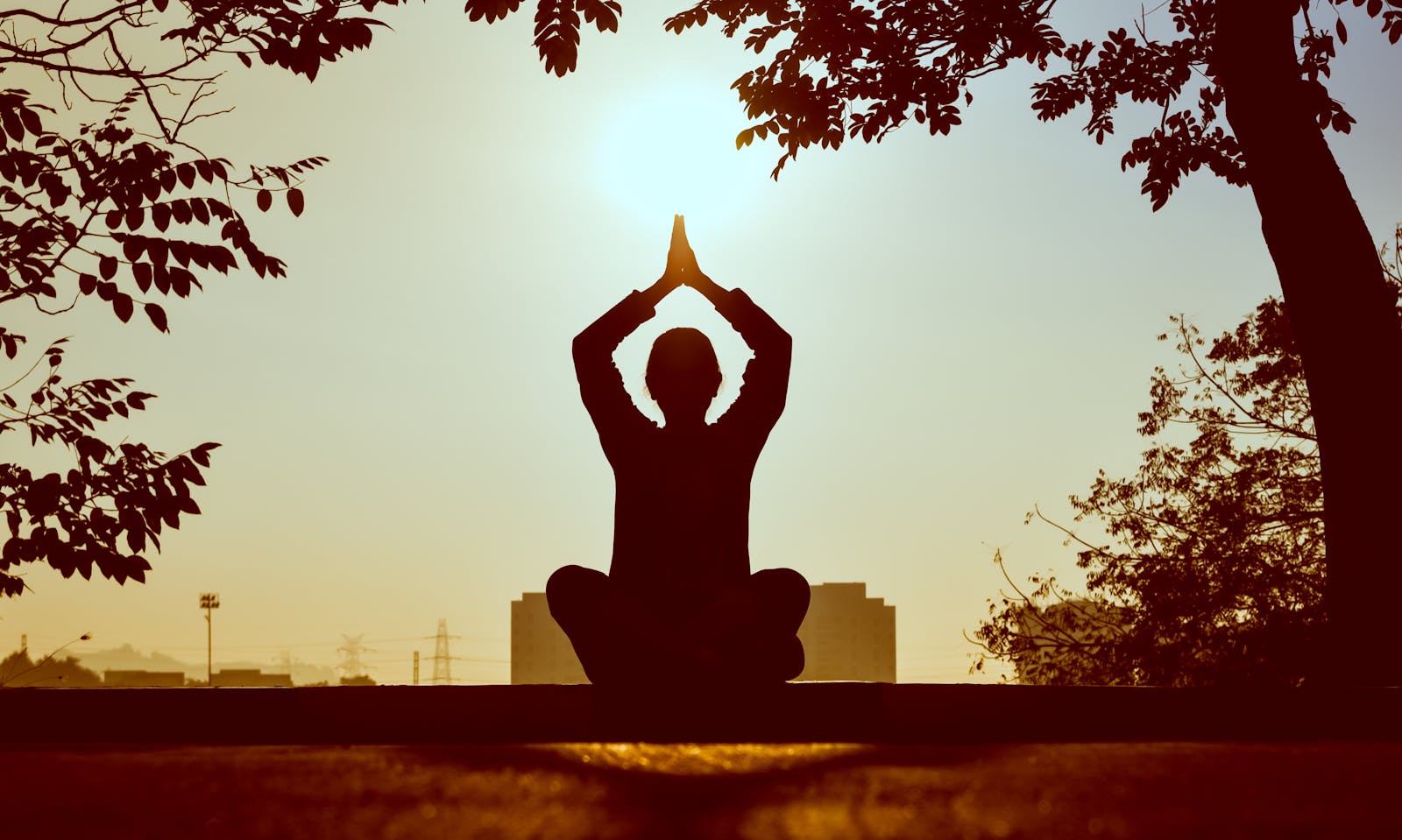
What makes morning yoga different from an evening practice?
Morning yoga is designed to wake you up: gentle movement, a few standing poses and steady breathing loosen stiff joints and raise alertness in about 10 to 20 minutes. Evening yoga does the opposite, using longer holds and slower breathing to wind you down. Both help; the difference is pacing, not difficulty.
Doing yoga in the morning means meeting your body at its stiffest: most people feel tight in the first hour after getting up, particularly through the lower back, hips and hamstrings. That is why a morning session starts with joint circles and Cat-Cow and saves deeper folds and twists for later. If evenings are your quieter time, our evening yoga guide covers the slower, sleep-friendly version.
A 12-minute morning yoga sequence, pose by pose
This morning yoga sequence moves from the floor to standing, so the spine and hips warm up before they carry your weight. Hold each of these morning yoga asanas for about 5 slow breaths, roughly 25 to 30 seconds, and let the breath set the pace rather than the clock.
| Step | Pose | Time | Key cue | Easier option |
|---|---|---|---|---|
| 1 | Joint wake-up (wrist, ankle and shoulder circles, gentle neck tilts) | 1 min | Small, slow circles; no forcing the neck | Do it seated on the bed edge |
| 2 | Cat-Cow | 1.5 min | Wrists under shoulders, knees under hips; exhale to round, inhale to lift the chest | Keep the range small, or use forearms |
| 3 | Child’s Pose (Balasana) | 1 min | Knees wide, hips back toward heels, forehead resting | Pillow under hips or forehead |
| 4 | Downward-Facing Dog | 1 min | Knees bent, spine long, push the floor away | Hands on a wall or sturdy chair |
| 5 | Low Lunge (each side) | 1.5 min | Front knee over ankle, tailbone slightly tucked | Folded towel under the back knee |
| 6 | Standing Forward Fold | 1 min | Hinge at the hips, soft knees, roll up slowly | Hands on thighs or a chair seat |
| 7 | Slow Sun Salutation, 2 rounds | 2 min | Move one movement per breath, knees bent in folds | Half salutation: fold, lift, fold, rise |
| 8 | Warrior II (each side) | 1 min | Front knee tracks over the middle toes, shoulders over hips | Shorter stance, hands on hips |
| 9 | Supine Spinal Twist (each side) | 1 min | Both shoulders stay heavy on the floor | Pillow under the knees |
| 10 | Final rest with slow breathing | 1 min | Inhale for 4 counts, exhale for 6 | Rest seated if lying down makes you drowsy |
The sun salutation is the engine of the sequence. Keep the first two rounds slow, bend your knees in every fold, and swap upward-facing dog for a low cobra with elbows tucked until your back feels warm. Our surya namaskar guide breaks the full 12-position flow down, and linking poses through breath is the idea behind yoga flow if you want to build on this later.
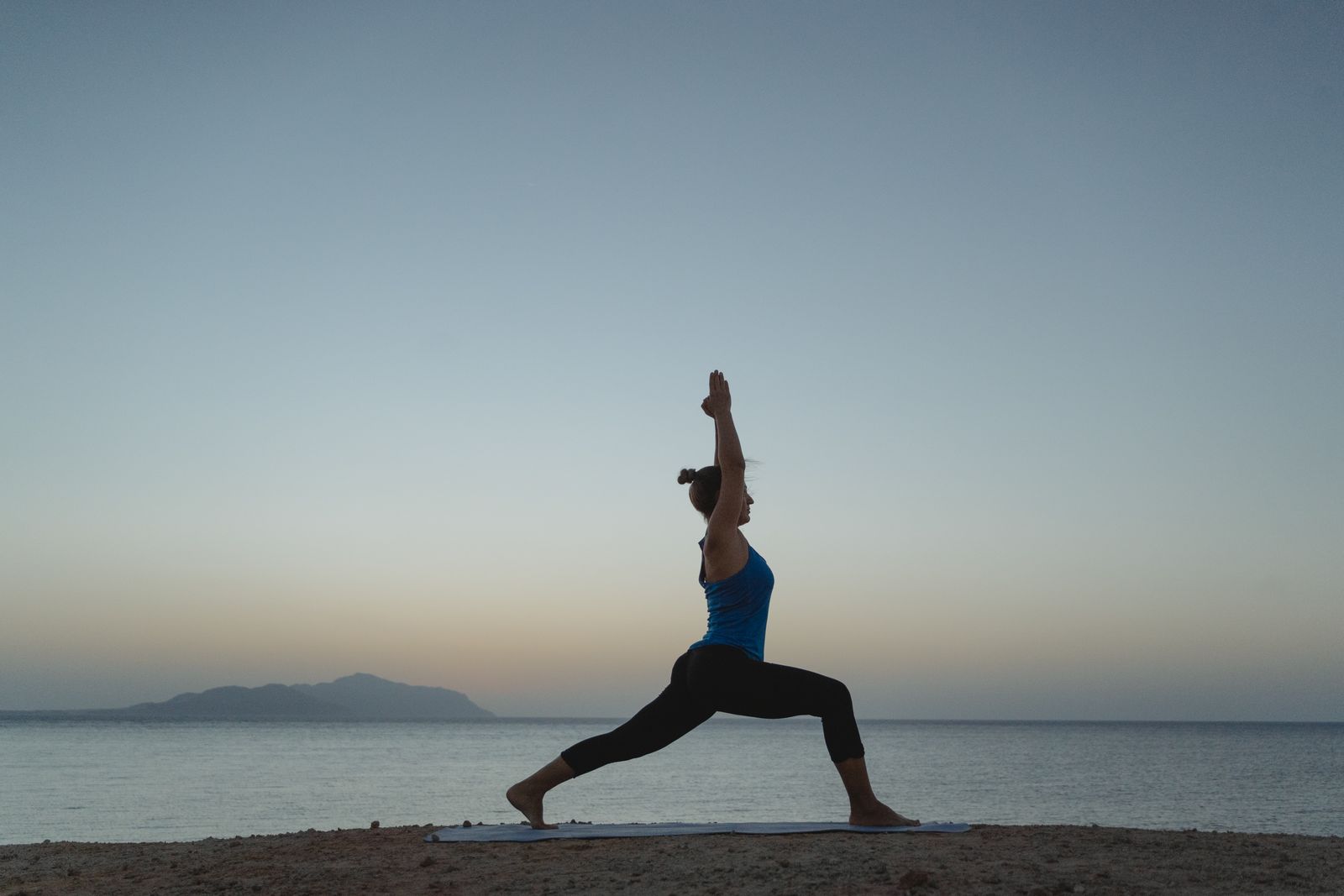
Alignment cues for the morning yoga poses people get wrong most
A cool body forgives less, so small alignment fixes matter more at 6 a.m. than at 6 p.m.
- Downward dog: hands shoulder-width apart, knees bent. Lengthen the spine and press the floor away before straightening the legs. Heels need not touch the ground.
- Low lunge: front knee over the ankle, not past the toes. Tuck the tailbone slightly so the lower back does not sag, and pad the back knee.
- Standing forward fold: fold from the hip creases with soft knees. Roll up slowly, chin tucked and head last, to avoid a head rush.
- Warrior II: front knee tracks over the middle toes and never collapses inward. A shorter stance beats a long, wobbly one.
- Supine twist: let the knees fall only as far as both shoulders stay comfortable on the floor.
In every pose, stop at a mild, steady stretch. Sharp, pinching or tingling sensations mean back off. If lower back tightness is your main reason for practising, yoga for back pain goes further into pose choices and precautions.
How soon after waking should you start morning yoga?
Start morning yoga about 10 to 30 minutes after waking, once you have had a glass of water and your body has moved a little. Practise on a light stomach: wait about 2 to 3 hours after a heavy meal, roughly an hour after a snack. A time you can repeat beats a perfect time you skip.
| When | What to do | Caution |
|---|---|---|
| Still in bed (first 5 minutes) | Knee hugs, gentle lying twists, ankle circles | Sit up slowly; no jumping into standing poses |
| 10 to 30 minutes after waking | Full 12-minute sequence | Sip water first; keep the first 3 to 5 minutes gentle |
| After a small cup of tea or coffee | Full sequence, with a longer warm-up | If it gives you acidity or a racing heart, wait 20 to 30 minutes |
| After a light snack such as a banana | Start after roughly an hour; skip deep twists | Folds and twists feel heavy on a full stomach |
| After a heavy breakfast | Wait about 2 to 3 hours, or do a gentle walk instead | Nausea, reflux and cramping are likely if you rush it |
Seasons matter. In north Indian winters a cold room stiffens everything, so add two or three minutes of joint circles and Cat-Cow. In hot, humid cities, going early before the heat builds is kinder. Tying the session to an anchor, like right after brushing your teeth, turns it into daily yoga rather than an occasional effort.
Warm-up cautions for a cold, stiff body
- Wake the joints first. One minute of wrist, ankle and shoulder circles prepares them for Cat-Cow and dog.
- Keep the first three to five minutes gentle. No deep backbends, forceful twists or bouncing in a fold until you feel warm.
- Sip water first. Overnight fan or AC air is dry, and mild dehydration adds to lightheadedness. A few sips is enough.
- Rise slowly from folds and the floor. Blood pressure can dip briefly when you stand fast, so pause for a breath at the top.
- Tell stretch from pain. A pull that eases as you breathe is fine. Sharp or lingering pain means stop that pose and ask a professional.
Troubleshooting: when your morning session feels off
- Dizzy coming up from the fold: bend the knees more, rise slowly, keep a hand near a wall, and sit if it persists.
- Wrists ache in Cat-Cow or dog: spread the fingers, use fists or forearms, or place your hands on a wall.
- You skip three days in a row: shrink it to five minutes (Cat-Cow, dog, fold, twist) rather than dropping it.
Who should modify or skip parts of a morning routine?
Most healthy adults can follow this sequence using the easier options, but some conditions need changes first. Pregnancy, high blood pressure, glaucoma, disc or back problems, osteoporosis and recent surgery all call for a doctor’s or physiotherapist’s advice before you begin. The table is general guidance, not medical clearance.
| Situation | Adjust | Check with your doctor first if |
|---|---|---|
| High blood pressure or heart condition | Keep head near heart level; use half dog at a wall; skip long folds; never hold the breath | Your readings are uncontrolled or you get chest discomfort, breathlessness or palpitations |
| Glaucoma or eye surgery | Avoid prolonged head-down poses; replace dog and folds with seated or standing options | Always, before head-down poses |
| Pregnancy | Wide-knee child’s pose, no deep twists, limit lying flat later on | Always, before starting or changing a routine |
| Disc problem, sciatica or acute back pain | Bend knees in every fold; skip the twist; keep to Cat-Cow | Pain travels down a leg, or there is numbness or weakness |
| Osteoporosis or recent surgery | Avoid deep folds and twists | Always, before starting |
| Diabetes or regular medication | Practise at a consistent time and keep a snack nearby | You get shaky or faint; never change medication on your own |
| Vertigo or frequent dizziness on standing | Stay close to a wall; replace folds with seated stretches | Dizziness is new, frequent or comes with fainting |
Stop and get medical advice if you feel chest pain, severe dizziness, sudden breathlessness or numbness during practice.
Is morning yoga for beginners different from a regular routine?
Morning yoga for beginners uses the same poses with shorter holds, bent knees and props, so the session stays comfortable. Begin with 5 to 8 minutes, three to four days a week, then add a minute or two every week. Let breathing, not flexibility, set the pace.
If you have never practised before, read our yoga for beginners guide first, and look at the main types of yoga so you choose a style that suits your body instead of copying a routine that does not. Desk workers benefit from extra time on the hip flexors and chest, and adults over 40 do well with a longer joint warm-up and a wall for balance. A mat and a quiet corner of roughly 2 metres by 1 metre are enough, and our yoga at home guide covers the setup.
Four morning yoga myths worth dropping
- “It only counts if it is an hour long.” Consistent 10 to 15 minutes beats an occasional long session that gets skipped.
- “Feeling stiff means I am bad at yoga.” Stiffness after sleep is normal, and nearly every pose has a modification.
- “Certain poses burn fat from the belly or thighs.” No pose removes fat from one area. Fat loss depends on your overall food and activity, and yoga is one supporting piece.
- “Yoga replaces gym or cardio.” It builds mobility, balance and calm, but it rarely matches dedicated cardio or strength training.
Can morning yoga help with energy, mood and weight?
Morning yoga can leave you feeling looser, calmer and more alert, and a regular habit may support steadier energy through the day, though effects differ from person to person. It burns only a modest number of calories, so weight change depends mostly on food and overall activity, not on yoga alone.
Its strongest case is that it builds a movement habit and loosens you up, which makes other exercise easier to start. The wider list of benefits of yoga is worth reading, but keep expectations realistic. If your goal is cardio fitness, alternate yoga days with something rhythmic such as Zumba for toned legs, and if you want strength built up safely, 1-on-1 personal training can add a structured plan around your yoga.
Questions people ask about morning yoga
Is it safe to do morning yoga without warming up first?
Treat the first two to three minutes as the warm-up, not as something to skip. Start with joint circles and Cat-Cow, keep movements small, and leave deep folds, backbends and twists until you feel warm. Jumping straight into deep stretches while your muscles are cool from sleep raises the chance of a pulled hamstring or tight lower back.
Should I do morning yoga before or after tea or coffee?
Either can work. Water first is a good default. A small cup of tea or coffee is fine for many people, but if it gives you acidity, jitters or a racing heart, wait 20 to 30 minutes before practising, or do your yoga first and have the tea afterwards.
Can morning yoga replace my gym or cardio workout?
For most fitness goals, no. Morning yoga builds mobility, balance and a calm start to the day, but building significant muscle or heart and lung fitness usually needs strength training or cardio on other days. Use yoga as a warm-up before them or as a gentler rest-day option.
How long does it take to notice a difference from a morning yoga routine?
Many people feel looser and calmer within one to two weeks of regular practice, mostly from less morning stiffness. Changes in strength, balance and flexibility usually take longer, often 4 to 8 weeks of consistent sessions, and they vary with age, starting fitness and how often you practise.
What should I do if I feel dizzy during morning yoga?
Stop, sit down or lean on a wall, and breathe slowly until it passes. Next time, sip water first, bend your knees more in folds and rise slowly. If dizziness is frequent, severe or comes with chest pain or fainting, stop practising and see a doctor.
If you would rather have someone watch your alignment and adjust the pace to your body, try a live session in FitStrot’s online yoga classes and book your first morning slot this week.


