

A yoga flow is a sequence of yoga poses linked by breath, so you move from one shape to the next in a continuous rhythm instead of holding each pose on its own. If you have only ever stretched in static holds, a flow feels different: warmer, more rhythmic and closer to a moving meditation. This guide explains how a sequence is built and walks you through a 20-minute beginner yoga flow with alignment cues, easier options and a plain list of who should adjust or skip parts. It does not replace your doctor’s advice if you have an injury or health condition.
What is a yoga flow, exactly?
A yoga flow is a series of yoga postures connected by breath, usually one inhale or exhale per movement, so you transition smoothly instead of pausing in every pose. Most studio classes called vinyasa or flow follow this idea. A flow can last 10 to 60 minutes and can be slow and gentle or fast and athletic.
The key difference from a held-pose class is continuity. In a traditional hatha-style class you would typically stay in each shape for several breaths before moving on. Neither is better; they train different things. Our guide to the types of yoga shows where flow classes sit next to restorative, yin and power formats.
Flow vs held poses at a glance
| Feature | Yoga flow | Held-pose practice |
|---|---|---|
| Pace | Continuous, about one breath per movement | Pauses of several breaths in each pose |
| Heart rate | Mildly raised, depends on speed | Mostly steady |
| Best for | Warming up, rhythm, light stamina, coordination | Learning alignment, deeper stretching |
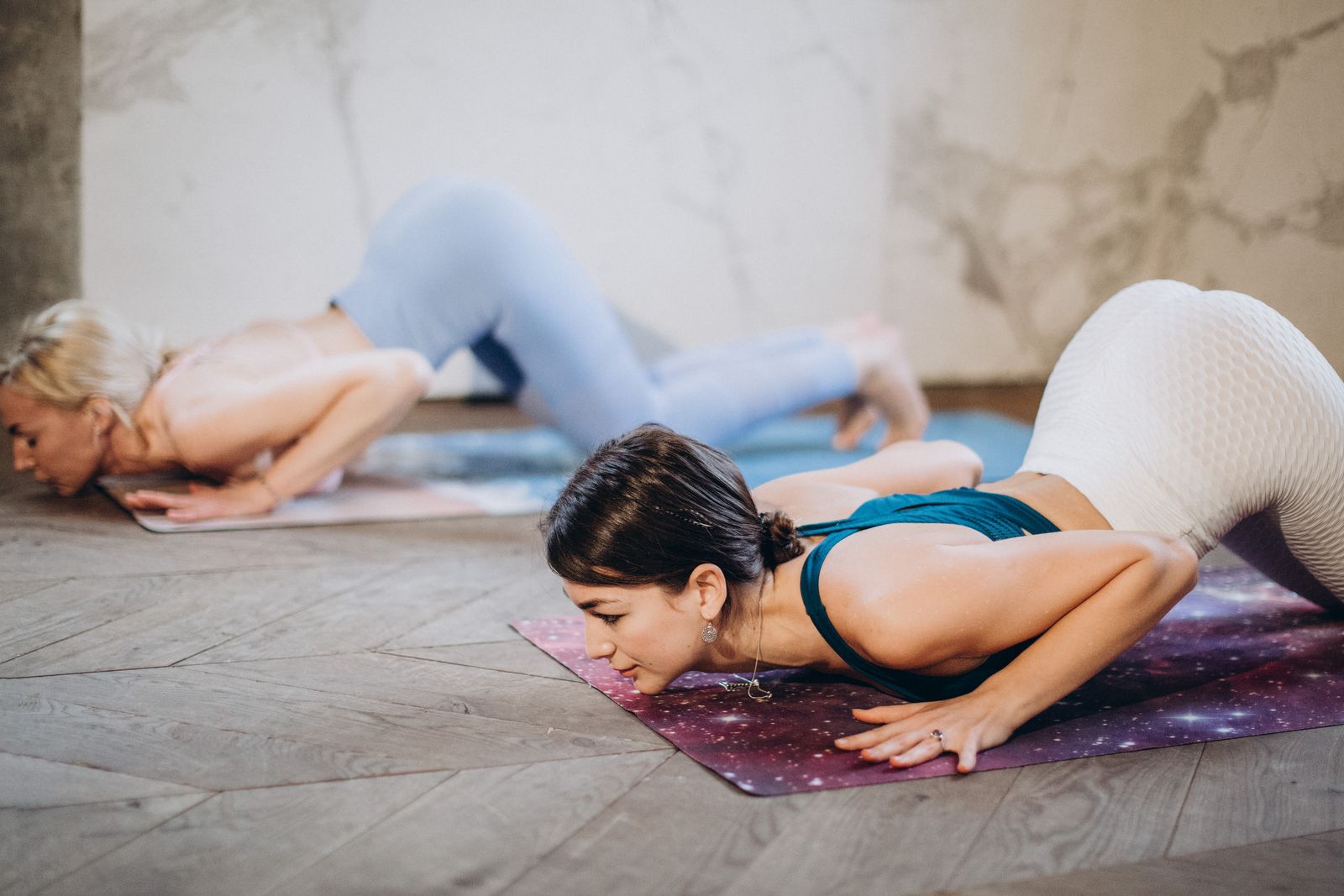
How is a beginner yoga flow sequence built?
A beginner yoga flow sequence follows five phases: settle the breath for about 2 minutes, warm the spine with gentle movement for around 5 minutes, move through standing poses for 8 to 10 minutes, cool down on the floor for roughly 4 minutes, and finish with 3 to 5 minutes of rest. Each phase prepares the body for the next.
Muscles and joints respond better to gradual loading than to sudden effort. This arc is also the easiest way to learn how to create your own yoga flow: keep the five phases, then swap poses in and out. Pick one “peak” pose, such as warrior, and choose earlier poses that prepare the same areas. One or two well-prepared peaks beat five demanding poses packed together.
A 20-minute beginner yoga flow, step by step
Use the table below as a yoga flow chart you can screenshot and keep beside your mat. Total time is about 20 to 22 minutes, and using the easier options is how a yoga flow for beginners should be done.
| Step | Pose and timing | Alignment cue | Easier option |
|---|---|---|---|
| 1 | Easy seated breathing, about 2 minutes (10 slow breaths) | Sit tall, hands on knees, exhale longer than you inhale | Sit on a cushion or a chair |
| 2 | Cat-cow, 6 rounds | Hands under shoulders, knees under hips; inhale lift the chest, exhale round the spine | Smaller range; fists or forearms if wrists feel sore |
| 3 | Child’s pose, 3 breaths | Hips back toward heels, forehead down | Cushion under hips or forehead |
| 4 | Downward dog, 3 to 5 breaths | Press the floor away, lengthen the spine first | Keep knees bent, heels lifted |
| 5 | Low lunge, each side, 3 to 5 breaths | Front knee over the ankle, hips sink, chest lifts on the inhale | Folded blanket under back knee, hands on books or blocks |
| 6 | Half sun salutation, 5 rounds | Inhale arms up, exhale fold, inhale lengthen, exhale fold, inhale rise | Bend knees in the fold, hands on thighs |
| 7 | Gentle sun salutation, 3 rounds | Step back, lower knees, chest, chin, then low cobra with elbows close; exhale to downward dog | Skip cobra and rest in child’s pose |
| 8 | Chair pose, then warrior II each side, 3 to 5 breaths | Weight in heels; in warrior II the front knee tracks the second toe | Shorter stance, hands on hips |
| 9 | Bridge, 2 rounds of 5 breaths | Feet hip-width, knees parallel, lift on the inhale, neck relaxed | Lift only a few centimetres |
| 10 | Supine twist, each side, 5 breaths | Both shoulders heavy, let the knees fall to one side | Pillow under the knees |
| 11 | Savasana, 3 to 5 minutes | Lie on your back, let the breath return to normal | Cushion under knees, or lie on your side |
Use a non-slip mat, wait about two hours after a full meal, and move at the speed of your breath, not the speed of a video. For more starter shapes, see our yoga for beginners guide.
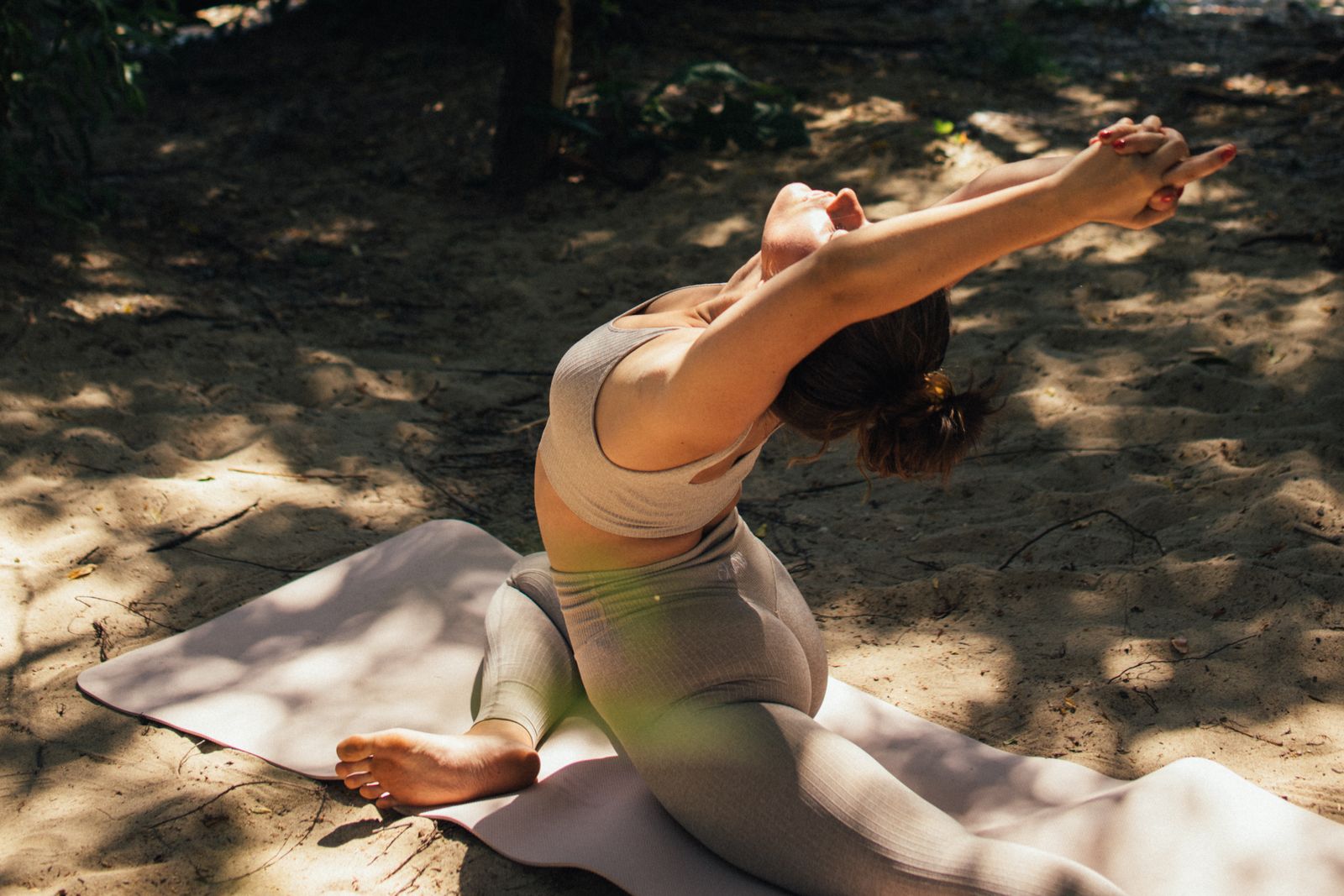
How does breath drive a yoga flow?
In a yoga flow, breath sets the tempo. Inhales usually go with expanding movements such as lifting the chest or raising the arms, and exhales with folding, twisting or lowering. Many classes use ujjayi breathing, a gentle narrowing at the back of the throat that makes a soft, steady sound, so you can hear when you rush.
Lifting makes room in the ribcage for an inhale, and folding helps you exhale. Never strain or hold the breath. If you feel light-headed, drop ujjayi, breathe normally and rest.
Which alignment cues keep a flow safe?
On all fours, keep wrists under shoulders and knees under hips. In downward dog, bend your knees freely. In lunges and warrior poses, track the front knee over the second toe. Move twists from the ribs, not the lower back. Stop at stretch or effort, never at sharp, shooting or tingling pain.
- Wrists and shoulders: spread your fingers and press through the whole hand. Replace chaturanga with lowering the knees first, then the chest.
- Knees: never let the knee collapse inward or travel far past the ankle. Shorten the stance if you wobble.
- Lower back: in forward folds, bend the knees and lengthen the spine before folding. In backbends such as cobra and bridge, keep the lift small.
- Neck: keep the back of the neck long. In bridge and cobra, look straight ahead or up gently, and do not turn your head side to side.
Myth check: you do not need to be flexible, fast or sweaty
Flexibility is something a flow builds over time, not a ticket to enter. Speed is not skill either; the same sequence done slowly gives you the same practice with less injury risk. Sweat is optional.
A third myth is that a flow melts fat from a chosen area. It cannot; fat loss comes from overall energy balance across the body. A 30-minute flow burns roughly 100 to 250 kcal depending on pace and body weight, which is modest, so treat it as support for a plan that includes food and other activity. Our guide to yoga for weight loss covers how to fit it in realistically.
Who should modify a yoga flow or skip it for now?
Check with your doctor before starting a yoga flow if you are pregnant, recovering from surgery, or live with uncontrolled high blood pressure, glaucoma, vertigo, osteoporosis, a disc problem, or a wrist, shoulder or knee injury. Many people can still practise with changes, but head-down poses, deep twists and weight on the hands need individual advice.
- Pregnancy: use a flow designed for pregnancy and avoid closed twists and lying flat on the back for long.
- Blood pressure, glaucoma, dizziness: long holds with the head below the heart, such as downward dog and deep folds, may not suit you. Rise slowly from every fold.
- Osteoporosis or disc problems: avoid deep forward folds and forceful twists unless your doctor or physiotherapist has cleared them.
- Wrist, shoulder or knee pain: use forearms, a shorter stance or padding, or choose a chair-based version.
See your doctor if poses cause chest pain, breathlessness, numbness, shooting pain down a limb or dizziness that does not settle after resting. Do not push through those signals. A flow is gentle movement, not a treatment.
Troubleshooting: when your flow feels wrong
| What you notice | Likely cause | What to try |
|---|---|---|
| Wrists ache in cat-cow or downward dog | Too much weight in the heels of the hands | Spread fingers, press through the whole hand, use fists or forearms, shorten the holds |
| Shoulders creep up toward your ears | Arms tense, pose held too long | Bend the knees, press the floor away, slide the shoulder blades down your back |
| Lower back rounds in a forward fold | Tight hamstrings | Bend the knees generously, rest hands on thighs or blocks |
| Dizzy when you stand up | Rising too fast, holding the breath | Rise slowly, keep breathing, pause in mountain pose and sip water; mention repeated episodes to your doctor |
| Knee twinges in lunge or warrior | Knee past the ankle or falling inward | Shorten the stance, line the knee up with the second toe, pad the back knee |
| You keep losing the breath rhythm | Moving faster than you can breathe | Slow down, add a breath per pose, or switch to held poses for a few rounds |
How long and how often should you do a yoga flow?
Start with 15 to 20 minutes, three to four days a week, and add time only when the sequence feels easy to breathe through. A short yoga flow of about 10 minutes on other days keeps the habit going. Around 30 minutes suits most people after a few weeks.
Many people prefer an energising flow in the morning and a slower one at night. Our morning yoga routine suits the first half of the sequence above, daily yoga helps you build the habit, and evening yoga gives a calmer wind-down.
What can a regular yoga flow do for you?
Regular flow practice may improve flexibility, balance and muscular endurance, and many people find it calming. It raises your heart rate only mildly, so it complements rather than replaces brisk walking, cycling or strength work. It is not a treatment for any medical condition, and results vary from person to person.
Holding plank, lunge and chair builds endurance in the legs, core and shoulders, while stretches give the hips and hamstrings room to move. Linking breath to movement also asks for steady attention, which is why many people feel settled afterwards. Our overview of the benefits of yoga goes wider, and yoga for flexibility explains how to progress safely. If stress is your reason to start, yoga for anxiety helps, though persistent anxiety needs professional support, not yoga alone.
Chest-opening, chair and creative flows: variations by need
A chest-opening yoga flow suits desk workers whose shoulders round forward after long hours at a laptop. It leans on cobra, a supported fish over a cushion and a cat-cow that stresses the “cow” phase. Keep backbends small and stop if your neck or lower back protests. Pair it with yoga for posture and yoga for back pain.
A chair yoga flow suits people with limited mobility, balance concerns, or those returning after illness or surgery with their doctor’s go-ahead. Seated cat-cow, a seated forward fold and a supported twist with one hand on the chair back keep the breath-and-movement link without floor transitions. A creative flow, which links poses by theme or shape, suits you once the basics feel automatic.
Frequently asked questions about yoga flow
What is the difference between yoga flow and vinyasa?
The terms overlap heavily. Vinyasa refers to linking breath with movement, and flow describes the continuous sequence that results. Most studios use “vinyasa flow” and “flow class” to mean the same breath-led, continuously moving practice, in contrast to poses held separately for several breaths.
Can beginners do a yoga flow?
Yes, if the pace is beginner-friendly and modifications are offered. Learning the breath-and-movement link early is useful. Mixing in a few held poses helps you understand alignment before speed is added. Anyone with an injury or medical condition should check with a doctor first.
Do I need equipment to practise a yoga flow at home?
A non-slip mat is the only real requirement. Two blocks (or stacked books), a strap and a folded blanket make several poses more comfortable, especially for tight hamstrings or sore knees. A sturdy chair can replace blocks in a pinch.
Is a yoga flow a good workout for weight loss?
It can contribute, but modestly: about 100 to 250 kcal in 30 minutes depending on pace and body weight, usually less than brisk cardio. It cannot target fat from one area. It works best combined with other activity and sensible eating.
Why does the same yoga flow feel harder on some days?
Sleep, hydration, stress, meal timing, hormonal cycles and time of day all change how demanding a sequence feels. That variation is normal. On heavy days, slow down and use the easier options.
Try your first guided flow
Book a beginner session with Fitstrot’s Online Yoga Classes, mention any injury before you start, and run through the 20-minute sequence above with an instructor so your breath and alignment get checked in real time.


