
Most people who try daily yoga quit inside three weeks — not because yoga is hard, but because they started with a 60-minute video at 5:30 am and missed day four. The useful question is not “is yoga good for me” but “what is the smallest honest daily dose that still changes something?” This guide answers that with minute-by-minute sequences, a printable chart, a 30-day ramp, and what the published evidence does and does not support. No guru talk, no promises about your spine lengthening.
How many minutes of daily yoga actually do something?
A daily yoga practice of 15–20 minutes is enough to count toward health guidelines. The WHO asks adults for at least 150 minutes of moderate activity weekly; 20 minutes daily gets you to 140, and a longer weekend session closes the gap. The NHS separately lists yoga as a muscle-strengthening activity for the required 2 days per week — so daily yoga covers two boxes at once.
Those targets are not invented for this article. The WHO physical activity fact sheet sets the 150-minute weekly floor for adults aged 18–64 and reports that 31% of adults worldwide fall short of it. The NHS guidelines for adults aged 19 to 64 name yoga explicitly in the list of activities that work the major muscle groups, alongside pilates, resistance bands and push-ups, and ask for those on at least 2 days a week.
The evidence for shorter, frequent sessions is decent. Harvard Health cites work showing that people who practised at least 30 minutes a week for four or more years gained significantly less weight through middle adulthood, and a small trial where sedentary adults doing 180 minutes over 8 weeks improved muscular strength, endurance, flexibility and cardio-respiratory fitness (Harvard Health, “Yoga: benefits beyond the mat”). That is roughly 22 minutes a day. Frequency beats heroics.
Daily also beats three-times-weekly for a reason that has nothing to do with physiology: a daily slot needs no decision. Three sessions a week means choosing which three, every week, forever. A fixed daily slot removes that negotiation, and on the days you have nothing left you run the short version instead of skipping. The practical target is not “never miss” — it is “never miss twice”.
A daily yoga routine that fits 10, 20 or 30 minutes
The mistake is designing one routine and then skipping it on busy days. Design three, and pick by the clock. Every version below keeps the same four blocks — breath, warm-up, standing work, floor and rest — and simply changes how long each block runs. On a chaotic Tuesday you run the 10-minute column and you have still practised.
| Block | 10-minute version | 20-minute version | 30-minute version | Form cue |
|---|---|---|---|---|
| Centring & breath | 1 min seated breathing | 2 min, add 6 rounds Nadi Shodhana | 4 min, add 6 rounds Bhramari | Ribs move sideways, not shoulders up |
| Warm-up / loosening | 2 min: Cat–Cow ×8, neck rolls ×4 each way | 4 min: add shoulder rolls, wrist circles, ankle rotations | 5 min: add hip circles and gentle spinal rocks | Move with the breath, one movement per inhale |
| Standing / Surya Namaskar | 3 min: 3 slow rounds | 6 min: 6 rounds + Vrikshasana 30 s each side | 10 min: 8 rounds + Trikonasana and Virabhadrasana II | Front knee tracks over the second toe |
| Floor work | 3 min: Bhujangasana ×2, Setu Bandhasana ×2 | 6 min: add Balasana and supine twist | 8 min: add Paschimottanasana and a hip opener | Lengthen the spine before you bend it |
| Savasana | 1 min | 2 min | 3 min | Set a timer so you do not skip it |
If you want the individual postures explained with entry and exit steps, our illustrated yoga poses library covers each one, and Bhujangasana has its own walkthrough for the lower-back cues most people get wrong.
Daily yoga asanas for good health: holds, rounds and cues
Eight postures carry most of a general practice. Hold times below are for a healthy adult with no acute injury; if any pose produces sharp or radiating pain, come out of it and speak to a doctor or physiotherapist before repeating it.
| Asana | English name | Hold | Rounds | Rest between | Form cue |
|---|---|---|---|---|---|
| Tadasana | Mountain pose | 30–45 s | 1 | — | Weight even across both heels and big toes |
| Marjaryasana–Bitilasana | Cat–Cow | 1 breath per position | 8–10 | — | Start the movement from the tailbone, not the neck |
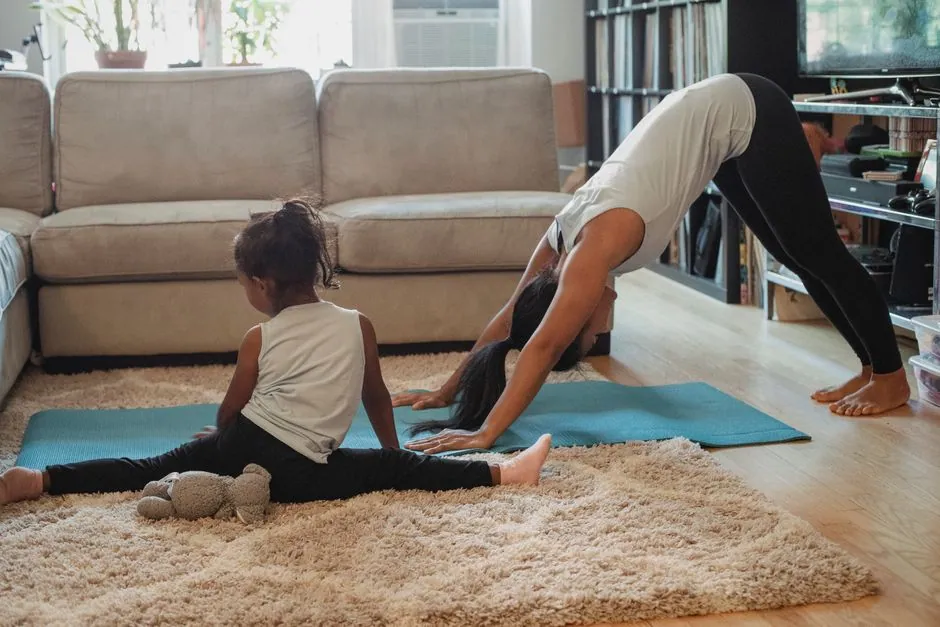
| Adho Mukha Svanasana | Downward-facing dog | 20–30 s | 3 | 20 s | Bend the knees to get the spine long first |
| Bhujangasana | Cobra | 15–20 s | 3 | 20 s | Elbows stay bent and tucked; lift with the back, not the hands |
| Vrikshasana | Tree pose | 30 s each side | 2 | 15 s | Foot above or below the knee, never on it |
| Setu Bandhasana | Bridge | 20–30 s | 3 | 30 s | Press through the heels; keep the chin off the chest |
| Supta Matsyendrasana | Supine twist | 45–60 s each side | 1 | — | Both shoulders stay on the floor; let the knees fall |
| Savasana | Corpse pose | 2–3 min | 1 | — | Palms up, jaw loose, no phone within reach |
Morning or evening: when is the best time for daily yoga exercise?
Morning practice on an empty stomach is the traditional and the practical choice — nothing has crowded it out yet. Evening practice suits stiff bodies and desk workers, since tissue is warmer and hips have unlocked. India’s Common Yoga Protocol advises bathing and eating only 20–30 minutes after practice. The best time is the one you will still be doing in week six.
That 20–30 minute buffer comes from the Ministry of Ayush’s Common Yoga Protocol, the 45-minute sequence used for International Day of Yoga, which also builds in prayer, loosening practices, asana, pranayama, dhyana and a closing sankalpa. It is a reasonable template if you ever want a longer weekend session.
Practical Indian scheduling: if you eat dinner at 9 pm, an evening practice at 7 pm works better than 9:45 pm. If you are a 7 am office commuter, a 20-minute 6:15 am slot is more defensible than a 45-minute plan you will resent by Thursday. Intense backbends and fast Surya Namaskar rounds late at night can be activating for some people; shift those to morning and keep the evening for forward folds, twists and breathwork.

Setting up a daily yoga routine at home in an Indian flat
You need a rectangle of floor roughly 2 m × 1 m, which is less than most balconies. Everything else is optional. A basic 4 mm PVC mat runs ₹500–₹900, a 6 mm TPE mat ₹1,200–₹2,000, and two foam blocks about ₹600 the pair. A folded bedsheet and two hardback books do the same job for the first fortnight — buy equipment after the habit sticks, not before.
Three setup rules that prevent most dropouts:
- Leave the mat out. Rolling it away adds a decision. An unrolled mat is a visual prompt, and prompts are the cheapest habit technology available.
- Fix the slot, not the length. “After I brush my teeth” beats “sometime in the morning”. Length can flex from 10 to 30 minutes; the trigger should not move.
- Check the floor. Vitrified tiles plus a thin mat is a slip risk in Downward Dog. Practise on a rug, or use a cotton yoga rug over the tile.
Ventilation matters more than aesthetics. If you are in Delhi or another city with poor winter air quality, a closed room with an air purifier beats an open balcony on a high-AQI morning, particularly for pranayama.
What 30 days of daily practice realistically changes
In 30 days of 20-minute daily yoga most beginners can expect measurably better hamstring and shoulder range, easier breathing, better sleep quality and lower perceived stress. What you should not expect is significant fat loss, visible muscle gain, or a cured slipped disc. Flexibility responds fastest; strength and body composition need months and a calorie plan.
Here is an honest ramp. Each week adds a little, and rest is built in rather than improvised.
| Week | Daily length | Focus | Surya Namaskar rounds | What to track |
|---|---|---|---|---|
| Days 1–7 | 10 min | Breath + loosening + 4 asanas | 2–3 slow | Did you show up? Tick a box. |
| Days 8–14 | 15 min | Add Vrikshasana and Setu Bandhasana | 4 | Seconds held in Tree pose |
| Days 15–21 | 20 min | Add a supine twist and longer Savasana | 6 | Fingertip-to-floor distance in a forward fold |
| Days 22–28 | 20–25 min | Add Nadi Shodhana, 8 rounds | 6–8 | Sleep quality, 1–5 each morning |
| Days 29–30 | 25–30 min | Full sequence, one gentle day | 8 | Re-measure week-1 markers |
Daily yoga karne ke fayde: what the research supports
The honest list, with sources:
- Blood pressure. A 2025 systematic review of 30 randomised trials with 2,283 participants found yoga lowered systolic blood pressure by about 7.95 mmHg and diastolic by 4.93 mmHg versus waitlist control — though the authors rated the evidence as very low quality (Geiger et al., PLoS One, 2025).
- Chronic low back pain. A 2022 Cochrane review of 21 trials and 2,223 participants concluded yoga is probably better than no exercise for pain and back-related function at three months, with small improvements and probably little difference versus other back-focused exercise (Cochrane, 2022).
- Stress and balance. A 2020 review of 12 studies with 672 participants found beneficial effects on perceived stress in every study, and 11 of 15 balance studies (688 participants) showed improvement (NCCIH, NIH).
- Mood and sleep. Mayo Clinic notes that regular activity including yoga can raise endorphin output, improve mood and improve sleep that stress has disturbed (Mayo Clinic).
Daily yoga practice benefits the evidence does not back
Three claims worth retiring. First, yoga does not “detoxify” organs — your liver and kidneys do that, and no twist changes their output. Second, daily yoga alone rarely produces meaningful fat loss without a calorie deficit; the NCCIH weight-loss data comes from trials that ran for months and usually paired practice with dietary change. Third, a daily practice is not risk-free: the Cochrane review found back pain was the most commonly reported harm and that the risk of harm was higher with yoga than with no yoga, though there was no signal of serious harm. Rare injury is still injury.
Daily yoga for women: periods, pregnancy and perimenopause
There is no evidence that practising through menstruation is harmful, but comfort varies and inversions are commonly skipped on heavy days by personal preference rather than medical rule. Swap Surya Namaskar for Supta Baddha Konasana, Balasana and a supported twist if you feel drained; the point is to keep the slot, not to hit the same intensity.
Pregnancy is different and needs individual clearance. Deep twists, prone poses after the first trimester, and breath retention are generally avoided, and prenatal-specific instruction matters more than any list on a blog. Speak to your obstetrician before starting or continuing. In perimenopause, the useful additions are load-bearing standing poses for bone and balance — Vrikshasana, Virabhadrasana II, Utkatasana — plus slow breathwork for sleep, since the NHS asks for muscle-strengthening work twice weekly and standing yoga qualifies.
Is a daily yoga app enough, or do you need a teacher?
An app is excellent at scheduling and terrible at correcting you. It cannot see that your knee is collapsing inward in Warrior II or that you are hinging at L4 instead of the hips. Use an app for streaks, timers and short follow-along sessions; get live eyes on your form at least every few weeks, especially in the first two months when patterns are being set.
Apps are also biased towards sequences that film well. A daily practice built entirely from 20-minute “flow” videos tends to be heavy on repeated Chaturanga and light on the unglamorous work — balance holds, hip openers, long Savasana, slow breathwork — which is exactly where the NCCIH balance and stress data comes from. If you use an app, audit your last two weeks: if every session was a flow, swap two of them for a slow, held practice.
Our comparison of free yoga apps covers what the main options actually include. If you want breathwork and meditation to be more than an afterthought, the meditation techniques guide pairs well with a 20-minute asana slot.
When online daily yoga classes make more sense
Live online daily yoga classes solve the one thing a recording cannot: a teacher watching and adjusting. They also solve attendance, because a scheduled call at 6:30 am is harder to ignore than an app notification. If you have a specific limitation — a disc issue, knee pain, a shoulder that clicks — a class where the instructor can see you and modify in real time is the safer option, and it is worth the cost difference over a subscription library.
Troubleshooting: when daily practice starts to go wrong
- Wrist pain in Downward Dog or Chaturanga. Usually load, not injury. Spread the fingers, press the knuckle of the index finger down, and drop to forearms for a week. If pain persists past two weeks, get it looked at.
- Lower-back pinching in backbends. You are compressing instead of lengthening. Reduce the height of Bhujangasana by half, keep elbows bent, and engage the glutes lightly before lifting.
- Boredom by week three. Change the sequence order, not the habit. Same time, same mat, different middle.
- Missing two days in a row. Do a five-minute version — Cat–Cow, two Surya Namaskar rounds, Savasana. Restarting small beats restarting perfectly.
- Dizziness in standing or breath practices. Stop, sit, and if it recurs, see a doctor before continuing. Do not breathe through it.
Frequently asked questions about daily yoga
Is it okay to do yoga every single day?
Yes, for most healthy adults, provided intensity varies. Daily gentle or moderate practice is generally safe and the NHS counts yoga toward both weekly activity and twice-weekly strengthening targets. Alternate demanding sessions with restorative ones, and take a genuine rest day if you feel run down or sore for more than 48 hours.
How long should a daily yoga practice be for a beginner?
Start at 10 minutes for the first week and build to 20 minutes by week three. Ten minutes done daily for a month builds a stronger habit than 45 minutes done twice and abandoned. Once 20 minutes is automatic, extend to 30 on the days you have room.
Can daily yoga replace gym workouts or cardio?
Partly. Standing and arm-balancing asanas provide real strengthening stimulus, which is why the NHS lists yoga as a muscle-strengthening activity. But most gentle styles do not push heart rate into the moderate-to-vigorous zone for long, so add brisk walking, cycling or dance if cardiovascular fitness is a goal.
Will daily yoga help me lose weight?
Only modestly, and only alongside a calorie deficit. NCCIH cites a 2022 review of 22 studies with 1,178 participants that documented reductions in body weight, BMI, body fat and waist size, but those were multi-week programmes. Treat yoga as the movement and stress-management layer, not the whole plan.
Should I practise daily yoga before or after eating?
Before. Practise on a reasonably empty stomach — around 2–3 hours after a full meal — and follow the Ministry of Ayush guidance of eating and bathing only 20–30 minutes after you finish. A small banana or a few soaked almonds 30 minutes beforehand is fine if you feel light-headed.
How soon will I notice results from daily yoga?
Breathing ease and sleep often shift inside two weeks. Flexibility changes are usually visible by week four if you measure something concrete, like fingertip-to-floor distance. Strength and posture changes take eight to twelve weeks of consistent practice.
Do I need to do Surya Namaskar every day?
No. It is efficient because it moves the spine in several directions quickly, but it is not compulsory. If your shoulders or wrists object, build the same daily practice from standing poses, Cat–Cow, bridges and twists instead.
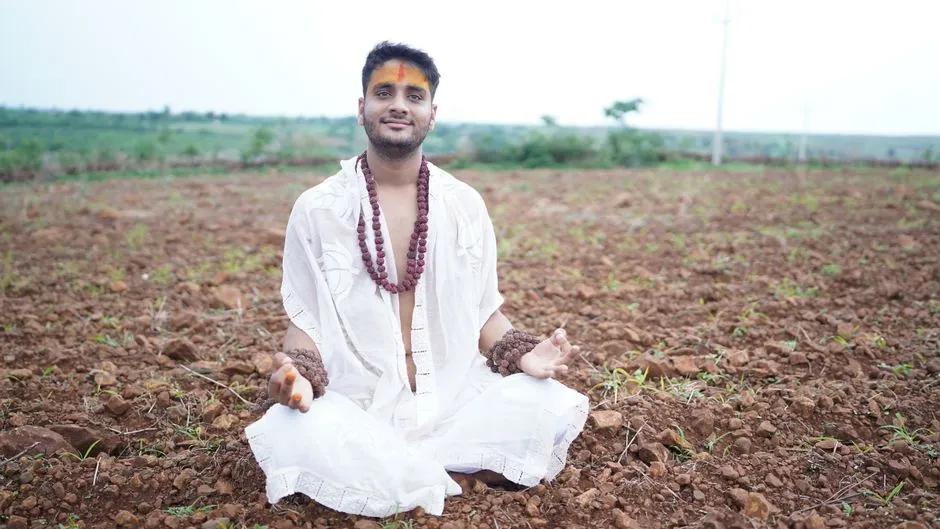
Start with ten minutes tomorrow
Pick one slot, leave the mat out, and run the 10-minute column for seven days before changing anything. If you want a teacher watching your form while you build the habit, Fitstrot’s online yoga classes run live sessions with correction in real time — book a single trial slot and decide from there.


