
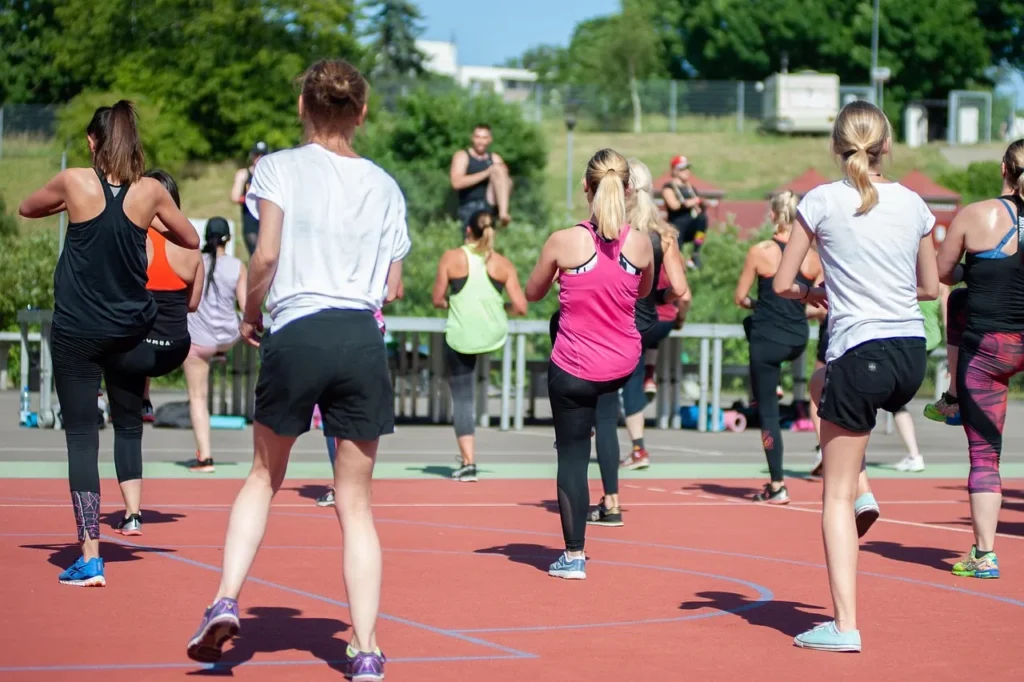
Zumba for legs works, with one honest caveat. A 40–60 minute class keeps your quads, hamstrings, glutes and calves working through hundreds of squats, lunges, steps and bounces, so leg endurance and firmness improve within weeks. What standard Zumba will not do on its own is build much muscle size or burn fat off your thighs alone. “Toned” legs come from two things together: a bit more muscle, and a bit less fat covering it.
This guide keeps the question most people actually type, “does Zumba really tone and shape the lower body?”, and answers it with published data rather than hype. You will find which moves load which muscles, what the studies measured, which Zumba formats push your legs harder, a lower-body strength table to pair with class, and a four-week plan you can follow at home.
Does Zumba for legs actually work?
Yes, for endurance and mild firming; only partly for shape. A 2016 randomised trial found women doing Zumba gained 0.4 kg of lower-limb lean mass over 9 months versus controls, while an 8-week study saw no change in jump power. Zumba reliably tones legs through fat loss and endurance, but visible definition needs added strength work 2 days a week.
That split matters because “toning” is not a separate physiological process. Muscle can grow, stay the same or shrink; fat can go down or up. A leg looks “toned” when there is enough muscle to give it shape and little enough fat for that shape to show. Zumba is excellent at the second part because it is a high-output cardio session. It is moderate at the first part because your legs only ever lift your own bodyweight, at a pace set by the music.
If you are new to the format, our explainer on what Zumba is and how a class is structured covers the basics. Here, the focus stays squarely on your lower body.
Zumba leg workout: which moves load which muscles
Zumba choreography borrows from salsa, merengue, cumbia, reggaeton and, in most Indian studios, Bollywood and bhangra. Footwork-heavy dance styles are, by definition, leg-heavy. The table below maps common steps to the muscles doing the work, so you can put in more effort where it counts.
| Move (style) | Main leg muscles | What it mostly builds | Form cue to get more from it |
|---|---|---|---|
| Cumbia squat-shuffle | Quads, glutes, inner thighs | Muscular endurance | Sit hips back until thighs near parallel; knees track over the 2nd toe |
| Reggaeton bounce | Calves, quads | Calf endurance, ankle stiffness | Stay light on the balls of the feet; let the heel kiss the floor |
| Salsa back-step / cross-body lunge | Hamstrings, glutes | Endurance, balance | Step long, keep the torso tall, front knee soft |
| Merengue march with kickback | Glutes, hamstrings | Glute activation | Squeeze the glute at the top of each kick, no arching of the lower back |
| Bachata side-step / lateral shuffle | Outer hips (glute medius), adductors | Hip stability | Take wide steps and stay low instead of bobbing up |
| Bhangra jumps and knee lifts | Hip flexors, quads, calves | Power, heart rate spikes | Land softly through the whole foot; go low-impact if knees complain |
Two patterns stand out. Almost every move trains endurance rather than maximal strength, and depth is up to you. Instructors often show a shallow squat to keep up with the beat, but a fuller range of motion recruits more of the thigh and glute. Going lower on squats and lunges at the same tempo is the simplest way to make a class harder for your legs.
What the research actually measured
Zumba has been studied more than most dance workouts, and the numbers are consistent: strong cardio effect, modest muscle effect.
- Energy use: In the American Council on Exercise study of 19 women aged 18–22, a class averaged 369 kcal, about 9.5 kcal per minute, at 80% of maximum heart rate and 8.8 METs. That is vigorous intensity by any standard.
- Leg lean mass: A 9-month randomised trial of 107 female hospital employees aged 25–63 (Barene et al., 2016) found the Zumba group improved lower-limb lean mass by 0.4 kg and postural sway versus controls, with no significant change in vertical jump height.
- Jump power and balance: An 8-week trial of 30 female students (Donath et al., 2014) doing Zumba twice a week found 6-minute walk distance rose 21% and dynamic balance by 11–26%, but jump performance did not meaningfully change.
- Overall evidence: A 2016 systematic review of 11 studies and 586 participants (Vendramin et al.) concluded Zumba reliably improves aerobic capacity and produces small reductions in body weight, but found only limited evidence for gains in muscular strength.
Read together, the picture is clear. Zumba makes legs fitter, steadier and slightly leaner over months. It does not behave like a squat rack. A 0.4 kg lean-mass gain spread over both legs across nine months is real but subtle, which is exactly why the rest of this guide pairs dance with deliberate strength work.

Myth: “Zumba will slim down just my thighs”
No workout removes fat from one chosen body part. In a 2013 study, 11 adults did 960–1,200 leg-press reps with one leg, 3 times a week for 12 weeks. Total fat mass fell 5.1%, but the trained leg lost no more fat than the untrained one; most loss came from the arms and trunk. Your body decides where fat comes off first.
That study by Ramírez-Campillo and colleagues in the Journal of Strength and Conditioning Research is one of the cleaner tests of “spot reduction”, and it came out against it. Zumba still helps thigh fat, just not in a targeted way. Burning 300–400 kcal a session, a few times a week, contributes to an overall energy deficit, and your thighs get their share of that loss on your body’s schedule, not the playlist’s.
Zumba for thighs and hips: what changes and what doesn’t
What usually changes in 6–12 weeks: less jiggle when you walk because the muscles under the skin are working more; stronger hips and better balance; a slight drop in thigh and hip measurements if your overall eating supports it. What usually does not change: the basic shape of your hips and thighs (largely genetic and hormonal), fat stored on the inner thigh before it leaves other areas, and cellulite.
On cellulite, be realistic. Cleveland Clinic notes that 80% to 90% of women who have gone through puberty have cellulite. Exercise that builds muscle can make it less visible, usually after two to three months of steady effort, but no workout removes it. Cellulite is normal and not a sign that your Zumba is failing.
Zumba toning, Strong Nation and Step: which dancing Zumba workout suits your legs?
Standard Zumba is the entry point, but not the only format. If legs are your priority, the variations that add load or height matter more than the playlist. Here is how the common options compare for lower-body goals.
| Format | What is added | Leg stimulus | Best for | Watch out for |
|---|---|---|---|---|
| Zumba Fitness (standard) | Nothing; bodyweight dance cardio | Endurance, calories, balance | Beginners, fat loss, heart health | Shallow squats if you rush the beat |
| Zumba Toning | Light weighted toning sticks | Slightly higher muscular load on squats and lunges | People who want more muscle work without a gym | Sticks mostly load the arms; legs still need depth |
| Zumba Step | A raised step platform | More quad and glute work from stepping up against gravity | Glute and thigh emphasis | Knee strain if the step is too high; start with the lowest riser |
| Strong Nation (Strong by Zumba) | Music-synced HIIT: squats, lunges, jumps, holds | The most direct leg strength and power stimulus of the family | Intermediate exercisers chasing definition | High impact; not a first-week class |
| Zumba Gold | Lower-impact choreography | Gentle endurance, balance | Older adults, returning after a break | Too easy to build much leg strength |
Zumba toning sticks: do they help your legs?
Zumba toning sticks are light, maraca-style weights that you shake in time with the music. They add more load to your shoulders and arms than to your legs, because a few hundred grams in each hand barely changes what your quads lift during a squat. Their real value for your legs is the class design: Zumba Toning includes more squats, lunges and holds than a standard class. So treat the sticks as a nice extra, and treat depth and time under tension as the part that works your legs.
Strong Nation: when you want more than toning
Strong Nation drops the dance steps and syncs bodyweight strength and plyometric moves to the beat of the music. Squat holds, lunge pulses and jump transitions make it the closest thing in the Zumba family to a leg-strength session. Fitstrot’s lead Zumba trainer, Yash Pathak, is ZIN Licensed, ACE Certified and Strong Nation Certified. That mix lets our live classes blend dance cardio with Strong-style strength blocks.

Exercises for leg toning to pair with Zumba
This is the piece most “Zumba for toned legs” articles skip. The American College of Sports Medicine’s 2009 position stand on resistance training recommends 8–12 repetition-maximum loads, 2–3 days a week, for novices, and more than 15 reps with short rests (under 90 seconds) for muscular endurance. Zumba covers the endurance end. The routine below covers the strength end, and the NHS guidelines ask adults to do strengthening work that includes the legs and hips on at least 2 days a week anyway.
| Exercise | Sets × reps | Rest | Load at home | Form cue |
|---|---|---|---|---|
| Goblet squat | 3 × 10–12 | 60–90 s | Dumbbell, kettlebell or a filled 5 L water can | Chest up, sit between the heels, knees follow toes |
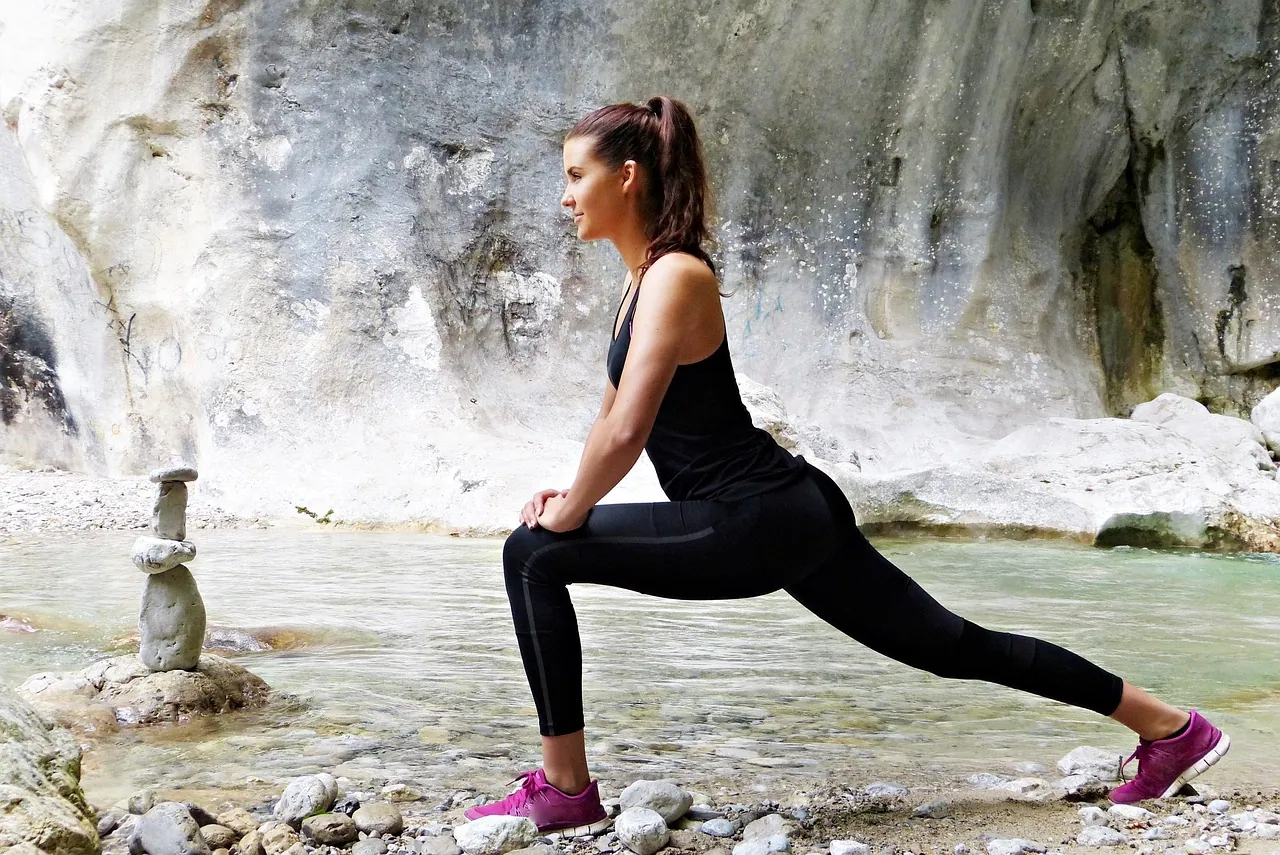
| Reverse lunge | 3 × 8–10 per leg | 60 s | Bodyweight, then two water bottles | Step back, drop the back knee straight down, push through the front heel |
| Glute bridge (or single-leg bridge) | 3 × 12–15 | 45–60 s | Weight resting on hips | Ribs down, squeeze glutes for 1 second at the top |
| Step-up | 3 × 8–10 per leg | 60 s | Sturdy stair or bench, 30–45 cm | Whole foot on the step; the top leg does the work, no pushing off the back foot |
| Romanian deadlift | 3 × 10–12 | 60–90 s | Dumbbells or a loaded backpack | Hinge at the hips, flat back, feel the stretch in the hamstrings |
| Standing calf raise | 2 × 15–20 | 45 s | Bodyweight on a stair edge | Full stretch at the bottom, 1-second pause at the top |
| Wall sit | 2 × 30–45 s | 45 s | Bodyweight | Thighs near parallel, back flat on the wall, breathe |
Progress by adding 1–2 reps each week until you hit the top of the range, then add load. The ACSM suggests a 2–10% increase when you can beat the rep target by one or two. At home, start with water bottles or a backpack filled with books or a 5 kg rice bag before buying adjustable dumbbells. If you train in a gym, the machine and barbell options in our guide to leg workouts at the gym give you more room to progress.

A four-week home Zumba workout plan for stronger legs
This walkthrough combines 3 Zumba sessions with 2 short strength sessions each week. It is built for someone who is healthy, can already manage a 30-minute class, and trains at home or online. The total is roughly 150–220 minutes a week, which fits the NHS target of 150 minutes of moderate or 75 minutes of vigorous activity.
| Week | Mon | Tue | Wed | Thu | Fri | Sat | Sun |
|---|---|---|---|---|---|---|---|
| 1 | Zumba 30 min | Strength: 2 sets each, bodyweight | Rest or walk | Zumba 30 min | Strength: 2 sets each, bodyweight | Zumba 30 min | Rest |
| 2 | Zumba 40 min | Strength: 3 sets, bodyweight | Rest or yoga | Zumba Toning workout 40 min | Strength: 3 sets, bodyweight | Zumba 40 min | Rest |
| 3 | Zumba 45 min | Strength: 3 sets, add light load | Rest or walk | Zumba Toning workout 45 min | Strength: 3 sets, add light load | Strong-style or Step class 40 min | Rest |
| 4 | Zumba 45–60 min | Strength: 3 sets, +1–2 reps or more load | Rest or yoga | Zumba Toning workout 45 min | Strength: 3 sets, +1–2 reps or more load | Strong-style or Step class 45 min | Rest |
Running a Zumba toning workout day
- Warm up for 10 minutes. Harvard’s Nutrition Source advises 10–15 minutes of marching or walking before class and shoes with arch support and a flexible sole instead of grippy running shoes, since Zumba involves lots of side-to-side movement.
- Pick one leg focus per song. On one track, go deeper on every squat; on the next, stay low through all the lateral steps; on the next, add a 2-second hold at the bottom of each lunge.
- Use the toning sticks or light weights only in the strength songs, not during fast turns or jumps.
- End with a 5-minute lower-body finisher: 45 seconds of wall sit, 45 seconds of glute bridges, 45 seconds of calf raises, repeated twice.
- Cool down and stretch quads, hamstrings, hip flexors and calves for 5 minutes.
After week four, keep the structure and keep progressing the strength days. Wondering whether more classes would speed things up? Our breakdown of how often you should do Zumba explains why 3–4 sessions a week is the useful ceiling for most people.
Troubleshooting: when your legs aren’t responding
“My knees hurt after class.” Knees are the most common Zumba injury site. In a 2013 survey of 49 regular participants (Inouye et al.), 29% reported a Zumba-related injury and 42% of those injuries involved the knee. Injured participants attended more classes per week (3.8 vs 2.7). Cut back to 2–3 sessions, swap jumps for the low-impact option, check that your knees are not caving in on squats, and avoid dancing barefoot on hard marble or tile floors. Pain that lasts more than a few days, or any swelling, needs a physiotherapist or doctor.
“Eight weeks in and my legs look the same.” Check three things. Are you adding strength sessions, or only dancing? Are your squats actually deep? Has your overall eating changed at all? If the answer to all three is no, the result is expected rather than a failure. Take thigh and hip measurements every 2 weeks rather than relying on the mirror.
“My legs look bigger.” Early on, this is usually fluid and glycogen stored in newly worked muscle, not fat or bulk. Women in particular rarely add much muscle size from dance and bodyweight work. If measurements keep rising after 6–8 weeks, look at eating before blaming the workout.
“My calves cramp or feel tight.” Constant bouncing on the balls of the feet overloads the calves. Let your heels touch the floor during bounces, stretch your calves after class, drink water through a humid Indian summer session, and check that your shoes are not worn flat.
“I plateau on the strength days.” Rotate from bodyweight to a single leg (split squats, single-leg bridges), then to load. Slowing the lowering phase to 3 seconds also makes the same weight much harder.
Who should adjust this approach?
- Complete beginners: start with 2 standard or low-impact classes a week plus one strength day for the first two weeks. Learning the steps is part of the workout.
- Adults over 40–45: Zumba Gold or low-impact options protect the joints. The strength days matter even more here because leg muscle declines with age.
- Knee, hip or ankle history: skip jumps and deep pivots, keep squats to a pain-free depth, and get a physiotherapist’s go-ahead first.
- Pregnancy and postpartum: get your obstetrician’s approval, avoid high-impact and fast-pivot sections, and rebuild the pelvic floor before returning to jumps.
- Heavier bodies: low-impact versions give you the same leg work with far less stress on the joints. There is no benefit to jumping through pain.
- People who want visibly muscular legs: treat Zumba as your cardio and a structured lifting programme as the main event. A coach from our 1-on-1 personal training can build and progress that plan with you.
Frequently asked questions
How long does Zumba take to tone legs?
Most people feel firmer, stronger-feeling legs and better stamina within 4–6 weeks of 3 sessions a week. Visible changes in shape usually take 8–12 weeks and depend on overall fat loss and on adding strength work 2 days a week. A 9-month trial measured only 0.4 kg of extra leg lean mass from Zumba alone.
Is Zumba better than squats for toning legs?
They do different jobs. Zumba burns around 369 kcal a class and builds endurance; squats with progressive load build strength and shape. For toned legs, combining both works better than either alone: 3 Zumba sessions for cardio and 2 short strength sessions with squats, lunges and bridges.
Can Zumba make your legs bigger or bulky?
Unlikely. Standard Zumba uses only bodyweight at a fast tempo, which builds endurance rather than size. Studies show small lean-mass gains at most. Any early “bigger” feeling is usually fluid in working muscles and settles within a few weeks.
Does Zumba reduce thigh fat?
Indirectly. Zumba helps create the calorie deficit that reduces overall body fat, and thighs lose fat as part of that. Research on spot reduction shows that working one area does not burn fat preferentially from it, so diet and total activity matter more than which moves you do.
Which Zumba class is best for leg toning?
Strong Nation provides the most direct leg strength stimulus, followed by Zumba Step and Zumba Toning. Standard Zumba still works the legs well for endurance. Beginners should start with standard or low-impact classes and add Strong or Step after 3–4 weeks.
Do Zumba toning sticks tone your legs?
Only slightly. Zumba toning sticks are light and mainly add load to the arms and shoulders. The leg benefit of a Zumba Toning class comes from its extra squats, lunges and holds, so focus on depth and control rather than the sticks themselves.
Can I do a Zumba leg workout at home on a tiled floor?
Yes, with care. Wear cushioned shoes with a flexible sole rather than dancing barefoot, choose low-impact versions of jumps, and clear enough space to step sideways. A thin rubber mat under the landing area can help, but a thick yoga mat can make pivots unstable.
Want your legs coached, not just cardio’d? Join a live Fitstrot online Zumba class, tell your trainer that leg strength is your goal, and we will build Strong-style lower-body blocks into your weekly sessions.


