

Your after leg day workout is not really a workout. It is a short, easy session, a few well-built meals and an early night, and it decides whether you walk normally by Wednesday or grip the stair rail for three days. Below are a day-by-day timeline, a 45-minute recovery routine, Indian food portions in grams, programming rules that keep soreness manageable, and the signs that mean you should stop and get checked.
What should you do after a leg day workout?
Do three things: move lightly, eat enough and sleep well. Walk or cycle easily for 20 to 30 minutes, stretch for about 10 minutes, eat roughly 25 to 40 grams of protein at three or four meals with carbohydrates alongside, and sleep seven to eight hours. Skip sprints, jumping and a second heavy leg session for at least 48 hours.
Heavy leg training leaves muscles tired and slightly damaged, and they rebuild only if you supply protein and rest. Light movement keeps stiffness down without adding stress; sitting motionless for 24 hours usually leaves legs stiffer.
For a quick checklist version of the same advice, our after leg workout guide is a good companion to this longer plan.
Day-by-day recovery timeline after leg day
Soreness follows a fairly predictable curve for most people, though beginners and anyone who tried a new exercise or a much higher volume will feel it more. Use this table as a rough map, not a promise.
| When | What it usually feels like | What to do |
|---|---|---|
| Same evening (0 to 6 hours) | Legs heavy and tired, little pain yet | Easy 10-minute walk, a protein and carb dinner, water through the evening |
| Day 1 (12 to 24 hours) | Stiffness starts, stairs feel awkward | 20 to 30 minute walk, 5 to 10 minutes of stretching, upper body training is fine |
| Day 2 (24 to 48 hours) | Peak soreness for most people, tight quads and glutes | Easy cycling or walking, 5 to 10 minutes of foam rolling, no heavy leg work |
| Day 3 (48 to 72 hours) | Fading, though first-timers can still be near peak | Mobility work, a few bodyweight squats as a test, upper body or rest |
| Day 4 to 5 | Close to normal | Train legs again if you can squat to a comfortable depth without sharp pain |
The day-four test: if a bodyweight squat feels smooth and your warm-up sets feel light, train legs again. If you are still limping, wait another day.
Can you train upper body the day after leg day?
Yes. Your chest, back, shoulders and arms are not sore after squats and leg presses, so an upper body session the next day is fine. Watch your lower back and core: if heavy deadlifts left them tired, trim overhead presses and barbell rows by 10 to 20 percent or switch to supported versions such as chest-supported rows.
This is exactly how a push pull legs workout split is built. Legs take the hit on one day, then pushing and pulling muscles take over while the lower body rebuilds. If you run that split, our breakdowns of the push day workout and the pull day workout slot straight in after your leg session.
A sensible upper body day after legs: four to five exercises, 3 sets of 8 to 12 reps, 60 to 90 seconds of rest, and nothing that needs leg drive, so skip push presses and heavy loaded carries.
Myth check: soreness does not prove a good leg session
Three common myths lead people to train worse the day after.
- “No soreness means the session was wasted.” Soreness mostly reflects how unfamiliar the work was, not how effective it was. Judge progress by your logbook: more reps or more weight at the same effort.
- “Stretching hard removes soreness.” Gentle stretching feels good and keeps you mobile, but do not expect it to erase soreness. Stay at mild tension for 20 to 30 seconds.
- “A full rest day means lying down all day.” Complete stillness usually leaves you stiffer. Easy walking beats the sofa almost every time.
A 45-minute active recovery walkthrough
Active recovery should feel easy enough that you finish with more energy than you started. Run through these blocks in order on day one or day two. Effort is on a 1 to 10 scale, where 10 is an all-out set.
| Block | Time | Effort | Form cue |
|---|---|---|---|
| Easy walk (or stationary bike) | 20 to 30 min | 3 to 4 out of 10, able to talk in full sentences | Flat surface, heel-to-toe, relaxed shoulders; on a bike, keep resistance low |
| Foam rolling: quads, glutes, calves | 5 to 10 min total | Firm but tolerable | 30 to 60 seconds per area, roll slowly, never roll directly on the knee joint or lower back |
| Static stretches: quads, hamstrings, hip flexors, glutes, calves | 20 to 30 sec each, 2 rounds | Mild tension, no pain | Breathe out as you settle in; do not bounce |
| Bodyweight mobility: squats, glute bridges | 2 sets of 8 to 10 each | 2 to 3 out of 10 | Knees track over toes, pause one second at the bottom, squeeze glutes at the top of the bridge |
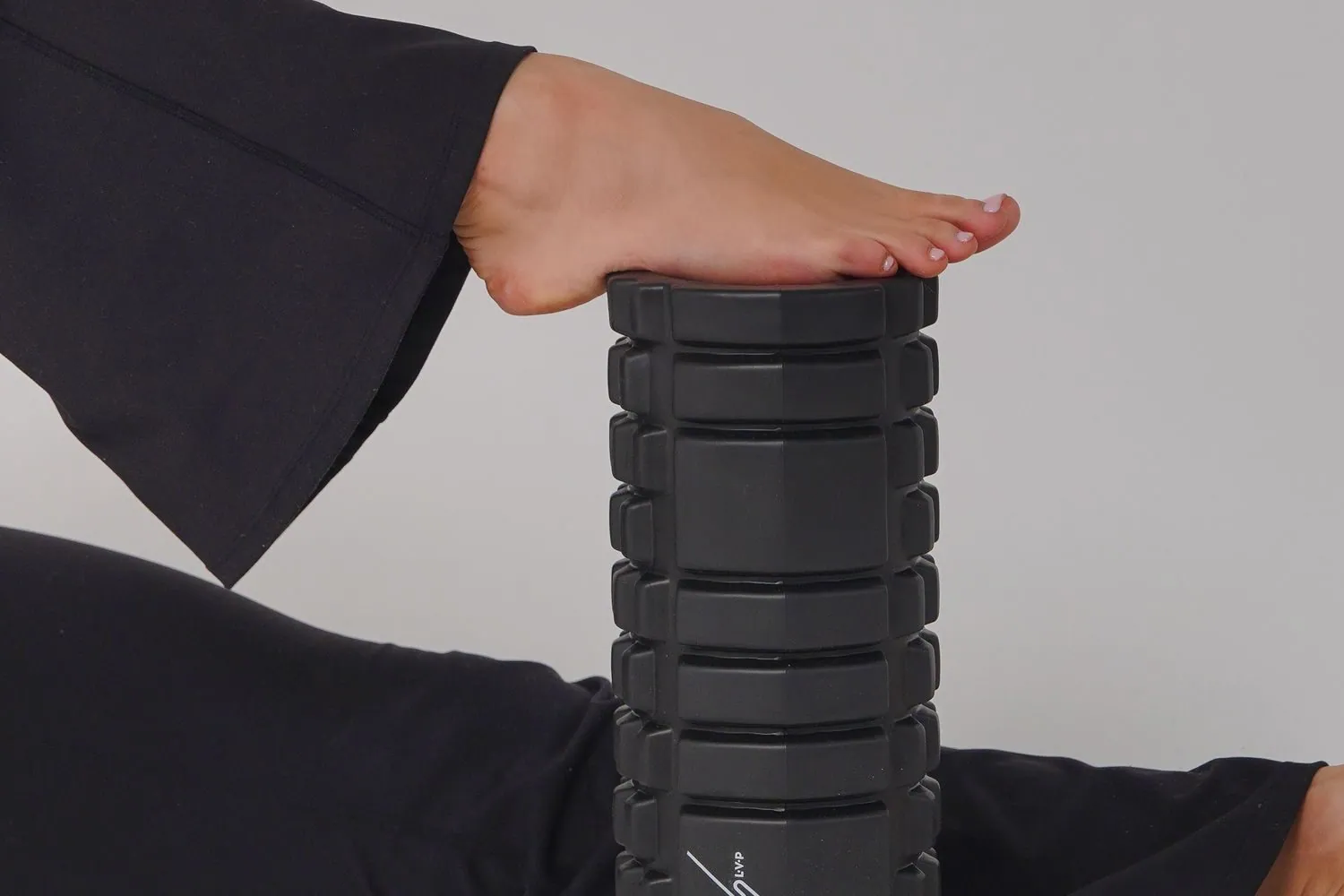
For more stretching options, see our guide to stretching after workout. Foam rolling is optional; walking and stretching alone are enough. Avoid anything that copies the load you just applied: sprints, skipping, box jumps or another heavy squat or deadlift session.
How much protein and water do you need after leg day?
Aim for 1.6 to 2.2 grams of protein per kg of bodyweight across the day, so a 70 kg person needs roughly 110 to 155 grams, split over three or four meals. Add carbohydrates at most meals to refill glycogen, and drink enough water to keep urine pale yellow, which is often 2.5 to 3.5 litres in an Indian summer.
There is no magic 30-minute window. What matters is the daily total, including rest days, when many people drop protein. For carbohydrates, roughly 3 to 5 grams per kg on a training day suits most gym-goers.
| Food | Portion | Protein (about) | Carbs (about) |
|---|---|---|---|
| Whole eggs | 2 eggs | 12 g | 1 g |
| Paneer | 100 g | 18 g | 3 g |
| Cooked dal | 1 katori (150 g) | 8 g | 22 g |
| Roti | 2 medium | 6 g | 38 g |
| Cooked rice | 1 katori (150 g) | 4 g | 42 g |
| Curd | 1 cup (200 g) | 7 g | 8 g |
| Soya chunks (dry weight) | 30 g | 15 g | 10 g |
| Cooked chicken breast | 100 g | 30 g | 0 g |
| Banana | 1 medium | 1 g | 25 g |
These are rounded home-kitchen estimates and will shift with your recipe and cooking oil. As an example, a lunch of 2 rotis, a katori of dal, 100 g paneer sabzi and a cup of curd lands at around 40 grams of protein. Vegetarians can reach the target with paneer, curd, dal, soya and eggs if they eat them; if the numbers still feel out of reach, a session with an online nutritionist can turn your usual thali into a workable plan.
Is your soreness normal DOMS or something else?
Normal delayed onset muscle soreness is a dull, tight ache in both legs that starts 12 to 24 hours after training, peaks at 24 to 72 hours and eases as you move. Sharp joint pain, swelling in one spot, soreness worsening after 72 hours, or weakness beyond five days is not typical and deserves rest and a professional check.
Here is how to troubleshoot the common problems.
- Stairs are painful. Walk for 10 minutes before attempting them, hold the rail, and take them one at a time. The first few steps are always the worst.
- Sharp pain at the front of the knee during squats. Cut depth to a pain-free range, reduce the load by about 20 percent, and check that your knees follow the line of your toes. If the pain returns, stop that exercise and see a physiotherapist.
- Soreness lasts more than five days after every leg session. You are doing too much too soon. Reduce total sets by 25 to 30 percent for two weeks, then build back gradually.
- Severe, disabling soreness with swelling, weakness and unusually dark urine. Stop training and see a doctor the same day. Do not try to push through this with a foam roller and a protein shake.
This is general training advice, not a medical assessment. If you have a known knee, hip, heart or kidney condition, or are unsure what you feel, check with your doctor first.
Why your leg day programming decides how sore tomorrow feels
Recovery starts in the session itself. These ranges suit most gym-goers.
- Main lift (squat, hack squat or leg press): 3 to 4 sets of 6 to 10 reps, resting 2 to 3 minutes.
- Hip hinge (Romanian deadlift): 3 sets of 8 to 10 reps, resting about 2 minutes.
- Single-leg work (lunges, split squats): 2 to 3 sets of 8 to 12 reps per leg, resting about 90 seconds.
- Hamstring curl and calf raise: 2 to 3 sets of 10 to 15 reps, resting 60 to 90 seconds.
Total hard sets per session usually land around 8 to 10 for a beginner and 12 to 16 for someone with a year or more of training. Stop most sets one to three reps short of failure, particularly in the first three weeks of a new programme.
Progress one thing at a time. Add one or two reps per set each week until you hit the top of the range, then add 2.5 to 5 kg and drop back to the bottom. Do not raise load, sets and exercise count in the same week.
Form cues matter too. On squats, brace your core before you descend, keep your knees tracking over your toes, and let your hips and chest rise together. On Romanian deadlifts, hinge at the hips, keep a soft bend in the knees and slide the bar close to your thighs until you feel the hamstrings load. Slow lowering over two to three seconds causes more soreness, so use it deliberately. For full session ideas, see our leg workouts at the gym guide.
Adjusting the plan for beginners, women, men and home trainers
The principles stay the same for everyone, but a few details change.
- Beginners: Start with 2 sets of 3 or 4 leg exercises for the first two to three weeks and expect stronger soreness than the table suggests. A structured month such as our 30 day workout plan keeps your volume under control while you adapt.
- Women: The recovery plan is the same. If your energy is low on a given day, shorten the training session but keep the walk and the protein. Our leg workout guide for women at the gym follows the same recovery logic.
- Men: Heavy squatters and deadlifters should leave about 48 hours between heavy hinge sessions. The leg day workout for men guide shows how to space them.
- Home trainers: Slow tempo bodyweight squats and lunges can still leave you sore, so use the same timeline. Our leg day workout at home plan works with it.
Frequently asked questions
What should you do after a leg day workout?
Keep moving lightly with a 20 to 30 minute walk or easy cycle, stretch gently for about 10 minutes, eat protein at every meal with carbohydrates, and sleep seven to eight hours. Avoid another intense lower body session for at least 48 hours.
Can you work out the day after leg day?
Yes, as long as it is not another heavy lower body session. Upper body training, light cardio and mobility work are all fine. Scale back if your core or lower back is still tired from squats or deadlifts.
How long does leg day soreness last?
For most people it starts within 12 to 24 hours, peaks between 24 and 72 hours and fades by day four or five. Beginners may take a little longer. If it is severe, sharp or getting worse after 72 hours, rest and get it checked.
Is walking good after leg day?
Yes. An easy 20 to 30 minute walk on flat ground increases circulation and reduces stiffness without adding load. Keep the pace relaxed enough to hold a conversation, and avoid steep inclines that turn it into training.
Should you eat more on leg day?
You should not need a huge increase, but do not under-eat. Hit your daily protein target of roughly 1.6 to 2.2 grams per kg and include carbohydrates such as roti, rice, oats or fruit so your legs can refill their glycogen.
Want a leg day programme and recovery plan built around your own schedule and body? Book a session with a coach for 1-on-1 personal training and get your sets, rest days and meals mapped out.


