
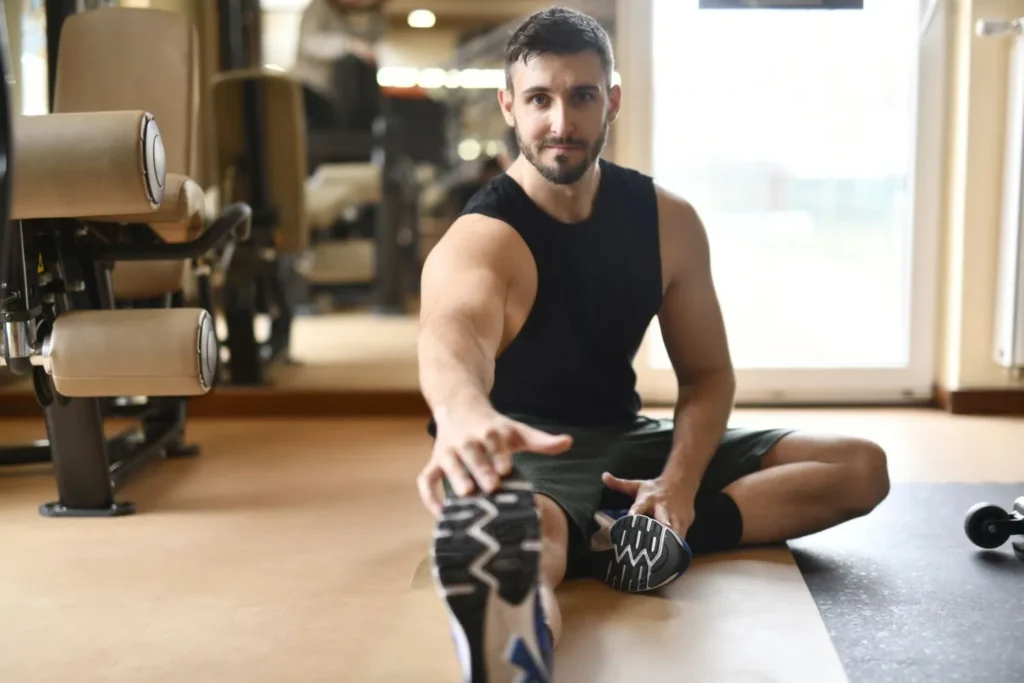
Stretching after workout sessions means holding gentle static stretches for 20 to 30 seconds per muscle group once your last set or song is done, while your body is still warm. It takes about 6 to 10 minutes. It will not erase tomorrow’s soreness, but it helps your heart rate settle, keeps your range of motion from shrinking, and gives you a quiet moment to notice what feels tight. This guide covers what to stretch, for how long, and when to skip it.
Is stretching after a workout actually necessary?
No, it is not essential, but it is useful. Spending 6 to 10 minutes on static stretches after training helps your heart rate drop gradually and, practised over weeks, helps you keep or slowly improve flexibility. Skipping it once costs you nothing. Skipping it for months can leave tight hips and hamstrings, especially if you sit all day.
Think of it as maintenance rather than medicine. Your workout is the work. The stretch is the tidy-up that keeps joints moving well so the next session feels easier to start. Most people who say it “does nothing” have either rushed it or expected it to fix soreness, which is not its job.
Three myths about stretching after a workout
Gym floors are full of stretching folklore. Here are the three claims we hear most, and what is actually true.
- Myth: stretching flushes out lactic acid. Lactate clears from your blood within roughly an hour after you stop, whether you stretch or not. It is not what makes you sore the next morning.
- Myth: stretching prevents soreness. The ache you feel 24 to 48 hours later is delayed onset muscle soreness (DOMS), caused by tiny tears in muscle fibres from hard or unfamiliar work. Stretching may feel pleasant, but it does not reliably prevent it.
- Myth: the deeper the stretch, the better. Pushing to sharp pain does not make you more flexible faster. It makes you more likely to strain something. A good stretch is a firm pull at about 6 or 7 out of 10 discomfort, never a stab.
If soreness is your main worry, our guide to muscle pain after workout explains what is normal and what is not.
The 8 best post workout stretches (with form cues)
You do not need twenty stretches. These eight cover the muscles most people train. Hold each for 20 to 30 seconds per side, breathe slowly, and stop at a firm pull, not pain.
| Stretch | Muscles it targets | Hold | Form cue |
|---|---|---|---|
| Standing quad stretch | Front of thigh, hip flexors | 20-30 sec per side | Pull heel to glute, knees together, stand tall. Hold a wall for balance. |
| Seated hamstring stretch | Back of thigh, calf | 20-30 sec per side | Hinge forward from the hips with a flat back. Do not round to reach your toes. |
| Kneeling hip flexor stretch | Front of hip, quads | 20-30 sec per side | Tuck the pelvis slightly, then shift forward. Do not arch your lower back. |
| Figure-four glute stretch | Glutes, outer hip | 20-30 sec per side | Lie on your back, ankle over opposite knee, pull the thigh toward your chest. |
| Calf stretch at a wall | Calves, Achilles | 20-30 sec per side | Back leg straight, heel pressed down, lean the hips toward the wall. |
| Doorway chest stretch | Chest, front shoulders | 20-30 sec per side | Forearm on the frame at shoulder height, turn the body away slowly. |
| Cross-body shoulder stretch | Rear shoulder, upper back | 20-30 sec per side | Pull the arm across the chest with the other hand. Keep shoulders down. |
| Child’s pose | Lower back, lats, hips | 30-45 sec total | Knees wide, sit back toward heels, arms long. Breathe into the back ribs. |
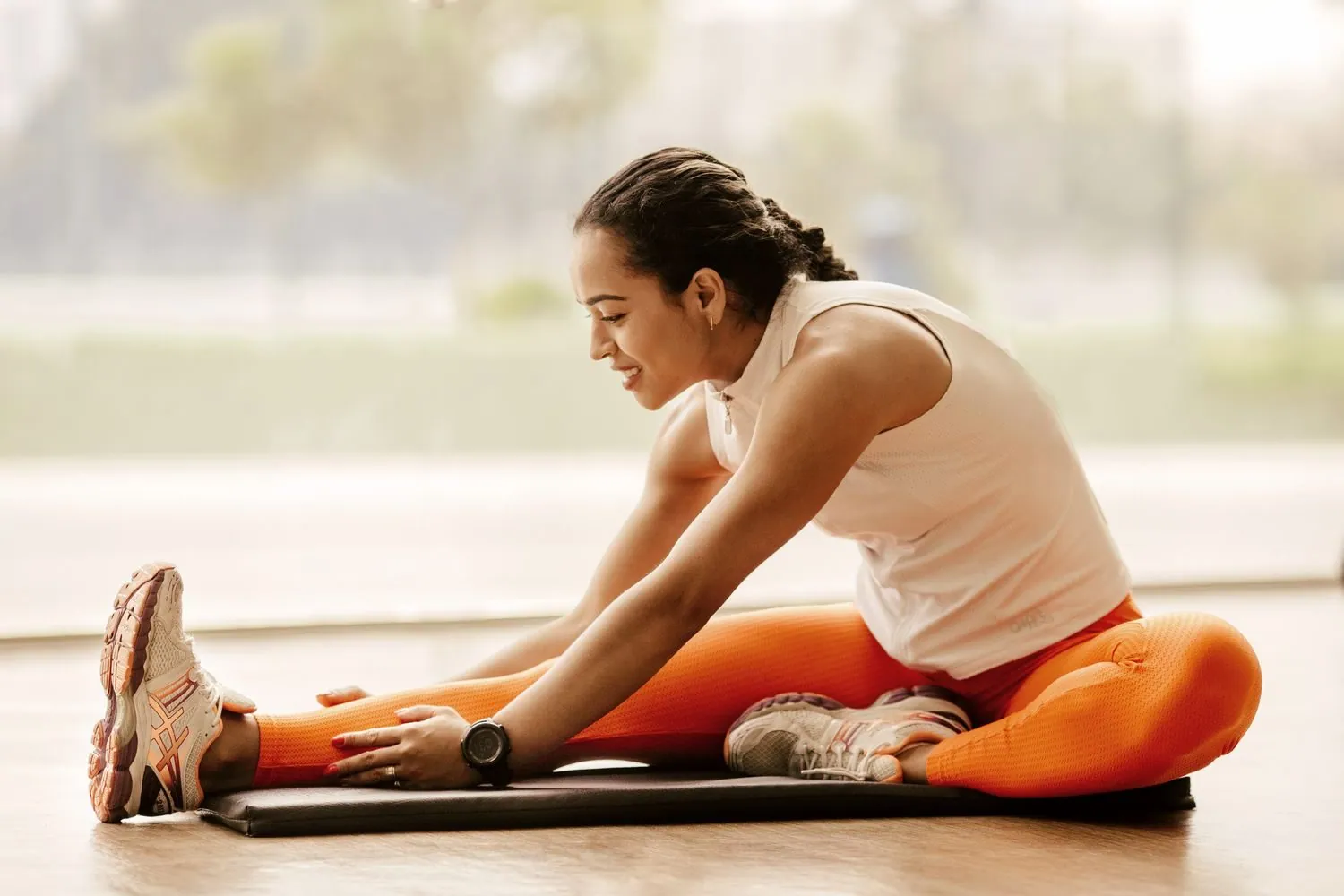
If you want a longer, flow-style sequence with breathing cues, our cool-down stretches after workout guide goes further than this table.
How long should you stretch after a workout?
Hold each static stretch for 20 to 30 seconds, repeat each one 2 to 3 times if you have time, and keep the whole routine to roughly 6 to 10 minutes. Doing it after most sessions, at least 3 to 4 days a week, is enough to notice better flexibility within a couple of months.
Short on time? Do not skip it entirely. Pick the two or three muscle groups you worked hardest and give each one a single 30-second hold. That is a perfectly respectable two-minute version, and far better than nothing.
Which stretches match which workout?
Different sessions load different muscles, so a fixed routine wastes time. Use this as a quick reference for stretching after strength training, cardio or dance.
| Session type | Prioritise these stretches | Suggested time | Extra note |
|---|---|---|---|
| Leg day (squats, lunges, deadlifts) | Quad, hamstring, hip flexor, glute, calf | 8-10 min | Take your time. These are the biggest muscles. |
| Upper body push (chest, shoulders, triceps) | Doorway chest, cross-body shoulder, triceps overhead | 5-6 min | Keep the neck relaxed, no shrugging. |
| Back and biceps | Child’s pose, lat stretch, forearm and biceps stretch | 5-6 min | Breathe into the stretch, do not hold your breath. |
| Running or brisk walking | Calf, quad, hamstring, hip flexor | 5-7 min | Walk for a few minutes first so you are not stretching with a pounding heart. |
| Zumba or dance cardio | Calf, hip flexor, glute, lower back | 5-7 min | Lots of hip and ankle work, so go gently on these. |
| Full-body or HIIT | One stretch per major area | 6-8 min | Let your breathing settle first. |
Your first 8 minutes after the last rep: a walkthrough
Here is a simple order that works for most gym, home and studio sessions.
- Walk for 2 to 3 minutes. Do not sit down or stop dead. Slow walking lets your breathing and heart rate come down smoothly.
- Take a sip of water. Then start with the biggest muscles you trained, while they are still warm.
- Stretch legs first. Quads, hamstrings, hip flexors and calves, in that order, 20 to 30 seconds each side.
- Move to hips and glutes. The figure-four stretch is gentle and works on the floor or a bench.
- Finish with the upper body. Chest, shoulders, then child’s pose to unload the back.
- End with three slow breaths. In through the nose for about 4 seconds, out for about 6. This is your signal that the session is over.
Ease into each position slowly, never bounce, and release just as slowly. Bouncing can trigger a protective reflex that tightens the muscle instead of letting it lengthen.
Static vs dynamic: stretching before and after a workout
Both are useful, but at different times. Dynamic moves like leg swings and arm circles belong before training. Static holds belong after. Mixing them up is one of the most common beginner mistakes.
| Feature | Before workout (dynamic) | After workout (static) |
|---|---|---|
| Goal | Raise temperature, rehearse movement | Lower heart rate, maintain range of motion |
| Style | Controlled movement, no long holds | Hold 20-30 seconds, no bouncing |
| Typical time | 5-10 minutes | 6-10 minutes |
| Examples | Leg swings, walking lunges, arm circles | Seated hamstring, quad stretch, child’s pose |
| Risk if skipped | Stiff first sets, awkward form | Slowly narrowing flexibility over months |
Long static holds on cold muscle just before heavy lifting or sprinting can briefly blunt power, so save them for later. Our warm up before workout guide covers the first ten minutes properly. If you do yoga around your gym sessions, yoga before or after workout explains how to slot it in.
Troubleshooting: when stretching does not feel right
Most stretching problems come down to timing, intensity or the wrong expectations. Check these first.
- “I feel nothing.” You may be stopping too early or standing in the wrong position. Re-read the form cue, then move slightly deeper until you feel a mild pull, and hold for the full 20 to 30 seconds.
- “It hurts.” Back off. A stretch should feel like firm tension, not sharp or burning pain. Sharp, one-sided or pinching pain at a joint is a signal to stop.
- “My hamstring cramps.” Cramping often means you pushed too hard or are tired and low on fluids. Ease off, breathe, and try a gentler version, such as bending the knee slightly.
- “I have no time.” Do two minutes on your hardest-worked muscles. Consistency beats length.
- “I am no more flexible after weeks.” Progress is slow. Most people need about 4 to 8 weeks of regular practice to notice a change, and genetics play a role too.
Normal tightness feels dull, spread across the muscle and fades within 3 to 5 days. Swelling, bruising, a pop during the lift, numbness, tingling, or pain that worsens day by day is not a stretching problem. Rest, and see a doctor or physiotherapist. Our piece on whether you should work out with sore muscles helps you decide when to train and when to back off.
Stretching after a workout for desk workers, beginners and over-40s
Your stretching priorities shift with your daily life, not just your gym session.
If you sit 8 hours a day. Many Indian office workers and long-commute drivers have tight hip flexors and hamstrings. Make the kneeling hip flexor stretch and the seated hamstring stretch non-negotiable, and give them the full 30 seconds.
If you are a beginner. Keep it simple. Pick four stretches, hold each for 20 seconds, and build up. Do not compare yourself to anyone who can touch their toes. Your range will grow with practice.
If you are over 40. Warm muscles are even more important, so stretch right after training, not hours later. Move slowly and avoid forcing end-range positions.
If you have an injury, joint pain or a medical condition. Check with your doctor or a physiotherapist before adding new stretches. A general routine cannot account for a specific injury.
If you want your stretching built around your own body and training, 1-on-1 personal training includes coach feedback on form, and online yoga classes are a good way to build flexibility on rest days.
Frequently asked questions
Should you stretch immediately after a workout?
Yes, ideally within 10 minutes of finishing, once your breathing has settled. Your muscles are warm, which makes static stretching safer and more comfortable. Walk for a few minutes first, then begin. If you stop hard and sit, hold off until your heart rate has come down.
Does stretching after a workout reduce soreness?
Not reliably. Muscle soreness comes from tiny fibre damage and inflammation, and it peaks around 24 to 48 hours after hard or new training. Stretching may feel good in the moment, but gentle walking, enough sleep, and time do more for recovery.
How many minutes should you spend stretching after exercise?
About 6 to 10 minutes is plenty for most people: 20 to 30 seconds per stretch, on the main muscles you used. If you only have 2 minutes, stretch the one or two muscle groups you trained hardest.
Is it bad to skip stretching after a workout?
No. Skipping it occasionally causes no harm. Over months, though, you may notice stiffer hips, hamstrings or shoulders, particularly if you also sit a lot. Even a quick 3-minute version most days is better than none.
Is it better to stretch before or after a workout?
Both, but different types. Use dynamic, moving stretches before training to warm up, and slower static holds of 20 to 30 seconds afterward. Long static holds on cold muscle right before lifting can reduce power briefly, so save them for the end.
Next step: tell a Fitstrot coach which muscles feel tight after your sessions, and we will put together a short post-workout routine that fits your training. Start with 1-on-1 personal training.


