
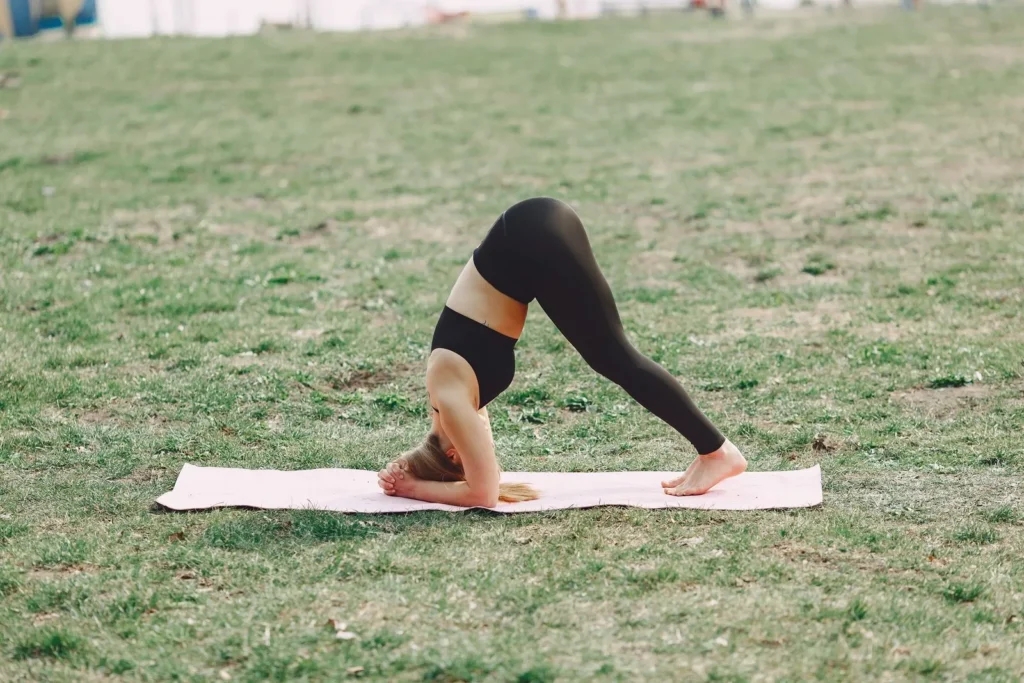
The yoga before or after workout question comes down to one rule: use short, flowing yoga before training to warm up, and slower, longer-held yoga after training to cool down. A 5 to 10 minute flow beforehand helps your joints move freely, while a 10 to 20 minute cooldown afterwards lets your breathing settle and tight spots ease. Neither placement is the single right answer. This guide shows when each works, gives you a pose-by-pose flow for both with alignment cues and easier options, and flags who should adjust the plan.
Yoga before or after workout: which should you choose?
Choose short, dynamic yoga before a workout (5 to 10 minutes) and slower, longer-held yoga after it (10 to 20 minutes). Before, the aim is warm joints and easy movement. After, the aim is a calmer heart rate and gentler stretching. If you can only do one, pick whichever your body is asking for that day.
A quick way to decide on any given day:
- Stiff, cold or slow at the start (common early in the morning or after long desk hours): do the warm-up flow.
- Wired, tight or sore at the end: do the cooldown.
- Only 10 free minutes: spend roughly 4 before and 6 after.
- Want a full 45 to 60 minute class: treat it as its own session, not something squeezed in front of lifting or running.
Doing both takes about 15 minutes in total, which is why many people use the bookend approach on training days.
Before vs after at a glance
Screenshot this table and keep it on your phone for the gym or living room floor.
| Detail | Yoga before workout | Yoga after workout |
|---|---|---|
| Main job | Warm joints, wake up muscles | Lower heart rate, ease tightness |
| Style | Flowing and dynamic | Slow and supported |
| Length | About 5 to 10 minutes | About 10 to 20 minutes |
| Hold per pose | Moving, or 1 to 3 breaths | Roughly 30 seconds to 2 minutes |
| Effort | Light to moderate; you can still talk | Very light, getting calmer |
| Breathing | Steady, matched to movement | Slow, with a longer exhale |
| Typical poses | Cat-cow, low lunge, sun salutation, chair pose | Child’s pose, half split, reclined twist, legs up the wall |
| Biggest mistake | Turning it into a full class | Forcing deep stretches while tired |
Post-workout yoga is where many people notice the most difference, because warm muscles feel easier to stretch and the slow breathing is a nice reset. Treat it as a comfort and recovery habit rather than a guarantee against soreness. Pre-workout yoga is also not a full substitute for a proper warm-up: before heavy lifts or sprints, still add a few lighter sets or easy jogging.
A 7-minute yoga warm-up flow, pose by pose
Move through this once, at a brisk but controlled pace. You should finish feeling warmer and looser, not tired. Stop any pose that causes sharp, pinching or tingling pain.
| Pose | Time (about) | Alignment cue | Easier option |
|---|---|---|---|
| Cat-cow | 1 minute, 8 slow rounds | Wrists under shoulders, knees under hips; move the spine from the tailbone | Sit on a chair with hands on knees |
| Low lunge, rocking gently | 1.5 minutes, both sides | Front knee over the ankle, back knee padded, ribs stacked over hips | Hands on two books or cushions |
| Downward dog with heel pedals | 1 minute | Press the floor away, lengthen the spine before straightening the legs | Bend knees generously, or place hands on a wall |
| Sun salutation A | 2 minutes, 3 to 4 rounds | Step back rather than jump; keep elbows hugging the ribs when lowering | Lower the knees, skip the push-up phase |
| Chair pose pulses | 30 seconds, about 8 pulses | Weight in the heels, knees tracking over the second toe | Sit back only halfway |
| Forward fold with slow roll-up | 1 minute, 4 to 6 rolls | Hinge from the hips, soften the knees, lift the head last | Hands on thighs, shorter fold |
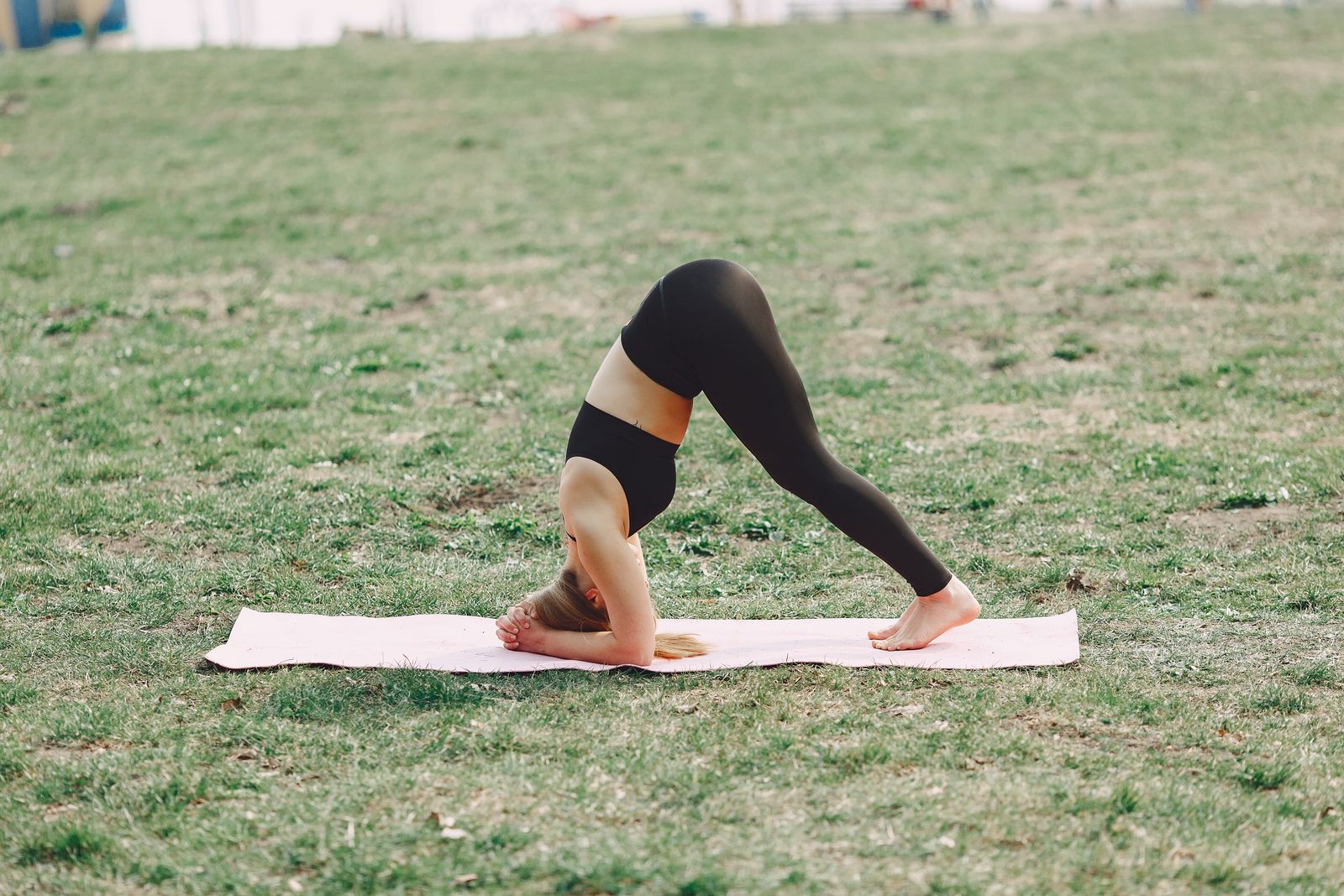
If your legs feel heavy once the flow ends, you probably went too deep or too long. Next time shorten it and keep holds to three breaths.
A 12-minute cooldown to follow your workout
Walk easily for 2 to 3 minutes first, until you can speak in full sentences, then move to the mat. Aim for an inhale of about 4 counts and an exhale of about 6. Props can be homemade: a folded blanket, two firm pillows or a rolled-up dupatta work well.
| Pose | Hold (about) | Alignment cue | Easier option |
|---|---|---|---|
| Child’s pose | 1 minute | Knees wide, hips back, forehead resting down, arms long | Pillow under the chest; folded towel behind knees |
| Half split | 45 seconds per side | Hips over the back knee, foot flexed, spine long rather than rounded | Bend the front knee, hands on cushions |
| Reclined figure-four | 1 to 2 minutes per side | Keep the top foot flexed to protect the knee; relax the head and shoulders | Keep the bottom foot on the floor |
| Reclined spinal twist | 1 minute per side | Both shoulders heavy, knees stacked, turn the head only if the neck is comfortable | Cushion under the knees |
| Supine butterfly | 1 to 2 minutes | Soles together, knees falling open without force | Cushions under each knee |
| Legs up the wall | 2 to 3 minutes | Hips a hand’s width from the wall, chin level, arms loose | Bend the knees, or rest calves on a chair |
Pigeon pose is swapped for the reclined figure-four on purpose. It gives a similar hip stretch with far less twisting force on the knee, which matters when your legs are already tired.

Want longer holds? Restorative yoga supports the body with props, and yin yoga holds poses for several minutes. Both work better as separate sessions, in the evening or on a rest day, than straight after a hard workout. For a deeper wind-down at night, yoga nidra is a guided lying-down practice that asks for no effort.
Match the yoga to the workout you just did
The workout decides which poses earn a place in your routine.
- Strength training: before, focus on shoulder and hip mobility (cat-cow, low lunge, chair pulses). After, stretch what you trained, for example half split after legs or child’s pose with long arms after back day. Our guide to yoga vs gym shows how the two share a week.
- Running or cycling: before, use low lunge and downward dog pedals for hips and calves. After, add half split, figure-four and legs up the wall. See yoga for runners for a fuller sequence.
- HIIT, Zumba or dance: before, a few easy sun salutations. After, a walk and slow breathing first, then the cooldown table above.
- Swimming or shoulder-heavy sessions: before, gentle cat-cow and arm circles. After, child’s pose with arms forward and a reclined twist.
Myth check: does stretching before a workout hurt performance?
Not if the stretches are short and moving. Very long static holds, often a minute or more per muscle, can temporarily lower power and speed in some people, so save those for after training. Brief dynamic yoga movements of one to three breaths are commonly used in warm-ups without that drawback.
Two more myths worth clearing up:
- Myth: cooldown yoga flushes out lactic acid. Lactate usually drops back toward normal within about an hour whatever you do. Soreness that shows up a day or two later, often peaking around 24 to 72 hours after unfamiliar exercise, is not caused by lactic acid. A cooldown may leave you feeling looser and calmer, but it will not erase soreness.
- Myth: deeper is better. Pain is not progress. Aim for a mild to moderate stretch, around 5 out of 10, with easy breathing. If your breath gets tight or you hold it, back off.
Troubleshooting: when yoga makes the workout feel worse
- Heavy legs in your first set: the warm-up was too long or too deep. Cut it to 5 minutes and skip the chair pulses.
- Dizzy coming up from a forward fold: keep the knees bent, roll up slowly and pause for two breaths. If it keeps happening, mention it to your doctor.
- Sleepy after the cooldown: shorten legs up the wall to one minute, or save long relaxation for the evening.
- Lower back pinches in folds: bend the knees, put hands on thighs and reduce range.
- Knees complain in child’s pose: place a folded towel behind the knees or use the supported version.
- Wrists ache in downward dog: press through the knuckles, or use a wall.
- You keep skipping the cooldown: set a 10-minute timer as you finish your last set and treat it as part of the workout.
Who should change or skip these poses?
Anyone with a recent injury, surgery, pregnancy, high blood pressure, glaucoma, vertigo or a bone-density concern should check with their doctor or physiotherapist first, and may need different poses. Everyone else can use the easier options above, move slowly, and stop at sharp pain, dizziness or numbness.
- Beginners: learn three or four poses well before adding more. Alignment first, depth later.
- Desk workers with tight hips: raise your hands on cushions in lunges and keep holds shorter.
- Very flexible or hypermobile people: stretch to a mild sensation only, keep muscles gently active, and skip hanging in the joints.
- Pregnancy: ask your doctor before starting. Lying flat on the back for long periods and deep twists are often advised against later on.
- High blood pressure, glaucoma or vertigo: ask before long head-down poses such as forward folds and downward dog.
- Older adults or low bone density: avoid deep forward folds and forceful twists; chair and wall versions are safer.
Chest pain, unusual breathlessness or severe pain during exercise calls for stopping and seeing a doctor, not more stretching.
Fitting both into your week
Yoga placement works better as a weekly pattern than as a one-off rule.
- Training days: 5 minutes before, 10 minutes after.
- Rest days: a 30 to 45 minute session of hatha yoga suits slower, steadier practice.
- Standalone strong days: vinyasa or power yoga counts as a full workout, so keep it apart from lifting or running.
- Time of day: read the best time to do yoga, or try morning yoga if a short early flow could double as your warm-up.
Yoga can build balance, flexibility and some strength, but it may not be enough alone for muscle-building or endurance goals. Our comparison of yoga vs exercise explains the overlap.
FAQ: yoga before and after exercise
Is it better to do yoga before or after cardio?
A short, dynamic flow of 5 to 7 minutes before cardio loosens hips, calves and shoulders. A slower cooldown of 10 to 15 minutes afterwards lets breathing settle and stretches warm muscles more comfortably. With time for only one, warm up before fast cardio such as sprints, and cool down after cardio that leaves you tight.
Can yoga replace a warm-up before weightlifting?
Partly. A 5 to 10 minute flow of cat-cow, lunges, sun salutations and chair pose covers general mobility for the spine, hips and shoulders. Before heavy lifts, still add two or three lighter sets of your first exercise, because yoga does not rehearse the exact movement or the load.
How long should yoga after a workout last?
About 10 to 20 minutes suits most people: 2 to 3 minutes of easy walking, then six or so poses held for roughly 30 seconds to 2 minutes each. Longer sessions of 45 to 60 minutes fit rest days better than the minutes right after hard training, when muscles are fatigued.
Should beginners do yoga before or after the workout?
Beginners often find the cooldown easier to start with, because slow, supported poses are simple to learn and forgiving of stiffness. Add the 5 to 7 minute warm-up flow once cat-cow, low lunge and downward dog feel comfortable. Move gently, use the easier options, and keep every stretch mild.
Can I do a full yoga class and a gym session on the same day?
Yes, but give them space. A 45 to 60 minute class is best done in a separate part of the day, because right before lifting or running it can leave muscles tired, and right after a hard session your body may not want a vigorous flow. If you must combine them, keep the yoga gentle.
Next step: to have someone check your alignment and tailor a warm-up and cooldown to your training week, book a session in Fitstrot’s online yoga classes.


