

The best time to do yoga is the slot you can repeat five or six days a week without negotiating with yourself. If you want a default, early morning (roughly 5:30 to 7:30 a.m.) on a light or empty stomach wins on consistency, while late afternoon to early evening (about 4 to 7 p.m.) wins on flexibility and depth. This guide helps you choose between them using your goal, your body clock and your meal timings, then gives you a plan you can start tomorrow.
What is the best time to do yoga?
The best time to do yoga is early morning, ideally 5:30 to 7:30 a.m., for most people, because the house is quiet, the stomach is usually empty and the habit is rarely pushed aside by work. Evening, between 4 and 7 p.m., is better for flexibility. Either works if you practise at the same time daily.
That answer has one honest caveat: nothing about yoga stops working at 8 p.m. or 2 p.m. The clock changes how the practice feels, not whether it helps. Morning tends to feel slower and stiffer but calmer. Evening tends to feel looser and more physical. Your job is to match the feel to your goal, then protect the slot.
Morning vs afternoon vs evening yoga at a glance
Each part of the day gives your body something different to work with. Use this table to see the trade-offs side by side before you commit to a slot.
| Factor | Early morning (5:30-7:30) | Midday / afternoon (12-4) | Evening (4-8) |
|---|---|---|---|
| Body feel | Stiff spine and hamstrings, cooler muscles | Fairly loose, energy can dip after lunch | Warmest and most flexible of the day |
| Mind | Quiet, fewer messages and demands | Good as a reset between tasks | Busy at first, settles with slow breathing |
| Stomach | Usually empty, no waiting needed | Needs 2-3 hours after lunch | Needs 2-3 hours after a heavy lunch, or 45-60 minutes after tea and a light snack |
| Best styles | Surya Namaskar, standing poses, pranayama | Short desk-break flows, 10-15 minutes | Hip openers, forward folds, backbends, restorative |
| Main risk | Pushing into deep stretches too fast | Skipped because of meetings | Skipped because of fatigue or family time |
| Habit strength | Highest, fewer interruptions | Medium | Medium to low unless anchored |
Notice that no column wins every row. Morning is the strongest for habit and a clear head. Evening is the strongest for range of motion. Midday is the underrated option for desk workers who cannot manage either end of the day.

Myth check: does yoga only work at sunrise?
No. Traditional teachers praise the pre-dawn period, called Brahma Muhurta, which is roughly the last 90 minutes of the night before sunrise, because it is quiet and distraction-free. That is a tradition about stillness, not a rule that other hours are useless. Strength, balance, flexibility and stress relief come from regular practice at any hour.
Three related myths are worth clearing up.
- “Evening yoga ruins sleep.” Slow, floor-based sequences usually help you wind down. Only fast, sweaty flows right before bed tend to leave people wired.
- “You must practise at 4 a.m. to be serious.” A 4 a.m. alarm that wrecks your sleep does more harm than a 7 a.m. session you actually enjoy. Most adults need roughly 7 to 9 hours of sleep.
- “Afternoon yoga is a waste.” A 10 to 15 minute midday session is one of the easiest ways to undo hours of sitting, and it costs less willpower than a full class.
Pick your slot by goal
Instead of asking what is best in general, ask what you want from the next 30 days. This table maps common goals to a sensible time, style and session length. Treat the minutes as starting points, not targets.
| Your main goal | Best time | Style to favour | Session length |
|---|---|---|---|
| Build a daily habit | Same time every day, usually morning | Simple Hatha, 6-8 poses | 15-20 minutes |
| Improve flexibility | Late afternoon or evening | Long holds, hip and hamstring work | 30-45 minutes |
| Calm stress and sleep better | Evening, at least 1 hour before bed | Restorative, forward folds, long Shavasana | 20-30 minutes |
| Energy and focus for work | Morning, before breakfast or work | Surya Namaskar, standing poses | 15-25 minutes |
| Strength and calorie burn | Whenever you are energised, usually morning or early evening | Vinyasa or power flows | 30-45 minutes |
| Undo desk stiffness | Midday break plus a short evening stretch | Spine, shoulder and hip mobility | 10-15 minutes |
On calorie burn, be realistic. A vigorous flow burns similar energy at 7 a.m. and 7 p.m., so timing barely moves the needle. Weight change depends mostly on your food and total weekly activity, with yoga as one useful part of that mix.
How long after eating can you do yoga?
Wait about 2 to 3 hours after a full Indian meal such as dal, rice and sabzi, and 45 to 60 minutes after a light snack like a banana or a handful of nuts. Twists, forward folds and inversions compress the abdomen, so a full stomach brings discomfort, reflux or nausea.
Use this table as a quick planner. Your own digestion matters more than any chart, so adjust by 15 to 30 minutes either way.
| What you ate | Typical wait before yoga | Notes |
|---|---|---|
| Water or plain nimbu pani | 5-10 minutes | Sip, do not gulp |
| Tea or coffee with no snack | 15-30 minutes | Can irritate an empty stomach in some people |
| Banana, dates or a few soaked almonds | 45-60 minutes | Good pre-practice fuel for morning sessions |
| Poha, upma or 2 idlis | 1.5-2 hours | Light but still a meal |
| Full thali, biryani or paratha meal | 3 hours | Skip deep twists and inversions until then |
If you get light-headed on a completely empty stomach, or you manage diabetes or low blood pressure, take a small snack first and ask your doctor what suits you. We cover this in more depth in our guide on whether you can do yoga on an empty stomach.
A morning walkthrough: 15 minutes from bed to mat
Morning is where most people get stuck, because the body is stiff and the bed is warm. This sequence respects that. Do it slowly, and do not judge how far you can bend on day one.
- Minutes 0-2: wake the joints. Rinse your face, drink a few sips of water, then roll your neck, shoulders, wrists and ankles slowly.
- Minutes 2-5: spine first. Cat-Cow for 8 to 10 slow breaths, then a gentle seated twist on each side. Keep movements small until the spine warms up.
- Minutes 5-10: build heat. Three to five rounds of Surya Namaskar at a relaxed pace, bending the knees in forward folds if your hamstrings feel tight.
- Minutes 10-13: stand and balance. Tadasana, Vrikshasana and a gentle Trikonasana, 5 breaths each side.
- Minutes 13-15: settle. Lie down for 1 to 2 minutes of Shavasana with slow nasal breathing.
Lay your mat out the night before and keep your clothes beside it. Removing two decisions makes a 6 a.m. start far easier. If you are still learning the poses, start with our basic guide on how to do yoga before you add speed.
An evening wind-down that actually helps you switch off
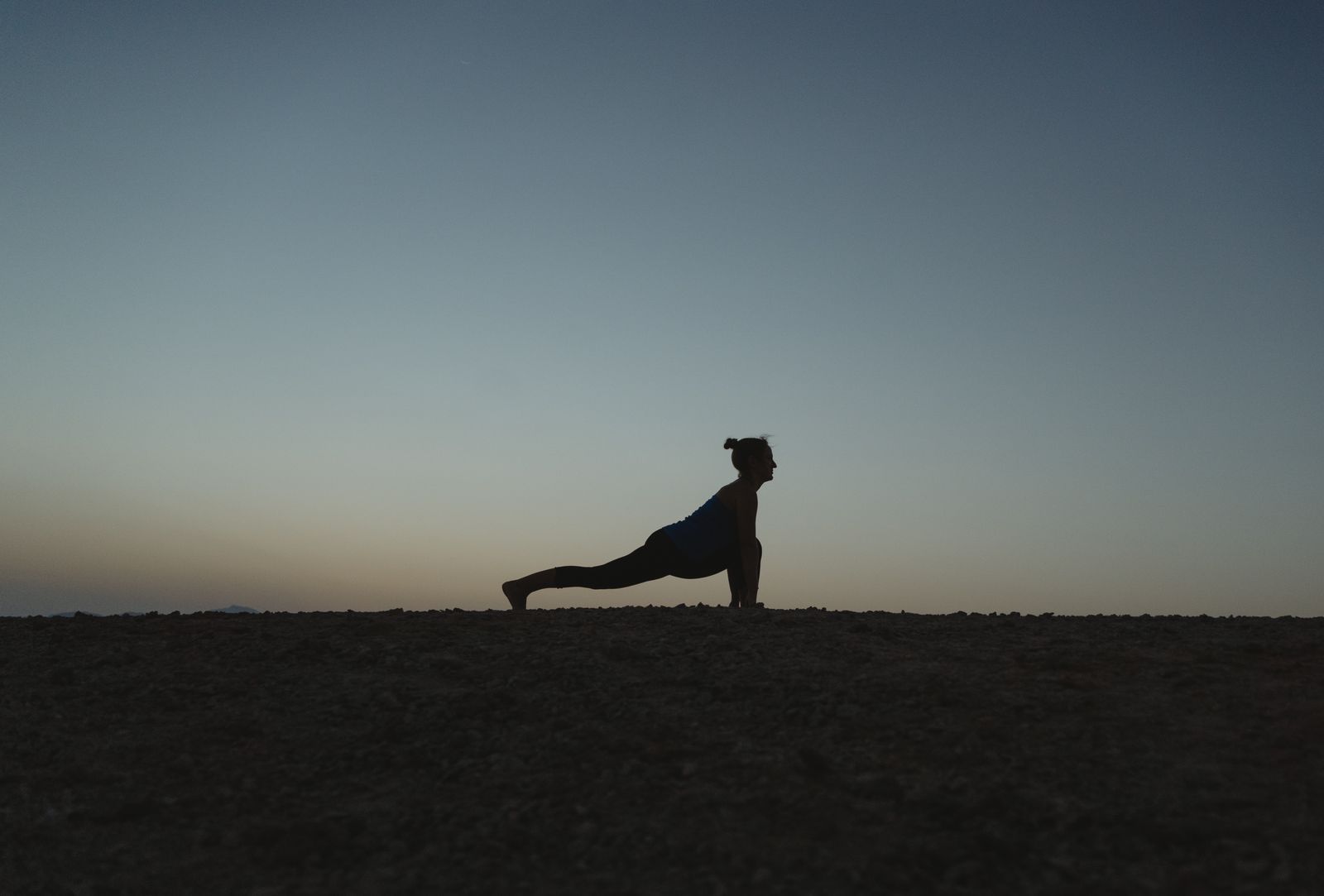
Evening practice works best when it is deliberately slower than your day. Aim to finish at least an hour before bed, dim the lights if you can, and keep your phone out of reach.
- Start with 2 minutes of lying-down breathing, making the exhale longer than the inhale.
- Move through Child’s Pose, Low Lunge, Pigeon or Bound Angle, and a seated forward fold, holding each for 5 to 8 breaths.
- Finish with Legs-up-the-wall for 3 to 5 minutes, then Shavasana for at least 3 minutes.
Skip heated, fast flows in this slot. They raise your heart rate when you want it to fall.
Troubleshooting: when your chosen time is not working
If you keep missing sessions, the problem is usually the slot, not your discipline. Match the symptom to the fix.
- You hit snooze every morning. Move the session 30 minutes later, or shift to a 10-minute version. Going to bed 30 minutes earlier helps more than a louder alarm.
- You feel dizzy or shaky in the morning. Have a banana or a few soaked almonds and wait 45 minutes. Ease off inversions and fast transitions.
- Evenings always get swallowed by family or work. Move to a fixed 10 to 15 minute block straight after you get home, before you sit down.
- You feel wired after evening yoga. Swap vigorous flows for slow holds, and finish earlier.
- You feel stiff and fragile at dawn. Spend longer on the first five minutes and keep deep stretches for later in the day.
- Your schedule changes every week. Anchor yoga to a habit rather than a clock, such as right after brushing your teeth or right after you close your laptop.
Best time to do yoga for different people
The same hour does not suit everyone. Here is a quick guide by lifestyle.
- Office workers and desk jobs: a 10-minute midday break plus a short evening stretch. Our guide to yoga for screen time and posture has poses built for this.
- Parents of young children: practise after the school run or after bedtime, whichever is more predictable. A 15-minute session beats an hour you never reach.
- Beginners: pick morning or early evening, start at 15 to 20 minutes, and keep the same slot for 4 weeks before judging results.
- Shift workers: practise within 1 to 2 hours of waking, whatever time that is, and avoid vigorous sessions right before sleeping.
- Adults over 50 or with stiff joints: choose late morning or afternoon when joints have loosened, and always warm up for longer.
- People with health conditions: if you have high blood pressure, heart problems, pregnancy, a recent surgery or a spinal issue, check with your doctor about timing and poses first.
If you are building a routine at home, our walkthrough on yoga at home covers space, props and a weekly rhythm.
Frequently asked questions about the best time to do yoga
Is 4 or 5 a.m. too early to do yoga?
It is not too early, as long as you are not cutting into your sleep. Many people practise comfortably at 5 a.m. and find it quiet. But if the early alarm leaves you with under 7 hours of sleep, move to 6 or 7 a.m. Shift your wake time by 15 minutes every few days rather than all at once.
Is it bad to do yoga right before bed?
Not if the practice is slow. Gentle stretches, forward folds, Legs-up-the-wall and long Shavasana usually help you relax. Avoid fast Vinyasa or power flows in the last hour before sleep, since they raise your heart rate and body temperature. Finish at least 45 to 60 minutes before lights out.
Can I do yoga in the afternoon or at lunchtime?
Yes. Afternoon is a good time for a 10 to 15 minute reset, and your body is usually fairly flexible by then. Wait 2 to 3 hours after a full lunch before twists and forward folds. A short flow of Cat-Cow, a seated twist, and a standing side bend is enough to loosen a desk-bound back.
Should I take a bath before or after yoga?
Either works, but many people prefer to bathe after yoga, once the body has cooled for 15 to 30 minutes and the sweat is gone. A quick wash before practice is fine if it helps you feel awake. Avoid a very hot bath right before a session, since it can leave you drowsy.
Does the best time for yoga change with the season?
It can, mostly for comfort. In winter, a slightly later morning slot feels kinder to cold, stiff joints. In summer and in the humid months, earlier mornings or evenings avoid heat. The rule stays the same: pick a time that suits the weather and repeat it consistently.
Your next step
Pick one slot, practise for 15 minutes at the same time for 14 days, then adjust. If you want a live instructor to build the session around your schedule and flexibility, join a trial of Fitstrot’s online yoga classes and choose the batch that fits your day.


