

People often ask can we do yoga empty stomach, and for most healthy adults the answer is yes. An empty or lightly fed stomach is the most comfortable state for the twists, folds and backbends in a normal class. The better question is not “fasted or fed” but “how full is my stomach right now”. This guide gives you waiting times, the poses that feel worst after food, simple snack ideas from an Indian kitchen, and a clear list of people who should speak to a doctor before practising fasted.
Can we do yoga empty stomach, or is a light snack better?
Yes, most healthy adults can do yoga on an empty stomach, especially after an overnight gap of 7 to 9 hours. A full stomach is the bigger problem, because twists and folds press on it. If you feel shaky or light-headed when fasted, eat something small, such as half a banana, about 20 to 30 minutes before you start.
The reason is simple mechanics. After a meal, your stomach stretches and your digestive system gets extra blood flow. Seated forward bends, spinal twists and deep backbends then squeeze or stretch the very area that is busy. The result can be cramps, burping, a heavy feeling or mild nausea. Slow breathing practices such as pranayama also feel restricted, because a full stomach limits how far the diaphragm can move on an inhale.
None of this means you must starve before class. It means leaving a gap so digestion and movement are not competing. For many people that happens naturally in the morning. Our guide to the best time to do yoga covers the full picture, and a planned morning yoga routine makes an empty stomach almost automatic.
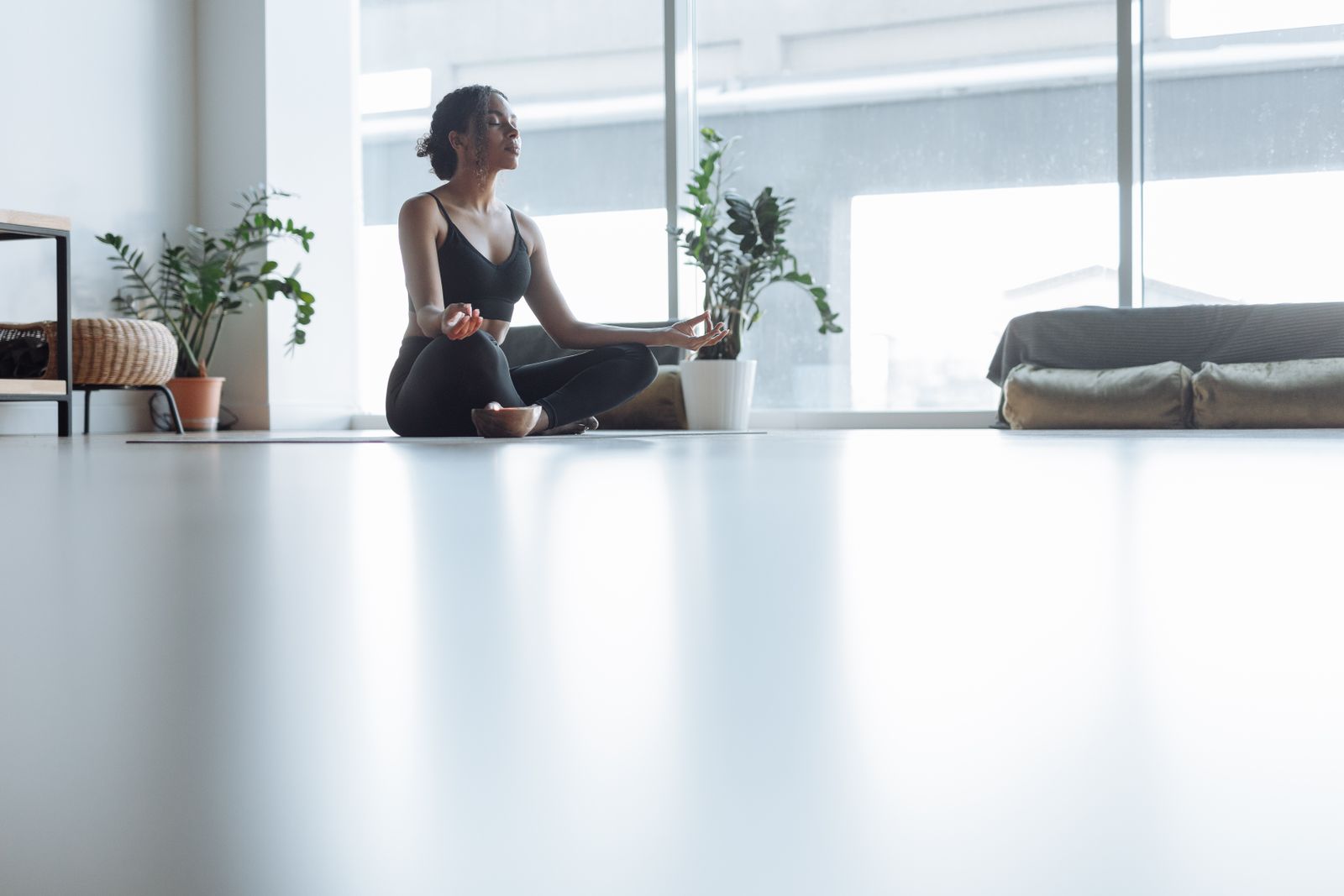
How long should you wait after eating before yoga?
Wait about 2 to 3 hours after a heavy meal, around 2 hours after a normal home meal, 1.5 to 2 hours after a light meal such as idli or poha, and 30 to 45 minutes after a small snack. Heavier, oilier food stays in the stomach longer, so it needs the longest gap.
Treat these times as a starting point, because digestion differs from person to person.
| What you ate | Suggested wait | If you cannot wait that long |
|---|---|---|
| Heavy meal (dal, rice, sabzi, roti, ghee, or anything fried) | About 3 hours | Choose a slow, mostly lying-down session |
| Normal home meal (2 rotis, dal, sabzi, curd) | About 2 hours | Standing poses and gentle stretches only |
| Light meal (2 idlis, a small bowl of poha or khichdi) | 1.5 to 2 hours | Skip deep twists and long inversions |
| Small snack (banana, 4 to 5 soaked almonds, small cup of curd) | 30 to 45 minutes | Usually fine for any gentle to moderate class |
If your schedule leaves you only a short gap, change the style rather than skipping the meal. A slow Hatha yoga class or a supported restorative yoga session is much kinder after food than a fast Vinyasa yoga flow with repeated folds and jumps.
Myth check: does fasted yoga make you more flexible or burn more fat?
No. An empty stomach removes one source of discomfort, which is pressure and bloating, but it does not make you more flexible or guarantee extra fat loss. Flexibility improves mainly through regular practice, a good warm-up and gradual progress over weeks and months, not through skipping breakfast.
It helps to separate three claims you may have heard:
- “Fasted yoga is a must.” Not true. Plenty of people practise comfortably 2 hours after a meal or 30 minutes after a snack.
- “Fasted yoga melts fat faster.” There is no guarantee of this. A gentle class burns a modest amount of energy, and long-term body composition depends on your overall eating, sleep and activity habits.
Which yoga poses feel worst on a full stomach?
Deep twists, forward folds, strong backbends and long inversions feel worst after eating. Twists and folds compress the abdomen directly, backbends stretch it, and inversions tilt the body so stomach contents press upward. Standing poses and gentle stretches are far more forgiving, even after a light meal.
| Pose group | Examples | Why it bothers a full stomach | Easier option if you have eaten |
|---|---|---|---|
| Deep twists | Ardha Matsyendrasana, Parivrtta Trikonasana | Squeezes the stomach and intestines from the sides | Gentle seated twist, turning only halfway |
| Forward folds | Paschimottanasana, Uttanasana | Presses the belly against the thighs | Wide-legged fold with a bolster or cushion |
| Backbends | Bhujangasana, Dhanurasana, Chakrasana | Stretches the front of the abdomen, can trigger burping or reflux | Low cobra or bridge pose, held briefly |
| Inversions | Sirsasana, Sarvangasana, long Downward Dog | Head below heart can push stomach contents upward | Legs up the wall for 2 to 3 minutes |
A short, flowing warm-up built from standing poses is the safest thing to do when you are unsure. If you want ideas for putting poses together in a sensible order, our yoga sequence guide shows how to build a class that starts gently and saves the intense shapes for later.
What if you feel dizzy, nauseous or shaky when you practise fasted?
Stop, sit down and sip water. Dizziness or shakiness on an empty stomach usually means low energy, dehydration or standing up too fast. Rest for a few minutes, then continue gently or end the session. If it keeps happening, eat a small snack 20 to 30 minutes before practice, and speak to a doctor if episodes repeat.
Here is a quick troubleshooting guide for the most common problems:
- Light-headed when you stand or come up from a fold: move slowly, pause in mountain pose for a few breaths, and have a few sips of water before class.
- Weak or trembling mid-class: your body may need fuel. Next time, eat half a banana or 2 to 3 dates 20 to 30 minutes before.
- Nausea or a sour taste: an empty stomach can sometimes make acidity worse. Try a small snack and avoid strong backbends and long inversions until it settles.
Who should not practise fasted? See your doctor first
People with diabetes, low blood pressure, a history of fainting or pregnancy should not assume that fasted practice is safe for them. Meal timing matters more in these situations, so check with your doctor or a registered dietitian before practising on an empty stomach or changing your eating pattern.
The groups below should be extra cautious:
- Diabetes or blood sugar problems: an empty stomach can cause blood sugar to dip, particularly if you take medicines that lower it. Do not change your medication or meal timing on your own. Ask your doctor what is safe before class.
- Low blood pressure or frequent fainting: fasting plus standing up quickly or inverted poses can make you faint. A doctor can tell you the right timing for you.
- Pregnancy: energy and blood sugar needs change, and nausea is common. Always ask your doctor how to eat around practice, and which poses to avoid.
- Acidity, gastritis or ulcers: an empty stomach can sometimes aggravate symptoms. A light snack and a gentler class are usually more comfortable, but confirm with your doctor.
- Older adults, children and teenagers: they need steady energy during the day, so regular meals and a small snack before class are usually sensible.
- Anyone with a history of disordered eating: fasting as part of practice can be unhelpful. Talk to a doctor or a qualified professional first.
What should you eat or drink before yoga if you cannot fully fast?
Choose a small, easy-to-digest snack of roughly 50 to 150 kcal, eaten 30 to 60 minutes before class. Good Indian options are half to one banana, 4 to 5 soaked almonds, 2 to 3 dates or a small cup of curd. Avoid fried, very spicy or high-fibre food in that window.
| Snack | Rough portion | Approximate energy | Best wait before class |
|---|---|---|---|
| Banana | Half to 1 medium | About 50 to 105 kcal | 20 to 30 minutes |
| Soaked almonds | 4 to 5 pieces | About 30 to 40 kcal | 30 to 45 minutes |
| Dates (khajoor) | 2 to 3 pieces | About 50 to 70 kcal | 20 to 30 minutes |
| Plain curd (dahi) | Small cup, about 100 g | About 60 to 100 kcal | 45 to 60 minutes |
These figures are rough, since sizes and recipes vary. For hydration, small sips of water over the hour before class work better than one big glass at the last minute, which can slosh and feel as uncomfortable as a full stomach.
A 7-day walkthrough to find your own timing
Your ideal gap is personal, so test it. Keep the class the same for one week, change only the timing, and note how you feel.
- Day 1: Practise first thing after waking, with only a few sips of water. Rate your energy and comfort from 1 to 5.
- Day 2: Repeat, but eat half a banana 20 to 30 minutes before. Compare the score.
- Day 3: Practise 30 to 45 minutes after a small snack of almonds or curd.
- Day 4: Practise about 2 hours after a normal meal and notice how twists and folds feel.
- Day 5: Repeat the 2-hour gap with a gentle class built around standing poses.
- Day 6 and 7: Choose the timing that scored best and repeat it. That is your starting routine.
Stop at once if you feel faint or unwell, and speak to a doctor if it keeps happening.
Does the empty-stomach rule change by yoga style?
Yes. The more dynamic the style, and the more twisting, folding and inverting it involves, the more the gap after meals matters. Gentle and floor-based styles are forgiving, while fast, heat-building or inversion-heavy classes are best done on an empty or lightly fed stomach.
- Power yoga: fast, strong and full of sun salutations, so leave the longest gap and keep any snack tiny.
- Vinyasa: continuous flow with many folds, so a gap of 2 hours after a meal is sensible.
- Hatha: slower holds make a light meal about 1.5 to 2 hours earlier much easier to manage.
- Yin yoga: long, passive floor poses, so it is the most forgiving of the active styles, though deep folds can still feel heavy after a big meal.
- Restorative: supported and quiet, so a snack 30 to 45 minutes before is usually no problem.
Practising at home lets you wait an extra 30 minutes or switch to something gentler. Our guide to online yoga for strength and flexibility explains how to choose a home class that matches your day.
Is the advice the same for a fasted gym session?
Not quite. Yoga rarely demands the sudden energy of sprints or heavy lifting, so a fasted yoga class is usually easier to tolerate than a fasted strength session. However, yoga’s twists and folds make fullness more noticeable. Compare the two in our yoga vs gym guide.
Frequently asked questions about yoga on an empty stomach
Can we do yoga empty stomach every morning?
Yes, for most healthy adults this is the most common pattern. After 7 to 9 hours of sleep you are naturally fasted, and a few sips of water are usually enough. If you feel weak, add a small snack 20 to 30 minutes earlier. Check with your doctor if you have diabetes, low blood pressure or you are pregnant.
How long after dinner can we do yoga?
Wait about 2 to 3 hours after a full dinner before an active session. After a light dinner, 1.5 to 2 hours is usually enough. Late at night, choose a gentle, floor-based routine, because heavy dals, fried food and rich curries stay in the stomach longer.
Can we drink water or tea before yoga on an empty stomach?
Yes. Take small sips of water in the hour before class instead of a large glass at once. Plain warm water or weak, unsweetened tea is generally fine for most people. Heavily sweetened or very strong drinks right before an intense class may cause jitteriness or an uncomfortable stomach.
Is yoga on an empty stomach safe for people with diabetes or low blood pressure?
It depends on the person, so ask your doctor first. An empty stomach can lead to a dip in blood sugar or blood pressure, and either can cause dizziness. Do not change medicines or meal timing on your own. Your doctor or a registered dietitian can advise on a safe pre-class routine.
What is the best snack to eat 30 minutes before yoga?
A small, easy-to-digest snack works best, such as half a banana, 2 to 3 dates or 4 to 5 soaked almonds. These give a little quick energy without sitting heavily in the stomach. Avoid fried, spicy, very oily or high-fibre food, which digests slowly and can feel uncomfortable during twists and folds.
Not sure what timing suits your body? Book a session with one of our trainers through FitStrot’s online yoga classes and get a practice paced around your meals and your energy.


