

A yoga sequence is a planned order of poses that warms the body up, builds toward one main posture, and then cools you down again. The order is the whole point: the same ten poses shuffled at random feel very different, and sometimes carry more risk. Below you get the standard structure, a 25-minute beginner plan, a 1 hour yoga sequence, goal-based tweaks and safety notes.
What is a yoga sequence, and why does the order matter?
A yoga sequence is an intentional order of asanas that moves from centring and warm-ups to stronger poses, one peak pose, a counter-pose and final rest. Order matters because it prepares the joints before deeper work, builds heat gradually and balances each direction of movement, which may lower the chance of strain around the lower back, hamstrings and shoulders.
After a backbend, for example, the next pose should gently reverse it, such as hugging your knees to your chest or a lying twist. Styles weigh the phases differently, and our guide to types of yoga shows how hatha, vinyasa and restorative classes each shape the arc.
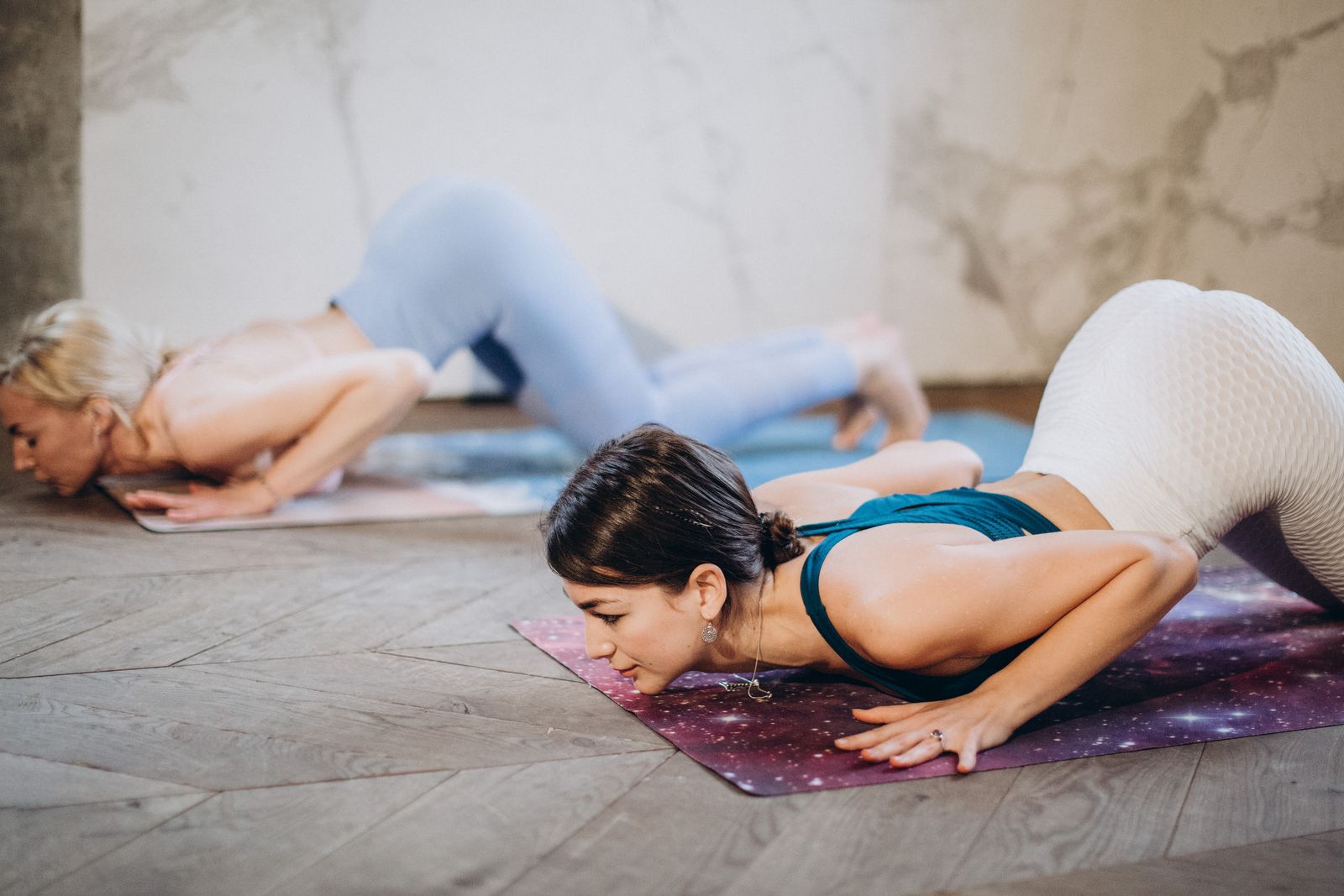
The seven-phase arc behind almost every class
Nearly every well-built class, from a quick home session to a studio hour, follows the same seven phases. Only the minutes and poses change.
| Phase | 30-minute class | 60-minute class | What it does | Example poses |
|---|---|---|---|---|
| 1. Centre and breathe | 2 min | 5 min | Settles the mind, sets the pace | Easy Pose, slow nasal breathing |
| 2. Warm up | 4 min | 10 min | Mobilises spine, hips, shoulders | Cat-cow, neck rolls, hip circles |
| 3. Sun salutations | 6 min | 10 min | Builds gentle heat | Surya Namaskar A, 2-3 rounds |
| 4. Standing and balance | 8 min | 15 min | Strength and stability | Warrior II, Triangle, Tree |
| 5. Peak pose | 3 min | 8 min | One focus for the session | Bridge, Half Moon, Boat |
| 6. Counter-pose and seated work | 4 min | 7 min | Neutralises the peak, stretches | Supine twist, seated forward fold |
| 7. Savasana | 3 min | 5 min | Lets the body settle | Lying flat, knees supported if needed |
The peak pose does not need to be dramatic; a steady Bridge Pose is a fine peak for a beginner. When time is short, trim phase 4 first, never the warm-up or the final rest.
How do you build a beginner yoga sequence?
A beginner yoga sequence runs about 20-30 minutes and uses simple, stable poses: two minutes of seated breathing, a short spinal warm-up, three slow sun salutations, two or three standing poses held for about five breaths, one gentle backbend or twist, and four to five minutes of savasana. Skip deep balances and inversions at first.
Here is a complete plan of roughly 25 minutes. Stay in each pose only while your breathing stays smooth.
| Step | Pose | Hold | Form cue | Easier option |
|---|---|---|---|---|
| 1 | Easy Pose, breath awareness | 2 min | Lengthen the spine, soften the shoulders | Sit on a folded blanket |
| 2 | Cat-Cow | 8-10 breaths | Move the whole spine, not only the neck | Place a pad under the knees |
| 3 | Downward Dog | 5 breaths | Press the floor away, lengthen the back | Bend the knees, heels stay lifted |
| 4 | Surya Namaskar A, slow | 3 rounds | One breath per movement | Knees down in the plank step |
| 5 | Warrior II, each side | 5 breaths | Front knee tracks over the middle toes | Shorten the stance |
| 6 | Triangle, each side | 5 breaths | Lengthen the side body before reaching | Hand on shin or a block |
| 7 | Tree Pose, each side | 5 breaths | Foot on calf or thigh, never on the knee | Fingertips on a wall |
| 8 | Bridge Pose | 5 breaths, twice | Knees hip-width, neck relaxed | Lower the hips a little |
| 9 | Supine twist, each side | 8 breaths | Keep both shoulders heavy on the mat | Cushion under the knees |
| 10 | Savasana | 4-5 min | Let the breath return to normal | Bolster under the knees |
Practise it three or four times a week for the first month and the order will start to feel automatic. Our morning yoga article covers how to make a morning habit stick, and the yoga poses guide breaks down individual shapes.
What do a hatha yoga sequence and a 1 hour yoga sequence look like?
A hatha yoga sequence uses slower pacing and longer holds, usually five to ten breaths per pose. A 1 hour yoga sequence splits into roughly 5 minutes of centring, 10 of warm-ups, 10 of sun salutations, 15 of standing and balance work, 8 for the peak, 7 for seated and counter-poses, and 5 of savasana.
The extra time lets you add poses such as Half Moon, Extended Side Angle and Warrior III, and hold each one longer. Twelve to fifteen poses held with good alignment serve you better than twenty-five rushed ones.
A vinyasa yoga sequence uses the same skeleton but links movement to breath, with a transition on nearly every inhale or exhale. That makes it faster and more cardiovascular, and harder on the wrists and shoulders. Our guides to vinyasa yoga and yoga flow explain the pacing and how to link poses smoothly.
How do you sequence a backbend safely?
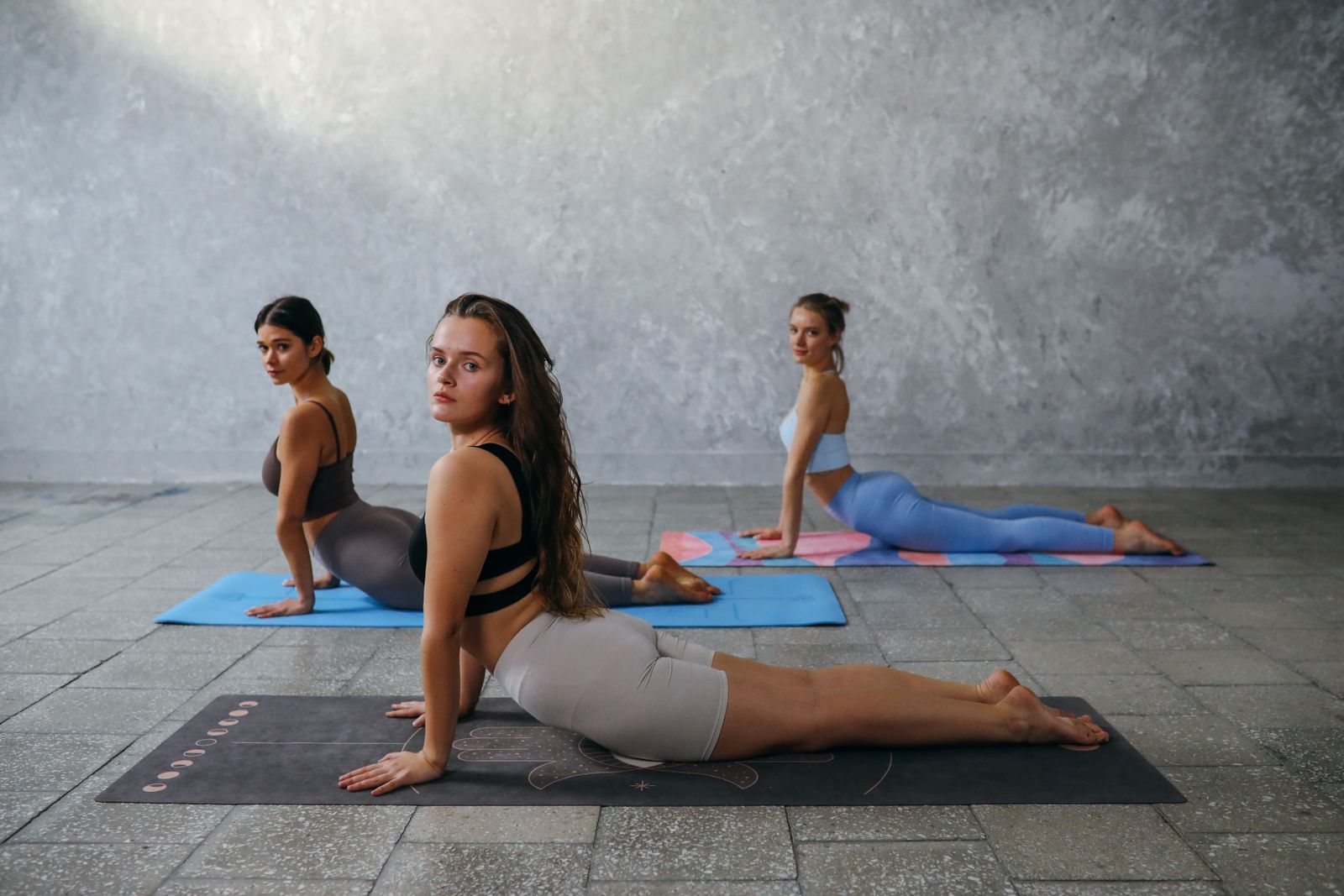
A backbend yoga sequence needs roughly 15-20 minutes of preparation before any deep pose. Build in order: cat-cow, sun salutations, a low lunge for the hip flexors, cobra or sphinx, then bridge, and only then a peak such as camel or wheel. Follow it straight away with a knees-to-chest hold or a gentle lying twist.
Backbends compress the lower spine, so a short plank or boat hold earlier in the class gives that area support. Keep the neck long, spread the effort across the upper back and thighs, and come out of any pose that pinches. If you live with back pain, skip the deepest peaks and read our guide to yoga for back pain before you begin.
Match the sequence to your goal
The skeleton stays the same; only the poses in each slot change. Pick the goal first, then fill the slots.
| Goal | Lean on | Typical hold | Go gently or check first if |
|---|---|---|---|
| Flexibility | Low lunge, seated forward fold, reclined pigeon | About 30-60 seconds, no bouncing | You feel sharp pain or have a recent muscle strain |
| Strength | Warrior II, Chair, plank, Boat | 5-8 breaths | Wrists or shoulders hurt (use forearms or drop the knees) |
| Stress and wind-down | Fewer standing poses, floor folds, supported Bridge, legs up the wall, long savasana | 1-3 min per pose, savasana 5-10 min | You have glaucoma or high blood pressure (ask your doctor about head-down and legs-up shapes) |
| Morning energy | 3-5 sun salutation rounds, lunges, a light twist | 3-5 breaths | Your back is stiff on waking (warm up longer, skip deep folds) |
| Back-friendly practice | Cat-cow, pelvic tilts, Bridge, knees-to-chest, lying twist | 5-8 slow breaths | Pain travels into a leg, or you notice numbness or weakness |
Many people find a regular practice helps them feel calmer and move more easily, though results vary and yoga is not a treatment for any condition. Our overview of the benefits of yoga separates the realistic outcomes from the hype.
Four myths that make sequences worse
- “More poses make a better class.”
- “I’m flexible, so I can skip the warm-up.” Flexibility is not the same as warmth or stability.
- “Savasana is optional.” The final rest, 3-10 minutes, is where the body settles after effort. If you enjoy it, our piece on yoga nidra explores longer guided relaxation.
- “A sequence I found online will suit my body.” It was written for someone else. Shorten holds and use easier options until you know how it feels.
Troubleshooting: when a sequence does not feel right
- Wrists ache in plank or Downward Dog: come onto fists or forearms, lower the knees, and shorten the holds.
- Your lower back pulls in a forward fold: bend the knees generously and rest your hands on your shins or blocks.
- You wobble in balance poses: fix your gaze on a still point, stand near a wall, and shorten the hold.
- You feel light-headed on rising: come up slowly and pause in Mountain Pose. If it happens often, mention it to your doctor.
- You are short on time: drop standing poses first. Keep the warm-up and the final rest.
Who should modify a sequence or check with a doctor first?
Most healthy adults can follow a gentle sequence, but some situations call for changes or medical advice first. See your doctor, and ideally a teacher trained for your situation, before practising if you are pregnant or live with any of the conditions below:
- Pregnancy: deep twists, belly-down poses, strong backbends and long periods flat on the back usually need changing. Use a prenatal class.
- High blood pressure or heart conditions: avoid long breath-holds and prolonged head-down poses unless your doctor agrees.
- Glaucoma or eye problems: inversions and long forward folds may raise pressure in the head, so ask first.
- Disc problems, sciatica or osteoporosis: avoid deep rounded forward folds and forceful twists, and move within a pain-free range.
- Recent surgery, or neck and shoulder injury: get clearance first and skip shoulder stand and headstand.
Stop and get medical advice if you feel chest pain, dizziness that does not pass, sharp or shooting pain, or numbness.
Themed sequences: root chakra, Half Moon and kids
A root chakra yoga sequence draws on yogic philosophy, where the root centre is linked with stability and feeling grounded. It is a tradition, not a medical framework. Expect Mountain Pose, Warrior I and II, Chair, Garland Pose and Child’s Pose, with slow breathing and few backbends or inversions.
A Half Moon yoga sequence builds toward Ardha Chandrasana, which asks for hip opening, balance and core control together. Lead in with Warrior II, Extended Side Angle and Triangle, keep a block under the lower hand, and practise beside a wall.
A kids yoga sequence lasts about 15-25 minutes and trades precision for play. Use animal shapes (cat, cow, snake, puppy), a simple Tree Pose game, holds of three to five breaths, and a short story for the relaxation, since children rarely lie silent. Keep it gentle, never force a stretch, and supervise throughout.
How long should a home yoga sequence be?
A home yoga sequence of 15-20 minutes, done most days, usually suits a beginner better than a 60-minute class done once in a while. Short sessions are easier to repeat, and repeating one sequence three to four times a week for about a month lets you focus on alignment and breath instead of remembering the order.
Once the habit holds, stretch the session to 30 or 45 minutes by lengthening the holds before adding new poses. Our guides to daily yoga and yoga at home cover space, timing and props.
Many people search for a yoga sequence pdf, and a one-page card works well: list pose names in order, the hold in breaths, and one cue per pose.
Yoga sequence questions, answered
How many poses should a yoga sequence have?
Most 30-45 minute sequences use 10-15 distinct poses, not counting repeats within sun salutations. A shorter list held with good alignment, with a counter-pose after any peak, usually offers more than a long list rushed through with little time to settle.
Can I make my own yoga sequence?
Yes, once you understand the arc: centring, warm-up, building poses, one peak, a counter-pose and final rest. Follow a ready-made plan for a few weeks to learn that structure, then adapt it to your goal, your time and any limits your body has.
What is the difference between a yoga sequence and a yoga flow?
A sequence is the overall ordered plan of a practice, from warm-up to cool-down. A flow is continuous, breath-linked movement between poses. Most flows are sequences, but not every sequence flows; hatha sequences often hold poses still instead of moving between them.
Do I need props to follow a yoga sequence at home?
Props are not mandatory, but they make many poses more comfortable. A block under the hand in Half Moon, a folded blanket under the hips in seated poses, or a strap for tight hamstrings keeps the sequence the same while reducing strain.
Is it safe to follow a yoga sequence video or PDF without a teacher?
For gentle, beginner-level sequences it is generally reasonable if you move slowly and skip anything that causes sharp pain. For deep backbends, inversions, pregnancy or an existing injury, get feedback from a qualified teacher first, because alignment is hard to judge from a screen.
Next step: Join a live online yoga class with Fitstrot, tell the teacher about any injury or condition beforehand, and have your 25-minute beginner sequence checked and adjusted in real time.


