
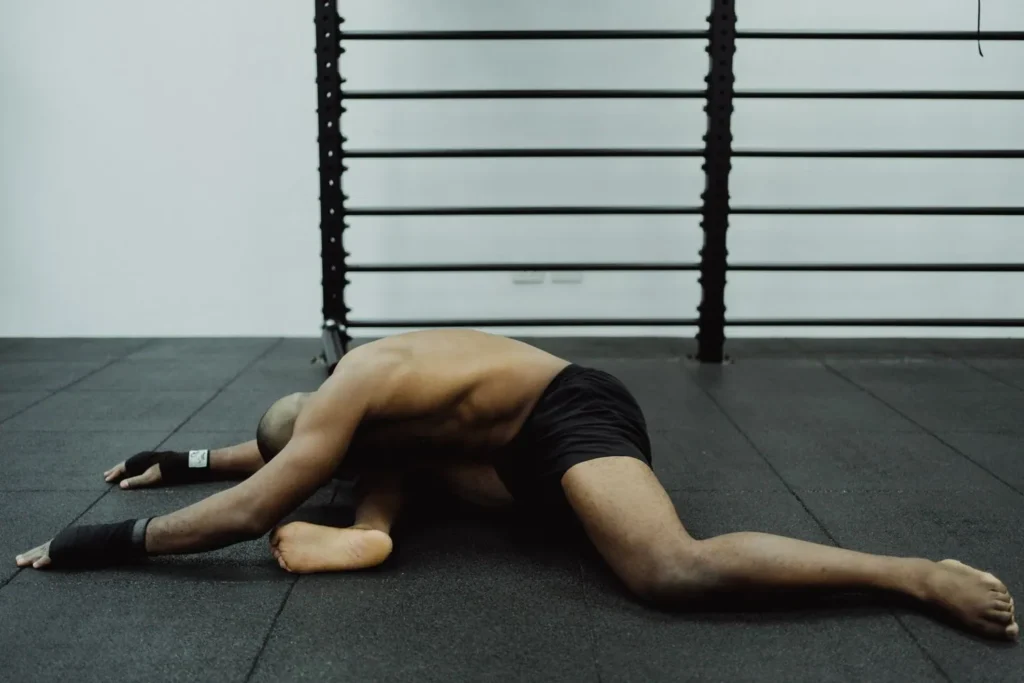
Most people finish their last set of squats, grab their bag and leave. The next 30 minutes decide whether your legs feel loose or locked for the rest of the day. A good after leg workout routine is simple: walk for 3 to 5 minutes, stretch your quads, hamstrings, glutes and calves for about 6 minutes, drink 400 to 500 ml of water, and eat protein with carbs within 1 to 2 hours. This guide covers only that immediate window. Soreness the next morning is a separate topic, which we cover in our guide on what to do after leg day.
What should you do after a leg workout?
Do four things in order: walk slowly for 3 to 5 minutes, stretch your quads, hamstrings, glutes and calves for 20 to 30 seconds each, sip 400 to 500 ml of water, then eat a meal with 20 to 30 g of protein and some carbohydrate within 1 to 2 hours. The effort adds up to roughly 10 minutes.
Squats, lunges, leg press and deadlifts load the biggest muscles in your body. Your heart rate is high, your legs are full of blood and your muscles are tired. If you drop straight into a car seat, an auto or a desk chair, those muscles stay short and tired while they cool, and that is why legs feel “locked” after a commute. Moving gently first and stretching while the muscles are still warm prevents most of that stiffness.
Your first 30 minutes after the last set, step by step
Hold every stretch at mild tension, a 4 or 5 out of 10, never sharp pain. Breathe slowly and do not bounce.
| Step | Sets and time | Form cue | Muscles |
|---|---|---|---|
| Easy walk | 1 x 3 to 5 minutes | Slow pace, you could hold a conversation, arms relaxed | Whole lower body, heart rate |
| Standing quad stretch | 2 x 30 sec per leg | Knees together, heel to glute, tuck the pelvis, stay tall | Quadriceps |
| Standing or seated hamstring stretch | 2 x 30 sec per leg | Heel on a low step, back flat, hinge from the hips | Hamstrings |
| Wall calf stretch | 2 x 30 sec per leg | Back heel pressed down, back knee straight | Calves |
| Figure-4 glute stretch | 2 x 30 sec per side | Ankle over opposite knee, sit back as if into a chair | Glutes, hip rotators |
| Half-kneeling hip flexor stretch | 2 x 30 sec per side | Squeeze the back-leg glute, ribs down, no arching | Hip flexors |
| Child’s pose | 1 x 45 to 60 sec | Hips back to heels, long slow exhales | Lower back, hips |
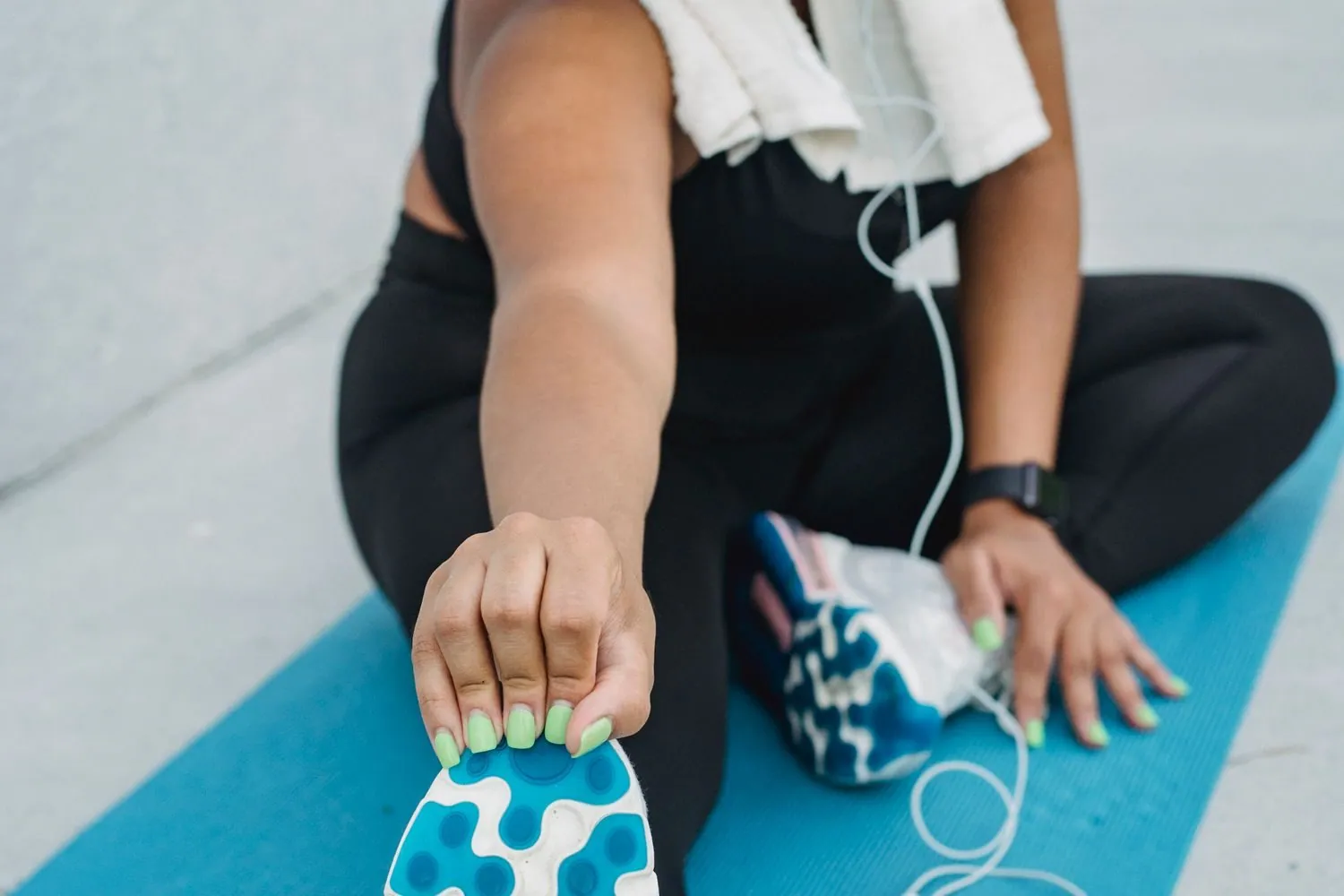
The full list takes about 10 to 12 minutes with the walk. Short on time? Keep the walk, the quad, the hamstring and the calf stretch, which comes to roughly 6 minutes. For a longer stretching library, see our guide to stretching after a workout.
Trained at home with no gym floor? The same sequence needs only a mat and a wall. Our plan for leg day at home pairs well with it, and the heavier barbell and machine sessions are covered in leg workouts at the gym.
How much water and food do you need after leg day?
Drink 400 to 500 ml of water within 30 minutes of finishing, then keep sipping. Eat 20 to 30 g of protein and about 40 to 60 g of carbohydrate within 1 to 2 hours. A plate of rice, dal and curd, or paneer with two rotis, meets that without any supplement.
Hydration comes first because you sweat heavily on leg day, especially in an Indian summer or an unventilated gym. A rough check: if you weigh yourself before and after, every 1 kg lost is mostly water, and replacing it takes about 1 to 1.5 litres over the next few hours. Pale yellow urine means you are on track. After a session longer than 45 minutes, or if you sweated a lot, a pinch of salt and a squeeze of lemon in your water, or a glass of coconut water, helps replace sodium.
On food, you do not need to eat in the gym car park. The goal is simply to not skip the meal because your day got busy. Here are practical Indian options, with approximate values.
| Meal option | Portion | Protein (about) | Carbs (about) |
|---|---|---|---|
| Whey protein shake with a banana | 1 scoop (30 g) + 1 medium banana | 24 g | 30 g |
| Boiled eggs with 2 slices of toast | 3 eggs + 2 slices bread | 24 g | 26 g |
| Paneer bhurji with rotis | 100 g paneer + 2 rotis | 24 g | 32 g |
| Dal, rice and curd | 1 katori dal (100 g cooked) + 100 g cooked rice + 1 katori curd (150 g) | 17 g | 50 g |
| Chicken curry with rice | 100 g cooked chicken + 150 g cooked rice | 33 g | 42 g |
| Soya chunks pulao | 30 g dry soya chunks + 150 g cooked rice | 20 g | 50 g |
| Chana chaat with curd | 1 cup boiled chana (about 160 g) + 1 katori curd | 18 g | 45 g |
For a deeper list, see our posts on what to eat after a workout and after-workout food.
Myths about the after leg workout window
Myth 1: You must eat within 30 minutes or the workout is wasted. Not true. The “anabolic window” is much wider than gym folklore suggests. If you ate a proper meal 2 to 3 hours before training, eating within 1 to 2 hours after is fine. If you trained fasted at 6 am, eat sooner, ideally within an hour.
Myth 2: Stretching prevents next-day soreness. It does not reliably. Post-workout stretching helps you move better and feel looser, but delayed soreness will probably still arrive 24 to 48 hours later after a hard session. Do not skip the stretches, just do not expect them to switch soreness off.
Myth 3: Lactic acid is why your legs hurt tomorrow. Lactate clears from your muscles within roughly an hour after exercise. Next-day soreness comes from the tiny disruption in muscle fibres from hard, unfamiliar or high-volume work, which is normal and part of adaptation.
For why soreness appears and how to handle it, our post on muscle pain after a workout goes into detail.
How long until you can take stairs, drive or train again?
Most people can walk normally within 10 to 15 minutes of a cool-down. Wait 15 to 20 minutes before taking stairs at pace after heavy squats or leg press. Another hard leg session should wait at least 48 hours, and a different muscle group can usually be trained the next day.
Easy walking, like getting to the car or a train platform, is fine straight away. Stairs are where tired quads cause trouble: going down at speed on fatigued legs is when ankles roll and knees give way, so use the handrail for the first flight. Drive or ride a two-wheeler only once your legs feel steady.
Here is how a typical day looks after an evening leg session, and the same logic shifts earlier if you train in the morning.
| When | What to do | Target |
|---|---|---|
| 0 to 10 minutes | Walk, then stretch the main leg muscles | 3 to 5 min walk, 6 to 8 min stretching |
| 10 to 30 minutes | Rehydrate, change into dry clothes | 400 to 500 ml water, a pinch of salt if you sweated heavily |
| 1 to 2 hours | Protein and carb meal | 20 to 30 g protein, 40 to 60 g carbs |
| Evening | Short easy walks, avoid long sitting spells | 5 minutes of walking every hour you are seated |
| Bedtime | Light calf and hamstring stretch, sleep | 7 to 9 hours of sleep |
| Next morning | Gentle movement, protein at breakfast | 20 to 30 minutes of easy walking or yoga |
Troubleshooting: cramps, shaky legs, dizziness and stiffness
Leg cramps right after training. Stop and stretch the cramping muscle gently, then drink water with a pinch of salt. Calf cramps ease if you pull your toes toward your shin. If cramps keep coming back on every leg day, check your fluids, your total food intake that day, and whether you added volume too quickly.
Legs shaking when you walk out. Some trembling after heavy sets is normal for a few minutes. Walk slowly, stretch and eat. If you cannot take stairs safely after 30 minutes, you probably overdid the volume, so reduce sets next week.
Dizziness or feeling faint. Sit down straight away, sip water and eat something with carbohydrate such as a banana. If you faint, or the dizziness comes with chest pain or breathlessness, stop and get medical help.
Stiff in a car or at the desk. Stand up and move for a minute every 20 to 30 minutes.
See your doctor if: you feel a sharp or pinching pain inside a knee, hip or ankle joint, you cannot put weight on a leg, a calf is swollen, warm and painful on one side only, soreness is severe and your urine turns dark brown, or pain has not improved after about a week. Normal muscle fatigue feels dull and spread across the muscle, while injury pain feels sharp, localised or gets worse with movement. If a joint hurts, do not push through it, and get it checked by a doctor or physiotherapist before your next leg session.
After leg workout routines for office-goers, early risers and beginners
Office-goers and commuters. If you train at 7 am and leave for work, pack a small bag: a bottle, a banana and a protein bar or boiled eggs. Do the short 6-minute version of the stretch sequence before you leave, then eat within an hour of finishing, at the office if needed. Avoid sitting for more than 45 minutes at a stretch for the first few hours.
Early morning trainers. If you trained fasted, rehydrate right away and plan a proper breakfast, such as 3 eggs with toast, or besan chilla with curd, within an hour.
Women. The post-session routine is the same for women and men: walk, stretch, rehydrate, eat. Our guide to leg workouts for women has exercises and sets worth pairing with this cool-down.
Beginners. Your first few leg days will leave you sore whatever you do. Keep sets modest at 2 to 3 per exercise, add the full cool-down and expect stiffer stairs for a day or two. It gets easier within 3 to 4 weeks as your body adapts.
If legs sit inside a split, the same routine applies every time. We break down how to organise those sessions in our push pull legs workout guide.
If you are eating around training for weight loss or muscle gain and are not sure about your numbers, a one-on-one plan from an online nutritionist takes the guesswork out of portions.
Frequently asked questions
What should you do after a leg workout?
Walk slowly for 3 to 5 minutes, then stretch your quads, hamstrings, glutes and calves for 20 to 30 seconds each. Drink 400 to 500 ml of water straight away and eat a meal with 20 to 30 g of protein plus carbohydrate within 1 to 2 hours. The cool-down takes about 10 minutes.
Is it okay to sit down right after leg day?
A short sit is fine if your legs are shaky, but avoid sitting for long without moving. Walk and stretch first when you can. If you must commute or go straight to a desk, stand up and move for a minute every 20 to 30 minutes so the muscles do not stiffen.
How soon can you take stairs after leg day?
Most people can walk normally within 10 to 15 minutes after cooling down. After heavy squats or leg press, wait 15 to 20 minutes before taking stairs at pace and use the handrail. If your legs still shake or feel unstable after about 30 minutes, rest, eat and drink, and cut the volume next time.
What should you eat after a leg workout?
Aim for 20 to 30 g of protein and about 40 to 60 g of carbohydrate within 1 to 2 hours. Good Indian choices include dal, rice and curd, paneer with rotis, eggs with toast, chicken with rice, or a whey shake with a banana. Pick whatever you can actually eat on time.
Does stretching after a leg workout stop soreness?
Not reliably. Stretching helps your legs feel looser and keeps your range of motion, but it does not guarantee you will avoid soreness the next day. Hard, high-volume sessions usually cause some soreness 24 to 48 hours later. Stretching is still worth the 6 to 10 minutes it takes.
Want someone to check your form, plan your leg days and set your recovery? Book a session with a FitStrot coach through 1-on-1 personal training and get a leg routine built around your schedule and goal.


