
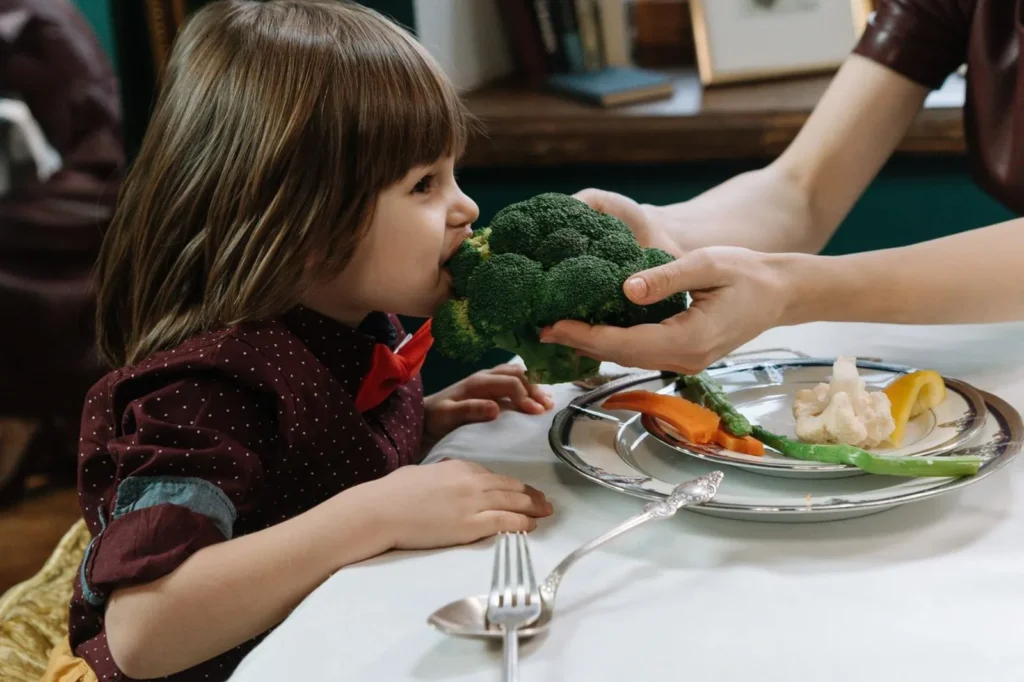
Most parents know children need balanced meals. The harder part is making child health and nutrition work on a real Tuesday: a 7:15 am school bus, a tiffin that comes back half-eaten, and a child who will only eat plain roti. This guide is built for school-age children, roughly 6 to 12 years. It shows what a day’s plate looks like in Indian food, which tiffin boxes tend to come back empty, and how to handle picky eating without a daily fight. It is general guidance, not a substitute for your child’s own doctor.
For age-wise targets, see our guides on child nutrition basics and nutritional requirements for children. This post stays practical: the plate, the tiffin box and the fussy eater, with more ideas in nutrition for kids.
What should a school-age child eat in a day?
A school-age child (about 6 to 12 years) needs roughly 1,400 to 2,200 kcal a day, depending on age, sex and activity. Spread it over three meals and two snacks, built from grains or millets, dal, egg or paneer, milk or curd, two to three servings of vegetables and one or two fruits. Treat sweets and fried snacks as extras.
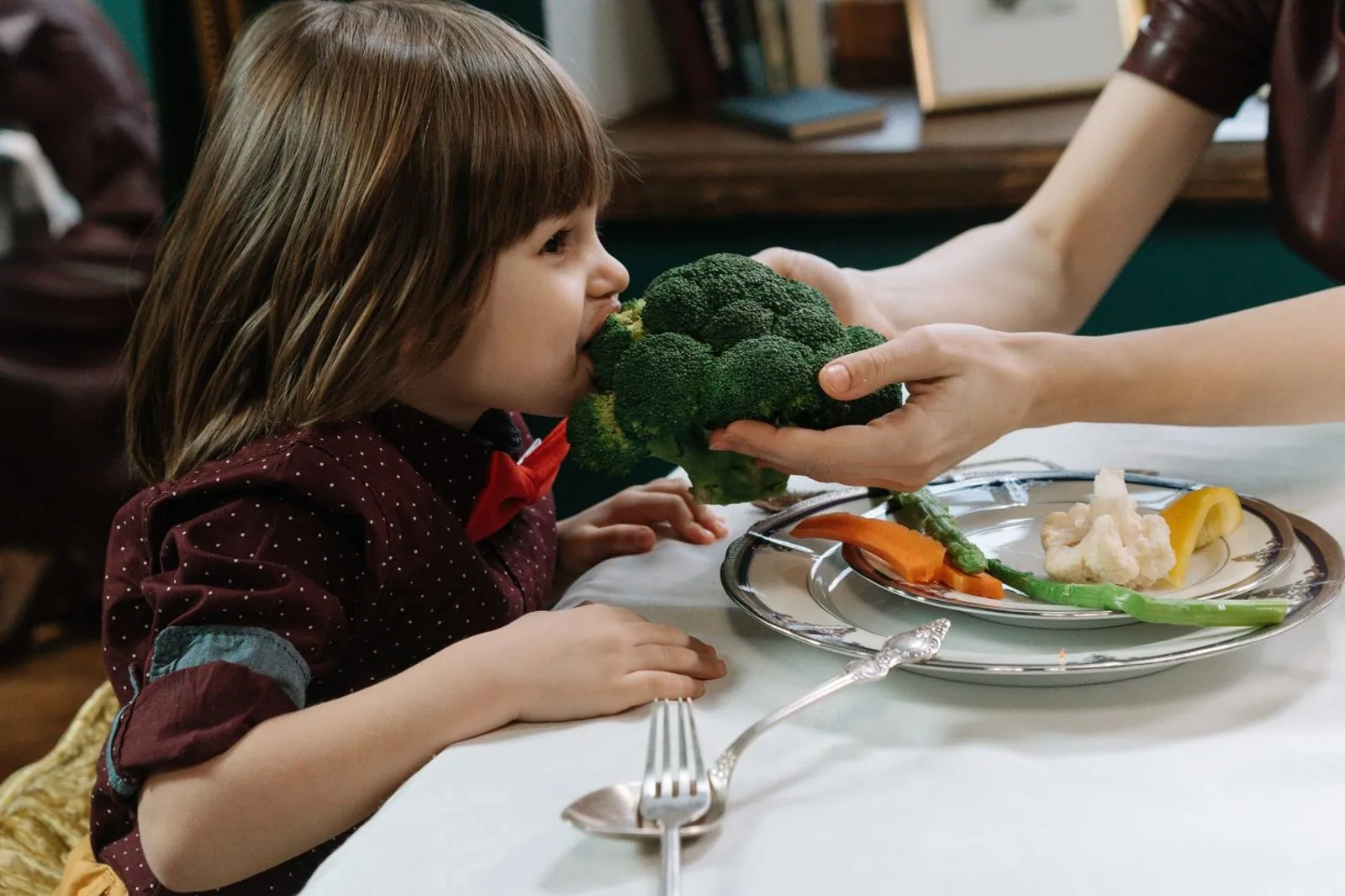
On a thali, picture it like this: about half the plate is vegetables, salad and fruit-type foods, a quarter is roti, rice or millet, and a quarter is protein such as dal, egg, paneer, sprouts or fish. Add a glass of milk or a bowl of curd on the side. The amounts below are rough guides.
| Food group | About how much a day | Indian examples | What it does |
|---|---|---|---|
| Cereals and millets | About 4 to 6 servings (1 serving = 1 roti or about 100 g cooked rice) | Roti, rice, poha, idli, ragi, jowar, oats | Main energy for school and play |
| Dal, eggs, paneer, fish, chicken | About 2 to 3 servings (1 serving = a katori of dal, 1 egg, or about 50 g paneer) | Moong, toor, rajma, chana, egg, paneer, sprouts | Growth and repair; about 20 to 40 g protein a day in total |
| Milk and curd | About 2 to 3 servings (150 to 200 ml milk or 100 to 150 g curd) | Milk, curd, chaas, paneer, cheese | Calcium, and B12 for vegetarians |
| Vegetables | About 2 to 3 servings, roughly 150 to 250 g in all | Lauki, carrot, spinach, methi, beans, cucumber | Fibre, iron, vitamins |
| Fruit | About 1 to 2 servings | Banana, guava, papaya, orange, apple | Vitamin C, fibre, natural sweetness |
| Nuts, seeds, oil, ghee | A small handful of nuts (about 15 to 20 g) and a few teaspoons of oil or ghee | Peanuts, almonds, til, flax, ghee on roti | Healthy fats; skip nuts where school or allergy rules say so |
A school day, meal by meal
Children eat better when the day has a rhythm. Aim for meals and snacks roughly two to three hours apart, with water in between, instead of grazing on biscuits all afternoon.
Breakfast (before school). Pair a grain with a protein: besan chilla with curd, an egg and whole wheat toast, idli with sambar, or a paneer paratha. Add a fruit.
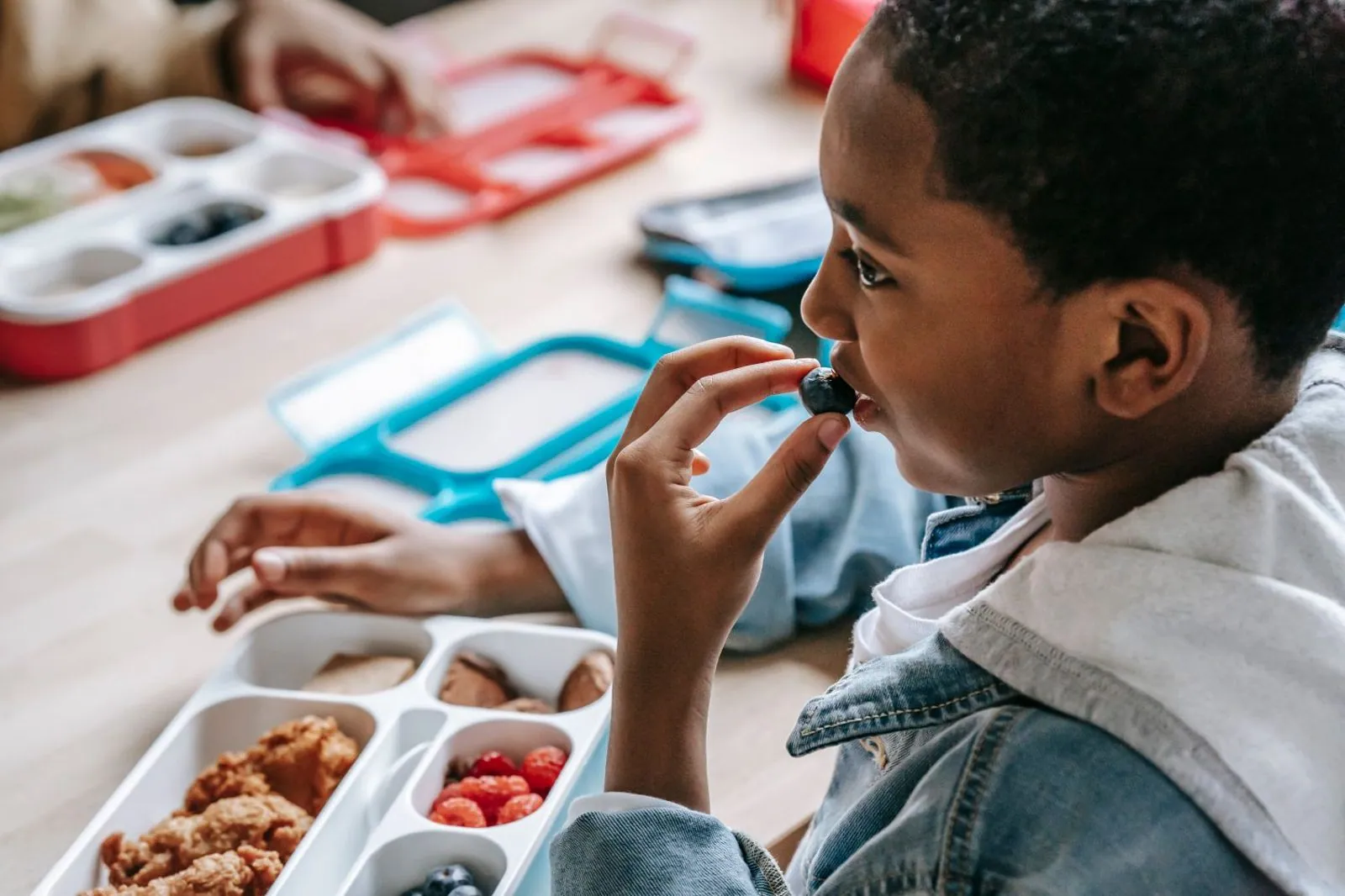
After-school snack (about 3:30 to 4:30 pm). This is when children are hungriest, so use it. Offer a fruit chaat, roasted makhana, a sprouts bowl, a banana with peanut butter, or a glass of milk with a thepla. If a packet is the only thing at hand, it will win.
Dinner (early, with the family). Dal-chawal, khichdi, or roti with sabzi and curd works well. Finish a couple of hours before bed, keep it light on fried food, and keep screens off the table.
Tiffin ideas that come back empty
A good tiffin has one protein, one colour and one thing your child likes. It should survive a warm bag for four or five hours, so skip anything that turns soggy. Protein figures below are rough estimates.
| Tiffin | What goes in | Rough protein | Why it works |
|---|---|---|---|
| Veggie besan chilla | 2 small chillas with grated carrot, mint-curd dip | About 8 to 10 g | Stays soft, easy to eat with hands |
| Paneer roti roll | Roti with crumbled paneer, cucumber, a little chutney, plus a banana | About 10 g | No cutlery, holds well |
| Egg bhurji sandwich | 1 egg bhurji with tomato on whole wheat bread, cucumber sticks | About 10 to 12 g | Quick to make, good for older kids |
| Idli and sambar | 3 small idlis, sambar in a separate small box, coconut chutney | About 8 g | Familiar, light, vegetables hide in the sambar |
| Vegetable poha with peanuts | Poha with peas and carrot, a few peanuts, lemon, orange slices | About 6 to 8 g | Fine at room temperature (nut-free if school requires) |
| Curd rice and chana | Curd rice with grated carrot, pomegranate, a small box of boiled chana | About 8 to 10 g | Cooling and gentle in summer |
Four small rules help. Check your school’s policy on nuts and eggs before packing them. Keep curd-based items cool with an ice pack or an insulated bag. Cut fruit into pieces your child can eat in two minutes. And let your child choose between two options once a week.
How do I get a picky eater to eat better?
Offer one new food at a time in a small portion beside something familiar, and repeat it calmly. Many children need ten or more exposures before accepting a new taste. Keep meals at fixed times, serve milk after food rather than before, avoid bribes and pressure, and let your child help cook. Most fussy phases ease with patience.
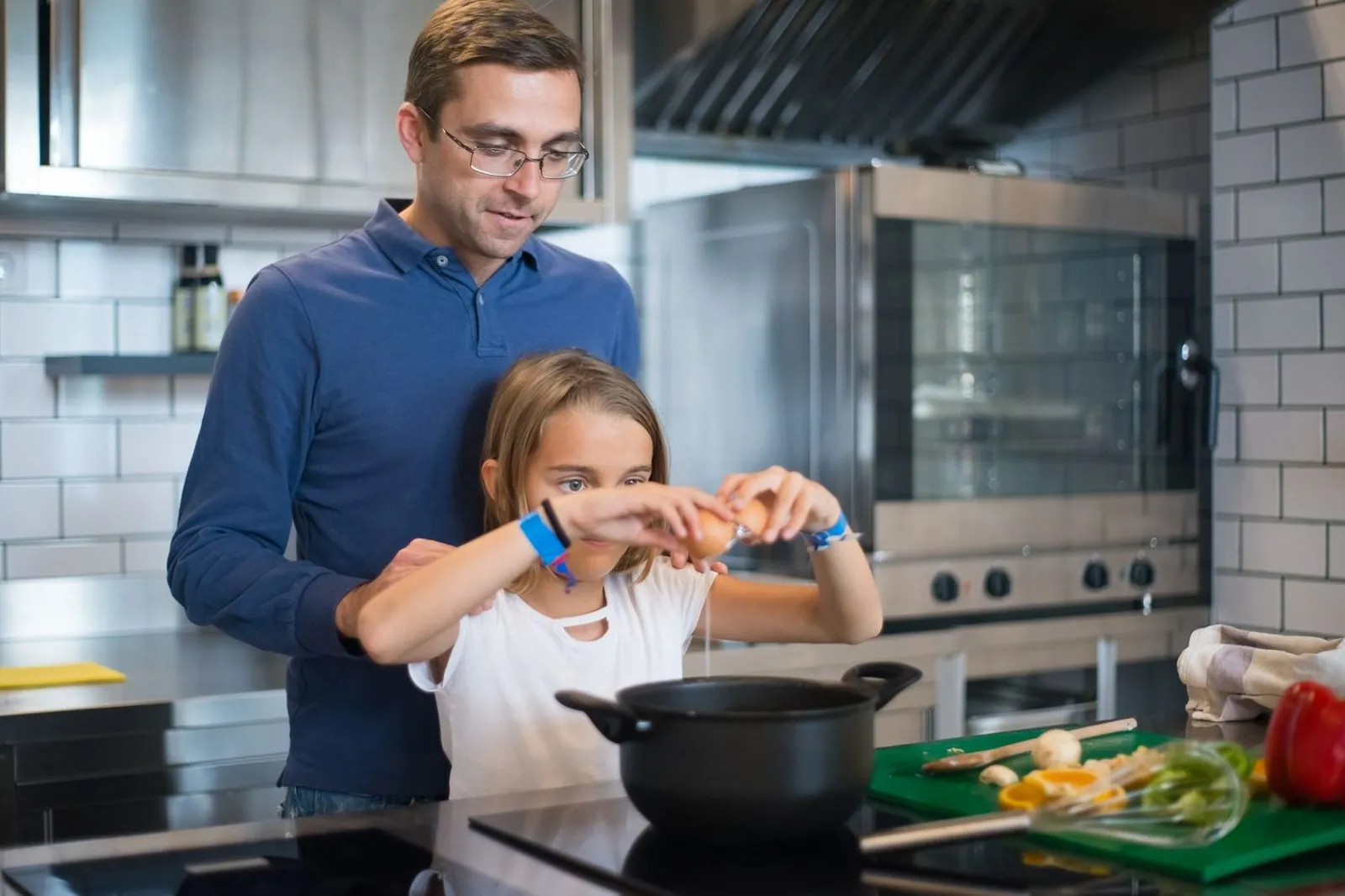
A useful rule is the split of responsibility. You decide what is served, when and where. Your child decides whether to eat it and how much. That removes the daily battle.
| What you see | Likely reason | What to try | What to avoid |
|---|---|---|---|
| Rejects every vegetable | Bitter taste or texture, slow acceptance | Serve a small piece next to a favourite food, grate it into chilla, paratha or dal, and offer it again in a different form | Offering dessert as a prize for eating it |
| Eats only roti, rice or biscuits | Snacking fills the stomach before meals | Fix snack times, keep biscuits out of the hour before a meal, serve protein first | Cooking a separate “kids’ meal” every time |
| Drinks milk but skips food | Large glasses of milk crowd out meals | Keep milk to about 2 to 3 servings, give it after food | Replacing a meal with a sweetened milk drink |
| Dislikes mixed textures | Sensory preference | Serve foods separately on the plate, let your child mix them | Forcing a bite or commenting on what is left |
| Only eats in front of a screen | Distraction replaces hunger cues | Eat at the table, screens off, start with 15 to 20 minutes | Using a screen as a reward for eating |
Hiding vegetables in food can help, but keep serving them visibly too. A child who sees you eating the same food, without commentary, copies you more than you expect.
Myths that make mealtimes harder
Myth: a child must finish everything on the plate. Appetite swings with growth spurts and activity. Serve small portions, let them ask for more, and judge the week, not the meal.
Myth: health drinks are needed for growth. Malt-based powders mixed into milk add sugar and are not required if your child eats a varied diet. Plain milk and normal meals do the job.
Myth: more milk means a stronger child. Milk is useful, but a child who drinks four or five glasses often eats less iron-rich food. About two to three servings of milk or curd is plenty for most.
Myth: sweets and chips must be banned. Total bans make them more exciting. Keep them as occasional extras, ideally after a proper meal.
Which nutrients do Indian school children most often miss?
The usual gaps are iron, calcium, vitamin D, vitamin B12 (mainly in vegetarian diets) and fibre. Food comes first: ragi, rajma, chana, greens and eggs for iron, milk or curd for calcium and B12, and outdoor time plus eggs or fish for vitamin D. Confirm any suspected deficiency with your paediatrician before giving supplements.
Iron. Pair iron-rich foods like chana, rajma, ragi, methi and jaggery-sweetened laddoos with a vitamin C source such as lemon on dal, or a guava after the meal, to help absorption. Tiredness or paleness can have many causes, so only a blood test can confirm low iron.
Calcium and vitamin D. Ragi, til, milk, curd and paneer cover calcium. Vitamin D mostly comes from sunlight, which many city children get little of, so ask your doctor whether a test makes sense. Do not give supplements on a guess.
Zinc and protein. Whole grains, chana, curd, pumpkin seeds and eggs all contribute. Our guides to zinc nutrition and protein and nutrition list more Indian sources.
Omega-3 and gut health. Fatty fish such as sardines and mackerel, plus walnuts, flax and chia, supply omega-3. See omega-3 nutrition for options. Curd, fruit and vegetables support digestion, and nutrition and gut health explains how. For a broader look at vitamins, read vitamin nutrition.
Planning for vegetarian, vegan, egg-free and nut-allergy families
Vegetarian and egg-free. Combine dal with rice or roti, add curd or paneer daily, and use sprouts, soya chunks, tofu and chana for extra protein. Milk and curd give most of the B12, so a child who avoids dairy needs a plan.
Vegan. Plant foods do not reliably supply vitamin B12, and iron, calcium and zinc need careful planning, so a vegan child should be guided by a paediatrician and a registered dietitian rather than by trial and error. Our vegan nutrition guide covers the basics.
Jain and no-onion-garlic homes. Without root vegetables, lean harder on dal, millets, leafy greens, sprouts and seeds for iron and fibre.
Nut or other allergies. Follow your allergist’s plan. Pack a clearly nut-free tiffin if the school asks, and give the class teacher a written list of foods to avoid.
If you also have a younger child at home, toddler nutrition covers the under-3 stage, which has different needs.
When should you see a paediatrician or registered dietitian?
See a paediatrician or registered dietitian if your child is losing weight, has dropped off their usual growth pattern, eats very few foods, refuses a whole food group, or has symptoms like pallor, constant tiredness, or frequent illness. Do not start restrictive diets, weight-loss plans or supplements on your own.
- Weight loss, no weight gain over several months, or a visible slowdown in height.
- A very short list of accepted foods (roughly ten or fewer), gagging or choking with certain textures, or meals that regularly last over an hour.
- Persistent constipation, stomach pain, loose stools, rashes, wheezing or swelling after meals, which may point to an allergy or intolerance.
- Looking pale, getting breathless easily, or being unusually tired, which can point to anaemia and needs a blood test.
- A known condition such as diabetes, coeliac disease, thyroid problems or kidney disease. Follow the care team’s diet plan, and never change a medicine because of anything you read online.
- An older child who skips meals on purpose, counts calories, or worries about body shape. Speak to your doctor early.
Frequently asked questions
How much protein does a school-age child need each day?
Most children aged 6 to 12 need about 20 to 40 g of protein a day, rising with age. A typical Indian day covers it with dal, milk or curd, an egg or paneer, and grains. Protein powders are usually unnecessary.
Is it okay if my child eats the same tiffin every day?
For a short stretch, yes, if the box has a protein, a fruit or vegetable and a grain. Over a few weeks, rotate two or three favourites and change one item at a time, so variety builds without a refusal.
Do school-age children need milk every day?
Milk or curd is a convenient source of calcium, protein and B12, and about two to three servings a day suits most children. If your child dislikes milk, curd, paneer, ragi and til can fill in. A child who avoids dairy altogether should see a dietitian.
How do I know my child is eating enough?
Look at the pattern over weeks, not one meal. A child who is active, growing in height and weight along their usual curve, sleeping well and has steady energy is usually eating enough. Poor appetite with weight loss, or growth that has slowed, needs a doctor’s check.
Are health drinks and multivitamins necessary for children?
Not for most children who eat a varied diet. Many health drinks add sugar, and supplements help only when there is a confirmed gap. Do not give iron, vitamin D or a multivitamin on a guess, and let your paediatrician decide, including the amount.
If you would like a week-long Indian menu shaped around your child’s likes, school timings and any allergies, book an online nutritionist consultation with Fitstrot, and bring your paediatrician’s advice along.


