

A 30 day yoga challenge asks you to unroll your mat every day for a month, usually with a plan that starts gentle and gets a little harder each week. Done well, it is less about touching your toes by day 30 and more about turning a vague wish into a routine. Below you will find a four-week plan, a day-by-day calendar, pose modifications and a clear list of who should check with a doctor first. You need a mat, a patch of floor and 10 to 30 minutes.
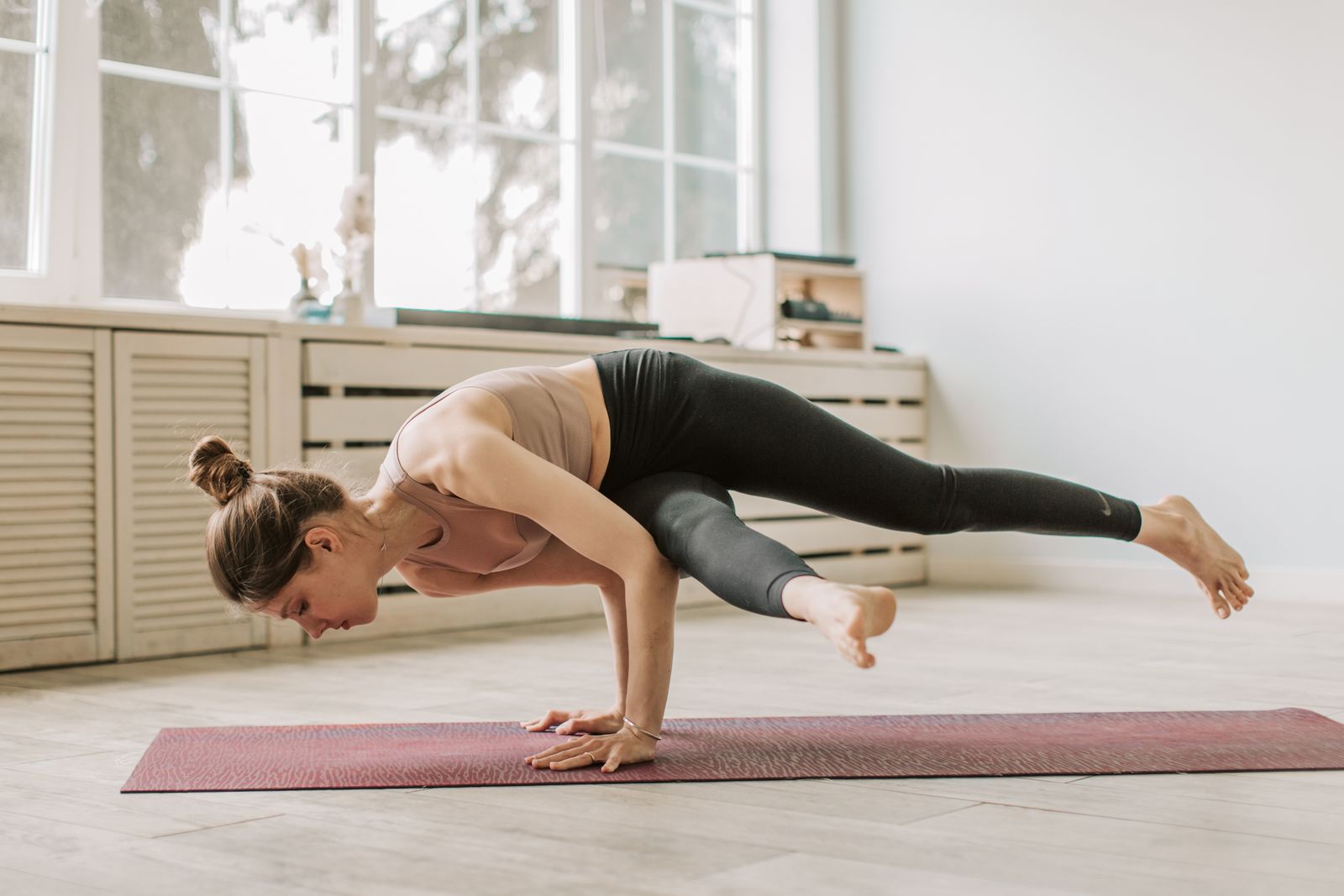
What is a 30 day yoga challenge, and how should you structure it?
A 30 day yoga challenge is a month of daily yoga that increases gradually: about 10 to 15 minutes a day in week one, building to 25 to 30 minutes by week four. The best structure is progressive, with a lighter day every seventh day, so the habit grows without overloading your joints or your motivation.
Many free challenges hand you a random video each day. A better 30 day yoga challenge for beginners follows a simple arc: breath and alignment in week one, standing poses in week two, hips, balance and core in week three, then linked flows in week four.
The 4-week plan at a glance
Use this table to see the shape of the month before you look at individual days.
| Week | Days | Focus | Session length | Effort level |
|---|---|---|---|---|
| Week 1 | 1-7 | Breath, alignment, spine movement | 10-15 min | Light |
| Week 2 | 8-14 | Standing poses, slow sun salutations | 15-20 min | Light to moderate |
| Week 3 | 15-21 | Hip openers, balance, core | 20-25 min | Moderate |
| Week 4 | 22-30 | Linked flows, longer holds, a calm finish | 20-30 min | Moderate |
Moderate means you can still speak in short sentences. If you are gasping or holding your breath, ease off.
Your day-by-day yoga challenge calendar
Screenshot this yoga challenge schedule and tick days off. Every seventh day is gentle but still counts. Hold each pose for 3 to 5 slow breaths unless stated.
| Day | Practice | Minutes |
|---|---|---|
| 1 | Breath awareness, mountain, cat-cow, child’s pose | 10 |
| 2 | Neck, shoulder, wrist warm-up; seated twist | 10 |
| 3 | Cat-cow, bent-knee downward dog, child’s pose | 12 |
| 4 | Mountain, bent-knee forward fold, chair | 12 |
| 5 | Bridge, knees-to-chest, reclined twist | 12 |
| 6 | Day 3 flow, then 3 minutes slow breathing | 15 |
| 7 | Gentle: legs up the wall, twist, final rest | 10 |
| 8 | Warrior II, triangle prep, both sides | 15 |
| 9 | Slow sun salutation, 3 rounds | 15 |
| 10 | Warrior I, low lunge, downward dog | 18 |
| 11 | Chair, forward fold, tree near a wall | 18 |
| 12 | Strap hamstring stretch, bridge | 15 |
| 13 | Sun salutation x4, knee plank | 20 |
| 14 | Gentle: supported fold, butterfly, final rest | 15 |
| 15 | Hip openers: low lunge, lizard, figure-four | 20 |
| 16 | Balance: tree, eagle arms, wall support | 20 |
| 17 | Core: bird-dog, boat with bent knees, plank | 20 |
| 18 | Back body: locust, low cobra, child’s pose | 20 |
| 19 | Warriors, triangle, side angle with block | 25 |
| 20 | Sun salutation x5, bridge | 25 |
| 21 | Gentle: reclined hip stretches, final rest | 15 |
| 22 | Link three standing poses via downward dog | 25 |
| 23 | Hip and hamstring flow, pigeon or figure-four | 25 |
| 24 | Tree, half moon at wall, boat | 25 |
| 25 | Chair, 5-breath warriors, 20-30 second plank | 30 |
| 26 | Longest day: full flow, 6 sun salutations | 30 |
| 27 | Bridge, locust, low cobra, child’s pose | 25 |
| 28 | Gentle: supported bridge, twist, final rest | 20 |
| 29 | Favourite flow from weeks 3-4 | 25 |
| 30 | Favourite flow, 5 minutes seated breathing | 20 |
Skip any pose that causes sharp or pinching pain. The calendar is a guide, not a test.
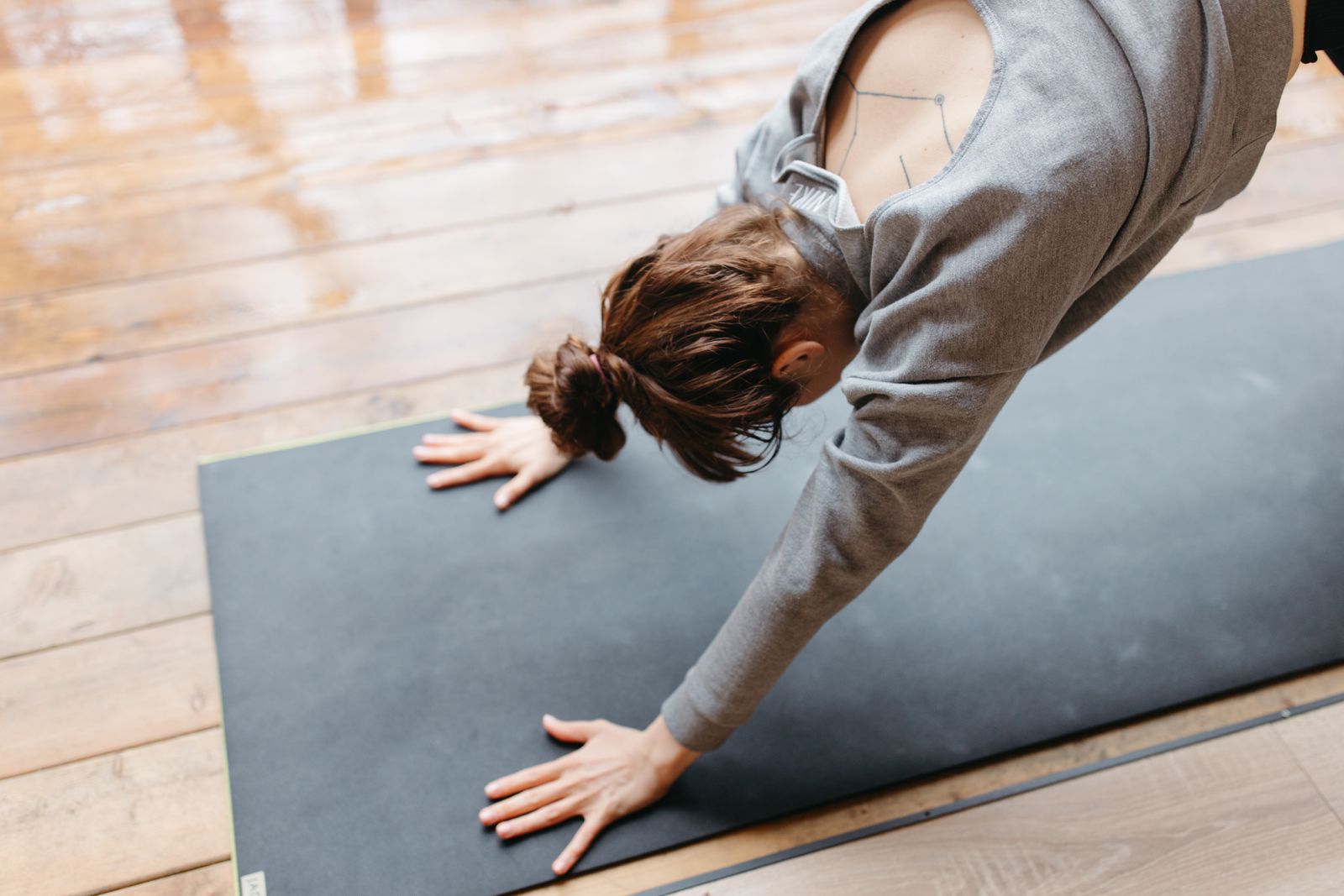
Week by week: what each phase is teaching you
Week 1 builds the base. Slow breathing through the nose, a neutral spine and relaxed shoulders matter more than depth. Slow styles such as hatha yoga suit this week because poses are held rather than rushed.
Week 2 adds legs and stamina. Warriors, chair pose and slow sun salutations teach you to hold a shape without tensing your jaw and shoulders. If you like the idea of moving with your breath, a taste of vinyasa yoga starts to make sense here, and the linking logic behind any yoga flow becomes easier to follow.
Week 3 opens hips and challenges balance. Tight hips from long hours of sitting show up here. Props help: a block under the hand in low lunge or a folded blanket under the hips turns a struggle into a useful stretch. For lighter days, the ideas in yoga for flexibility are a good fit.
Week 4 links and lands. The longest sessions sit on days 25 and 26, then the plan tapers so you finish calm rather than spent. For gentle days, yin yoga and restorative yoga fit well, because they use long, supported holds. Save demanding fixed series such as ashtanga yoga for after the challenge, ideally with a teacher; repeating them daily can leave wrists and hamstrings sore.
When and for how long should you practise each day?
Practise at the time you will actually show up, whether that is 15 minutes after waking or an hour before bed. Allow roughly 2 to 3 hours after a full meal, or about an hour after a light snack. Keep sessions between 10 and 30 minutes, with a short final rest of 2 to 3 minutes.
Morning suits people whose evenings are unpredictable, and a short morning session can double as a wake-up routine; see morning yoga for ideas. Evenings suit people who feel stiff after a day at a desk. Tie the session to something you do anyway, such as after brushing your teeth, so it needs no decision. To keep the habit going beyond the month, daily yoga covers how to make each session lighter and more sustainable.
Common myths that make people quit by week two
Myth: you must do the splits or a headstand by day 30. You do not. Forcing a deep pose through tight hips or a strained neck invites injury. A good goal is modest, such as holding tree pose for 20 seconds or sitting cross-legged more comfortably.
Myth: a daily yoga challenge has to be intense. It works because intensity varies, which is why the calendar includes a gentle day every seventh day.
Myth: it takes 21 days to build a habit. The 21-day figure is a rule of thumb. Habits usually become automatic over weeks to months, depending on the person. A month gets you well into the process but may not finish it.
Myth: yoga can target fat from one body area. No exercise removes fat from a chosen spot, and yoga is no exception. Poses strengthen and stretch muscles, but they do not decide where your body loses fat.
What can you realistically expect from a 30 day yoga challenge?
After 30 days of regular practice, many people notice easier movement in the hips and back, steadier breathing and a more settled routine. Results vary from person to person. Yoga is a moderate form of exercise, so it should not be treated as a guaranteed way to lose weight or change body shape.
Typical 30 day yoga challenge results are modest: reaching a little closer to the toes, holding standing poses longer, sleeping a little better, feeling calmer after a session. Those are plausible, not promised. For more on what regular practice may offer, read the benefits of yoga guide.
If your goal is weight loss, yoga can be one part of a plan that also covers food, walking and sleep, but it is rarely enough alone.
Pose fixes: modifications for common trouble spots
Modifying a pose is not a downgrade. It is how you keep a daily practice safe. Use this table whenever a pose feels sharp, strained or out of reach.
| Pose | Common trouble | Modification |
|---|---|---|
| Downward dog | Tight hamstrings, sore wrists | Bend the knees and lift the heels; press through the whole palm, or place hands on a wall instead |
| Standing forward fold | Lower-back strain | Bend the knees deeply and rest hands on thighs or blocks |
| Child’s pose | Knee or ankle discomfort | Place a folded blanket behind the knees or under the hips |
| Pigeon pose | Knee pinching | Swap for the figure-four stretch lying on your back |
| Plank | Wrist or shoulder fatigue | Lower the knees, or place hands on a sturdy sofa edge or wall |
| Bridge | Neck or lower-back tension | Lift only a few centimetres, keep the head still, feet hip-width |
| Tree pose | Wobbling | Rest fingertips on a wall; place the foot on the calf, never against the knee |
Who should check with a doctor before starting a 30 day yoga challenge?
Speak to a doctor or physiotherapist first if you are pregnant, have high blood pressure, glaucoma, a herniated disc, osteoporosis, recent surgery, a heart condition, ongoing joint injury or frequent dizziness. Gentle practice suits many healthy adults, but these conditions can make inversions, deep twists, deep forward folds or breath-holding unsuitable.
You may need to skip head-below-heart poses, avoid deep twists and folds, or follow only prenatal or therapeutic sequences. Never change medication because of yoga; ask your doctor how exercise fits in.
Stop and get medical help for chest pain, severe dizziness, numbness, lasting tingling, or sharp pain that continues after you leave the pose. Muscle tiredness is normal; joint pain is not.
For people living with back pain, start with the gentler progressions in yoga for back pain and let the pain level, not the calendar, decide your day.
What should you do if you miss a day?
Pick up from the day you missed rather than restarting. A missed day does not erase earlier practice, and restarting at day 1 is a habit that makes people quit. If you miss two days in a row, repeat the last session you finished, then continue and extend the challenge by the days you missed.
Many people hit a motivation dip around days 8 to 12, once novelty fades. Plan for it: on a bad day, do a 5-minute version with cat-cow, child’s pose and one long final rest. If time is the problem, fix a slot in your day and keep the mat unrolled where you can see it.
How to adapt the plan if you are a desk worker, beginner or returning practitioner
- Complete beginner: repeat each week once before moving on. A 5-week version works just as well.
- Desk worker: add 2 minutes of shoulder rolls and a seated twist at your desk on busy days.
- Returning after a break: keep week-one poses but extend sessions to 15 minutes.
- Experienced practitioner: keep the structure, swap in your own flows and hold poses for 5 to 8 breaths.
What should you do after day 30?
Do not stop completely and do not rush into another 30 days straight away. Scale down to 3 or 4 sessions a week for a month, keep one gentle day, and write down which days felt best. Those notes tell you which style to explore next.
If you want teacher feedback on alignment and a schedule you do not have to plan yourself, join Fitstrot’s online yoga classes and ask your instructor to build on the week 3 and 4 sequences from this plan.
FAQs about the 30 day yoga challenge
Can beginners do a 30 day yoga challenge?
Yes. This plan is written for beginners: sessions start at 10 minutes, week one uses only basic poses, and the table of modifications shows how to adapt each pose. Repeat days if needed and skip anything painful. If you have a medical condition, check with your doctor first.
Do I need to do yoga every single day for 30 days?
Daily practice is the point of the challenge, but it does not need to be hard. Gentle days count, and taking one unplanned rest day because of illness or pain is sensible. If you miss a day, continue from where you stopped rather than restarting.
Will a 30 day yoga challenge help me lose weight?
It may support a healthier routine, but it should not be expected to cause weight loss on its own. Weight change depends mostly on food intake, daily movement and sleep, and yoga cannot reduce fat from one specific area such as the belly or thighs.
Can I do a 30 day yoga challenge at home without equipment?
Yes. A mat or a non-slip surface is enough. A folded blanket, a cushion, a belt in place of a strap and sturdy books in place of blocks all work. Keep a wall within reach for balance poses.
Is a 30 day yoga challenge safe during pregnancy or with a back problem?
Not without medical advice. During pregnancy, many poses need changing or skipping, and with a back problem some forward folds and twists may need to be avoided. Ask your doctor or physiotherapist first, then choose a prenatal or back-friendly sequence rather than following the general plan above.


