

Yoga for athletes is not about touching your toes or twisting into a pretzel. It is a supportive practice, done alongside your normal training, that adds mobility work, balance, controlled breathing and a proper wind-down to a week that is otherwise built on repeating the same movements. Done sensibly, two or three short sessions can help you move more freely and recover more calmly. It does not treat injuries, and it does not replace your coach, a physiotherapist or your doctor’s advice.
Does yoga help athletes perform better?
Yoga can support athletic performance indirectly. It builds joint mobility, single-leg balance and body awareness, and it gives the nervous system a calmer reset after hard sessions. It will not replace strength, speed or endurance training, and it guarantees no particular result. Most athletes notice a difference after about four to eight weeks of regular practice.
Training makes you good at a narrow set of movements. A bowler repeats one action, a cyclist holds one posture for hours, a swimmer rotates the same shoulder thousands of times. The muscles you use constantly get tight and dominant, and the ones you rarely load get lazy. Yoga takes your joints through positions your sport never asks for, and it teaches you to notice where you are gripping, holding your breath or leaning on one side.
That awareness is the most underrated benefit: noticing a stiff hip on Tuesday lets you adjust a session before it becomes a problem. For the wider picture, see the benefits of yoga.
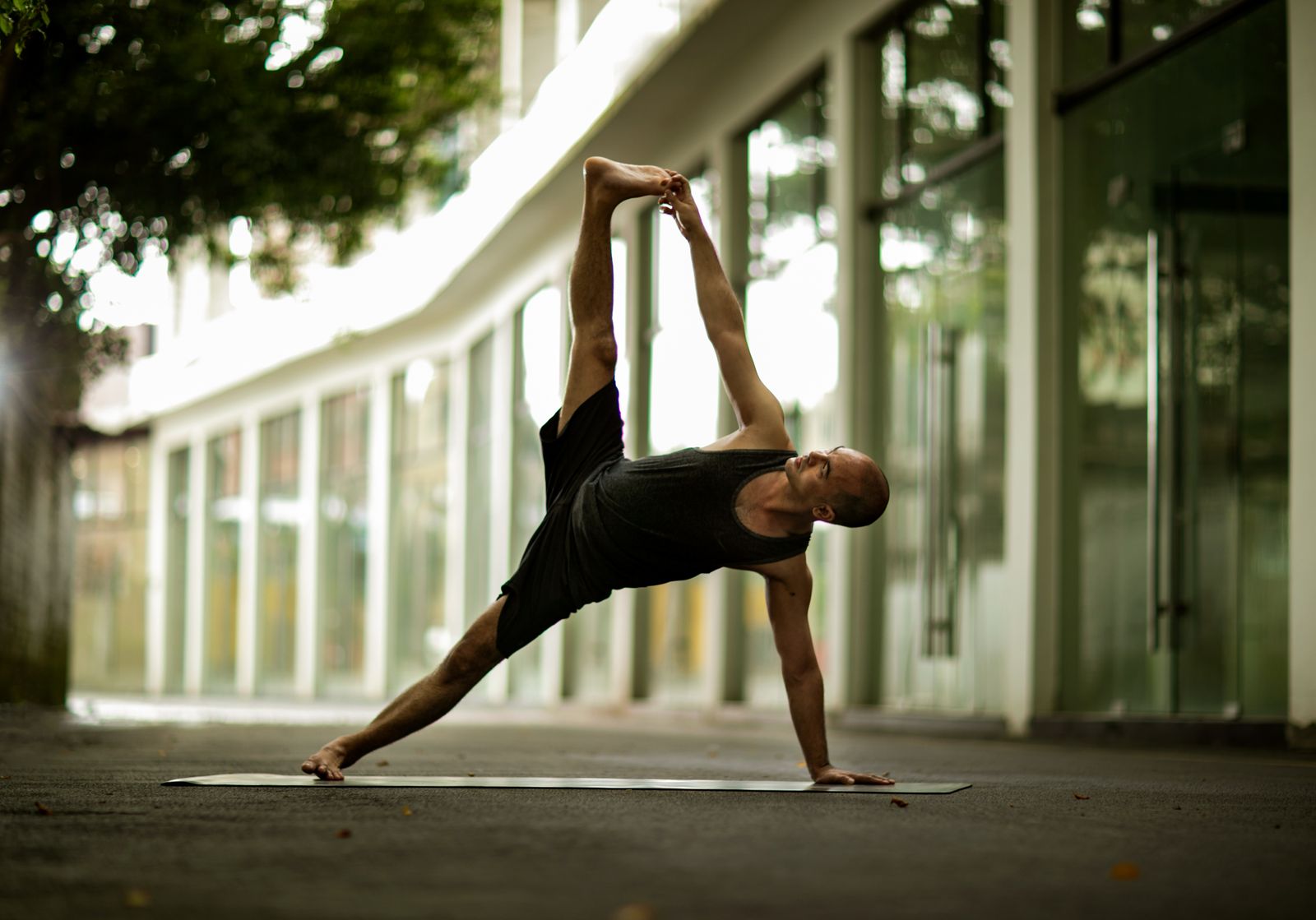
Myth check: “The more flexible I get, the better I will play”
Sport needs usable range: a joint that moves through the range your sport demands, under control. Extreme flexibility is not the goal, and for some athletes it is a disadvantage. Three corrections:
- Tight does not always mean short. Often the nervous system is simply guarding a joint it does not trust. Slow holds with steady breathing teach it the range is safe.
- Hypermobile athletes need stability, not depth. If your joints already bend further than most, chasing deeper stretches can irritate them. Choose poses that build control and stop short of your end range.
- Long static holds right before explosive work are a poor idea. Sprints, jumps and throws can feel flatter straight after deep, long stretches. Keep pre-training movement short and dynamic, and save the long holds for afterwards.
For more on how range of motion changes, see yoga for flexibility.
Sport-by-sport guide: what each athlete should focus on
Different sports overload different areas, so use this table to pick your priorities.
| Sport | Areas that usually get tight or overworked | Yoga focus | Good first pose |
|---|---|---|---|
| Running | Hip flexors, hamstrings, calves | Hip extension, ankle mobility | Low lunge |
| Cycling | Hip flexors, lower back, neck, chest | Spine extension, hip opening | Bridge pose |
| Swimming | Shoulders, upper back, chest | Shoulder rotation, upper back mobility | Thread the needle |
| Cricket (bowlers, fielders) | Hips, groin, lower back, shoulders | Hip mobility, trunk rotation, balance | Warrior II |
| Badminton and tennis | Shoulders, forearms, hips, ankles | Shoulder mobility, single-leg balance | Tree pose |
| Football and hockey | Groin, hamstrings, hip rotators, ankles | Hip mobility, ankle stability | Reclined figure-four |
Runners and cyclists have their own detailed pages: see yoga for runners and yoga for cyclists for sequences built around those sports.
A 25-minute recovery sequence, pose by pose
This sequence suits an easy day or the evening after a hard session. It moves from gentle to deeper, and it stays slow on purpose. Breathe through the nose where you can, and make the exhale longer than the inhale. Holds below are approximate, so treat them as a guide and not a target.
| Pose | Hold or reps | What it works on | Form cue |
|---|---|---|---|
| Child’s pose | About 1 minute | Hips, lower back, calming the breath | Knees wide, forehead down, let the back widen on each inhale |
| Cat-cow | About 8 to 10 slow rounds | Spine and shoulder blades | Move with the breath, not faster than it |
| Downward dog | About 5 breaths | Hamstrings, calves, shoulders | Bend the knees freely and lengthen the spine first |
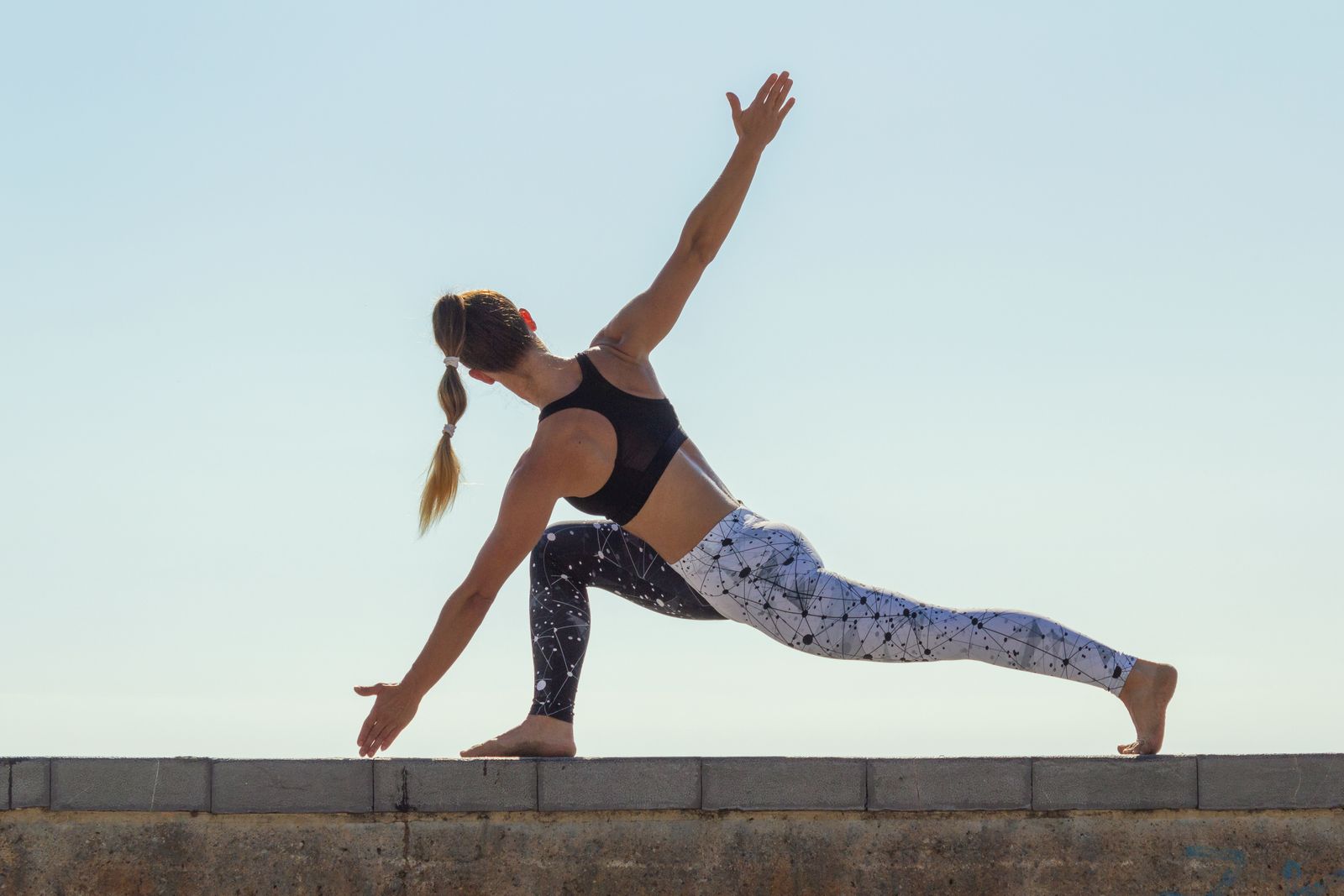
| Low lunge | About 5 to 8 breaths per side | Hip flexors, quadriceps | Tuck the tailbone slightly and keep the front knee over the ankle |
| Reclined figure-four | About 1 minute per side | Deep hip rotators, glutes | Keep the head down and flex the top foot to protect the knee |
| Bridge pose | About 5 breaths, 2 rounds | Glutes, hamstrings, front of the hips | Press through the heels and keep the knees in line with the hips |
| Thread the needle | About 5 breaths per side | Upper back, shoulders | Keep the hips stacked over the knees |
| Reclining spinal twist | About 1 minute per side | Lower back, trunk | Let the knees fall only as far as feels comfortable |
| Legs up the wall | About 3 to 5 minutes | Winding down, calves and feet | Hips a hand’s width from the wall, arms relaxed |
There is no pigeon pose in the table on purpose: it loads the knee, and athletes with stiff hips often force it. The reclined figure-four gives a similar stretch with less risk. For more poses, browse our library of yoga poses, or see yoga sequence for other orderings.
How often should athletes do yoga?
Most athletes do well with two to three yoga sessions a week, each lasting about 20 to 45 minutes, fitted around existing training and not piled on top of it. In an off-season, three to four lighter sessions is reasonable. In a heavy competition block, one or two short ones is plenty.
Use this table as a template and adjust it with your coach.
| Training phase | Yoga sessions per week | Session length | Style and focus |
|---|---|---|---|
| Off-season or base building | 3 to 4 | 30 to 45 minutes | Vinyasa or hatha; strength, balance and mobility |
| Heavy training block | 2 | 20 to 30 minutes | Hatha or yin; hips and spine, on lighter days or after sessions |
| Competition week | 1 to 2 | 10 to 20 minutes | Short, familiar poses and breathing; nothing new, nothing deep |
| Taper and after competition | 1 to 2 | 20 to 30 minutes | Restorative and gentle movement; no pushing into end range |
The common error is adding yoga without taking anything out. A late 45-minute class can eat into sleep, your best recovery tool, so shorten a session before you skip it.
Should athletes do yoga before or after training?
Do short, dynamic yoga movements before training and longer, slower holds after it. Before a session, about five to ten minutes of lunges, cat-cow and gentle twists warms the joints. Afterwards, holds of about 30 seconds to a minute and slow breathing help the body settle. Avoid long deep stretches right before explosive efforts.
A separate session on a rest or light day is also fine, and often the best option if your schedule is tight. Morning sessions feel stiffer, so allow a longer warm-up. Leave about two to three hours after a full meal, or around 30 to 60 minutes after a light snack such as a banana, so you are not twisting on a full stomach.
Which type of yoga suits athletes best?
The best style depends on the point in your season. Vinyasa suits strength and conditioning phases, hatha suits steady year-round maintenance, yin suits heavy training blocks that need deeper joint release, and restorative suits taper weeks and recovery after competition. Beginners are usually best served by hatha first.
- Vinyasa yoga links movement to breath and builds heat, balance and some cardiovascular demand.
- Hatha yoga is slower and more foundational. It is a low-risk choice for newcomers.
- Yin yoga holds floor poses for about three to five minutes. It can feel deeply uncomfortable, so go gently and ease out if you feel pinching or pain.
- Restorative yoga uses bolsters, blankets and support so the body can relax fully. It is the right call in the days around competition.
Not sure where to begin? Our overview of the types of yoga lays out the main styles side by side.
Breathing practices: keep them simple
Slow diaphragmatic breathing, where the belly rises on the inhale and the exhale is a little longer, is the most useful place to start. It gives a calmer reset after hard training and helps settle nerves before a match.
Keep it gentle. Avoid forceful breathing, long breath holds and breathing drills you have not been taught properly, because they can cause light-headedness. If you have asthma, high blood pressure, a heart condition or are pregnant, ask your doctor before trying any breathing technique beyond easy, natural breathing.
Troubleshooting: when yoga does not seem to help
- “I feel tighter after yoga.” You probably pushed too deep, too fast. Halve the depth, shorten the holds and breathe out longer.
- “My hamstrings never loosen.” Bend your knees in forward folds and downward dog, and think about lengthening the spine first. Consistency over weeks beats one big stretch.
- “I feel sluggish before training.” Long, slow yoga just before a session can leave you flat. Switch to a short dynamic warm-up and move the slow work to after training or to another time of day.
- “My knee complains in hip openers.” The stress is travelling through the knee instead of the hip. Come out of the pose, use a prop or choose a reclined version, and have an instructor check your alignment.
For gentle options for a stiff back, see yoga for back pain, though it is no substitute for assessing ongoing pain.
Who should modify or avoid yoga, and when to see a doctor
Yoga is a supportive practice. It is never a treatment for an injury or a medical condition, and it should never replace medication, rehabilitation or advice from your doctor or physiotherapist.
Hold off, or get clearance first, if you have:
- A recent or unhealed injury, sprain, strain or fracture, or recent surgery.
- A diagnosed joint, spine or disc problem, or osteoporosis.
- High blood pressure, a heart condition, glaucoma or vertigo (inversions and head-below-heart poses may not suit you).
- Pregnancy, or recovery after childbirth.
- Hypermobility, where you should avoid deep end-range poses.
See your doctor or physiotherapist if you notice:
- Sharp, sudden or worsening pain during or after a pose.
- Pain that lasts beyond a few days or keeps coming back in the same spot.
- Swelling, bruising, numbness, tingling or weakness in an arm or leg.
- A joint that locks, catches or gives way.
- Chest pain, fainting, unusual breathlessness or dizziness at any point.
If you are recovering from an injury, work with a clinician first, then return to yoga gradually with their go-ahead. A qualified coach on 1-on-1 personal training can also help you rebuild strength around a problem area once you are cleared.
Starting from scratch: your first month
Begin with two sessions a week of about 15 to 20 minutes, focused on the joints your sport stresses most. Add a third session in week three if you feel fine. Use a non-slip mat and keep water nearby. Guided classes help in the first month, because alignment and pacing are easy to get wrong alone.
Note after each session which poses felt tight and how training went the next day, and review after four weeks.
Questions athletes ask about yoga
Is yoga enough exercise for an athlete?
No. Yoga improves mobility, balance and recovery, but it does not replace the strength, speed or endurance work your sport needs. Treat it as a supplement to your training, usually two to three times a week, and not as a standalone programme.
Will yoga make athletes weaker or slower?
Not when it is programmed sensibly. Long static stretches right before explosive efforts can temporarily dull power, so keep pre-training yoga short and dynamic and save the deep holds for after training or for separate recovery days.
How soon will athletes notice results from yoga?
You may feel looser and calmer after a single session. Steadier gains in mobility, balance and recovery quality usually take about four to eight weeks of regular practice. Results vary from person to person, and nothing is guaranteed.
Can yoga help with a sports injury?
Gentle yoga may support recovery as part of a plan from your doctor or physiotherapist, but it does not treat an injury by itself. Get a diagnosis and clearance before doing poses that load the injured area, and stop if pain increases.
Do I need to be flexible to start yoga as an athlete?
No. Most people begin stiff, and stiffness is the reason to start. Use props like blocks, straps and cushions, bend your knees where needed, and work within a comfortable range. Comfort and control matter more than how deep you go.
Try one guided session this week: book a Fitstrot online yoga class, tell the instructor your sport and any niggles, and ask for a 25-minute recovery routine you can repeat at home.


