
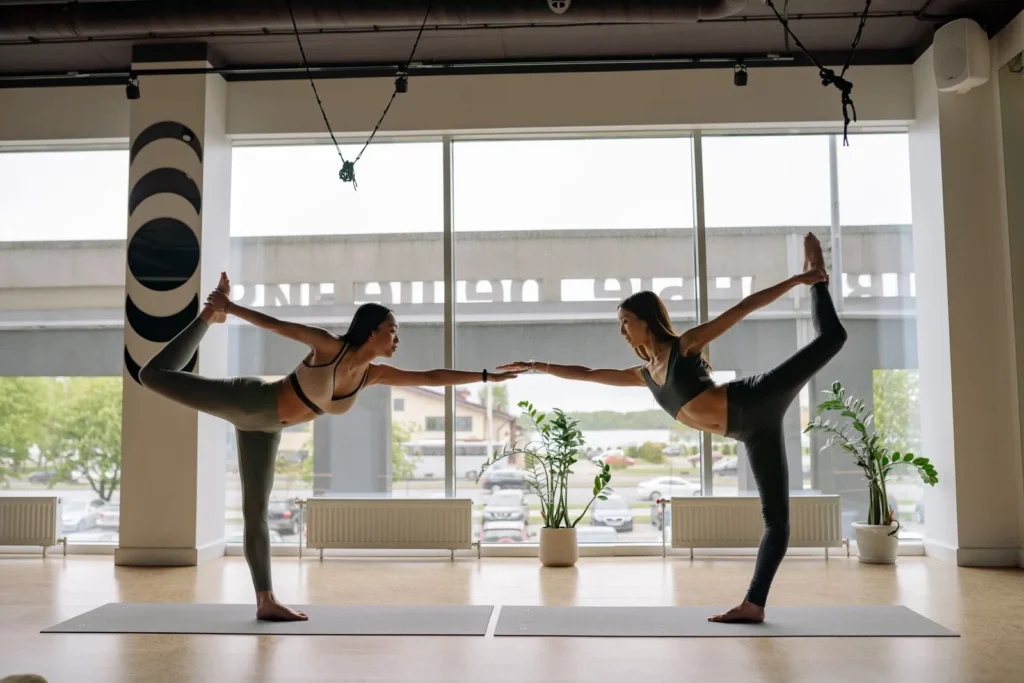
Yoga poses for two are simple shared asanas where two people balance, stretch or breathe together, using each other’s weight and feedback. They work for friends, siblings, a parent and an older child, or any pair who want a practice that feels more like time together than exercise. This guide gives you six beginner poses, a 15-minute sequence, safety rules and fixes for common problems. It is general guidance, not medical advice.
Which yoga poses for two are best for beginners?
Start with six low-risk poses: seated back-to-back breathing, partner twist, double butterfly, seated forward fold with held hands, double tree and partner cat-cow. None needs strength or flexibility, and each lasts 30-60 seconds, so a first session can finish in about 15 minutes.
Warm up separately for two minutes first with shoulder rolls, gentle neck circles and a few cat-cows, because cold muscles strain more easily when a second person adds pressure. Then use this table as a quick reference.
| Pose | Setup | Hold | Form cue |
|---|---|---|---|
| Back-to-back breathing | Sit cross-legged with spines touching | 1-2 minutes | Feel your partner’s breath expand against your back; do not lean your full weight |
| Partner twist | Sit back-to-back, each hand on own knee or partner’s knee | 5 breaths per side | Twist from the ribs, never yank with the arms |
| Double butterfly | Sit facing, soles of feet touching | 5-8 breaths | Sit tall and let knees drop on their own |
| Seated forward fold | Face each other, legs wide, hold forearms | 5 breaths each | The folding partner leads; the other leans back only as far as comfortable |
| Double tree | Stand side by side, inside foot on calf or ankle | 5 breaths per side | Never place a foot on the knee; link arms or press palms overhead |
| Partner cat-cow | Side by side on all fours, shoulders aligned | 6-8 slow rounds | Match the breath, with inhale for cow and exhale for cat |
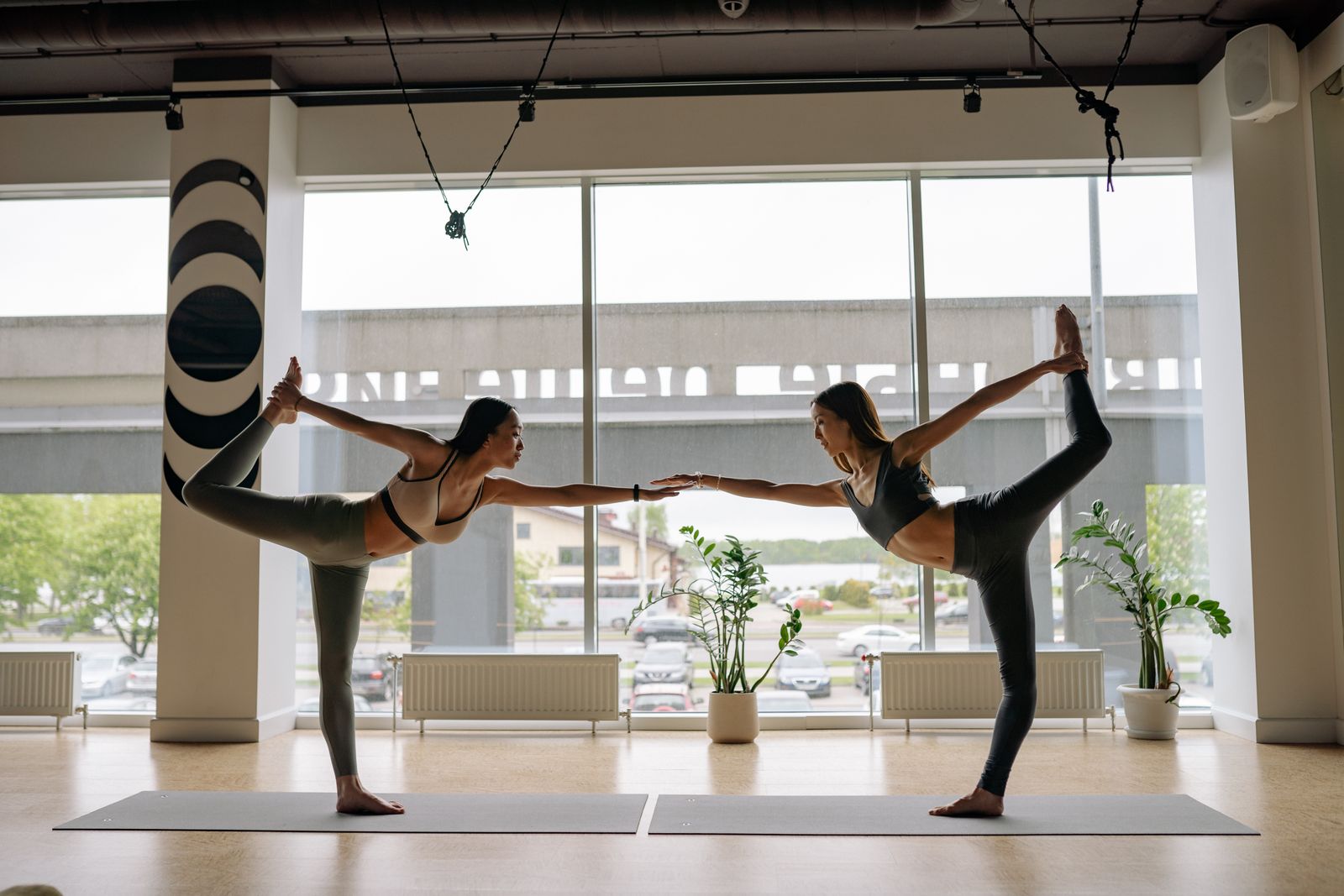
If you want names and Sanskrit terms for the poses you meet along the way, our guides to yoga poses, yoga asanas and yoga pose names are useful companions.
How do you do a 15-minute yoga sequence for two?
A simple 15-minute sequence runs in this order: 2 minutes of solo warm-up, 2 minutes of back-to-back breathing, then four partner poses at about 1.5 minutes each, and 3 minutes of shared relaxation. Keep the pace slow, switch roles halfway and talk to each other constantly.
| Minutes | Step | What to do |
|---|---|---|
| 0-2 | Solo warm-up | Shoulder rolls, cat-cow, gentle hip circles, done separately |
| 2-4 | Back-to-back breathing | Sit tall, breathe slowly, agree on a signal for “ease off” |
| 4-6 | Partner twist | 5 breaths each side, move together on the exhale |
| 6-8 | Double butterfly | Soles together, gently rock forward and back by turns |
| 8-10 | Seated forward fold | One folds while the other anchors, then swap |
| 10-12 | Double tree | 5 breaths each side, use the wall if balance wobbles |
| 12-15 | Cool-down | Sit back-to-back again, or lie side by side with eyes closed |
Set-up tips: use a non-slip mat or two mats side by side, wear comfortable clothes, practise barefoot on a clean floor, and keep a wall within reach for balance. Agree on a stop word before you begin, such as “pause”, so either person can end a pose at once without explanation. Keep the music low enough to hear each other breathe.
This works as a standalone session or as a gentle close to a longer practice. For a similar slow, supported feel, you might enjoy our guide to restorative yoga.
Which poses suit friends, siblings and parent-child pairs?
Friends and siblings can use any pose in the table. For a parent and child, choose playful, low-load poses and keep sessions near 10 minutes. The adult should take the base role and the child never carries the adult’s weight, so avoid stacked or weight-bearing poses.
- Friends or colleagues: start with back-to-back breathing and partner twist, which feel natural and need no physical closeness beyond shoulder contact.
- Siblings of similar age: add partner cat-cow, double butterfly and a “seesaw” fold where you gently rock while holding hands. Keep it light and laughing.
- Parent and young child: try mirror poses, where one copies the other’s shapes, plus a seated seesaw. Our guides to yoga for kids and yoga poses for kids cover child-friendly shapes and safe pacing.
- Parent and teenager: teens can manage the full table. Let them choose the poses and the music, which makes it more likely they will join again.
Yoga should never feel like a performance. If someone is giggling instead of holding a perfect shape, the practice is still working.
What if my partner is much taller, heavier or stiffer than me?
Size and flexibility differences are normal and rarely a problem. Stick to seated and standing balance poses, avoid anything that puts one person’s body weight on the other, and let the stiffer person set the depth. Matching weight only matters for weight-bearing poses, which beginners should skip.
- Taller partner: sit or stand on a folded blanket or a block to meet halfway in back-to-back poses.
- Different flexibility: the less flexible person decides the range. Use a belt or dupatta between the hands in forward folds so nobody is pulled.
- One partner is stronger: use that strength for support, such as steadying a balance, instead of lifting.
- Balance wobbles: stand near a wall, or hold the partner’s forearm instead of the hand.
Our yoga for beginners guide covers props and modifications in more detail if either of you is new to the mat.
Do you need to be flexible to try yoga poses for two?
No. Most beginner partner poses are about breath, communication and balance, not deep stretching. Flexibility improves gradually with regular practice, and a partner can actually make stretches feel more comfortable by giving steady, gentle feedback.
Another myth is that the pose is the point. The real skill is communication: saying “a little less” or “stay there” clearly, and listening without ego. A pose that looks smaller but feels safe is better than a deeper one that makes either person hold their breath.
How can you do double child’s pose and the partner twist safely?
For a safe double child’s pose, one person rests in child’s pose while the other sits beside them and rests a hand lightly on their upper back. For the partner twist, sit back-to-back, inhale tall, and twist together on the exhale from the ribs. In both poses, pressure should always stay light.
A few details improve safety in each:
- Hand placement: place hands on the shoulder blades or sacrum, never on the neck or directly on the spine.
- Breath: deepen only on the exhale. If either of you holds your breath, ease off.
- Twist depth: look over the shoulder only as far as the spine moves easily. The partner’s knee or shoulder is a light guide, not a lever.
- Exit: come out slowly and in the reverse order you went in.
Which two-person poses should beginners avoid?
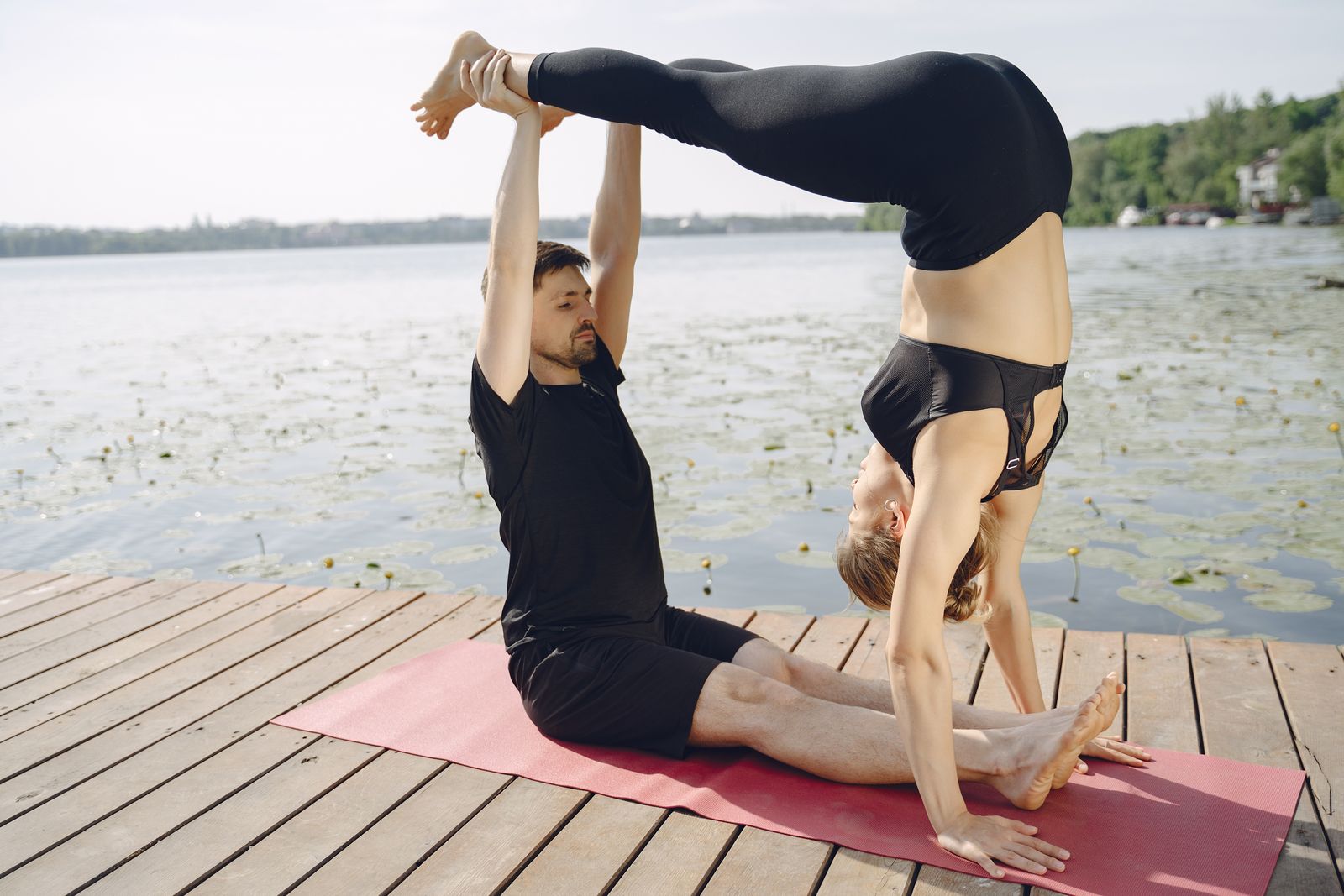
Beginners should skip double downward dog, partner backbends, any pose that lifts one person off the floor and all inverted lifts. Acro yoga, such as flying poses where one person balances on the other’s feet, needs in-person instruction and a spotter. Falls from even a low height cause real injuries.
| Pose or style | Main risk | When it may be appropriate |
|---|---|---|
| Double downward dog | Shoulder and wrist overload for the base partner | After months of regular practice and with a teacher present |
| Partner backbends | Lower back strain if one partner pulls | Only with a warm spine and slow, gentle assist |
| Acro lifts (bird, throne) | Falls and neck or back injury | Only with a certified acro teacher and a spotter |
| Deep forward fold with pushing | Hamstring and lower back strain | Never push; use gentle hands and breath |
| Standing balance with lean | Falls if one partner lets go | Beside a wall, with a clear exit plan |
When should you skip partner yoga or talk to a doctor first?
Check with a doctor before partner yoga if you are pregnant, have a recent injury or surgery, a spine or disc problem, osteoporosis, high blood pressure, a heart condition, or joint pain. Skip a session if you feel dizzy, are unwell, or have eaten a heavy meal in the last 2 hours.
Stop immediately if you feel sharp pain, tingling, numbness, chest discomfort or breathlessness. A stretch should feel like gentle pulling, never pain. Ask your teacher or doctor to adapt the poses, and never push through discomfort to match your partner.
Why practise yoga with another person at all?
Practising with another person adds accountability, which helps you show up more regularly, and it gives you feedback you cannot get alone, such as how your breath feels from outside. Many pairs find it relaxing and enjoyable, but the physical benefits are the same ones listed in our guide to the benefits of yoga.
Do not expect partner yoga to replace other exercise or to fix a specific health problem. It is a gentle, social way to stretch, breathe and stay consistent. If you outgrow the basics, flowing styles such as vinyasa yoga or traditional hatha yoga teach the individual strength and balance that make partner poses safer, and our overview of the types of yoga helps you choose.
Can you learn yoga poses for two online?
Yes. A live teacher can watch both of you on camera, correct hand placement and pace the session. This works well for pairs in the same room or for family members who live apart, because each person can also practise the solo versions. Our online yoga classes overview explains what to expect from a session.
Frequently asked questions
What is the easiest yoga pose for two beginners?
Seated back-to-back breathing is the easiest. Sit cross-legged with your spines touching, then breathe slowly together for 1-2 minutes. It needs no flexibility or strength and builds the communication that other poses depend on.
Can two people with different body sizes do yoga together?
Yes. Seated, twisting and standing balance poses work regardless of size. Skip weight-bearing or lifting poses if there is a large size difference, and always let the smaller or stiffer person set the depth.
How long should a beginner yoga session for two last?
About 15-20 minutes is plenty for a first session: 2 minutes of solo warm-up, 4 to 6 partner poses at 1-2 minutes each and 2-3 minutes of relaxation. Extend it gradually as you both feel comfortable.
Is acro yoga safe to try at home?
Basic seated and standing partner poses are fine at home, but acro yoga that lifts a person off the ground is not. Learn it from a certified teacher with a spotter and a soft surface, because falls can cause serious injury.
Can I do yoga poses for two with my child?
Yes, with simple, playful poses such as mirror poses and a seated seesaw, for around 10 minutes. The adult should take the supporting role, avoid weight-bearing poses and supervise throughout.
Yoga poses for two work best when you keep them slow, light and communicative. To learn them with a teacher watching your alignment, join a live online yoga class with Fitstrot and bring your partner, friend or child along.


